Carnaval de Québec 2022: a survival guide
Carnaval 2022: the context
The Carnaval de Québec 2022 is running, which is more than could be said for 2021 (fully cancelled) and 2020 (partially cancelled mid-event). This year’s edition is reduced in scale — the indoor events and the large-format evening parades have been modified or removed, and the effigy (the traditional ice palace on the Plains of Abraham) is smaller than in pre-pandemic years. But the core of Carnaval is here: Bonhomme is officially in residence, the outdoor events are running, the city is full of people in snowsuits, and the caribou is being served in insulated cups at stands throughout the old city.
I attended the 2018 and 2019 editions in their full form before the pandemic, and I am writing this in January 2022 after spending four days in Québec City for the opening weekend. This guide is practical — not a celebration of a perfect event, but an honest account of how to actually enjoy it.
| When | Late January to mid-February, roughly 17 days |
| Where | Old Québec, centred on the Plains of Abraham and Rue Saint-Jean |
| Cost | Carnaval passport around 20 CAD; most street events are free |
| Temperature | -10°C mild day to -30°C with windchill |
| Book ahead | Hotels 2+ months out; Hôtel de Glace overnight even earlier |
Surviving the cold: this is the first problem
The temperature during Carnaval varies between about -10°C on a mild day and -30°C with windchill on a bad one. The 2022 opening weekend was around -22°C with a north wind coming off the Saint-Laurent. I want to be specific about this because people consistently underestimate it.
The layering system that works:
- Base layer: merino wool or synthetic thermal (not cotton — cotton holds moisture and becomes cold)
- Mid layer: fleece or down vest
- Outer layer: insulated and windproof jacket rated to at least -30°C
- Pants: insulated ski pants or equivalent (jeans are useless at -22°C)
- Boots: rated to at least -40°C, waterproof, with felt liners. The standard recommended boot in Québec is Sorel Caribou or equivalent. I wore Baffin Impact boots, which were adequate.
- Hat: covers ears completely
- Balaclava or neck gaiter: for when the wind picks up
- Gloves with hand warmers inside
This sounds excessive until you are standing outside watching the Bonhomme effigy illumination for forty-five minutes in a north wind. Then it sounds like minimalism.
The single most common complaint I hear from first-time Carnaval visitors is cold feet. Buy the boots. Don’t improvise.
Bonhomme and the effigy
Bonhomme Carnaval is the giant snowman mascot who presides over the festival. He appears at official events, parades, and promotional activities throughout the two-week run. Getting a photograph with Bonhomme is a rite of passage and takes patience — the queues at his “palace” can be thirty to forty minutes long. Go early in the morning on weekdays rather than weekend afternoons.
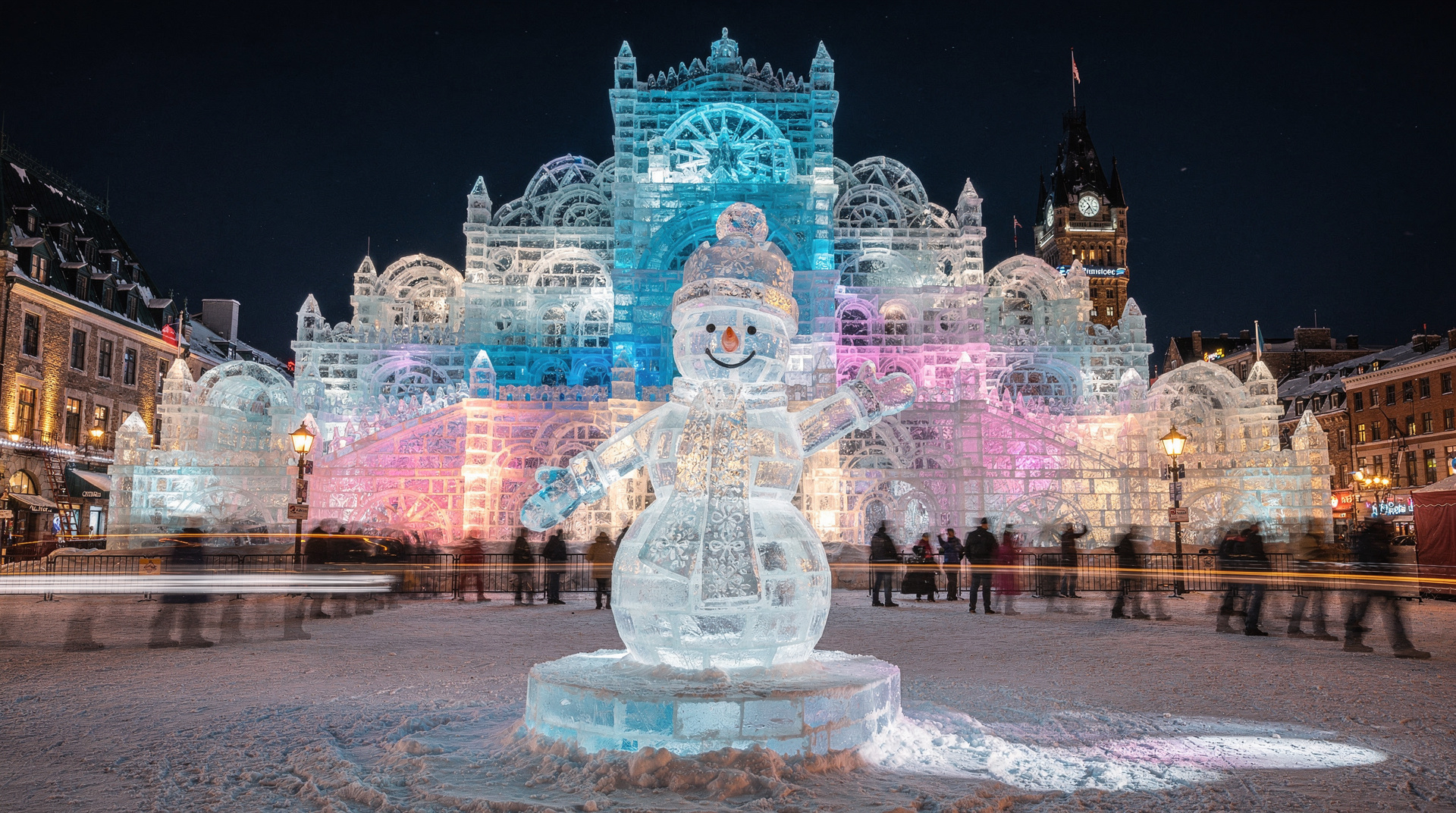
The Palais de Bonhomme (the effigy or ice palace) is built anew each year near the Parliament Building. The 2022 edition is scaled down but still impressive — about 500 tonnes of ice, illuminated at night with coloured lights. The illumination shows are worth watching from a distance before going in close: the colours shift through the ice in a way that’s genuinely beautiful.
The effigy is free to walk around from the outside at any time. Entry to the inside (where there are ice carvings, interactive elements for children, and warming areas) requires a Carnaval passport, which is available online in advance for around 20 CAD.
The events worth your time
The canoe race on the Saint-Laurent. Teams paddle and drag specially designed canoes across ice floes in the river, racing from Lévis to Québec City. This is genuinely extraordinary to watch — the river is partly frozen, partly liquid, and the athletes cross back and forth between ice and water, which is alarming and impressive. The banks fill with spectators. Dress for the cold and get there early for a spot.
The sculpture competitions. International snow sculpture teams work outside for two to three days creating large-format pieces near the effigy site. The final results, before the inevitable gradual melting, are remarkable. The process of watching is interesting too — go during the working days to see the sculptures mid-creation.
The night parades. In 2022, one of the two traditional night parades is running. The parade follows Rue Saint-Jean and involves floats, costumed performers, marching bands, and a great deal of fog machines. It is chaotic and cheerful. The key is finding a spot on the street before the crowd fills in. I planted myself on Rue Saint-Jean at the corner of Rue Saint-Stanislas about forty-five minutes before the parade start and had a decent view.
The outdoor slide on the Terrasse Dufferin. The giant wooden slide that runs down from the Terrasse Dufferin to the Lower Town is a Carnaval tradition. The queue is long but moves. You go down in a wooden toboggan called a luge and reach speeds that are, in retrospect, probably not safe. It is very good.
The Hôtel de Glace
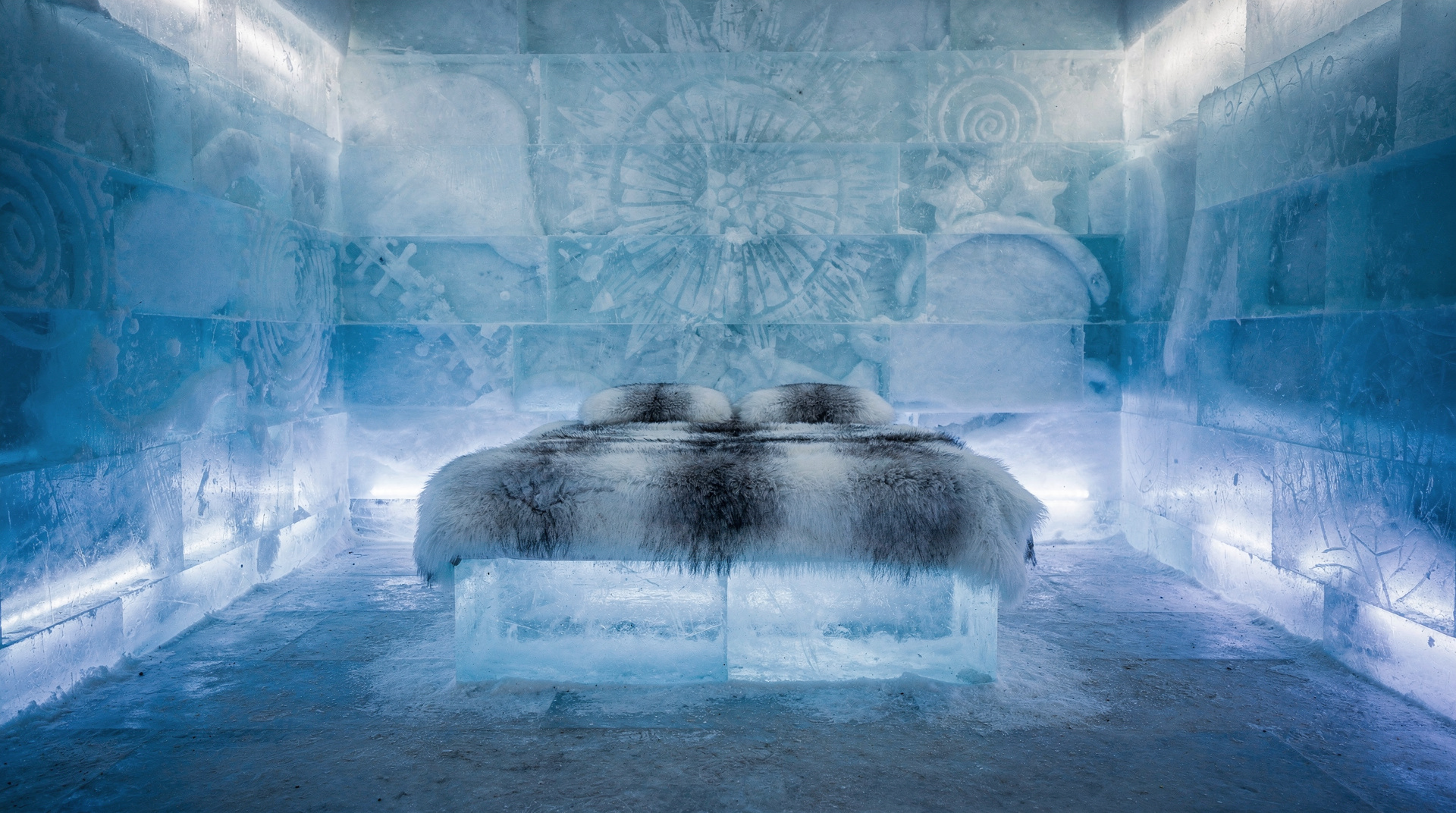
The Hôtel de Glace is technically not part of Carnaval — it is an independent attraction at the Valcartier resort about thirty minutes from the city — but it is the peak winter experience in the Québec City region and most visitors combine it with Carnaval. The ice hotel is rebuilt each January from approximately 15,000 tonnes of snow and 500,000 kg of ice, with themed rooms, an ice chapel, an ice bar, ice furniture, and a hot tub room.
Spending a night there is on my list of singular travel experiences. You sleep in an Arctic-rated sleeping bag on a bed carved from ice — the mattress is foam on top of the ice block, which is more comfortable than it sounds. The rooms are kept at around -5°C, which is cold but survivable with the sleeping bag. The sauna and hot tub are available 24 hours. I woke at 5am and watched the ice ceiling in the blue-grey light of early morning.
Hôtel de Glace Overnight ExperienceIf the overnight is beyond your budget or comfort zone, day visits to the Hôtel de Glace are available and include entry to the public spaces, the ice bar, and the various themed rooms.
Food and drink
Caribou. The official drink of Carnaval. A mixture of red wine, Pur Québec grain alcohol, maple syrup, and spices, served hot or cold. It is strong, sweet, warming, and tastes like exactly what it is: a drink designed to keep you warm at -25°C. Available at stands throughout the Carnaval site.
Beaver tails (queues de castor). Deep-fried pastry stretched into the shape of a beaver’s tail, served with various toppings: cinnamon sugar, Nutella, apple cinnamon. Available from stands throughout the old city in winter. Best eaten immediately, standing on a cold street corner.
Tourtière. The Québécois meat pie — pork, veal, or game, in a lard pastry crust, spiced with cloves and cinnamon. Several restaurants in the old city do good versions. Le Continental on Rue Saint-Louis serves a classic version that has been on the menu since 1956.
Where to eat dinner. Avoid Rue Saint-Louis restaurants during Carnaval weekend if you want value — they are tourist-optimised and the service is stretched. Restaurants in Saint-Roch (the neighbourhood downhill from the old city) are better value and less crowded. Le Cercle on Rue Saint-Joseph is a wine bar and restaurant that serves good modern Québécois food in an unpretentious setting. I ate there twice.
Hotels during Carnaval: what you need to know
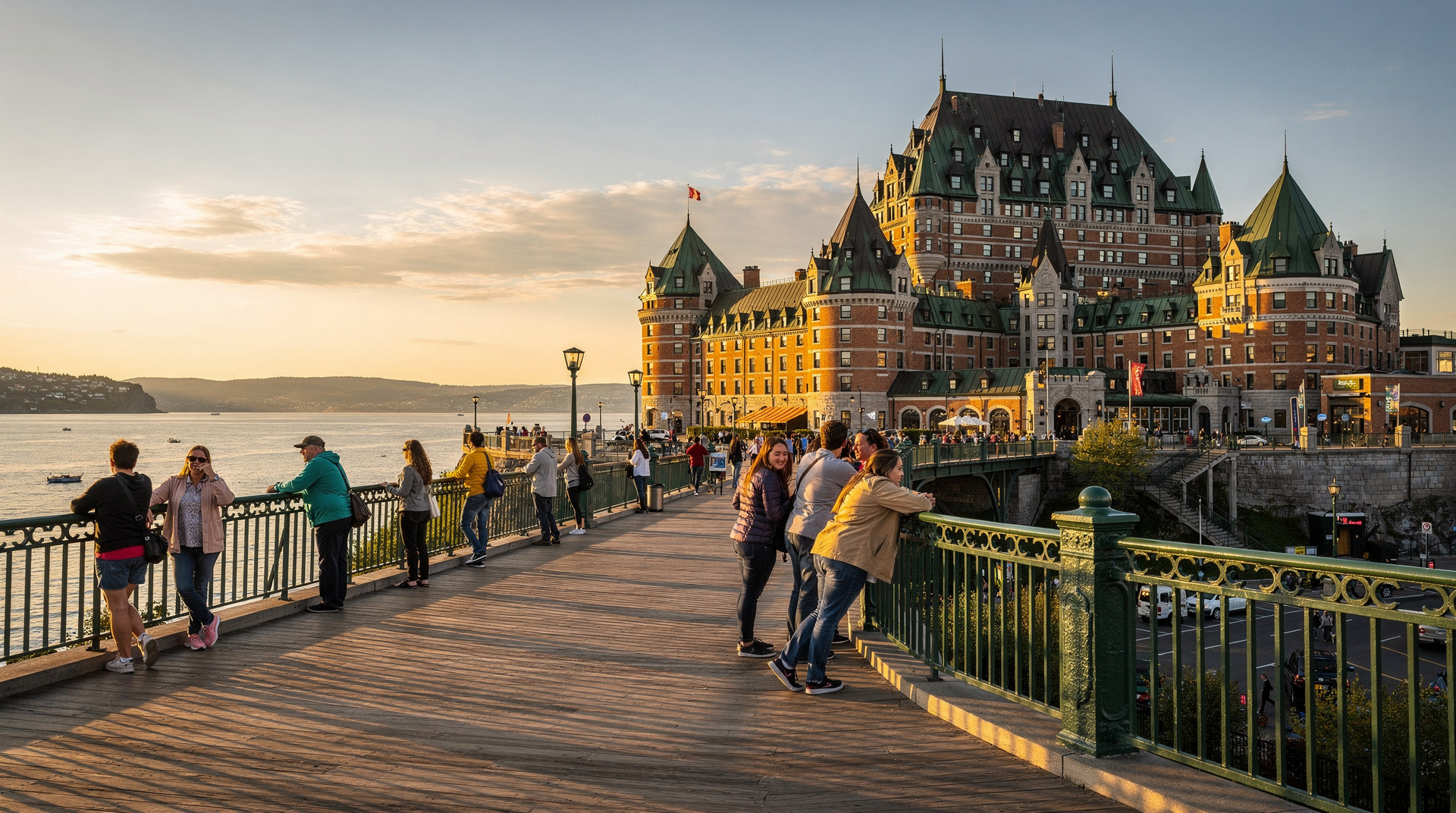
Book at least two months ahead for Carnaval weekends. The city fills up completely and prices are at annual peaks. The best-located hotels inside the walls — Hôtel du Vieux-Québec on Rue Sainte-Anne, Hôtel Manoir d’Auteuil near Porte Saint-Louis, Hôtel Château Bellevue near the Terrasse Dufferin — will all be expensive. The Auberge Saint-Antoine in the Lower Town is excellent but even more expensive.
If budget is a concern, hotels in Saint-Roch or outside the walls on Grande Allée are significantly cheaper and a manageable walk from the Carnaval sites. The walk is cold. Dress accordingly.
Getting there and getting around
Most visitors arrive by VIA Rail from Montréal — the Via Rail guide covers timetables and booking. If you’re flying in, the YQB airport guide has transfer options into the old city, which is compact enough to walk once you’re settled. Once inside the walls, everything Carnaval-related — the effigy site, Rue Saint-Jean, the Terrasse Dufferin slide — is within a fifteen-minute walk, so a car is more hassle than help for the festival itself.
For a broader sense of what winter in Québec City feels like outside the two Carnaval weeks, the winter versus summer feel piece is an honest comparison. And if the 2026 edition of the ice hotel interests you beyond a day visit, the Hôtel de Glace 2026 changes post covers what’s new this season.
If you only have one day
Carnaval rewards multiple days, but if you’re passing through for a single afternoon and evening, prioritise: the effigy illumination at dusk, a caribou from a street stand, the Terrasse Dufferin slide, and one night parade if the schedule aligns. Skip the queue for photos with Bonhomme unless you’re travelling with children who’ll genuinely treasure it — the wait rarely matches the payoff for adults. A guided walk of the old city beforehand helps you get oriented fast if it’s your first visit:
Old Québec winter walking tour
Frequently asked questions about Carnaval de Québec 2022: a survival guide
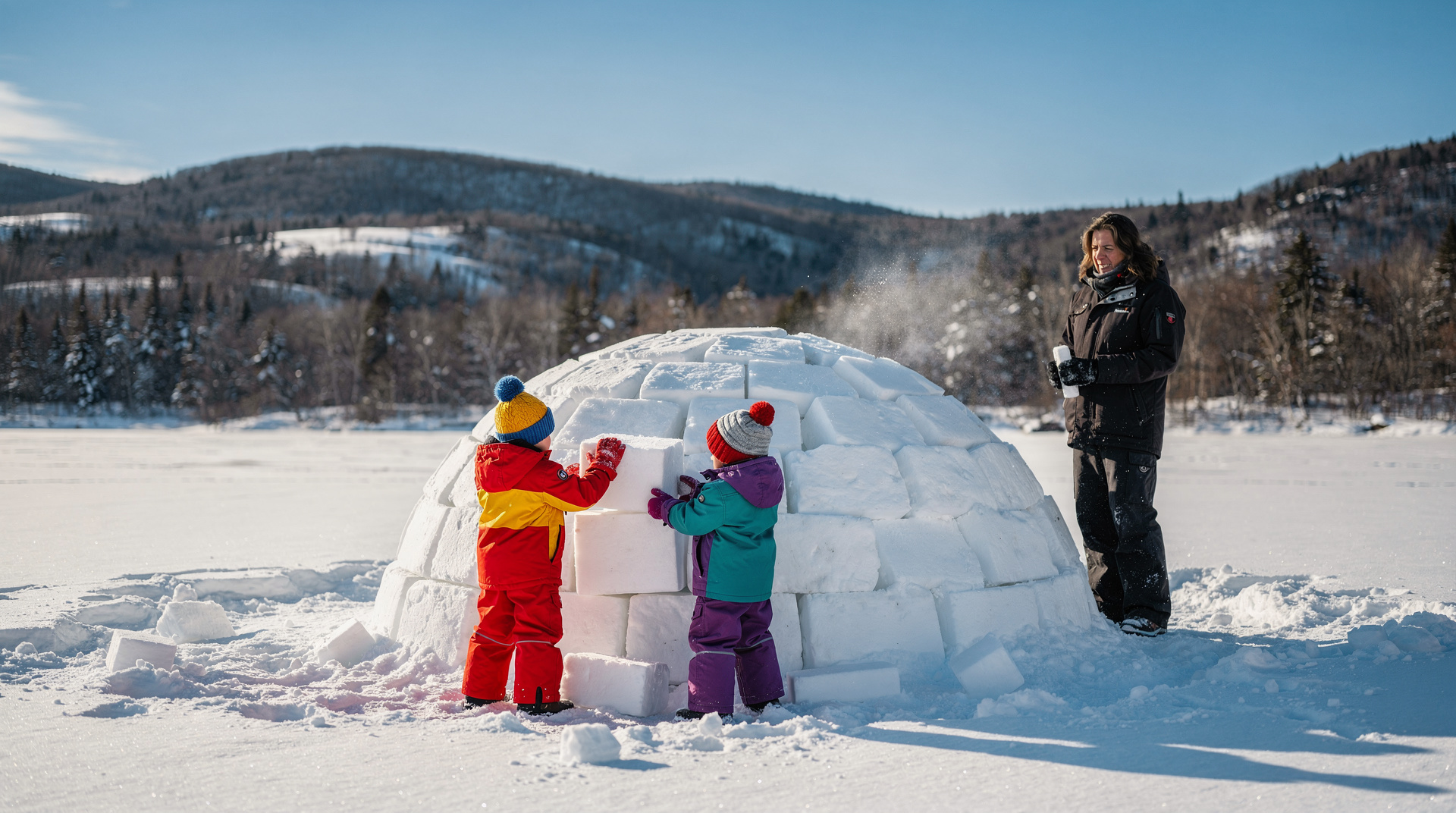
Is Carnaval de Québec good for families with young children? Yes, with caveats on the cold. The daytime events, the effigy, and the slide are all manageable with children if they’re dressed properly (see the layering system above). Evening parades and late-night events are harder for younger kids — plan for an earlier night if you’re bringing them, and check the family winter activities guide before you go.
Do I need the Carnaval passport? Only for entry to the effigy’s interior spaces and a handful of ticketed indoor events. Most of the atmosphere — the parades, the street life, the sculpture competitions, the canoe race — is free to watch from outside.
For everything about visiting Québec City in winter, the Quebec City destination page and the February guide have the full context. The Hôtel de Glace guide covers the ice hotel in detail. And the family winter activities guide is for anyone bringing children to Carnaval.
Go. It is cold. It is worth it.