Mont-Tremblant
Québec's premier mountain resort: world-class skiing, dog sledding, white-water rafting on the Rouge, and a pedestrian village open year-round.
Winter Day Trip with Gondola Ride
Duration: 8-10 hours
Quick facts
- Distance from Montréal
- ~130 km, 1h30 by car
- Resort elevation
- 875 m summit, 645 m vertical
- Ski season
- Late November to mid-April
- Summer gondola
- Late May to mid-October
- Currency
- CAD (taxes ~15% on top)
A mountain resort that earns its reputation
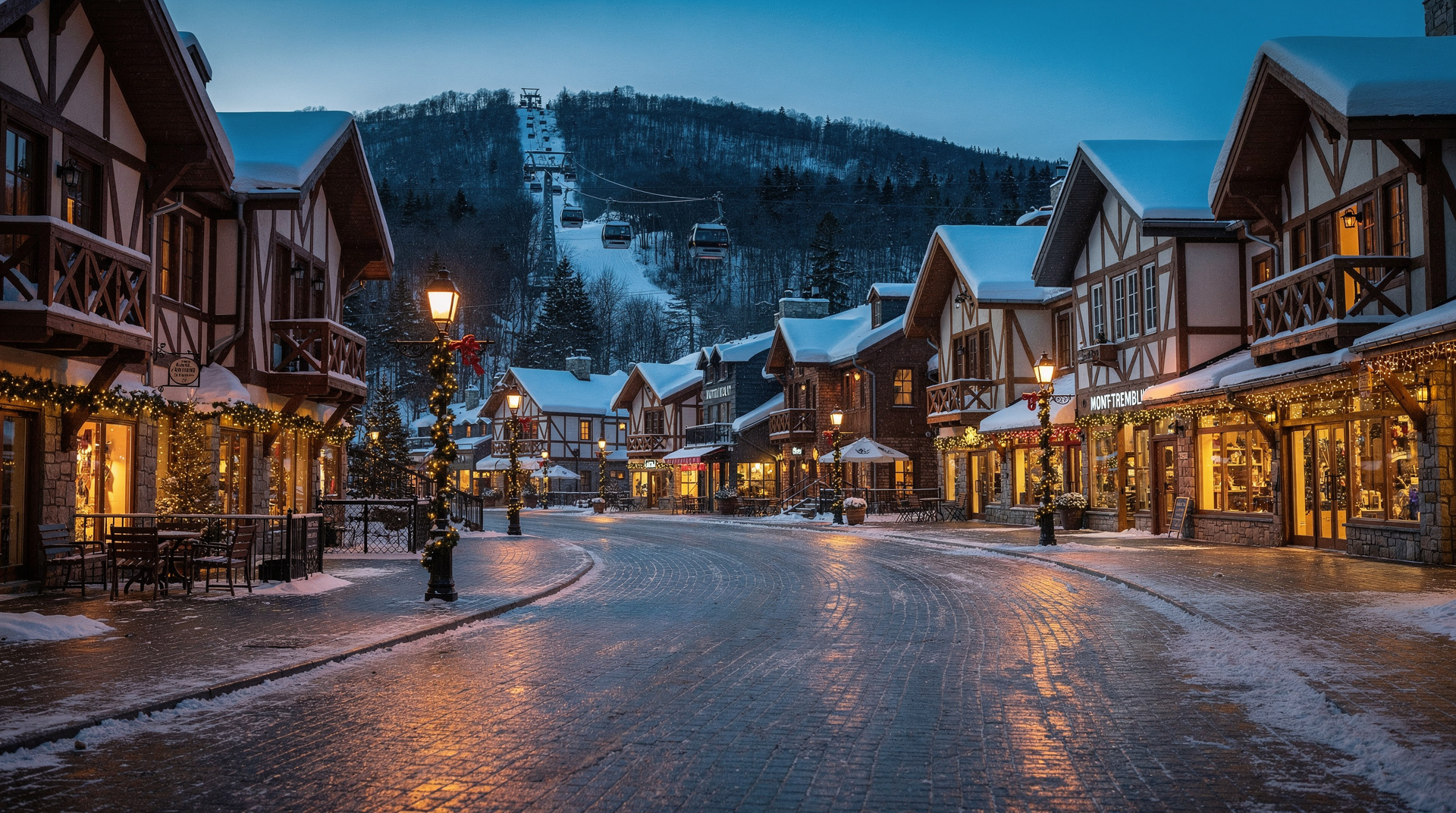
Mont-Tremblant is the best ski resort in eastern North America — that is not marketing copy, it is the consensus of multiple decades of Ski Magazine rankings and the reality that any skier who has skied here compared to alternatives in the Laurentides or the Appalachians will confirm. The mountain offers 96 runs across four sides, 13 lifts, and 645 metres of vertical drop. The pedestrian village at its base, modelled loosely on Québec City’s Lower Town with its colourful facades and covered walkways, operates as a genuine year-round destination rather than a ghost town between snow seasons.
All of that said, Mont-Tremblant is also one of the more expensive resort destinations in Québec. Lift tickets run 95–135 CAD per day depending on the date. The village restaurants charge resort prices — expect 18–26 CAD for a main course at the mid-range places, significantly more at the nicer tables. Hotel rooms on the mountain start around 250 CAD per night in high season. None of this makes Tremblant a bad choice; it makes it a choice worth understanding before you book.
Getting here from Montréal is straightforward: 130 km north on Autoroute 15 and then Route 117, roughly 1h30 in normal traffic. There is no direct train service; Via Rail does not reach Tremblant. A handful of shuttle companies run from Montréal-Trudeau airport to the resort, which is useful if you are flying in without a car, though having a car gives you more flexibility for exploring the wider Laurentides.
| Where | Laurentides, ~130 km north of Montréal |
| Cost | Lift tickets around 95–135 CAD/day; on-mountain hotels from ~250 CAD/night |
| Time needed | 2–3 days |
| Getting there | Car via A-15 then Route 117 (~1h30); no train; shuttles from YUL |
| Best time | January–February for snow, late September for foliage |
Skiing and snowboarding: what to expect
The mountain divides into four main sectors: the South Side, the North Side (Versant Nord), the Edge, and the Soleil sector. The South Side faces the village and holds most of the groomed intermediate terrain — this is where you want to spend your first morning if you are new to the mountain, learning the layout before crossing to the North Side. Versant Nord is where the serious skiers go: steeper fall-line runs, less grooming, and a noticeably quieter atmosphere because the crowds concentrate on the South Side.
The Edge sector, accessed from the summit, holds some of the best intermediate and advanced terrain on the mountain, including the famous Dynamite run — a long, sustained black diamond that descends the full vertical. Expect it to be tracked out by 10 AM on a powder day.
Snow quality in the Laurentides is affected by the freeze-thaw cycles that Atlantic systems bring — more so than the drier powder of western resorts. January and February are the most reliable months for cold temperatures and consistent snow cover. The snowmaking system is extensive and covers most of the mountain down to the village, which helps in early and late season, but natural snowfall varies year to year.
A guided winter day trip with gondola ride (around 110 CAD from Montréal) is an efficient option if you want a structured introduction to the mountain without arranging everything independently — transport included from the city.
Dog sledding: one of Tremblant’s genuine highlights
Dog sledding in the Tremblant valley is one of those experiences that surprises first-timers with how physical and emotional it is. You are not simply being pulled through the woods — you are standing on the runners of a sled pulled by a team of 8–10 Alaskan or Siberian huskies that want, urgently and entirely, to run. The guide gives you a brief orientation on braking and weight shifting, and then you are moving through spruce forest at a pace that feels fast until you realise the dogs are holding back.
The valley around Tremblant has several operators, with departures typically from Saint-Jovite or the Route du Village area. The tours run 2–3 hours and most include a warming stop with hot drinks at a mid-route shelter.
The Dogsledding Valley Adventure (around 150 CAD) is the most popular option and books up well in advance for January and February weekends — reserve at least 2–3 weeks ahead.
White-water rafting on the Rouge River
The Rouge River, which runs through the valley below Tremblant, is one of the most accessible white-water rivers in Québec. The half-day section offers class II–IV rapids depending on water levels, with the most demanding stretches in spring when snowmelt is running. Summer trips are generally more moderate and family-friendly. The full-day trip extends into class IV territory for the final section.
Half-day white-water rafting on the Rouge runs 80 CAD and includes wetsuit gear — bring a change of clothes for afterward. The put-in is around 20 minutes from the village by car. Groups run May through September, with the best rapids in May and June.
Zip-lining: above the treetops
The Tremblant zip-line park operates on the mountain from late spring through October, with five lines ranging from warm-up runs to a 1.4 km main line that crosses a valley at significant height. The full circuit takes around 3 hours.
The summit zip-line tour with 5 lines costs around 100 CAD and runs June through mid-October. Weight restrictions apply (50–120 kg). Book ahead for July and August weekends — this sells out.
Summer and autumn at Tremblant
Outside ski season, the mountain transforms into a hiking and mountain biking destination. The summer gondola (late May to mid-October) accesses the summit, from which several marked trails descend through the national park. The Sentier des Cimes canopy walk, an elevated walkway through the forest canopy, is one of the more original additions to the summer programme.
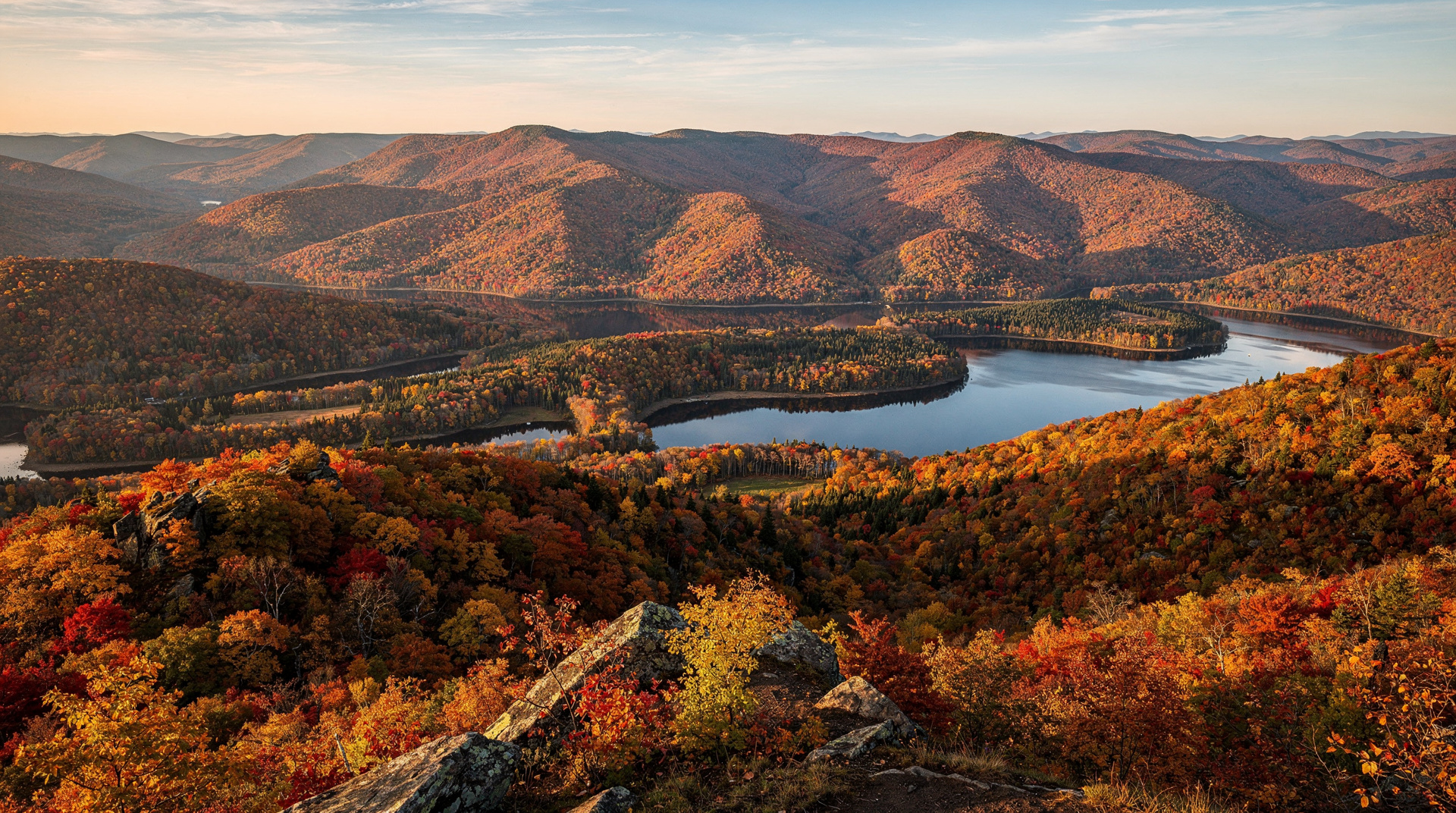
The foliage season, typically peaking in the third week of September in the Laurentides, is spectacular from the gondola. The mixed forest — sugar maple, white birch, trembling aspen — turns in reds, oranges, and yellows that are genuinely among the best in Québec. Reserve accommodation well ahead: the last two weekends of September are among the busiest of the year.
The pedestrian village holds a summer and autumn calendar of outdoor events, live music evenings, and a popular blues festival. Check the Tremblant events calendar before booking dates.
Where to stay
On the mountain (village piétonnier): The most convenient option — ski-in/ski-out or a short walk from lifts in winter. Brands include Fairmont Tremblant (Québec’s most upmarket ski hotel, from 350 CAD/night), Westin Resort, and various condo-hotel operations. Expensive, but you are buying proximity and atmosphere.
Saint-Jovite (Mont-Tremblant town): 12 km from the mountain, this is where you find normal-priced hotels and motels (from 120 CAD/night), grocery stores, gas stations, and restaurants with realistic prices. A car is essential. This is the sensible choice if you are on a budget or spending more than two nights.
Lac Tremblant area: Lakeside cottages and chalets, some available for rent by the week. Very pleasant in summer; more of a drive to the ski lifts in winter unless you have snowmobiling as part of your plan.
Honest assessment: tourist traps at Tremblant
The pedestrian village is deliberately designed to funnel you through expensive restaurants and boutiques. The trap to avoid is eating every meal at the resort’s own F&B outlets. Carry snacks on the mountain (food inside ski lodges is overpriced), and for evening meals, drive the 12 km to Saint-Jovite where you will eat the same quality of food at 30–40% lower prices. Rue de Saint-Jovite has several independent restaurants, including some good Québécois poutine spots and a couple of Italian restaurants that charge normal prices.
Avoid the “add-on” packages sold through the resort website (spa + ski + hotel bundles) unless you have done the per-item math — they often bundle services you would not choose individually. Book activities separately.
Logistics
- Getting there: Car from Montréal via A-15 then Route 117. No train. Shuttle services from YUL airport.
- Parking: On-mountain parking costs 20–30 CAD/day. Free parking exists at Saint-Jovite with a 15-minute drive to the mountain.
- Lift tickets: Book online in advance — walk-up prices are 15–20 CAD higher. Multi-day passes offer better value.
- Ski rentals: On-mountain rental is convenient but expensive (80–120 CAD/day). Consider renting from shops in Saint-Jovite.
- Connections: Mont-Tremblant is a natural gateway to the wider Laurentides region, including Sainte-Agathe-des-Monts 40 km south.
The Parc national du Mont-Tremblant
The ski resort and the Parc national du Mont-Tremblant occupy adjacent but distinct terrain. The national park — covering 1,510 km² of boreal wilderness — begins where the resort’s trail network ends and extends north and east into territory where road access is minimal and wildlife is significant. Moose, black bear, grey wolf, and beaver are all present; the birding in June and September is outstanding.
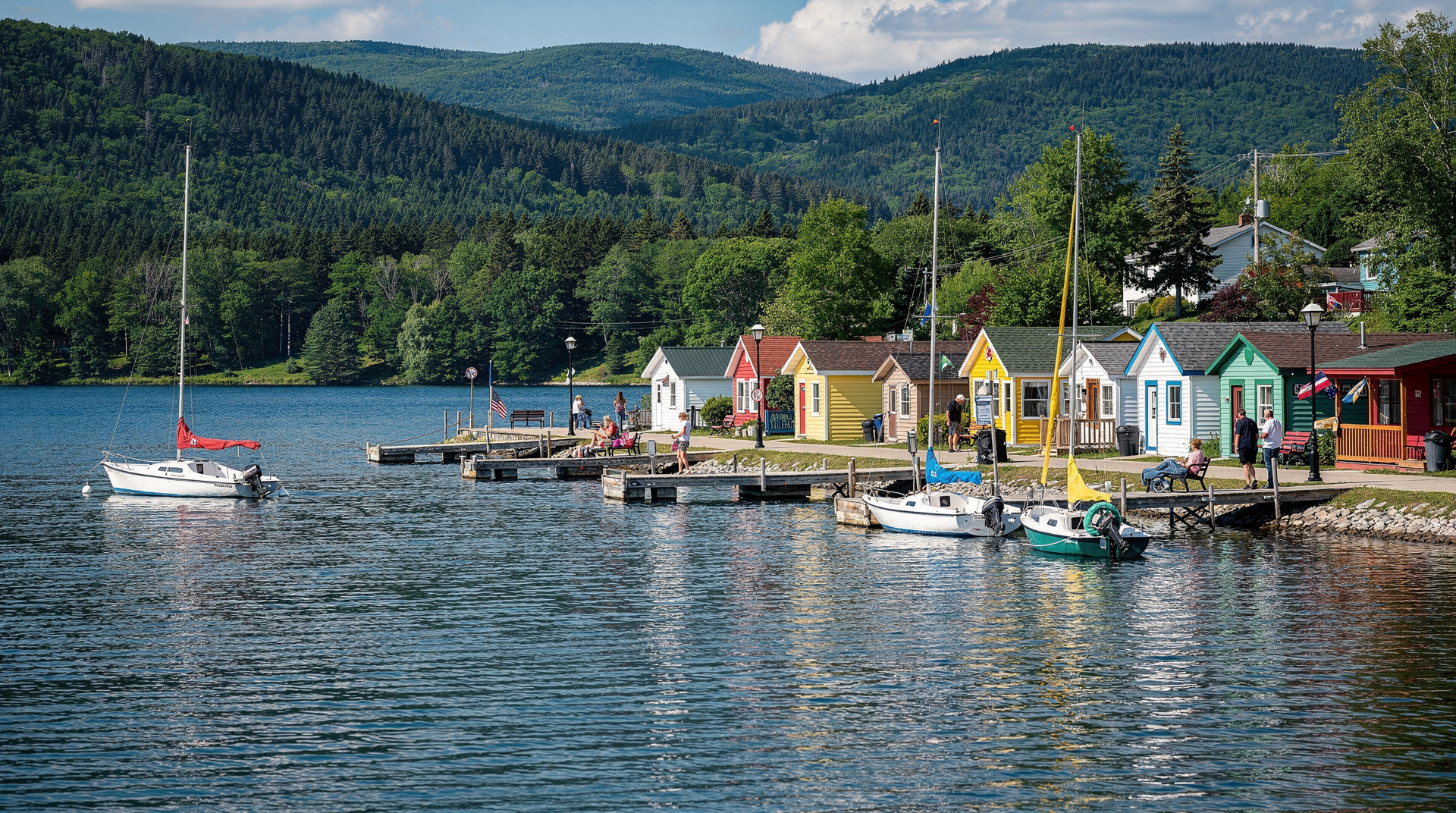
The park has three sectors: La Diable (closest to the resort, with camping and canoe routes), L’Assomption, and La Pimbina. Lac Monroe, the main base for La Diable sector, has a park reception, canoe and kayak rentals, and access to trails ranging from half-hour walks to multi-day backcountry routes. The lake itself, in a bowl surrounded by hills, is one of the more beautiful in the Laurentides.
The distinction between resort and park is worth understanding for planning purposes: the national park charges Sépaq entry (around 9 CAD per adult per day), is separate from the ski resort operation, and has different booking systems for camping. A combined stay — ski or hike the resort, camp or cottage in the park — is one of the better extended Tremblant itineraries.
Snowshoeing and cross-country skiing
Beyond the downhill infrastructure, Mont-Tremblant has an extensive network of groomed cross-country ski trails connecting the village to the national park. The 83 km of groomed classic and skate-ski trails are maintained by the resort and separate from the downhill operations — a separate pass is required. The quality is high and the views, away from the lift infrastructure, are genuinely peaceful.
Snowshoeing trails fan out from the village and can be accessed freely once you are in the national park. The Sentier des Chutes, leading to a series of frozen waterfalls in the park, is the signature winter snowshoe outing — approximately 6 km return, appropriate for families with older children.
The pedestrian village: what it does well
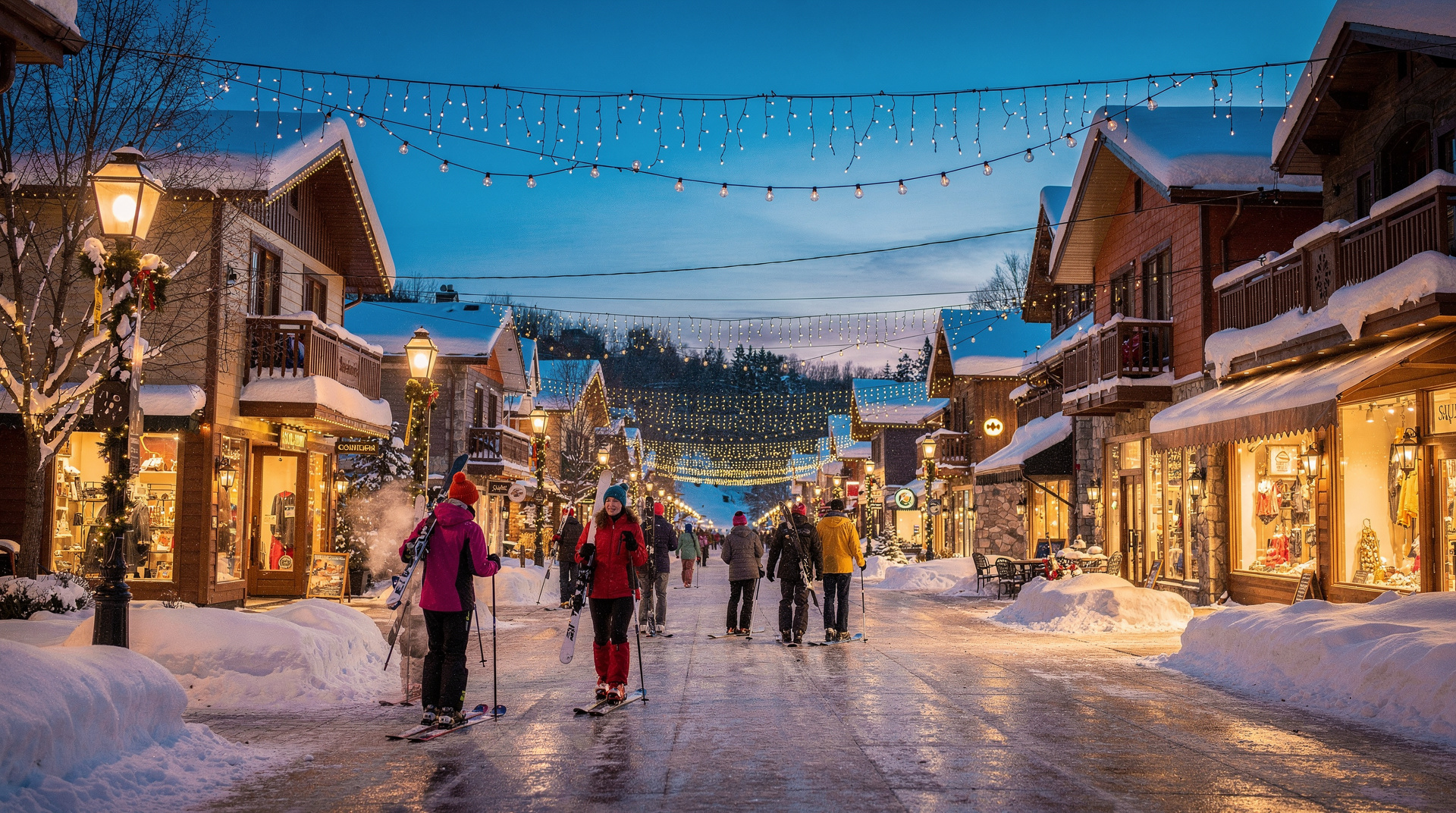
The village piétonnier is a genuine success as a resort design project, even if it is expensive. The scale is right — you can walk from one end to the other in 15 minutes — and the architectural consistency (Quebec vernacular with brightly painted facades, covered walkways in winter) creates the sense of being somewhere rather than nowhere. The main street has a mix of restaurants, cafés, outdoor shops, and the occasional boutique, and the evening atmosphere in January and February, with snow-covered rooftops and lit-up facades, is genuinely attractive.
The casino at Tremblant (Casino du Lac-Leamy operates a Tremblant location) is on the mountain. It is a casino — apply the same honest framing as with Casino de Charlevoix: a legitimate choice if gambling is your thing, not a tourist attraction in the usual sense.
The free outdoor skating rink on the village’s main plaza is one of the better free activities in winter. Equipment rental is available near the rink.
Hiking in summer: the Sentier des Cimes
The Sentier des Cimes canopy walk at the resort operates from late May through mid-October. It is an elevated walkway constructed among the treetops at height ranging from 2 to 10 m above the forest floor, following a route through mature mixed forest. The 1.2 km circuit takes 45–60 minutes and includes several elevated platform viewpoints. It is a distinctive experience — less physically demanding than a hike, more immersive than a gondola — and works well for families with children who are beyond the stroller age.
Admission runs around 40 CAD. The gondola to the summit, with its summit panorama and descent hiking options, is a separate ticket.
Tremblant with young children
Families with children under 6 have real options beyond ski school. The village has a supervised snow park with tubing and a small carousel of non-ski activities, and several on-mountain childcare services accept children as young as 3–4 for half- or full-day programs while parents ski — book these well ahead for peak weeks (Christmas–New Year, February break), as capacity is limited. Ski school for children typically starts around age 3 with dedicated learn-to-ski programs using rope tows and gentle terrain separate from the main lift network.
Strollers work on the flat pedestrian village but not on-mountain; carriers are the practical choice for outdoor activities beyond the village core. In summer, the Sentier des Cimes canopy walk and the gondola are both manageable with young children, while the zip-line and via ferrata-style activities have minimum age and weight requirements — check specifics before booking rather than assuming.
Getting around
No car means significant limitations outside the resort perimeter. The free shuttle circulates within the pedestrian village and between on-mountain lodgings. For everything beyond — excursions, dog sledding, the national park, restaurants in Saint-Jovite — a rental car is the practical choice. If you are without a car and coming from Montréal for the weekend, a tour operator pickup from the city (included in most organized day-trip packages) is the cleanest solution.
Frequently asked questions about Mont-Tremblant
When is the best time to ski at Mont-Tremblant?
January and February offer the most reliable cold temperatures and snow quality. The holiday weeks (Christmas–New Year, Carnaval weekend in early February) are the busiest. Early March can offer good conditions with longer daylight and often more relaxed crowds. Late March is variable — spring skiing but increasingly slushy afternoons.
Is Mont-Tremblant family-friendly?
Yes, very. The resort has dedicated children’s ski schools, a snow park, and non-ski winter activities including snow tubing and snowshoeing. The pedestrian village is walkable and car-free. In summer, the gondola, hiking trails, and zip-lining all accommodate children with age or weight minimums.
Can I visit Mont-Tremblant without skiing?
Yes — in winter, the gondola runs for sightseers, and the village has skating, dog sledding, snowshoeing, and snow tubing. In summer and autumn, hiking, mountain biking, the treetop canopy walk, and water activities on Lac Tremblant are all non-ski options. The village is pleasant to walk regardless of season.
How do I get from Montréal to Mont-Tremblant without a car?
Limocar runs bus service from Montréal to Saint-Jovite (about 2h15), from where a resort shuttle connects to the mountain in ski season. Organized day trips from Montréal (with guide and transport) are available on GYG and make sense if you want a single day without the hassle of logistics.
What is the accommodation price range at Tremblant?
On-mountain hotels range from 250–600 CAD/night in peak winter season. Saint-Jovite motels and B&Bs run 120–200 CAD. Weekly chalet rentals on the lakes (4–8 people) are often the best value for groups, averaging 200–400 CAD per person per week in summer.
Tremblant compared with other Laurentides options
Tremblant is not the only mountain in the corridor, and it is worth knowing what you’re trading off by choosing it over the alternatives.
| Mont-Tremblant | Sainte-Agathe-des-Monts | Saint-Sauveur | |
|---|---|---|---|
| Vertical drop | 645 m | Via ferrata/zipline, not ski-focused | 213 m |
| Distance from Montréal | ~130 km (1h30) | ~100 km (1h15) | ~60 km (45 min) |
| Character | Full destination resort, pedestrian village | Lake town, adventure activities | Closest ski hill, day-trip friendly |
| Price level | Highest in the region | Mid-range | Most affordable, easiest day trip |
| Best for | Multi-day ski trips, families wanting a full resort | A one- or two-night detour with via ferrata | A single day of skiing from Montréal without an overnight |
For a day trip rather than a multi-night stay, Saint-Sauveur is the more practical choice — closer to Montréal, less expensive, and geared to exactly that use case. Tremblant makes sense once you’re committing to at least two nights and want the full resort experience.
Combining Tremblant with the wider Laurentides
Mont-Tremblant is the northern anchor of the Laurentides corridor. Most visitors treat it as a standalone destination, but it integrates well into a longer regional itinerary.
Two-night extension south: After Tremblant, spend a night at Sainte-Agathe-des-Monts (35 km south) for the lake, the via ferrata, and the via ferrata/zipline combo — a different character from the resort. Continue to Val-David for lunch and the gallery scene, then Sainte-Adèle for the final night. This covers the corridor north to south over 4–5 days.
Parc national extension: Add a night inside the Parc national du Mont-Tremblant (La Diable sector) for wilderness camping or a Sépaq cottage — a completely different experience from the resort 20 minutes away.
Winter multi-resort week: Ski Tremblant for two days, then drive to Sainte-Anne 200 km east (via Québec City) for two days — a natural pairing that gives you the Laurentides and Appalachian/Charlevoix ski traditions in one week.
Downhill mountain biking
Tremblant’s bike park is one of the less-advertised summer draws — the gondola and a network of dedicated lift-served mountain bike trails let riders take multiple laps of downhill and flow trails without the climb. Trails range from beginner-friendly flow paths to technical rock and root sections aimed at experienced riders; full-face helmets and body armour are recommended for the steeper lines and can be rented on-site along with the bikes themselves. The bike park runs roughly the same window as the summer gondola (late May to mid-October), with the best trail conditions after a dry spell — rain turns the technical sections greasy quickly.
Rental packages (bike, protective gear, and a lift pass) run in the 90–130 CAD/day range depending on the bike level. Beginners should budget a half-day to get comfortable on the easier trails before attempting the lift-served descents; the resort’s ski-and-bike schools run introductory sessions aimed specifically at newcomers to lift-served riding.
Spring: the overlooked season
Late April and May at Tremblant are worth knowing about for a specific audience: hikers and cyclists who want the trails without snow but before summer crowds arrive. The national park opens its trail system as snow melts (typically late April at lower elevations), the gondola resumes in late May, and accommodation prices drop by 30–50% from peak season.
The sugar shack season (cabanes à sucre, late February to mid-April) overlaps with late ski season — the combination of morning skiing and an afternoon at a cabane à sucre in Saint-Jovite is one of the more quintessentially Québécois days available in the Laurentides. The cabanes serve fixed menus of traditional food (pea soup, beans, ham, pork rinds, eggs in syrup, crêpes, tire sur la neige) and most operate as buffets. Reservations required on weekends.
For a rafting-focused day trip guide with more detail on put-ins and water levels through the season, see rafting the Rouge River.
Top experiences
Bookable activities with verified prices and instant confirmation on GetYourGuide.