Charlevoix (region)
Charlevoix: UNESCO biosphere on a meteor crater, 1h30 from Québec City. Horseback riding, via ferrata, the Train de Charlevoix, and world-class dining.
Grands-Jardins NP Via Ferrata Hike
Duration: 3.5-5 hours
Quick facts
- Distance from Québec City
- Baie-Saint-Paul: 100 km, ~1h30. La Malbaie: 150 km, ~2h
- Geology
- Charlevoix astrobleme: 350 Mya meteor impact, 54 km crater
- Train de Charlevoix
- Mid-May to mid-October, Québec City to Baie-Saint-Paul to La Malbaie
- UNESCO designation
- Biosphere Reserve since 1988
- Currency
- CAD (taxes ~15%)
| Where | North shore of the Saint-Laurent, 100–150 km northeast of Québec City |
| Cost | Activities 57–110 CAD; hotels from 120 CAD (Baie-Saint-Paul) to 280 CAD (Fairmont, La Malbaie) |
| Time needed | 2–3 days, more with a Tadoussac extension |
| Getting there | Route 138 by car, or the seasonal Train de Charlevoix (mid-May–mid-October) |
| Best time | June–September for outdoors, early October for foliage, winter for Le Massif |
A region that began with a catastrophe 350 million years ago
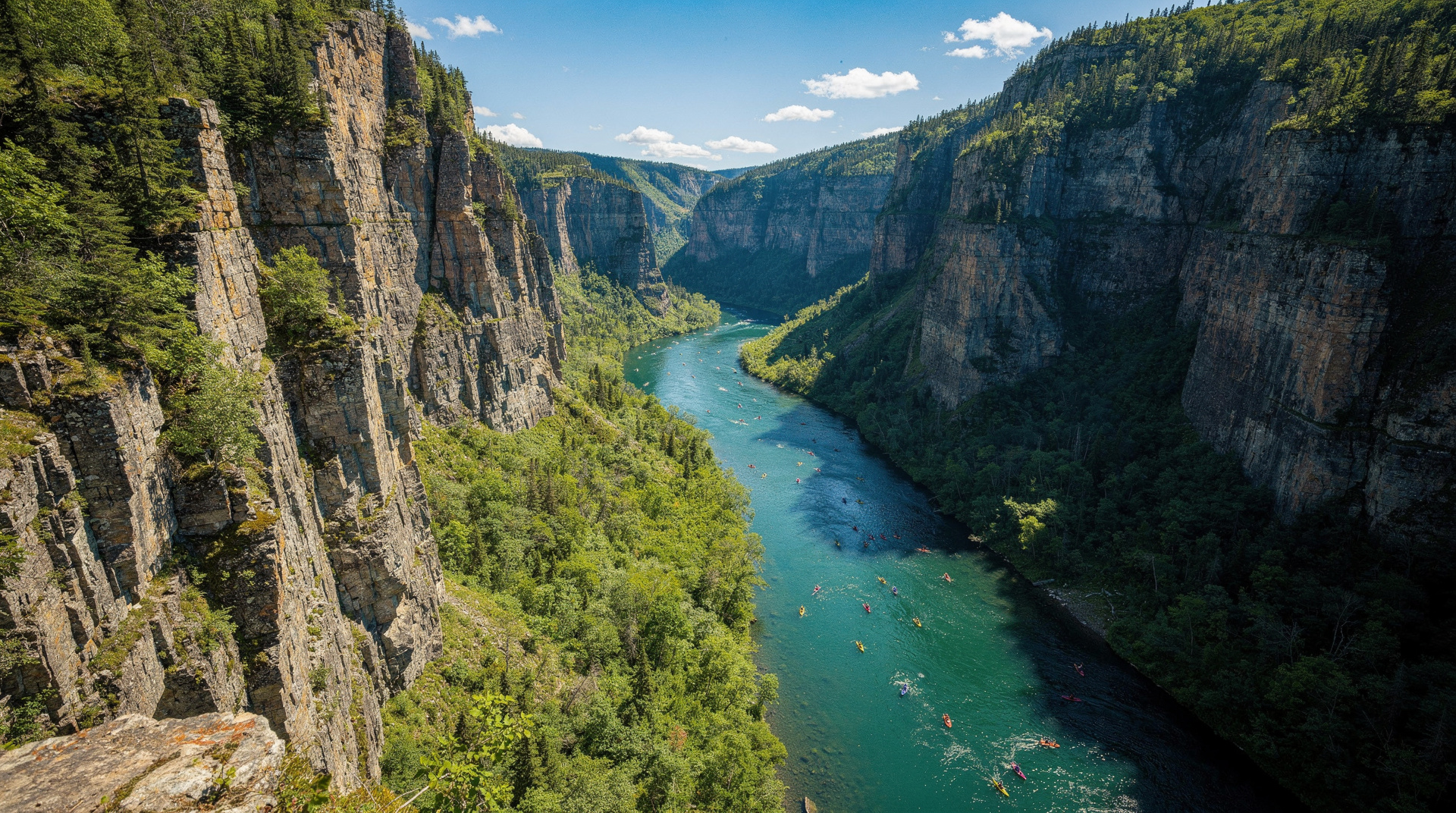
Charlevoix occupies a special position in the Québec imagination — and in geology textbooks. The entire landscape of the region, from the dramatic river valley walls to the rounded summits of the Laurentians that here descend almost to the Saint-Laurent, was shaped by a meteor impact roughly 350 million years ago. The Charlevoix astrobleme is one of the largest and best-preserved impact structures in the world: a crater 54 km in diameter whose central uplift created the distinctive topography of mountains, valleys, and river gorges that make the region visually extraordinary.
This geological foundation is why Charlevoix was designated a UNESCO Biosphere Reserve in 1988. The recognition covers the region’s unusual biodiversity — the collision of boreal and deciduous forest zones, the rich Saint-Laurent estuary that nourishes everything from beluga whales to migratory shorebirds — and its cultural landscape, which has been inhabited and farmed since the seventeenth century. The villages here feel older than most of Québec in the best possible sense: stone farmhouses on terraces above the river, working farms producing cheese and lamb, old churches presiding over narrow valleys.
The main entry point for most visitors is Baie-Saint-Paul, 100 km east of Québec City on Route 138. From there, the region extends northeast along the Saint-Laurent toward La Malbaie and Île-aux-Coudres, and inland toward the Parc des Hautes-Gorges-de-la-Rivière-Malbaie and Parc national des Grands-Jardins.
The Train de Charlevoix
One of the most pleasurable ways to arrive in the region is by train — not any train, but the Train de Charlevoix, a scenic tourist railway that operates between Québec City and Baie-Saint-Paul (and continuing to La Malbaie) from mid-May to mid-October. The route follows the north shore of the Saint-Laurent and the Malbaie River valley, offering river and countryside views that are hard to access otherwise.
The train is not cheap (120–180 CAD one-way for full scenic service) and it is a tourist product rather than commuter infrastructure, but it earns its cost in the experience it provides. The open-air observation car and commentary in French and English make it particularly good for photographers and first-time visitors who want context with their views.
Note the seasonal window: mid-May to mid-October only. Outside this period, the only option is Route 138 by car.
Via ferrata at Parc national des Grands-Jardins
The Grands-Jardins national park, 30 km north of Baie-Saint-Paul on Route 381, protects a plateau of boreal forest and open taiga that feels more like northern Québec than the river valleys below. The park’s via ferrata route, one of the most spectacular in the province, ascends a granite face with views across the plateau and down into the Charlevoix landscape.
The Grands-Jardins via ferrata hike (around 80 CAD, 3.5–5 hours) requires no prior climbing experience and includes all gear. It is one of the best adventure activities in the entire Charlevoix region — a full morning of technical challenge followed by views that justify the effort.
Horseback riding in the Charlevoix valleys
The agricultural landscape of Charlevoix — wide river valleys with hay fields and forest-backed farms — is some of the most beautiful riding country in Québec. Several operators offer guided rides ranging from gentle introductory sessions to multi-hour sunset excursions on the hillsides above the Saint-Laurent.
Romantic horseback riding at sunset in Charlevoix (around 80 CAD, 3.5 hours) is the most popular option for couples — a guided ride to elevated viewpoints as the light on the Saint-Laurent changes in the evening. It books up in July–August; reserve at least a week ahead.
For a more focused introduction to horsemanship, the Montagnarde ride covers similar terrain with a stronger emphasis on technique and instruction.
River adventure: the Gouffre
The Gouffre River runs through the valley at Baie-Saint-Paul before emptying into the Saint-Laurent. Its lower section is a classic beginner-to-intermediate kayaking and canoeing run, but the guided descent trip operates as a stand-up paddleboard or inflatable kayak excursion on calmer sections combined with the more animated rapids near the confluence.
The Descent of the Gouffre River (around 57 CAD, 2.5 hours) is the most accessible water activity in Charlevoix and suitable for participants without prior paddling experience. It runs May through September.
MICA cosmos planetarium
The MICA cosmos and outdoor planetarium, located about 15 km north of Baie-Saint-Paul on Route 381 toward Grands-Jardins, is one of the surprises of the region. It capitalizes on Charlevoix’s minimal light pollution — the park designation and low population density make this one of the darkest regions in southern Québec — to offer guided stargazing and astronomy programming. Sessions run in warmer months (May–October) on clear nights, and the indoor exhibits complement the outdoor astronomy programme. Worth building into a two-night stay.
The Casino de Charlevoix: honest assessment
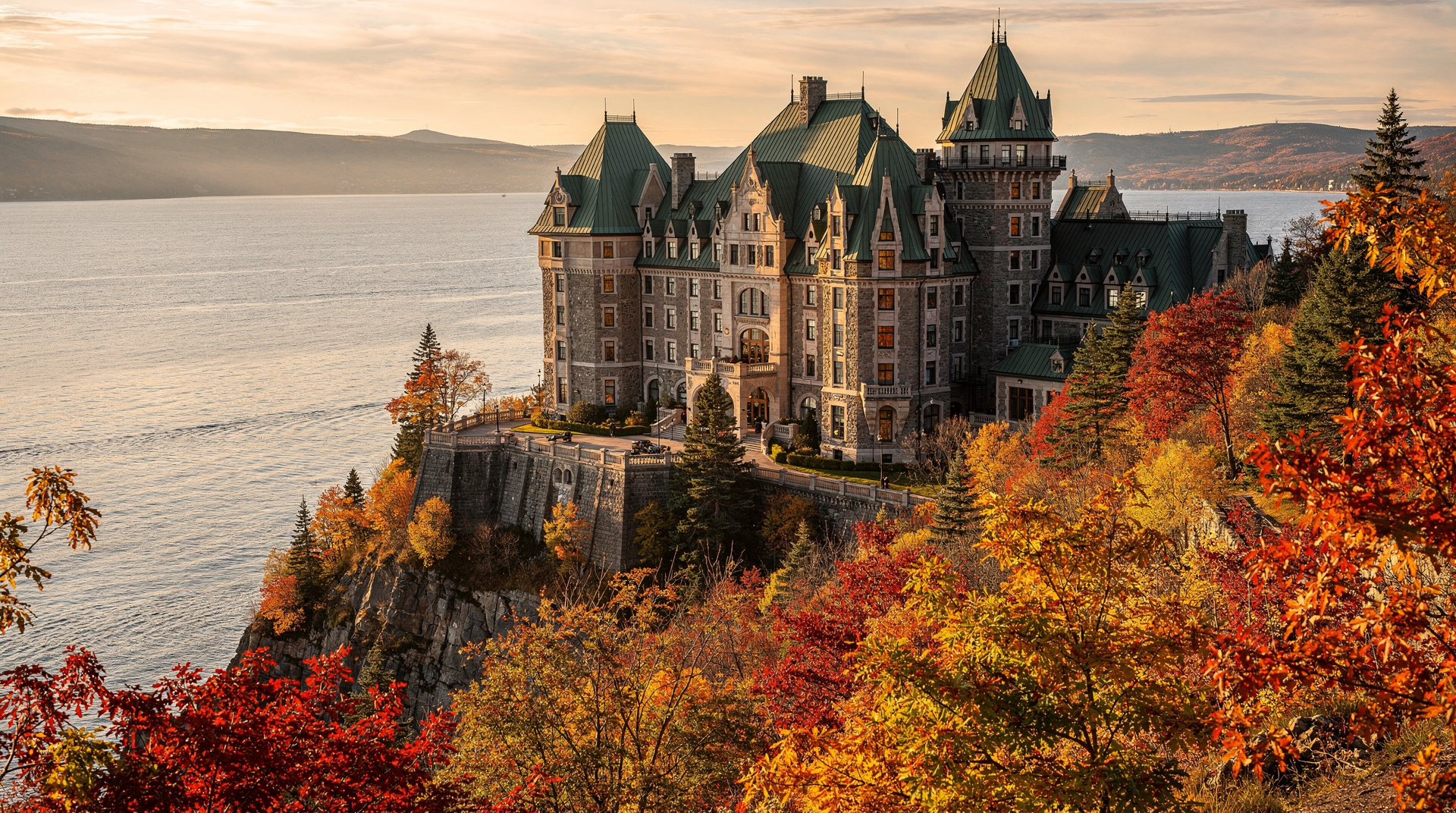
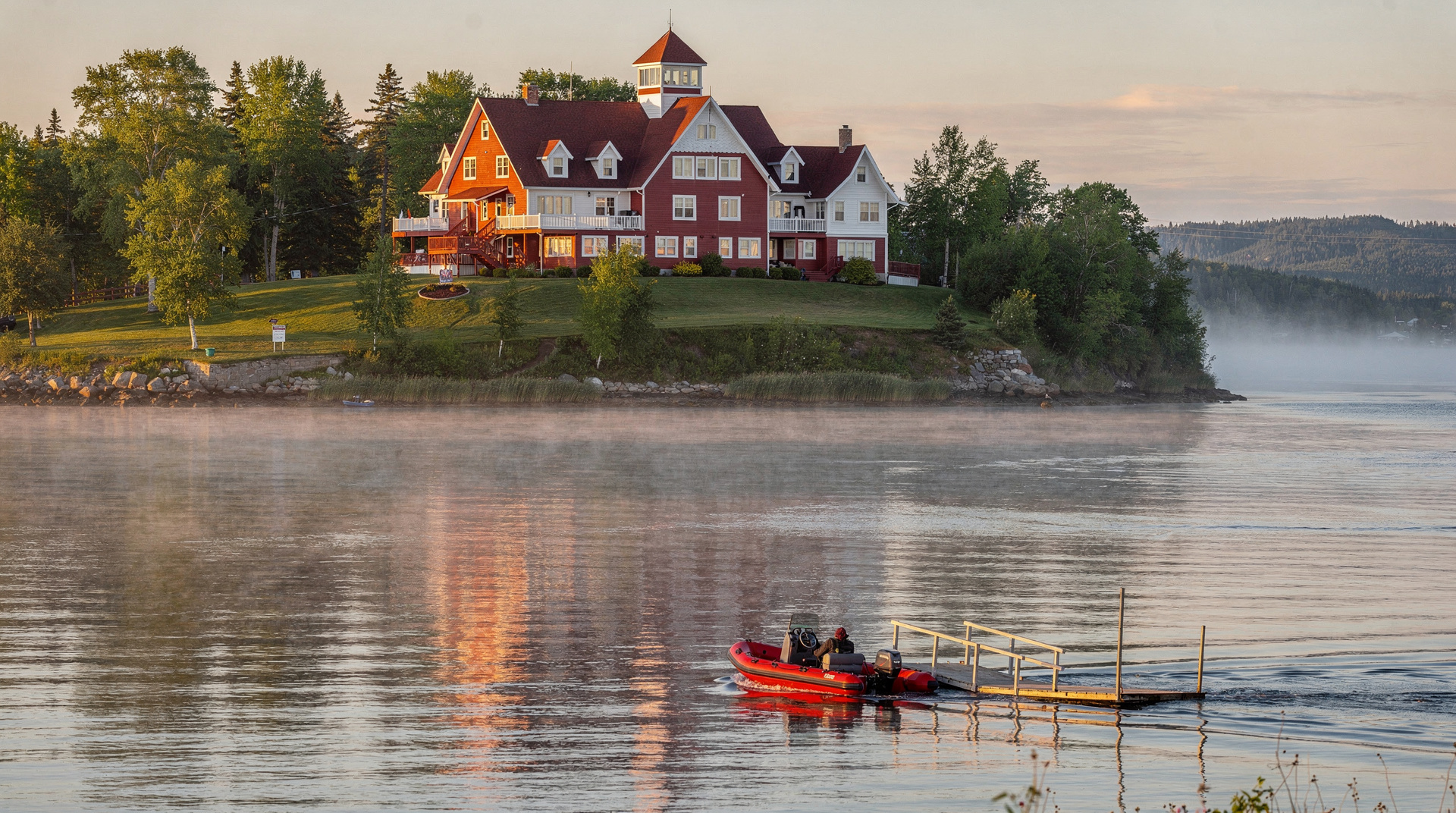
The Casino de Charlevoix at Pointe-au-Pic (La Malbaie) is operated by Loto-Québec and occupies a spectacular building adjacent to the Fairmont Le Manoir Richelieu. Let us be direct: it is a casino, which means the house always wins. Some visitors come specifically for the gaming floor, which is a legitimate use of your time if that is your thing. Others visit for the building, the views from the bar, and the Loto-Québec restaurant, which is genuinely good. If you are not a casino person, skip the gaming floor entirely and visit the Manoir for cocktails on the terrace instead — the view over the Saint-Laurent is the same and you will not have spent money with negative expected value.
Foliage: early October peak
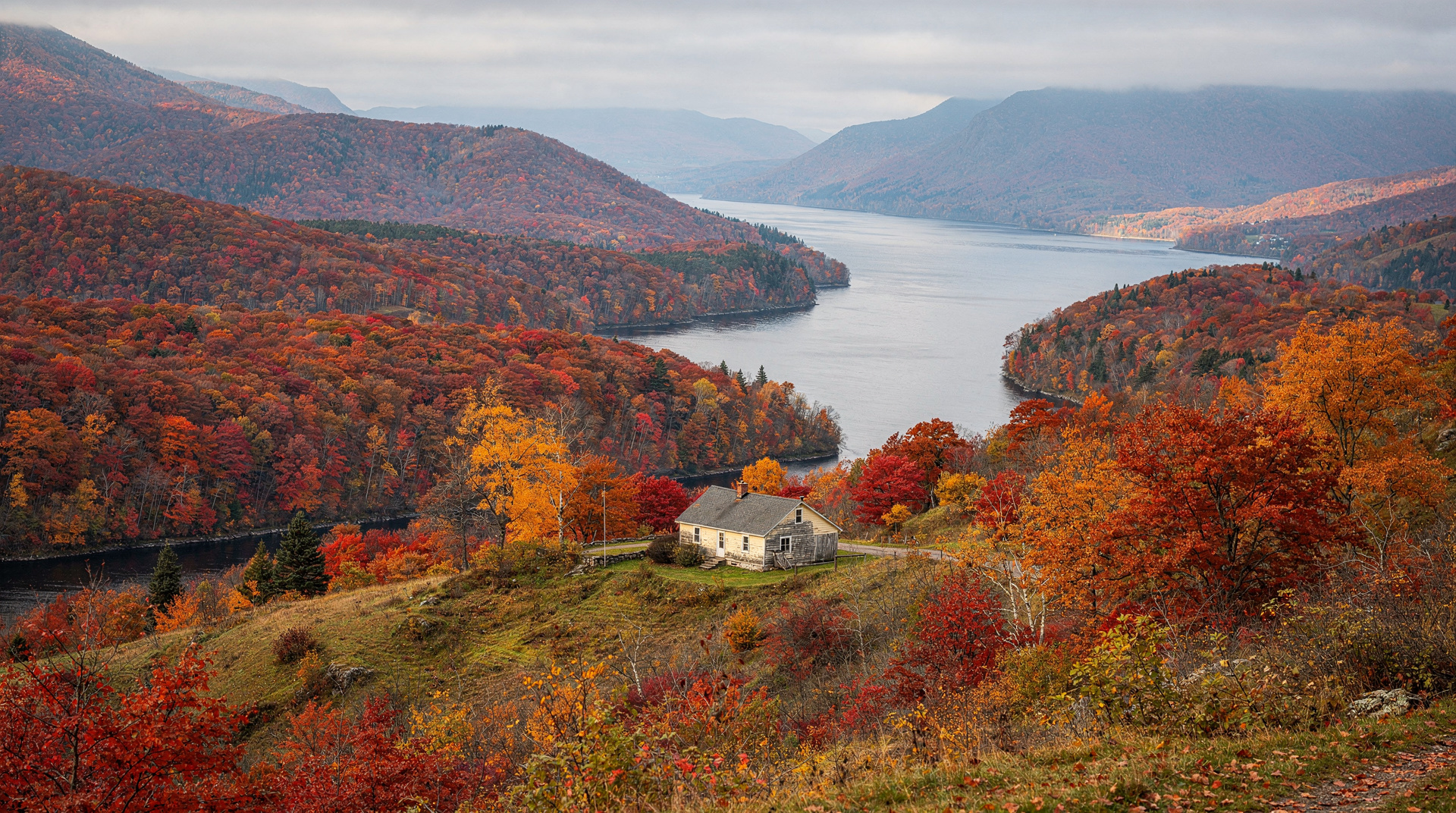
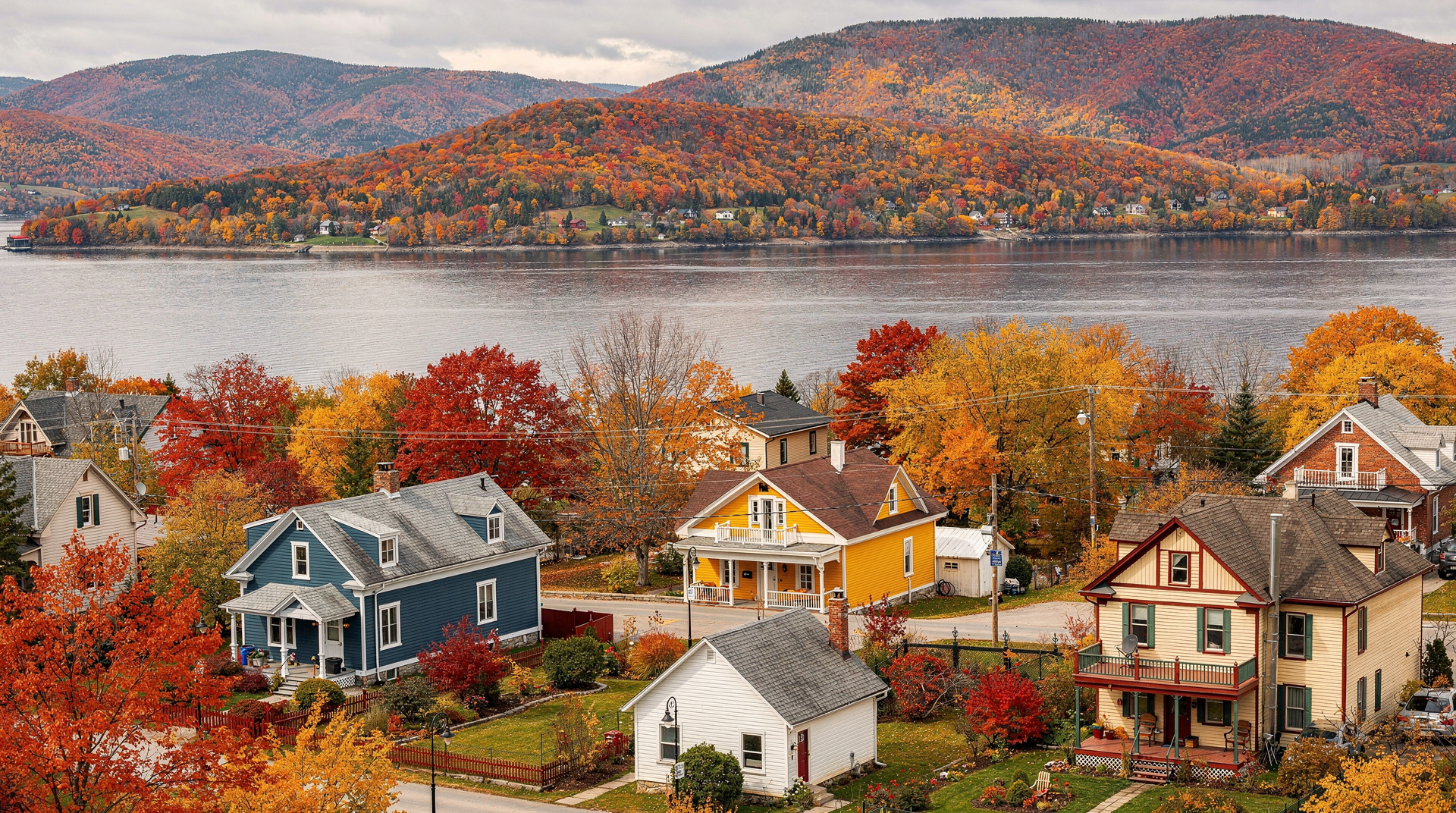
Charlevoix is one of the best foliage regions in Québec, with peak colour typically falling in the first two weeks of October — about a week later than the Laurentides, and often more dramatic because the steep valley walls and river backdrops create a landscape that showcases the colour rather than simply covering it. The drive on Route 362 between Baie-Saint-Paul and La Malbaie (the scenic coastal route rather than the inland Route 138) is particularly outstanding during peak week.
Le Massif de Charlevoix in winter
Le Massif, 13 km east of Baie-Saint-Paul, is a serious ski mountain — 770 m vertical (the largest in eastern Canada), with views over the Saint-Laurent on clear days that make the chair lifts feel like a different country from the standard Ontario ski experience. It is less developed than Mont-Tremblant in terms of resort amenities, which many skiers consider a feature rather than a bug. Lift tickets run 85–110 CAD.
Getting around Charlevoix
Route 138 is the main artery, paralleled by the more scenic Route 362 between Baie-Saint-Paul and La Malbaie along the cliffs above the Saint-Laurent. A car is essential; there is no practical public transport within the region. The Train de Charlevoix (seasonal) connects Québec City to Baie-Saint-Paul and La Malbaie but does not serve the inland parks.
Distances: Québec City to Baie-Saint-Paul 100 km (1h30). Baie-Saint-Paul to La Malbaie 60 km (1h). La Malbaie to ferry crossing for Île-aux-Coudres 20 km (25 min).
The food scene: why Charlevoix matters for gastronomy
Charlevoix has developed one of the strongest regional food identities in Québec over the past two decades. The logic is geological and climatological: the meteor crater that defines the region’s topography also creates a mosaic of microclimates unusual for this latitude, and the soil types in the valley floors — glacial till over the astrobleme’s impact breccia — support a variety of agricultural products that would not be feasible elsewhere in the region.
The result is a concentration of artisan food producers that is remarkable for a rural area this size. Laiterie Charlevoix in Baie-Saint-Paul produces a full range of cheeses from the local Canadienne cattle breed (a heritage breed documented to 1608). Ferme Basque de Charlevoix near Saint-Urbain produces foie gras and magret de canard from ducks raised on heritage grains. Économusée de la Boulangerie at Saint-Cassien-des-Caps demonstrates bread-making with local grain varieties. Les Jardins du Centre at Saint-Urbain has market vegetables unusual for this latitude. The Saveurs Charlevoix passport — a self-guided food tourism circuit — coordinates visits to 50+ producers and is available from tourist information offices in Baie-Saint-Paul.
The region’s restaurant scene, particularly in Baie-Saint-Paul, has capitalized on this agricultural foundation. Expect menus that list specific farms by name and dishes that change with the season — not as a marketing trope but as a genuine reflection of what the local producers have available.
Whale watching: the gateway from Charlevoix
Charlevoix’s position on the Saint-Laurent’s north shore makes it the southern access point for whale watching — Québec City visitors heading to Tadoussac pass through Baie-Saint-Paul on Route 138. Tadoussac, 100 km east of Baie-Saint-Paul, is the centre of whale-watching operations (see the Tadoussac destination page for full detail). But several whale-watching boat tours also depart from the Charlevoix shore: cruises from Baie-Sainte-Catherine (ferry distance across from Tadoussac) provide access to the whale feeding grounds in the Saguenay mouth.
The beluga whales that permanently inhabit the Saguenay estuary are visible from shore at Pointe-Noire interpretation centre (Parks Canada) at Baie-Sainte-Catherine — the observation platform is at water level and the belugas regularly come within 50 m. Free entry; worth combining with a Charlevoix itinerary even if you are not booking a boat tour.
Where to stay in Charlevoix
Baie-Saint-Paul (recommended base for most visitors): Hôtel Baie-Saint-Paul (from 180 CAD), several auberges and B&Bs (from 120 CAD), farm-stay options in the valley (from 150 CAD).
La Malbaie / Pointe-au-Pic: Fairmont Le Manoir Richelieu (from 280 CAD, the prestige choice), Auberge des 3 Canards (from 160 CAD).
L’Anse-Saint-Jean (fjord, Saguenay): Auberge La Fjordelaise (from 130 CAD), with fjord views and access to kayak operators.
For couples, a two-night itinerary — first night at a farm-stay in the valley near Baie-Saint-Paul, second night at a B&B in Cap-à-l’Aigle with river views — captures the two principal characters of the region.
Practical planning notes
Best base: Baie-Saint-Paul for most visitors; La Malbaie for those prioritizing the fjord and casino.
Driving: A car is essential. No public transport serves the region beyond occasional bus service on Route 138.
Seasonal access: The Train de Charlevoix (mid-May to mid-October) provides a car-free option from Québec City for this period only. Outside this window, all access is by car on Route 138.
Combined itinerary: The logical Charlevoix itinerary combines 1–2 nights in Baie-Saint-Paul with a day in the Hautes-Gorges, a horseback ride or river kayak, and a drive on Route 362 to La Malbaie. Then continue east to Tadoussac (100 km, 1h30 from Baie-Saint-Paul) for whale watching before returning to Québec City.
Frequently asked questions about Charlevoix (region)
When is the best time to visit Charlevoix?
Summer (June–September) for outdoor activities, horseback riding, the Gouffre River kayak, and the full menu of food tourism. Early October (first two weeks) for foliage — among the most spectacular in Québec. Winter for Le Massif skiing (November–April). The Train de Charlevoix runs mid-May to mid-October, so those who want to arrive without a car should target this window.
Can I visit Charlevoix without a car?
The Train de Charlevoix connects Québec City to Baie-Saint-Paul and La Malbaie from mid-May to mid-October, making a car-free visit possible during the tourist season. Outside this window, a car is required. Within the region, even with the train for arrival and departure, a car or bike gives significantly more flexibility.
Is Charlevoix suitable for children?
Yes, particularly for families interested in outdoor activities. Horseback riding has a minimum age requirement (usually 6–8 years), and the via ferrata at Grands-Jardins has minimum age and weight requirements (usually 10 years, 35 kg). The Gouffre River descent has age minimums (usually 8–10 years). The Train de Charlevoix is an excellent family travel experience.
How far is Charlevoix from Québec City?
Baie-Saint-Paul is 100 km from Québec City on Route 138, approximately 1h30 by car. La Malbaie is 150 km, approximately 2 hours. The Train de Charlevoix from Québec City reaches Baie-Saint-Paul in about 2 hours.
The Route 362 coastal drive: don’t skip it
Route 362, the coastal road between Baie-Saint-Paul and La Malbaie, is one of the great drives in eastern Canada. The road runs along the top of the cliff face above the Saint-Laurent, passing through the villages of Les Éboulements (perched on a ledge above the river with one of the most vertigo-inducing main streets in Québec) and Saint-Irénée (a summer concert venue in a farmhouse overlooking the river). The river views here — the width of the Saint-Laurent at this point is 20–25 km, with the south shore barely visible — are on a different scale from anything accessible by car west of Tadoussac.
The drive between Baie-Saint-Paul and La Malbaie takes about 1 hour on Route 362 versus 45 minutes on the inland Route 138. The extra 15 minutes is worth it every time, particularly in foliage season (early October) and on clear summer evenings when the light over the water is extraordinary.
Stop at Les Éboulements for the view from the church terrace. Stop at the belvedère de Saint-Irénée (a viewpoint maintained by the municipality) for the widest-angle perspective on the river.
Photography: when and where
Charlevoix rewards photographers with a combination of agricultural landscape, river scale, and foliage season timing. Practical notes:
Golden hour positioning: The Saint-Laurent faces south from the Charlevoix shore, which means evening light (west-facing cliff faces on Route 362) is excellent from June through September. Dawn requires positioning on the south-facing terraces.
Foliage: The first two weeks of October for the coastal villages; Route 362 from Les Éboulements to La Malbaie during this period is objectively spectacular. The valley floors at Baie-Saint-Paul turn slightly earlier (last week of September) than the upland forests.
Winter: Le Massif in clear January conditions with the Saint-Laurent as backdrop. The Hautes-Gorges with frozen waterfalls on the canyon walls (February–March). The agricultural valleys around Baie-Saint-Paul under fresh snow with blue sky — a specific and underrated subject.
Equipment: A telephoto (200mm+) is useful for whale watching from shore at Pointe-Noire. Wide-angle essential for the canyon views at Hautes-Gorges.
A sample three-day Charlevoix itinerary
For visitors who want a concrete structure rather than a list of options, here is how the region’s main pieces fit into three days.
Day one: arrive in Baie-Saint-Paul by late morning via Route 138 or the Train de Charlevoix. Walk the gallery street in the afternoon, dinner at Le Saint-Pub or Chez Boulay.
Day two: the Gouffre River descent or a horseback ride in the morning, then drive the Route 362 coastal road to La Malbaie in the afternoon, stopping at Les Éboulements and the Saint-Irénée belvedère. Overnight at the Fairmont Le Manoir Richelieu or a smaller La Malbaie auberge.
Day three: morning at the Casino de Charlevoix terrace or the Grands-Jardins via ferrata if you have the stamina, then continue east toward Tadoussac for whale watching, or return to Québec City via the inland Route 138 if time is limited.
This structure covers the region’s geology, food, outdoor activities, and the coastal drive without over-packing any single day, and it leaves flexibility to swap the via ferrata or whale-watching extension depending on season and stamina.
Travellers with only two days should drop day three’s Tadoussac extension and instead spend a slower morning in Baie-Saint-Paul before departure — the gallery scene and Boulangerie La Seigneurie reward a second, less rushed visit more than a truncated version of the coastal drive would. Those with four or more days can extend naturally toward Tadoussac and the Saguenay fjord for a full whale-watching day rather than a brief shore stop, or add a detour inland to the Hautes-Gorges canyon on day two before continuing to La Malbaie, turning the three-day plan into a fuller four-day loop without backtracking.
Baie-Saint-Paul vs La Malbaie: choosing a base
Nearly every Charlevoix trip starts with this decision. Both work; they suit different priorities.
| Baie-Saint-Paul | La Malbaie | |
|---|---|---|
| Distance from Québec City | 100 km, 1h30 | 150 km, 2h |
| Character | Art galleries, restaurants, Gouffre River activities | Fairmont hotel, casino, fjord south-shore access |
| Best for | First-time visitors, food and outdoor activities | Casino/hotel experience, Tadoussac day trips |
| See also | Baie-Saint-Paul destination page | La Malbaie destination page |
For most first-time visitors, Baie-Saint-Paul is the better single base, with a day trip to La Malbaie via the Route 362 coastal drive covering the highlights of both.
Top experiences
Bookable activities with verified prices and instant confirmation on GetYourGuide.