Île-aux-Coudres
Île-aux-Coudres: a 22 km island in the Saint-Laurent with windmills, farms, cycling, and cider. Charlevoix's most relaxed and accessible island escape.
Quick facts
- Distance from Baie-Saint-Paul
- ~30 km (20 min drive + 15 min free ferry from Saint-Joseph-de-la-Rive)
- Island circuit
- ~22 km by road; flat to gently rolling
- Ferry
- Free, Ministry of Transport, Saint-Joseph-de-la-Rive, year-round
- Known for
- Windmills, cider, schooner heritage, Jacques Cartier landing (1535)
A Saint-Laurent island with 500 years of history
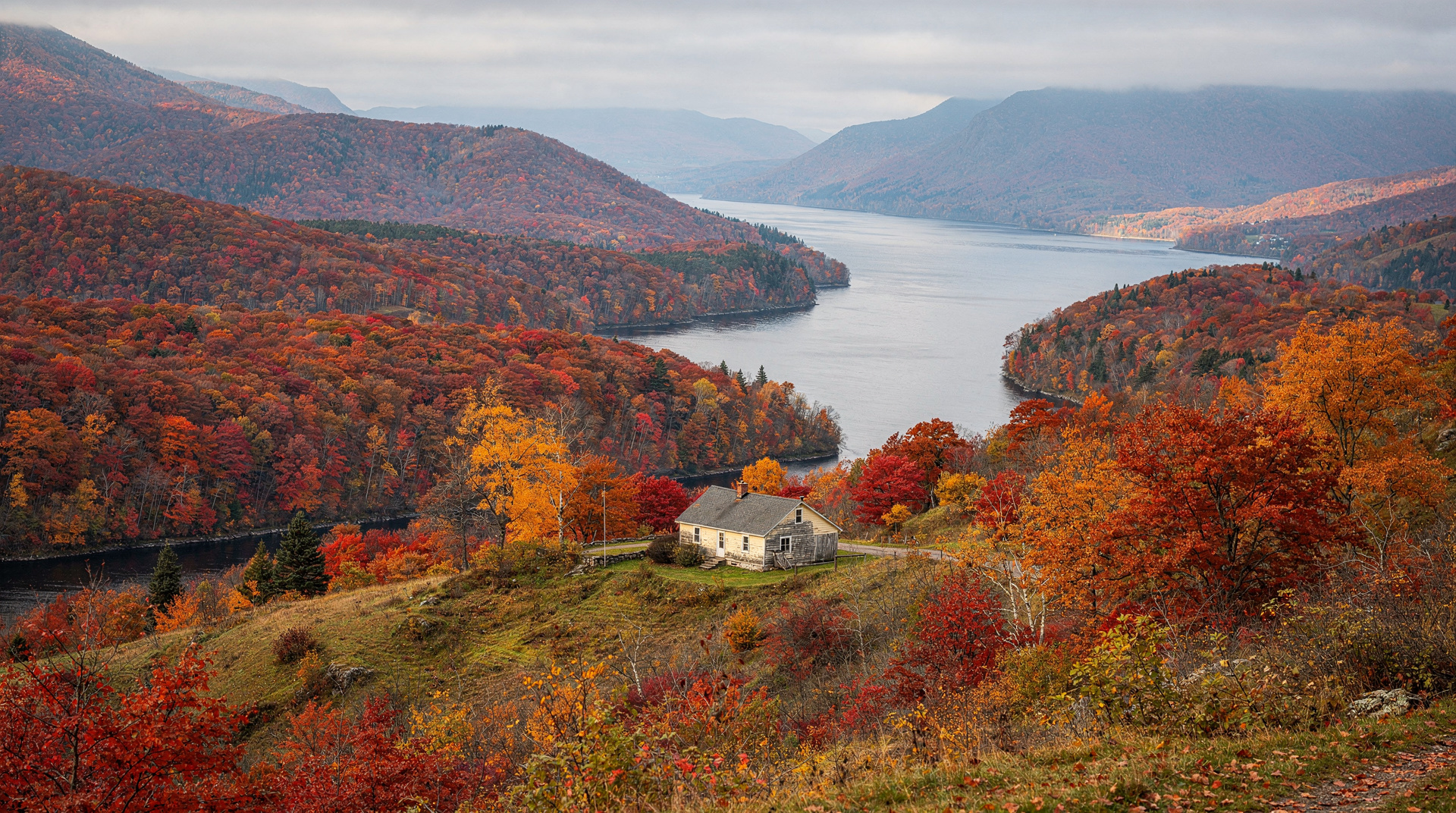
Île-aux-Coudres is an island of roughly 500 inhabitants in the Saint-Laurent, 30 km northeast of Baie-Saint-Paul and reached by a free 15-minute ferry crossing from Saint-Joseph-de-la-Rive. Jacques Cartier named it in 1535 on his second voyage — he found hazel trees (coudriers) growing on it, hence the name. The island’s 22 km road circuit takes cyclists around a landscape that has been farmed continuously since the seventeenth century: strip-lot farms running perpendicular to the river in the French seigneurial pattern, with windmills and water mills preserved at Les Moulins de l’Île-aux-Coudres, orchards, and views across the Saint-Laurent to the Laurentide plateau on both shores.
The island is quiet by design and by circumstance. There are no chain hotels, no fast food, and no significant commercial development. This makes it an appealing contrast to the busier parts of Charlevoix but also means you need to plan for self-sufficiency: bring a picnic, book your restaurant in advance, and check ferry schedules.
| Where | Saint-Laurent island, 30 km northeast of Baie-Saint-Paul, Charlevoix |
| Cost | Ferry free; bike rentals and cider tastings a few CAD to ~20 CAD |
| Time needed | Half a day to a full day; most visitors do not stay overnight |
| Getting there | Drive to Saint-Joseph-de-la-Rive, then a free 15-minute ferry |
| Best time | June–September for cycling; late September–mid-October for cider and harvest |
Cycling the island
The 22 km road circuit is the main activity for most visitors, and it is genuinely pleasant. The terrain is flat to gently rolling — manageable for family cycling — and the road stays near the shoreline for most of its length with views over the river. A few interior roads connect the circuit and add variety. Bike rentals are available on the island (bring cash; some vendors are cash-only). The full circuit takes 1.5–3 hours depending on pace and stops.
The best cycling is in summer (June–September) and during the apple harvest season (late September to mid-October), when the orchards are active and the cider producers open their doors.
Les Moulins de l’Île-aux-Coudres
The mill complex on the north shore of the island preserves two operational historic mills — a windmill (1820s) and a water mill — that were used for grinding grain until the mid-twentieth century. The museum and guided tour explain the technology and the agricultural history of the island. It is one of the most complete working mill sites in Québec and worth an hour.
Cider and orchards
The island produces good apple cider — the combination of river humidity, cold winters, and long summer days suits apple cultivation, and several producers have developed cider operations that would not embarrass Norman or Breton producers. La Cidrerie Verger Pedneault, operating since 1918, is the oldest and most established; their cidres de glace (ice ciders) produced from frozen-concentrated juice are distinctive and excellent, and the farmhouse shop is open to visitors in season.
Île-aux-Coudres’ cider culture pairs naturally with the wider maple and cider circuit further down the Saint-Laurent — see the Île d’Orléans cider route guide for a comparison with the other island cider destination near Quebec City, and the sugar shack guide if maple season overlaps with your visit.
Ferry logistics
The ferry from Saint-Joseph-de-la-Rive to the island runs year-round, approximately every 30–45 minutes in summer, less frequently in winter. The crossing takes 15 minutes and is free for pedestrians, cyclists, and cars. Confirm current schedules at the ferry terminal or via Transport Québec before departure; the last crossing in the evening is not late.
The schooner heritage: Goélettes du Saint-Laurent
Île-aux-Coudres was one of the principal bases of the Saint-Laurent schooner trade in the nineteenth and early twentieth centuries. The island’s men crewed the goélettes — flat-bottomed cargo schooners — that carried lumber, stone, hay, and passengers up and down the river before road and rail infrastructure made the trade obsolete. The documentary film Pour la suite du monde (Pierre Perrault, 1963) was filmed on the island and depicts the revival of a beluga hunting tradition; it is considered one of the foundational works of Québec documentary cinema and gives a sense of the island’s cultural identity.
The boatyards that once built and repaired the schooners are gone, but the shipbuilding heritage is visible in the construction of the houses and the orientation of the farms toward the river. The island’s position in the Saint-Laurent at the point where the tidal range becomes significant (the tide here runs 4–5 m) made it both a useful harbour and a productive site for the watermills that are preserved at Les Moulins.
Whale watching from the island
The tidal flats at the eastern end of Île-aux-Coudres, where the current accelerates around the point, are a secondary feeding ground for beluga whales. The belugas that inhabit the Saguenay estuary use the waters around the island seasonally. Shore-based sightings are possible from the eastern cape of the island — bring binoculars and patience in July–August.
The island does not operate its own whale-watching tours; Tadoussac (80 km east on the north shore, or accessible by water) is the centre for that activity. The Île-aux-Coudres experience is passive and shore-based rather than organized.
Accommodation on the island
Options are limited deliberately — the island has resisted the development that has changed other parts of Charlevoix.
- Hôtel Cap-aux-Pierres: the largest hotel on the island, with 95 rooms and a swimming pool, from 150 CAD. Lacks the character of smaller options but has the most services.
- Auberge La Muse: 8 rooms in a heritage house, from 110 CAD.
- Camping Le Repos: the main campground, near the north shore of the island, Sépaq reservations.
Book well ahead for July–August and the foliage season (first two weeks of October).
A one-day plan
For visitors with just a day, a workable sequence is: morning ferry from Saint-Joseph-de-la-Rive, bike rental near the dock, a clockwise loop of the 22 km circuit stopping at Les Moulins de l’Île-aux-Coudres, lunch at a farm-to-table stop or picnic overlooking the river, an afternoon cider tasting at Verger Pedneault, and a look for belugas from the eastern cape before catching an evening ferry back. This covers the island’s main draws without rushing any one stop, and it works equally well cycling or driving the loop.
Honest framing
Île-aux-Coudres is a half-day to full-day destination, not a multi-night stay for most visitors. The accommodation options are limited (a handful of B&Bs and one small inn) and the restaurant scene is modest. What it offers — genuine agricultural landscape, flat cycling, working mills, good cider, and the specific pleasure of a river crossing — is real and best appreciated by visitors who are not in a hurry. It pairs naturally with a base at Baie-Saint-Paul or La Malbaie.
Ferry logistics: Ferries run from Saint-Joseph-de-la-Rive (20 km east of Baie-Saint-Paul on Route 362) approximately every 30–45 minutes in summer. The Ministry of Transport operates the service; it is free in both directions. No reservations; vehicles queue for available space. Check schedule at transportquebec.gouv.qc.ca before arrival — last evening ferry varies seasonally.