Baie-Saint-Paul
Baie-Saint-Paul: Charlevoix's art capital. River kayaking, horseback riding in the valley, galleries, excellent food, and a scenic base for the region.
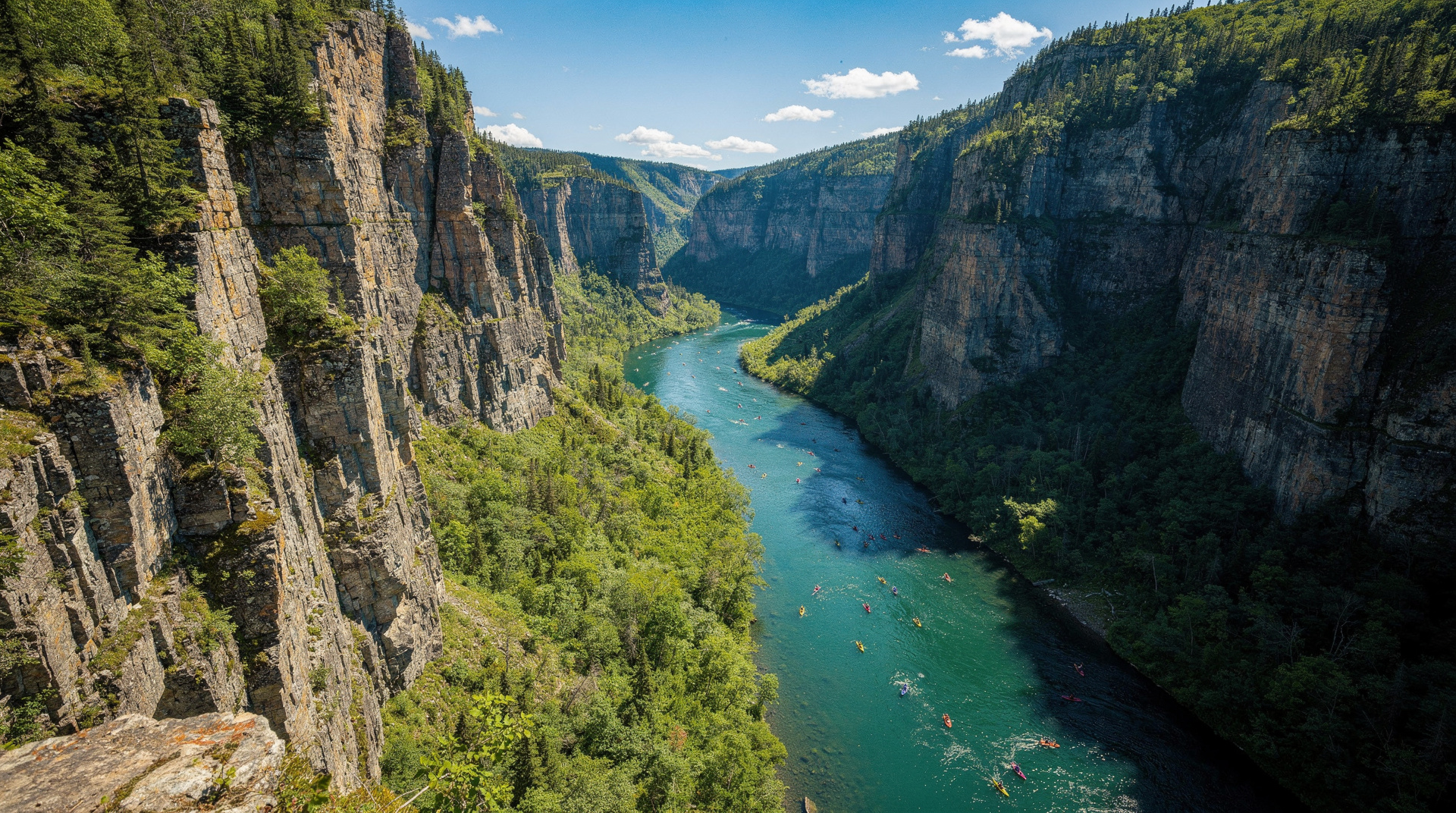
Descent of the Gouffre River in Baie-St-Paul
Duration: 2.5 hours
Quick facts
- Distance from Québec City
- 100 km east on Route 138, ~1h30
- Gallery scene
- 15+ galleries, annual plein-air painting event
- Le Massif de Charlevoix
- 13 km east, 770 m vertical, largest in eastern Canada
- Train de Charlevoix
- Serves Baie-Saint-Paul, mid-May to mid-October
- Currency
- CAD (taxes ~15%)
Where the Gouffre meets the Saint-Laurent
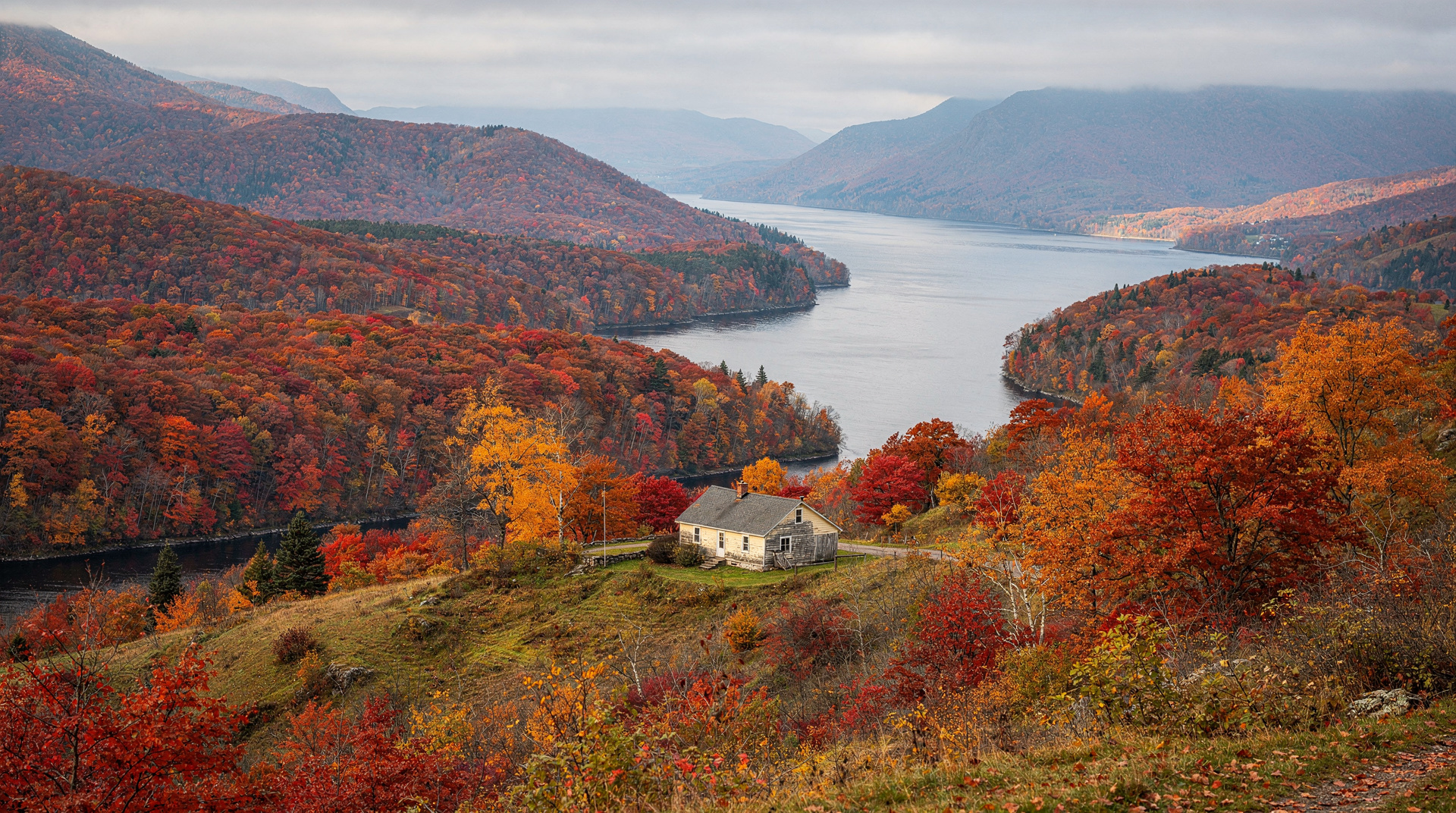
Baie-Saint-Paul sits at the point where the Gouffre River ends its descent through the Charlevoix hills and opens into a wide, flat agricultural valley before reaching the Saint-Laurent. It is a geographically distinctive location — the town nestles at the base of a bowl formed by surrounding hills, with river flats that have been farmed since the seventeenth century and a street pattern that follows the old seigneurial lot system. Artists noticed this light and this setting more than a century ago, and the resulting gallery culture has made Baie-Saint-Paul the visual arts capital of Charlevoix.
For the practical visitor: Baie-Saint-Paul is the natural first stop in the region arriving from Québec City, 100 km to the southwest on Route 138 (about 1h30). It has the best concentration of accommodation options in Charlevoix, a genuinely excellent restaurant scene, and enough outdoor activities to fill two full days without leaving the immediate area.
| Where | Charlevoix, 100 km east of Québec City on Route 138 |
| Cost | Around 340–570 CAD/couple/day mid-range (see budget breakdown below) |
| Time needed | 1–2 days, more with a Massif ski day |
| Getting there | Route 138 by car (1h15–1h30) or the seasonal Train de Charlevoix from Québec City |
| Best time | June–September for outdoor activities, early October for foliage, winter for skiing |
The art scene
The gallery density on rue Saint-Jean-Baptiste and the surrounding streets is real, not manufactured: these are working galleries representing Québécois painters, sculptors, and ceramicists who have chosen to base themselves here because of the quality of the light and landscape. The Centre d’exposition de Baie-Saint-Paul functions as the municipal gallery with a program of rotating exhibitions. Galerie d’art Clarence-Gagnon is named for one of the painters most associated with the Charlevoix landscape; the current gallery represents contemporary artists working in related traditions.
The annual plein-air painting event (Symposium de la Nouvelle Peinture) held in August attracts artists who work outdoors around the valley for a week, with results exhibited at the close. If you happen to be there during the symposium week, the chance to watch artists working in the landscape they are painting is a distinctive experience.
River kayaking: the Gouffre
The Gouffre River that runs through the valley below the town is both scenic and swimmable in summer — the kind of clear, cold Québec river that most non-Canadians did not know existed. The guided descent trip on the lower Gouffre combines sections of flatwater paddling with some animated rapids, taking participants through the most scenic part of the valley in kayaks or inflatable canoes.
The Descent of the Gouffre River (around 57 CAD, 2.5 hours) requires no prior paddling experience and operates May through September. A good activity for a summer morning before hitting the galleries in the afternoon.
Horseback riding in the valley
The agricultural valley around Baie-Saint-Paul — hay fields, forest edges, streams — is beautiful riding country. The Charlevoix horseback operators based here offer rides of varying length and intensity through this landscape.
The Montagnarde guided ride follows a route through the valley and forested hillsides above the town, covering 2.5 hours at a pace accessible to riders with basic experience.
The Montagnarde guided horseback ride (around 70 CAD, 2.5 hours) is the most straightforward option for first-time riders or those seeking a relaxed scenic experience.
For those who want a longer immersion with more instruction, the Vallée introduction to horseback riding dedicates more time to technique before heading into the landscape.
La Vallée introduction to horseback riding (around 100 CAD, 2–3 hours) is the better choice if you have limited or no riding experience and want more than just a guided trail walk on horseback.
Skiing at Le Massif de Charlevoix
Le Massif, 13 km east of Baie-Saint-Paul on Route 362, deserves recognition as one of the most dramatically positioned ski mountains in Canada. The 770 m vertical drop (larger than any hill in eastern Canada) descends toward the Saint-Laurent with views over the river on clear days that are genuinely unlike anything at the more famous ski resorts. The trails range from wide beginner runs to sustained steep pitches on the upper mountain.
The resort is smaller than Mont-Tremblant in terms of overall development — fewer on-hill amenities, no pedestrian village — but this is consistently what skiers who prefer it cite as an advantage. Lift tickets run 85–110 CAD.
Where to eat
The restaurant quality in Baie-Saint-Paul is the best in the region and competes with Québec City restaurants at equivalent price points. Le Saint-Pub is the essential stop for Québécois craft beer and honest regional cuisine — the menu uses local suppliers and changes with the season. Chez Boulay — not the Québec City original but a sibling operation — brings the same ingredient focus to a more refined dining room. Le Mouton Noir on rue Saint-Jean-Baptiste is the sociable mid-week choice for wine and small plates.
For baking and breakfast, Boulangerie La Seigneurie on rue Racine has the best croissants and pastries in the region — arrive early, they sell out.
Where to stay
Hôtel Baie-Saint-Paul is the main mid-range hotel in the town centre (from 180 CAD/night). Several auberges and bed-and-breakfast operations in heritage buildings around rue Saint-Jean-Baptiste offer more character at similar prices. For those with a car, several farm-stay properties in the valley offer an immersive Charlevoix experience from 150 CAD/night.
Practical notes
Baie-Saint-Paul is the logical base for exploring Charlevoix broadly. Day trips to Île-aux-Coudres (ferry from Saint-Joseph-de-la-Rive, 20 km east), the Hautes-Gorges (50 km north), and La Malbaie (60 km northeast on Route 362) are all achievable with a car.
The Train de Charlevoix (mid-May to mid-October) connects Baie-Saint-Paul with Québec City — a scenic alternative to driving for those who can arrange a one-way car or do the round trip on the train.
Walking the town: a self-guided route
The compact nature of Baie-Saint-Paul makes it one of the few Charlevoix destinations where a car is not needed once you have arrived. The following 90-minute walk covers the main points of interest.
Starting at the public parking area near the Rivière du Gouffre bridge: walk north on rue Saint-Jean-Baptiste (the main gallery street), visiting any of the 15+ galleries along the way. At the north end, turn west on rue Racine to the Centre d’exposition (municipal gallery). Continue west to the church of Saint-Pierre-aux-Liens (1963 rebuild in a modern Quebec vernacular style that sits oddly but effectively in the village).
Return east on rue Ambroise-Fafard along the high street, stopping at the Boulangerie La Seigneurie for coffee. Descend south on rue Sainte-Anne toward the river and walk east along the rivière du Gouffre toward the old bridge site, where you can see the valley floor that attracted the painters in the first place. The light here in morning and late afternoon is specifically why the Charlevoix painting tradition exists.
The art colony history
Baie-Saint-Paul’s gallery culture did not materialize recently — it has a continuous lineage from the late nineteenth century. Clarence Gagnon (1881–1942), Horatio Walker (1858–1938), and Jean-Paul Lemieux all worked in or around the village. The Charlevoix landscape — the river valley, the agricultural terraces, the light over the Saint-Laurent — became one of the defining subjects of Québec representational painting, and the tradition continues in the current generation of painters who have chosen to base themselves here.
The parallel with other artist colonies (Barbizon, St. Ives, Taos) is real: painters come for the light and the landscape, form a community, which attracts galleries, which attracts collectors, which enables more painters to survive in the location. The cycle has been self-sustaining in Baie-Saint-Paul for 120 years.
Winter in Baie-Saint-Paul: Le Massif and the village
Winter tourism in Baie-Saint-Paul centres on Le Massif de Charlevoix, 13 km east on Route 362, but the village itself is worth staying in for a few nights regardless of whether you ski. The galleries are open year-round (reduced hours in January), the restaurants serve the same menus, and the valley in snow — white fields, dark forested hills, the frozen river — is genuinely beautiful in a way that summer visitors miss.
The Train de Charlevoix does not run in winter, so a car is required for all winter visits.
Practical logistics
- Driving from Québec City: Route 138 east, approximately 100 km, 1h15–1h30
- Parking: Free public parking near the rivière du Gouffre bridge and near the Centre d’exposition
- Train de Charlevoix: Mid-May to mid-October only; 2 hours from Québec City; round trip or one-way with car rental in Baie-Saint-Paul
- Fuel: Full services in Baie-Saint-Paul; fewer options heading north toward Hautes-Gorges
Frequently asked questions about Baie-Saint-Paul
Is Baie-Saint-Paul worth visiting without doing outdoor activities?
Yes. The gallery scene, the architecture of the old village, the quality of the restaurants, and the physical beauty of the valley make Baie-Saint-Paul worthwhile even for visitors who are not hikers, riders, or kayakers. Plan a morning walk through the galleries, lunch at Le Saint-Pub, an afternoon drive to a viewpoint on Route 362, and dinner at one of the better restaurants.
What is the difference between Baie-Saint-Paul and La Malbaie as a Charlevoix base?
Baie-Saint-Paul is closer to Québec City (100 km vs 150 km), has a more developed restaurant and gallery scene, is the artistic heart of the region, and is positioned closer to the Hautes-Gorges park. La Malbaie is positioned for those who want the Fairmont hotel experience, casino access, and access to the fjord south shore via Route 170. For most first-time visitors, Baie-Saint-Paul is the better base.
When does the foliage peak in Charlevoix?
The first 10–14 days of October, typically peaking in the first week. The combination of the Route 362 coastal drive, the valley at Baie-Saint-Paul, and the Hautes-Gorges during peak foliage is one of the most spectacular autumn experiences in Québec. Reserve accommodation at least 6–8 weeks ahead for early October.
Photography and the Charlevoix light
Photographers have been drawn to the valley at Baie-Saint-Paul for over a century, and the reason is specific: the interaction of the Gouffre River valley topography with the morning light from the east and evening light from the west creates a quality of illumination that does not replicate elsewhere in Québec. The valley floor faces south, meaning the sun is relatively high in the sky for most of the day, and the surrounding hills create gradients of shadow that give the agricultural landscape depth and texture at most hours.
The optimal positions for photography: the belvedère above the village on Route 381 (looking south over the valley and river mouth toward the Saint-Laurent — best in early morning with mist in the valley). The rue Saint-Jean-Baptiste gallery street in late afternoon (the painted facades in warm light, with the church tower as a vertical element). The Gouffre River flats in October foliage season (the river reflection adds a horizontal counterpoint to the hill colours above).
The winter landscape — white fields, dark hills, the frozen river, steam from the river in cold snaps — is equally worth shooting and receives far fewer visitors.
Combining outdoor activities into a two-day plan
For visitors trying to fit the Gouffre River descent, a horseback ride, and the gallery scene into a short stay, sequencing matters more than it first appears. The Gouffre descent runs a fixed morning or early-afternoon schedule (May–September) and takes about 2.5 hours including transfer and gear; the horseback rides run similar blocks. Trying to do both activities plus a proper gallery walk in a single day is possible but rushed, and it leaves little time for the town’s better restaurants.
Day one: arrive by late morning, check in, do the Gouffre River descent early afternoon, then walk the gallery street in late-afternoon light before dinner at Le Saint-Pub or Chez Boulay.
Day two: horseback ride in the morning (Montagnarde for a straightforward 2.5-hour ride, La Vallée if you want more instruction), then either a drive to a Route 362 viewpoint toward La Malbaie or an afternoon at Le Massif (summer hiking or winter skiing depending on season), finishing with dinner and a last gallery pass before departure.
This two-day structure avoids the common mistake of cramming every activity into one packed day, and it leaves a buffer for weather — outdoor activities in the Gouffre valley are occasionally rescheduled for heavy rain.
For visitors with a third day, the natural extension is a loop toward Île-aux-Coudres via the Saint-Joseph-de-la-Rive ferry, or north into the Hautes-Gorges canyon for a half-day hike before returning to Baie-Saint-Paul for a final dinner. Either extension keeps the base in Baie-Saint-Paul rather than requiring a hotel change, which matters if you’ve already found a B&B or farm-stay you like.
A fourth option for a third day, less commonly taken but worthwhile for repeat Charlevoix visitors, is a slow drive north on Route 381 past the MICA planetarium toward Parc national des Grands-Jardins, returning to Baie-Saint-Paul by early evening in time for a final gallery walk before dinner.
Budget planning for Baie-Saint-Paul
Baie-Saint-Paul is moderately priced by Québec standards — more expensive than small Mauricie or Bas-Saint-Laurent towns, less expensive than the main resort areas. Honest daily benchmarks for a couple:
- Accommodation: 180–280 CAD (hotel or good B&B double room)
- Meals: 80–120 CAD (breakfast at hotel, bakery lunch, restaurant dinner)
- Activities: 60–140 CAD (Gouffre River descent or horseback ride + gondola or via ferrata)
- Fuel: 20–30 CAD for regional day trips
- Total mid-range: approximately 340–570 CAD/couple/day
The shoulder seasons (May–June, November) offer accommodation at 20–30% discount. Summer weekends in July–August see the highest prices and the most activity; mid-week travel in these months is both cheaper and more pleasant.
Top experiences
Bookable activities with verified prices and instant confirmation on GetYourGuide.