Val-David
Val-David: the Laurentides' artisan village. Rock climbing, galleries, the P'tit Train du Nord trail, and the beloved 1001 Pots ceramics festival.
Quick facts
- Distance from Montréal
- ~95 km, ~1h20 by car (A-15 exit 76)
- Character
- Arts and crafts village, rock-climbing scene, strong cycling culture
- P'tit Train du Nord
- Trail passes through the village centre
- Rock climbing
- Vallée des Fantômes sector, Grimpe-en-Cœur area
The Laurentides’ art village
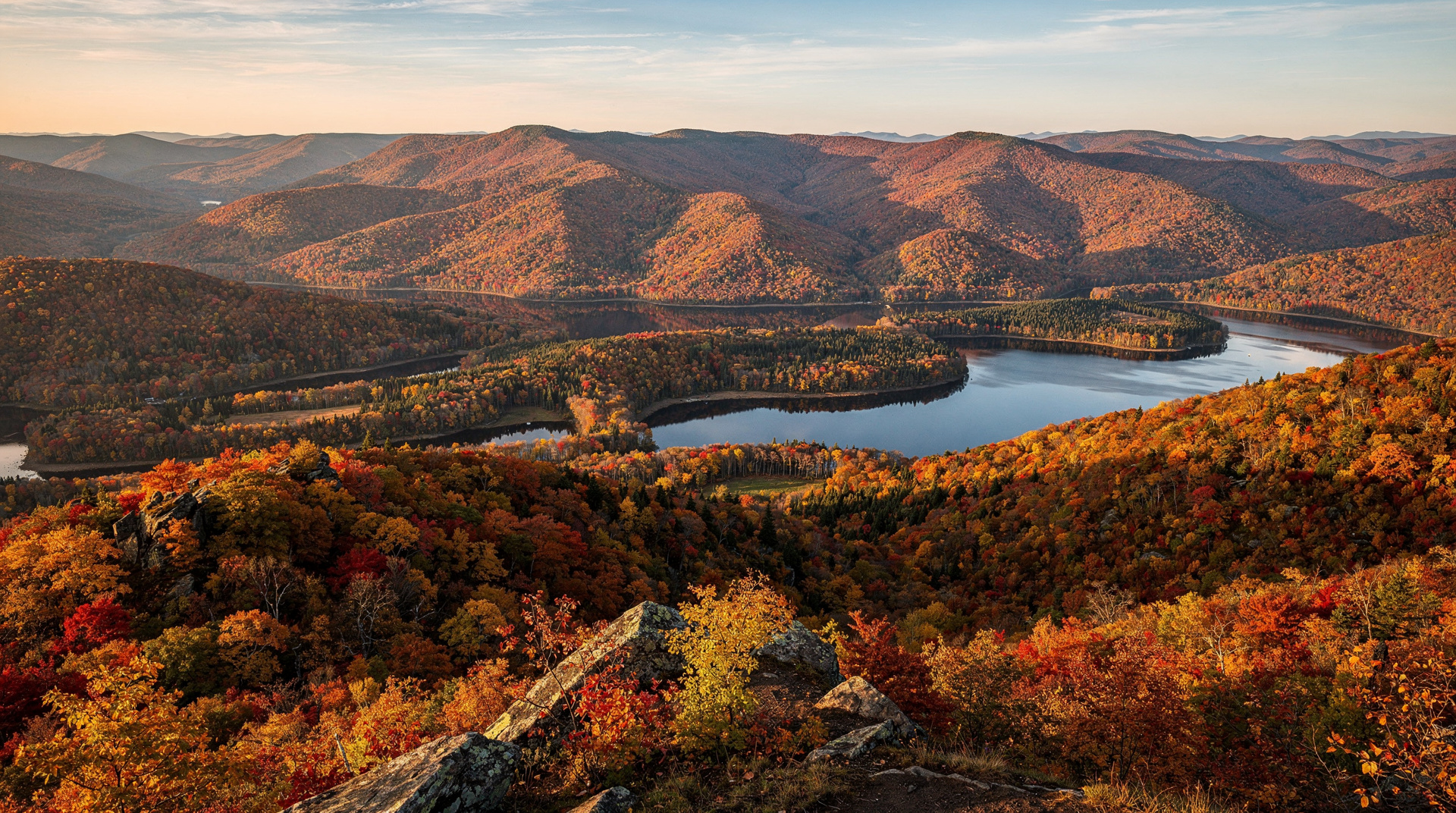
Val-David occupies a singular position in the Laurentides: it is the village that artists and rock climbers found before the resort industry did. Set in a narrow valley cut by the Rivière du Nord, with dramatic granite faces rising above the forest on both sides, it has attracted ceramicists, painters, sculptors, and outdoor athletes since the 1960s. The result is a village of roughly 5,000 people with a disproportionate number of independent galleries, artisan studios, good cafés, and an outdoor culture that centres on the local rock rather than the ski hills.
Val-David is a half-day stop rather than a multi-night destination for most visitors, but it earns a place in any Laurentides itinerary as a contrasting note to the resort towns.
| Where | Laurentides, ~95 km / 1h20 north of Montréal (A-15 exit 76) |
| Cost | Free to walk the village and galleries; meals 15–35 CAD |
| Time needed | Half a day; a full day during the 1001 Pots festival |
| Getting there | A-15 + Route 117, or the P’tit Train du Nord by bike |
| Best time | Summer for cycling/climbing; mid-to-late July for 1001 Pots |
Rock climbing at Vallée des Fantômes
The granite outcrops around Val-David constitute the most important outdoor climbing area in Québec. The main sector, known as Vallée des Fantômes, sits at the edge of the village and offers routes from 5.6 to 5.13+ across slab, face, and crack climbing. There are around 350 routes across the Val-David area, most concentrated on the Corridor and Grimpe-en-Cœur sectors, and the rock — friction granite with good features — rewards both beginners and experienced climbers.
The local climbing shop, La Cordée (branch in Val-David), rents gear and offers guiding services. The summer Vélirium climbing festival in late July brings competitions and demonstrations that draw the Québec climbing community to the village.
The P’tit Train du Nord
The trail passes directly through Val-David — the old railway station is now the village’s community and arts centre, and the surrounding park is the social heart of summer weekends. Coming from Sainte-Adèle to the south (17 km) or continuing north to Sainte-Agathe-des-Monts (12 km), Val-David is the natural midpoint stop on any cycling day in this section of the Laurentides corridor.
Galerie 1840-1 and the 1001 Pots festival
The Galerie 1840-1 on Chemin de la Rivière is the anchor of the Val-David gallery scene — a serious ceramics gallery that represents regional and national artists and has a permanent collection of works in clay, glass, and sculpture. Several smaller studios around the village centre offer artist-direct purchases and occasional open-studio weekends.
The 1001 Pots festival, held over two weekends in mid-to-late July, transforms Val-David into the largest ceramics market in North America. More than 90 artists from Québec, Canada, and internationally exhibit and sell their work in tented installations around the village. The festival draws 40,000–50,000 visitors over its run. If you visit during festival weekends, plan for significant crowds and limited parking; the P’tit Train du Nord trail from Sainte-Adèle is a better arrival strategy than driving.
Where to eat
Au Profit du Pain on rue de l’Église is a genuine artisan bakery with sourdough, pastries, and sandwiches worth the stop. Le Grand Pub in the village centre is the reliable choice for lunch or early dinner — local beers, poutine, and a lively terrace in summer. For something more substantial, Restaurant Le Refuge du Paysan has been serving traditional Québécois cuisine (tourtière, pot-au-feu, sugar pie) for decades.
Winter in Val-David
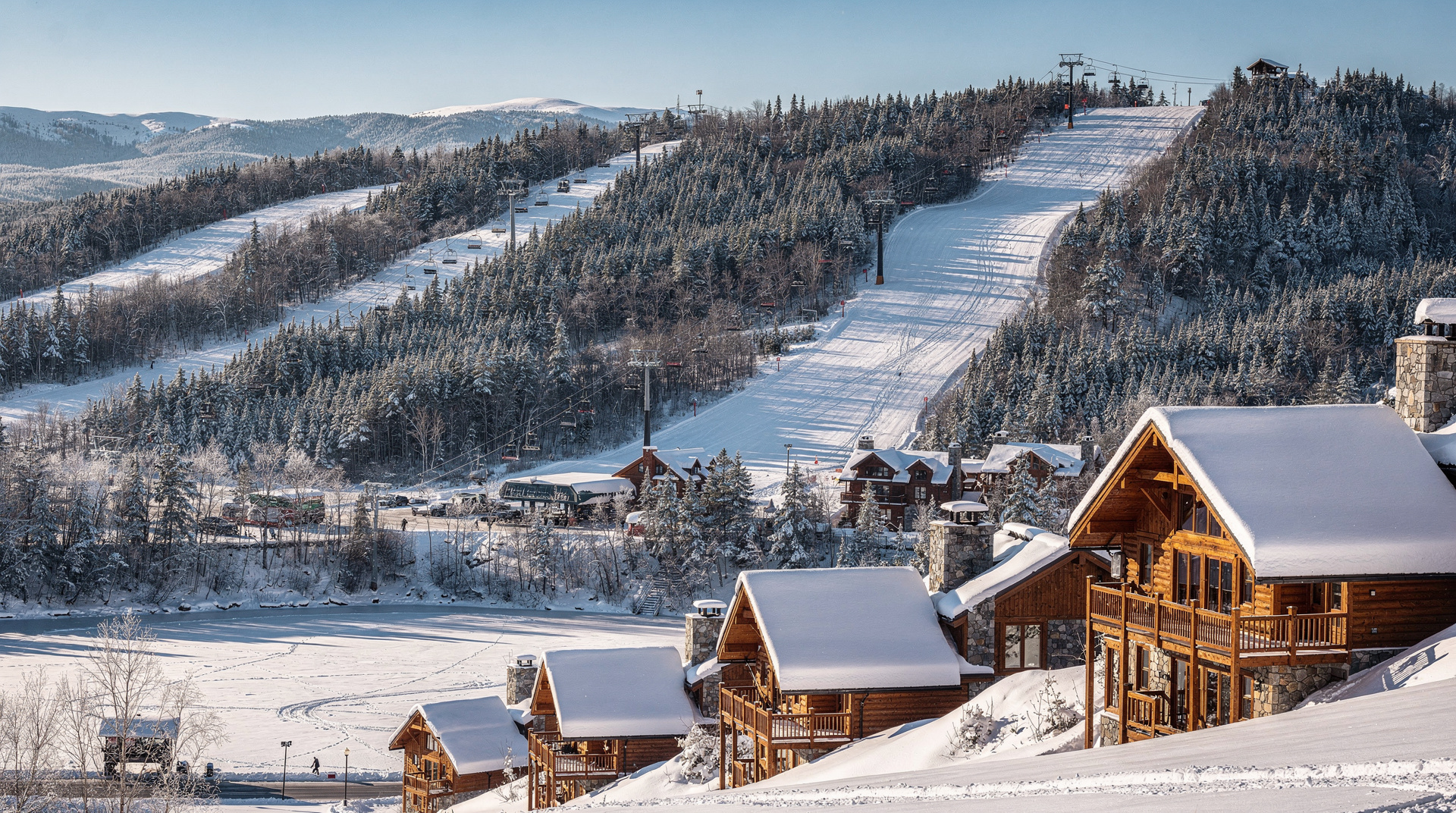
The village is less prominent in winter than its neighbours because it lacks a major ski hill. But for a specific kind of visitor — cross-country skier, snowshoe walker, person seeking a quiet weekend away from the Tremblant crowds — Val-David in winter has appeal. The P’tit Train du Nord trail becomes a cross-country ski corridor in winter, and the village’s small-town character is more visible when the summer cyclists and day-trippers are absent.
The indoor rock climbing gym in the village (attached to one of the outfitters on rue de l’Église) is one of the better sessions for climbing days when outdoor conditions are unsuitable.
The Vélirium festival
The Vélirium bike festival, held in late July, brings the cycling community to Val-David for races and recreational events on the P’tit Train du Nord trail and the surrounding roads. The festival atmosphere is festive and local rather than corporate, with evening concerts and artisan market activity around the P’tit Train station. Worth timing a visit to if cycling is your primary interest.
Accommodation
Val-David’s accommodation options are limited but adequate for a one-night stay:
- Auberge du Vieux Moulin: heritage mill building converted to a B&B with 8 rooms, from 110 CAD. Good breakfast.
- Gîte La Vagabonde: B&B with 5 rooms, from 90 CAD.
- For longer stays, private cottage rentals are available on the smaller lakes north of the village.
Val-David is better treated as a day-stop rather than a multi-night base; the town closes early and the restaurant and evening options are limited compared to Sainte-Adèle or Sainte-Agathe-des-Monts.
Getting there
A-15 north to exit 76, then Route 117 into the village (5 km). Alternatively, cycle from Sainte-Adèle on the P’tit Train du Nord (17 km north) or from Sainte-Agathe-des-Monts (12 km south).
Paid parking near the P’tit Train station; free street parking on rue de l’Église and side streets. Summer weekends (especially during the 1001 Pots festival) are challenging for parking — use the P’tit Train approach or arrive early.
Practical notes
Val-David is most naturally visited as a stop on the P’tit Train du Nord cycling route or as a detour en route between Sainte-Adèle and Sainte-Agathe-des-Monts. It does not have the hotel infrastructure for extended stays, and there is limited activity after dark. Come for a morning and early afternoon, then continue along the corridor.
For the full regional context and travel planning, see the Laurentides region overview.
Val-David vs Mont-Tremblant: a different Laurentides
Travellers planning a Laurentides trip often default to Mont-Tremblant and never hear of Val-David, which is a shame — the two make an instructive contrast rather than a competition.
| Val-David | Mont-Tremblant | |
|---|---|---|
| Character | Artisan village, rock climbing, quiet | Ski resort, pedestrian village, lively |
| Crowds | Low outside 1001 Pots weekends | High, especially winter and summer weekends |
| Cost level | Modest — cafés, small B&Bs | Higher — resort pricing throughout |
| Best for | A slower half-day, art and cycling | Multi-day stays, skiing, resort amenities |
If your Laurentides trip is built around Mont-Tremblant as a base, Val-David works well as a day-trip contrast about 45 minutes south along Route 117 or the trail — see the Mont-Tremblant summer vs winter guide for how the seasons compare at the bigger resort, and the Montreal to Mont-Tremblant day trip guide for routing options that can be adapted to include a Val-David stop.
Frequently asked questions about Val-David
Is Val-David worth visiting if I’m not into rock climbing?
Yes. The climbing scene is the village’s best-known feature, but the galleries, the P’tit Train du Nord trail, and the food scene stand on their own. A non-climber can spend a satisfying half-day here on cycling, gallery-browsing, and lunch alone — the climbing culture mostly adds atmosphere rather than being something you need to participate in.
What is the best way to combine Val-David with a Laurentides road trip?
Treat it as a midpoint stop rather than a base. Pair it with Sainte-Adèle to the south or Sainte-Agathe-des-Monts to the north for accommodation, and cycle or drive over for a few hours. Travellers heading further to Mont-Tremblant can slot Val-David in as a relaxed morning stop before continuing north.