Magdalen Islands without GetYourGuide: how we made it work
The problem I discovered in the planning phase
I was planning a July trip to the Îles-de-la-Madeleine — the archipelago of eight islands in the Gulf of Saint-Laurent, about 220 kilometres from the Gaspésie coast — and I went through my usual booking process. I checked GetYourGuide. I checked Viator. I checked Airbnb Experiences. I found approximately nothing. No whale-watching tours. No kayak tours. No guided hikes. No food tours. Nothing.
This is not a website error. The Magdalen Islands simply do not have a presence on the major international booking platforms. This is partly because the islands are small (about 13,000 permanent residents), partly because the local tourism operators have not prioritised international booking infrastructure, and partly because the Magdalen Islands attract a specific type of traveller — mostly Québécois from the mainland, some fishermen, some artists, some kite surfers from Europe who know exactly what they’re looking for — who books differently.
I almost adjusted my itinerary. Then I decided to figure it out the old way, which meant direct phone calls, email in French, and accepting that some things would be improvised on arrival.
| Getting there | Fly to Charlottetown, PEI, then CTMA ferry from Souris (~5 hrs) |
| When | June–September for warmest water and best weather |
| Booking | Ferry cabins and accommodation months ahead; activities by phone on arrival |
| Language | French essential for booking most local activities |
| Beaches | ~300 km of coastline across the archipelago |
Getting there: the ferry from Souris, PEI
The standard approach to the Magdalen Islands from the mainland is the CTMA ferry that departs from Souris, Prince Edward Island, and arrives at Cap-aux-Meules (the main island) approximately five hours later. We flew from Montréal to Charlottetown, PEI (Air Canada, about an hour), rented a car, drove the ninety minutes to Souris, and boarded the overnight ferry.
The ferry is called the CTMA Vacancier in summer configuration. It has cabins (book well ahead — I booked in April for a July crossing and the best cabin options were already limited), a cafeteria that serves adequate meals, and a bar that fills up pleasantly in the evening. We departed Souris at 2pm and arrived at Cap-aux-Meules at approximately 8pm.
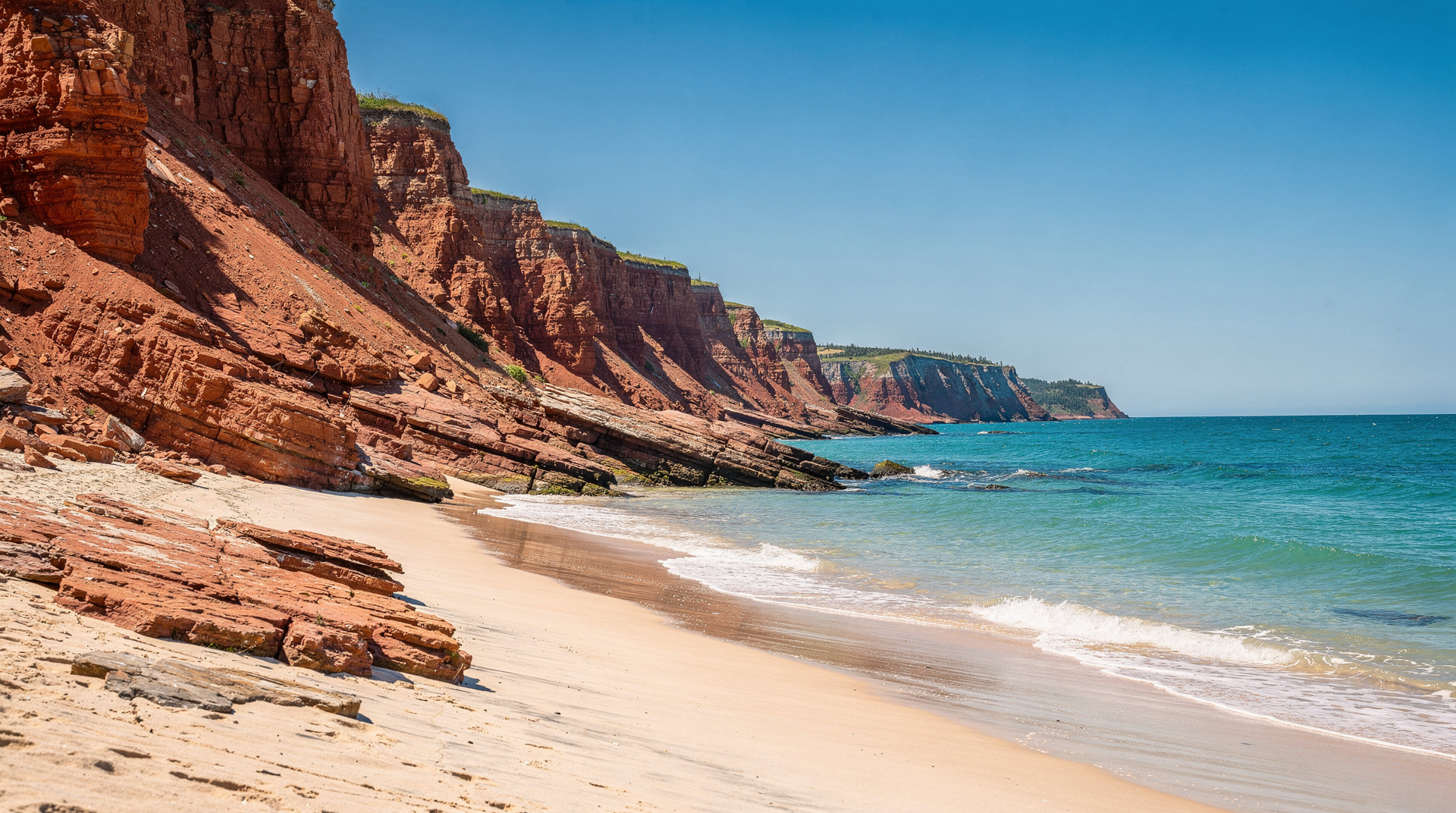
The arrival was striking. The Magdalen Islands from the sea are red sandstone cliffs with white houses and fishing boats below, the sea unexpectedly blue-green in the summer light. After the flat coastline of PEI, the geological drama of the cliffs felt like arriving somewhere remote and specific.
Where we stayed
I had booked directly through the website of La Salicorne, a small inn in L’Étang-du-Nord on the main island. La Salicorne is run by a couple who have been hosting guests for years and whose local knowledge is comprehensive. The rooms are simple but comfortable, the breakfast includes local products — seal pâté (yes, genuinely good), smoked herring, fresh bread from the island’s bakery — and the hosts drew us a map on our first evening that was more useful than any online guide I’d found.
An alternative option that several people recommended was Auberge Madeli in Cap-aux-Meules, which is slightly more central and has a good restaurant attached. I didn’t stay there but ate dinner there twice and found the food excellent: freshly caught lobster, crab bisque, local smoked fish in several configurations.
The beaches
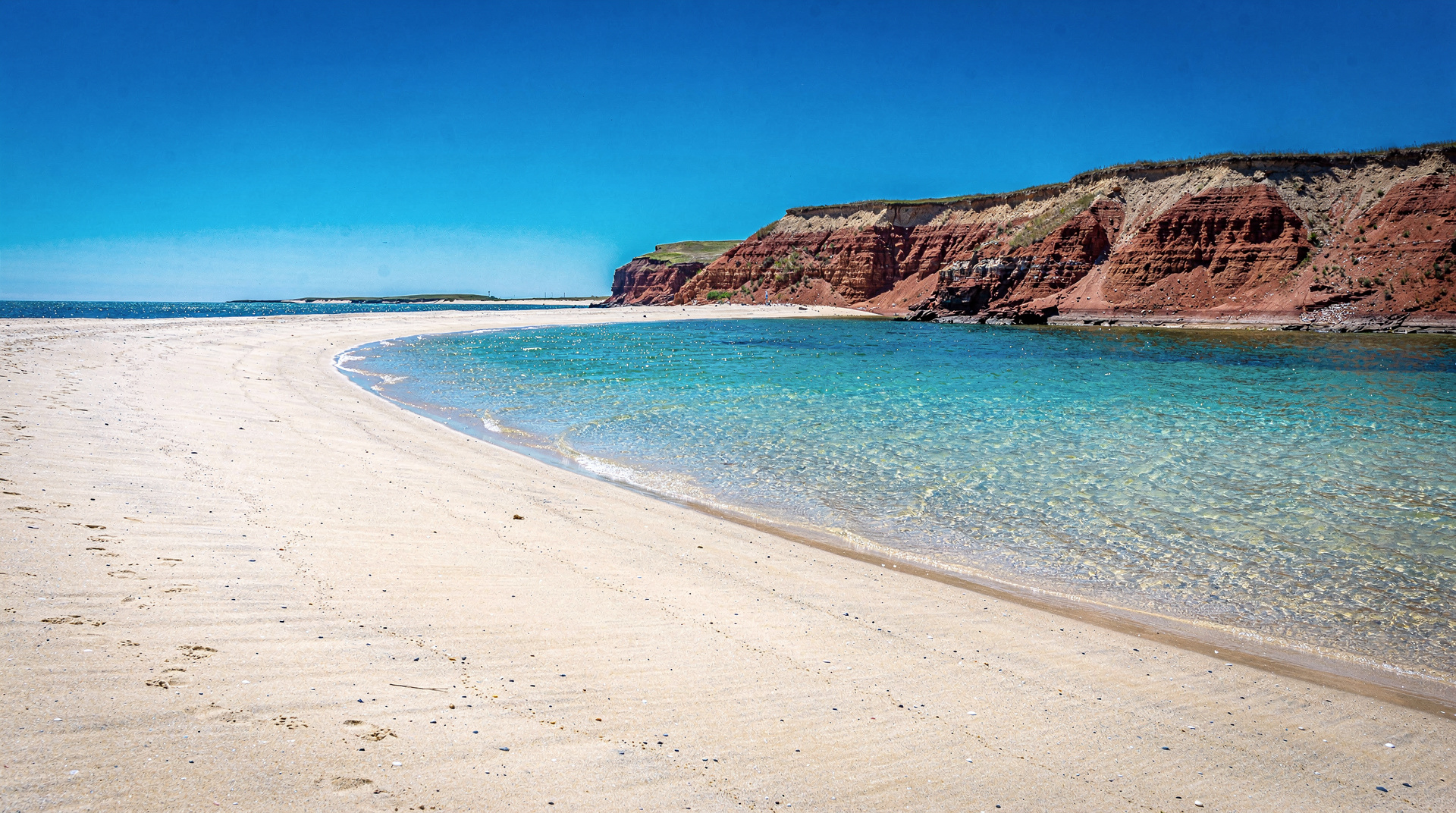
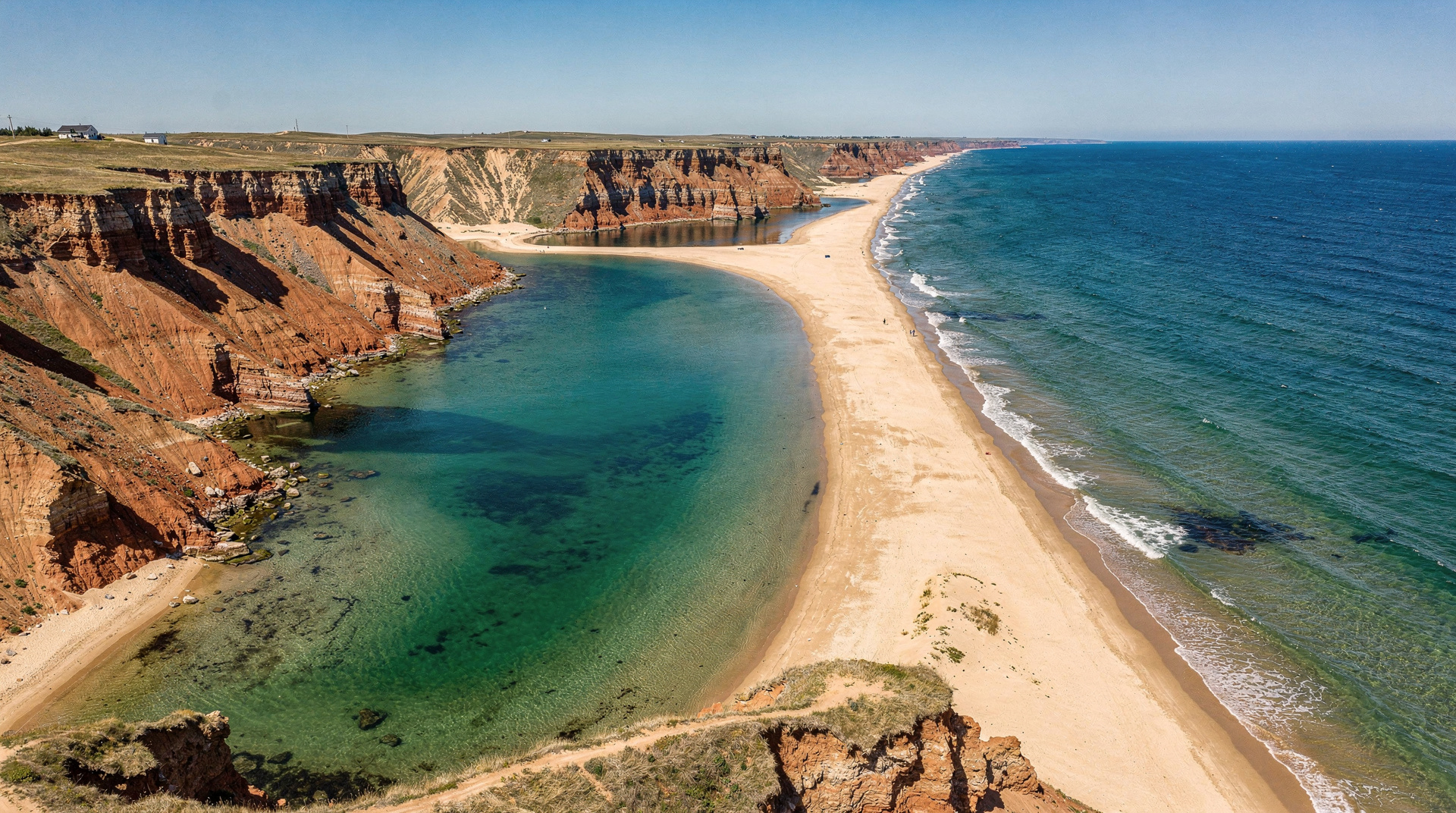
The Magdalen Islands have roughly 300 kilometres of beach, which for a small archipelago is an extraordinary number. The beaches are mostly fine white sand, and in July the water temperature is cool but swimmable — around 18-20°C depending on wind and current. The colour of the water, in certain light conditions, approaches the improbable turquoise of tropical beaches, which is jarring in a place that is undeniably a cold-water Atlantic environment.
The best beach we found was Dune de l’Ouest, a long sandspit on the western side of Havre-Aubert island, which is the southernmost of the main islands and requires a short drive from Cap-aux-Meules. The dune stretches for several kilometres with almost no facilities — no food vendors, no chairs for rent, no organised anything. You park at the end of a dirt road, walk through marram grass, and arrive at a beach that feels genuinely uncrowded even in July because the islands don’t have the visitor numbers to fill it.
The second beach worth mentioning is Plage de la Dune du Sud, near the village of Havre-aux-Maisons, where the kite surfers concentrate. The wind through the Magdalen Islands is almost constant in summer, which makes kite surfing viable most days, and watching the kitesurfers from the beach — colourful kites arcing against the sky, riders jumping the small shore break — is an unexpectedly beautiful afternoon activity that costs nothing.
The activities we found without booking in advance
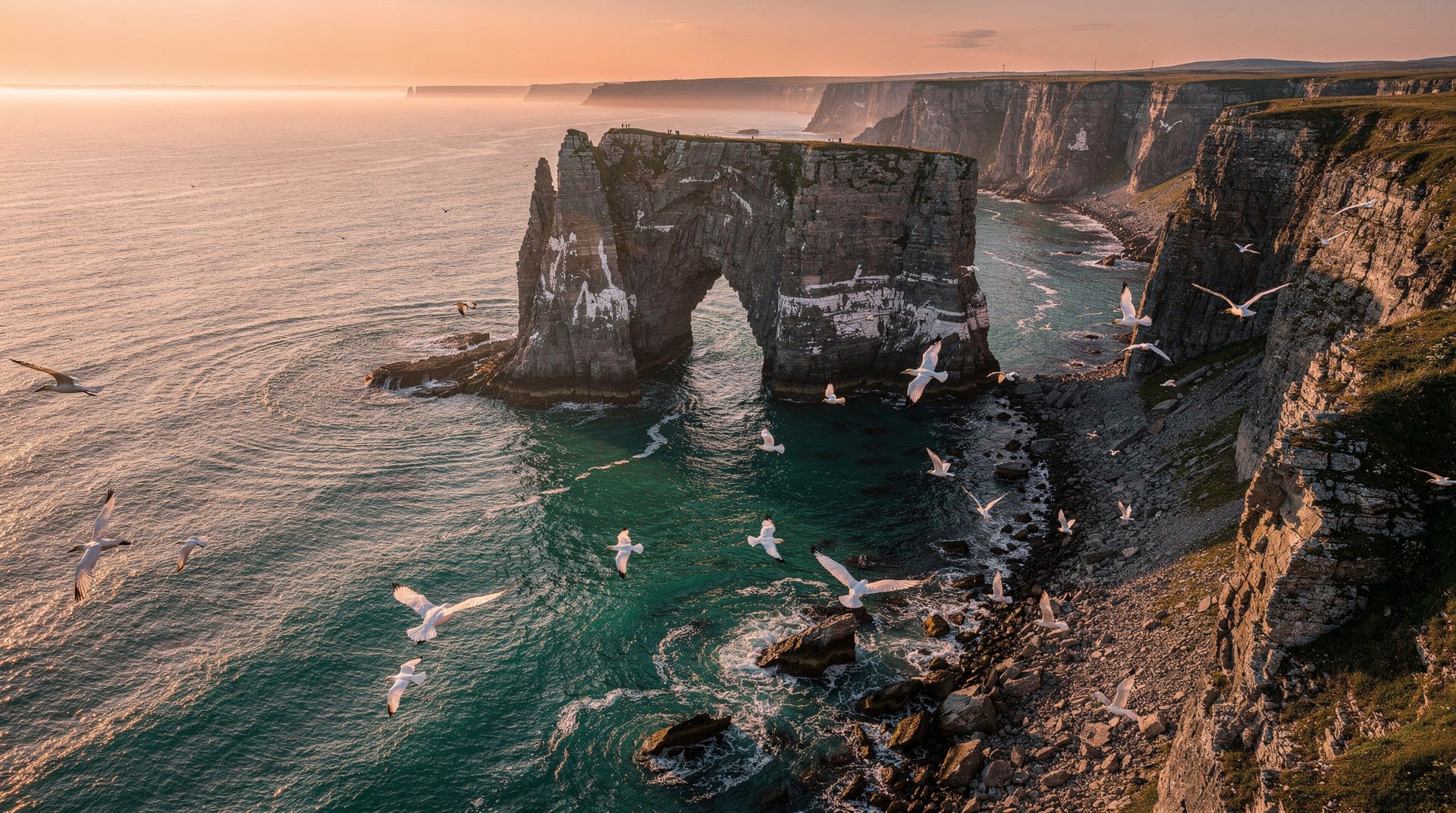
Kayaking with Arobas Plein-Air. I found this operator through the tourism office in Cap-aux-Meules, which had a list of local operators. Arobas runs guided sea kayak tours along the red sandstone cliffs on the eastern side of the archipelago. We booked by phone (French required; the guide did speak some English) for a three-hour morning paddle. The cliffs from sea level are extraordinary: the erosion has created arches and sea caves in the soft sandstone, and we paddled through two of them. Cost: approximately 75 CAD per person.
Self-guided cycling on Île du Havre-Aubert. We rented bikes from a small shop in the village of Havre-Aubert for 30 CAD for the day and cycled the perimeter of the island — about 25 kilometres, mostly flat, on roads with very light traffic. The landscape is open: low grass, wildflowers, occasional sheep, the sea always visible. We stopped at a lobster roll stand that was operating from a converted fishing shed and ate the best lobster rolls I have had anywhere in Canada. Cost: about 18 CAD for the roll. Worth every cent.
The Museum of the Sea (Musée de la mer) in Havre-Aubert. A small but genuinely excellent museum about the maritime history of the islands — the shipwrecks (over 400 documented off the archipelago), the fishing industry, the Acadian heritage of the islanders. Well-presented and in French and English. Entrance around 12 CAD. Two hours well spent.
The food situation, honestly
The Magdalen Islands are primarily a seafood destination, and the seafood is exceptional because it is local, fresh, and abundant. Lobster is the star — the islands are surrounded by productive lobster grounds, and in July (the main lobster season ends in late June but there is some availability in July from secondary sources) you can eat lobster at prices that would be impossible in most cities. We had a full lobster dinner at a small restaurant in Cap-aux-Meules for about 45 CAD including a half-bottle of wine.
Herring, crab, scallops, and a local specialty called morue (salt cod, prepared in the traditional way) are available everywhere. The smoked fish from the smokehouse at Fumoir d’Antan in Grande-Entrée is worth going out of your way for — they do smoked herring and smoked seal, both of which are polarising to non-locals and both of which are genuinely interesting to eat.
Why no booking platforms isn’t actually a problem
I want to be clear about this because it affected my initial approach to planning the trip. The absence of the Magdalen Islands from international booking platforms is not a gap that indicates a poor tourism offering. It indicates a specific kind of tourism culture — small-scale, locally run, not oriented toward international package visitors.
The tourism office in Cap-aux-Meules (open in July, well-staffed) has current lists of every local operator, accommodation, and activity. The operators themselves are reachable by phone or email. And the experience of planning in this less mediated way — calling someone who actually runs a kayak company and asking what they recommend for the weather that week — was more useful than most automated booking experiences.
How this compares to the rest of Québec
Most of Québec, including the Gaspésie coast just across the water, has embraced international booking platforms fully — the Gaspésie circle tour I did the following year had GYG and Viator listings for nearly everything. The Magdalen Islands are the exception, not the rule, and that’s worth knowing before you plan: don’t assume the rest of your Québec trip will require the same phone-and-email approach. If beaches are the draw, the broader best beaches in Québec guide covers where the archipelago fits relative to the mainland’s options, most of which are considerably easier to book activities around.
If you’re going, a few practical notes
Bring cash — some smaller operators, especially the food stands and the smaller kayak outfits, don’t take cards reliably. Book your ferry cabin and your accommodation as early as you can; those are the two genuine bottlenecks. Everything else — the kayaking, the cycling, the museum — can be sorted after you arrive, and the tourism office is a better resource for same-week bookings than anything online.
Frequently asked questions about Magdalen Islands without GetYourGuide: how we made it work
Do I need to speak French to visit the Magdalen Islands? Not to get by day-to-day, since many people in the tourism sector speak some English, but booking activities directly by phone — as described above — goes far more smoothly in French. If you don’t speak French, lean on the tourism office in Cap-aux-Meules, which can help bridge the gap.
Is it worth visiting if you can’t book anything in advance? Yes. The absence of GYG or Viator listings reflects a small-scale, locally run tourism culture rather than a lack of things to do — as this trip shows, the beaches, the kayaking, and the food are all genuinely excellent once you’re willing to plan the old-fashioned way.
The Magdalen Islands destination page on this site is honest about the absence of GYG coverage and has practical links to local operators. For the beach guide, see the Îles-de-la-Madeleine beaches guide. And if you are building a long Québec itinerary that includes the islands, the 14-day full province itinerary shows how to route this trip sensibly.