Montréal bagels: a blind taste test
The argument I kept having
Every time I take someone to Montréal for the first time, the bagel question comes up. Not “should we eat bagels” — that is settled; Montréal bagels are a definitive local experience and there is no serious debate about whether to eat them — but which bakery. St-Viateur or Fairmount. The two institutions on the Plateau and in Mile End that have been making wood-fired bagels since the mid-twentieth century and whose respective loyalists will discuss the difference with the intensity normally reserved for theology.
I have eaten at both many times. I have my preference. But I realised that my preference was formed by accumulated habit and personal bias rather than any kind of rigorous comparison. So in March 2023, on a trip to Montréal with seven friends, I organised a blind taste test.
| Where | St-Viateur Bagel and Fairmount Bagel, both Mile End |
| Distance apart | About four blocks, roughly 5 minutes on foot |
| Hours | Both open around the clock |
| Price | A few dollars for a single bagel; cheaper by the dozen |
| Result | St-Viateur won overall; Fairmount won on texture |
The setup
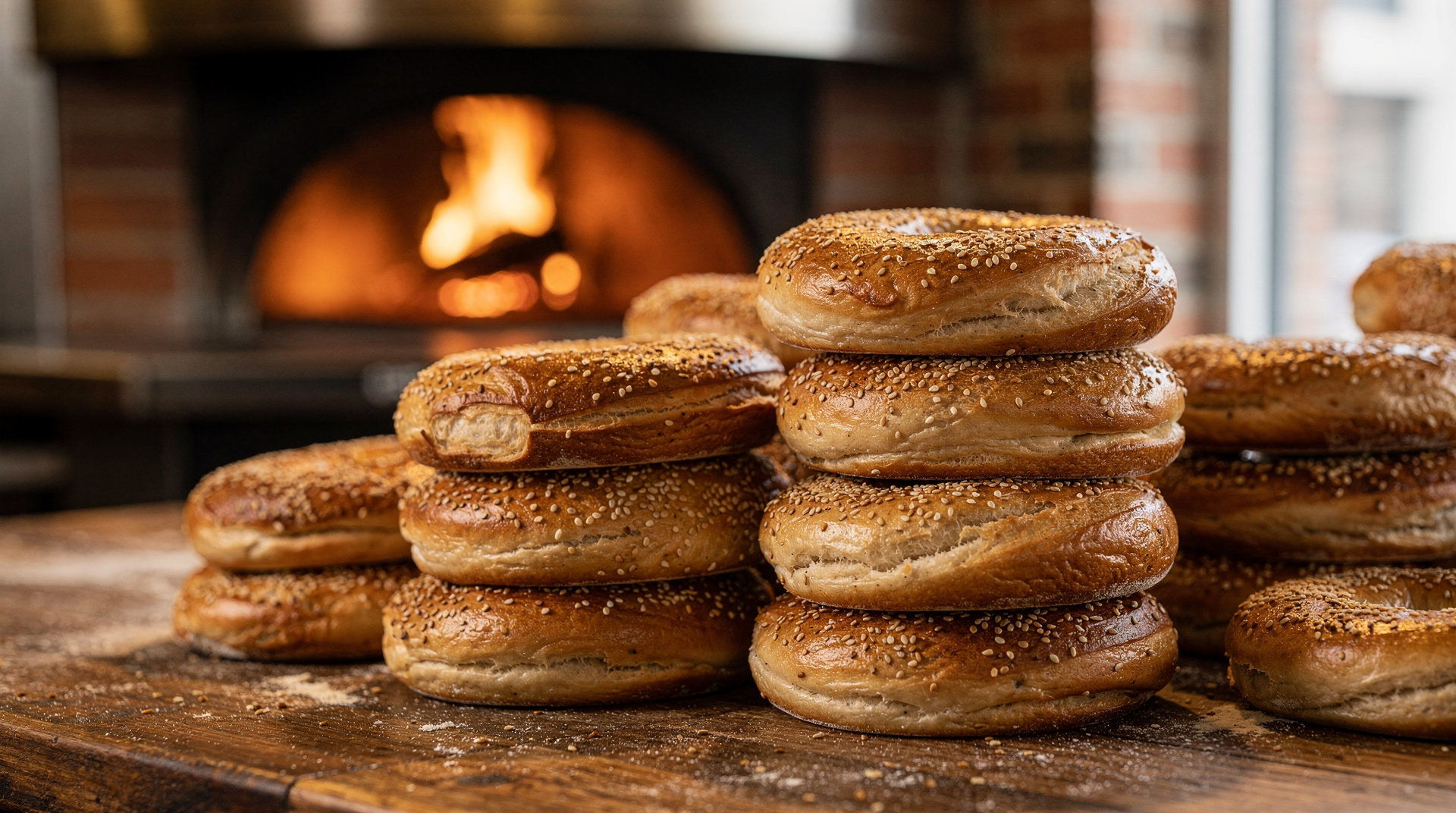
We bought sesame bagels from both bakeries on the same morning, within about twenty minutes of each other. St-Viateur Bagel is on Rue Saint-Viateur in Mile End; Fairmount Bagel is on Avenue Fairmount West, about four blocks away. Both bakeries operate around the clock, which is a commitment to their product that I respect. Both were freshly made when we bought them — you can see the bagels coming out of the wood-fired ovens at both shops, which removes any argument about freshness.
The bagels were kept separate in paper bags, labelled only as A and B. We served them plain, without cream cheese or lox, because the point was the bagel itself. Each of our eight tasters (myself included) tasted both and rated them on three criteria: texture, sweetness, and overall preference. We then revealed which was which.
The bagels, described objectively
Montréal bagels are not New York bagels. This needs to be said before anything else because the comparison is always happening in the background. Montréal bagels are smaller, denser, sweeter, and have a larger hole than New York bagels. They are hand-rolled and boiled in honey-sweetened water before going into the wood-fired oven. The honey in the boiling water is essential — it creates the slightly glossy, slightly sweet exterior crust that is the defining characteristic. The interior is dense and chewy in a different way than a New York bagel: less pillowy, more work to bite through.
St-Viateur: The sesame crust on the St-Viateur bagel was generously applied — seeds densely packed and well-toasted from the oven. The sweetness was noticeable, present throughout the eating experience. The interior had a slight tang that I have always associated with their particular sourdough starter (if that is what it is; neither bakery publishes their recipe). Slightly larger than the Fairmount in this batch.
Fairmount: The Fairmount sesame bagel had a thinner, crispier crust with seeds slightly less densely applied but more evenly distributed. The sweetness was present but less prominent, and the flavour had something I can only describe as more toasty — the wood-fire character was more pronounced. The interior was slightly chewier and required more work to eat, which some people consider a virtue.
The results
Eight tasters, blind. The question was: A or B, for texture preference, sweetness preference, and overall preference.
| Criterion | St-Viateur (A) | Fairmount (B) |
|---|---|---|
| Texture | 3 | 5 |
| Sweetness | 6 | 2 |
| Overall preference | 5 | 3 |
Note that “sweetness preference” here could mean either “I like this level of sweetness more” or “I found this sweetness level more appropriate” — we didn’t distinguish between these two interpretations, which is a methodological flaw I acknowledge.
So St-Viateur won overall, narrowly, while Fairmount was preferred on texture.
What people said
When we revealed which was which and asked for comments, a few patterns emerged.
The St-Viateur fans: “More flavour,” “the sweetness is what makes it a proper Montréal bagel,” “easier to eat plain,” “the one I’d buy a dozen of.”
The Fairmount fans: “Better crust,” “more complex,” “this is the one I’d want with cream cheese,” “the texture is what a bagel should be.”
One person in our group, who grew up in New York and was therefore approaching this with a different baseline entirely, said St-Viateur was “more interesting” and Fairmount was “more like what I understand a bagel to be,” which I thought was an insightful observation about how prior experience shapes taste assessment.
My own take, post-reveal
My preference, which I had been keeping private during the exercise, was Fairmount. It has been for years. I find the more pronounced wood-fire character and the slightly more complex flavour more interesting on repeated eating — if you’re going to eat bagels three mornings in a row, Fairmount feels like the one that doesn’t become monotonous. St-Viateur, I think, is the more accessible bagel — sweeter, more immediately appealing — and this is probably why it wins in blind tests: the sweetness registers as pleasurable on first bite in a way that doesn’t require any bagel-specific reference points.
I should say that both are excellent. The difference between them is real but not enormous, and either way you are eating something that has almost no equivalent anywhere else in the world. The experience of walking into one of these bakeries at 7am, watching a man hand-roll dough and slide it into a wood-fired oven with a long paddle, and leaving with a paper bag of warm bagels — this is one of those small, specific experiences that make Montréal feel like itself.
How to do the bagel experience properly
Both bakeries are in the Plateau/Mile End area, which means you can walk between them in about ten minutes. The standard tourist approach of buying one bagel at each and eating them on the street comparing them is both valid and pleasantly public. The serious approach involves buying a bag of a dozen (they travel well and are excellent the same day, less excellent the next day, and good toasted on day three), finding a park bench, and working through them at leisure.
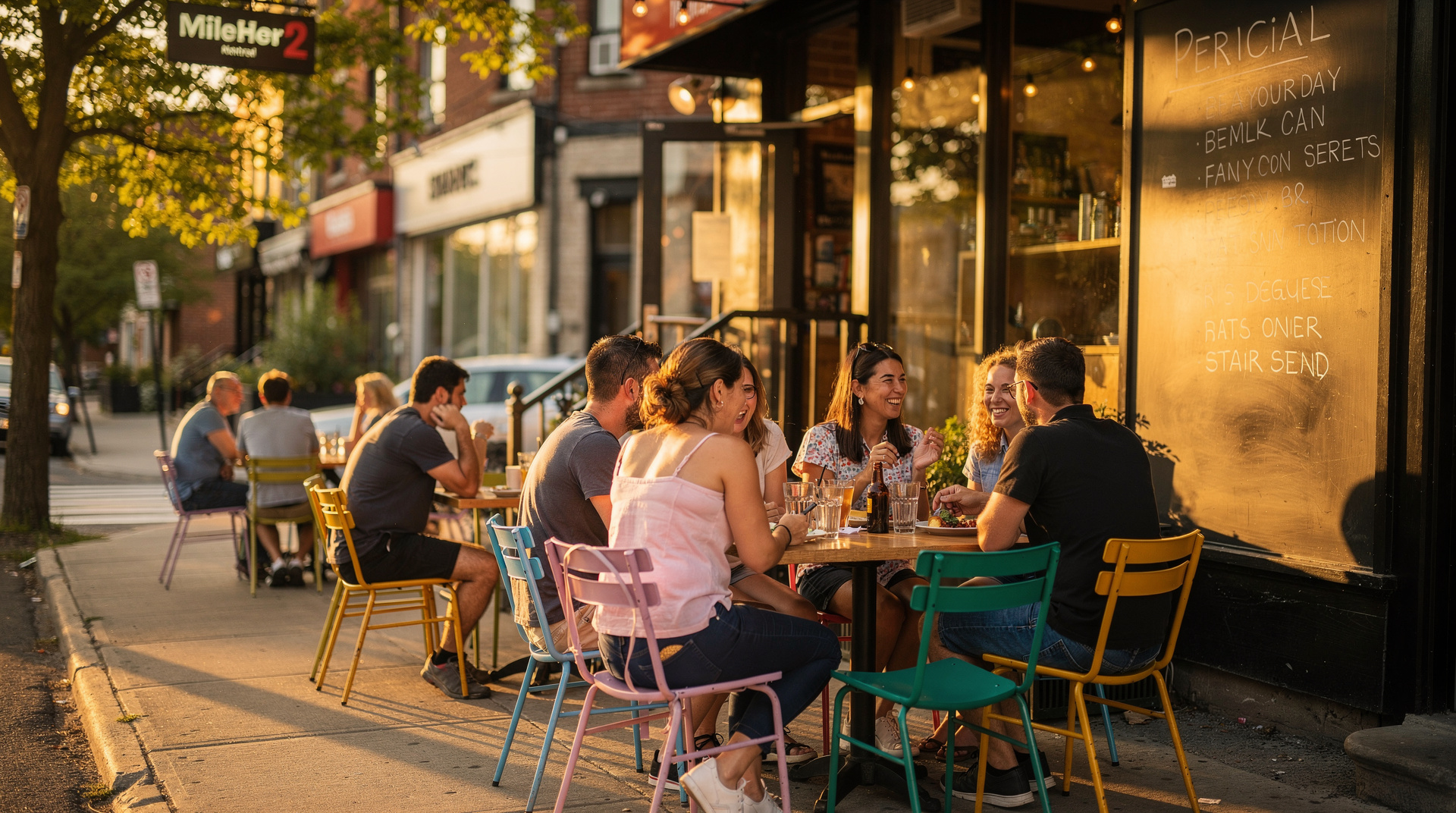
Bagels with cream cheese (shmear) are served at both bakeries, though neither is primarily a sit-down place. For a proper Mile End bagel experience with accompaniments, Café Olimpico on Rue Saint-Viateur serves excellent coffee and functions as a neighbourhood institution.
Where this fits in a Montréal trip
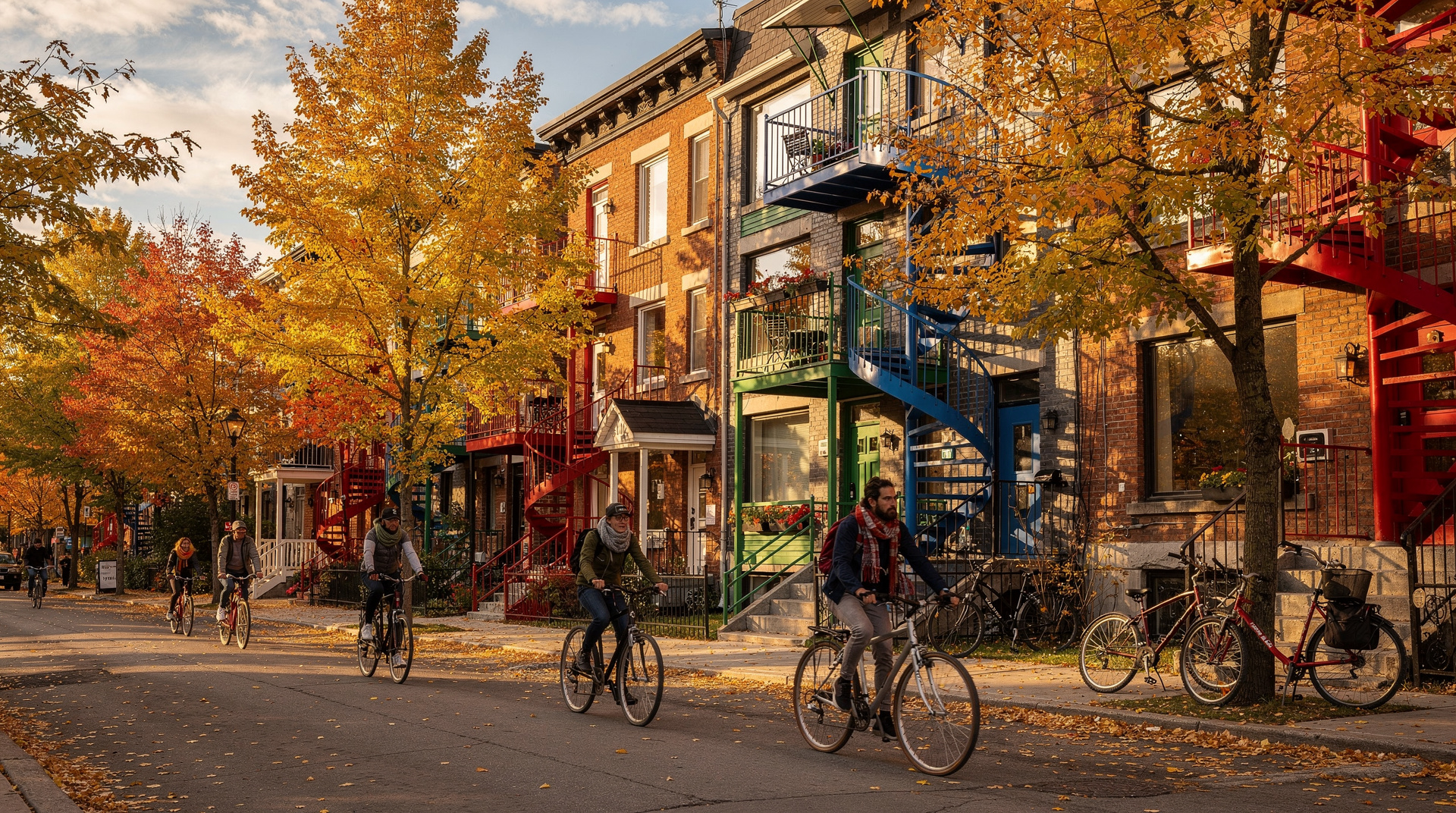
Mile End sits just north of the Plateau Mont-Royal, and the two neighbourhoods pair naturally for a morning of walking and eating before heading into the rest of Montréal. If bagels are just the start of your food itinerary, our 2026 new restaurant openings piece and the Montréal smoked meat guide cover where to go next.
Frequently asked questions about Montréal bagels: a blind taste test
Is there a real difference between St-Viateur and Fairmount bagels? Yes, though it’s subtler than the rivalry suggests — St-Viateur is sweeter and more immediately appealing on first bite, which likely explains why it wins more blind tests, while Fairmount has a more pronounced wood-fire character and a crispier crust. Both are genuinely excellent.
Should I visit both bakeries or just pick one? Visit both if you can — they’re about four blocks apart, both open around the clock, and comparing a warm bagel from each is a fun ten minutes of your trip. If you only have time for one, either choice is a good one.
For the longer story on both bakeries — history, hours, how to get there — the Montréal bagels guide has everything. And for the broader Montréal food scene, the Montréal restaurant guide covers beyond bagels.
If you want to go deeper into Mile End’s food culture on a guided tour, the food walking tours in the neighbourhood are genuinely good:
Mile-End Foodie Walking Tour 6 Tastings