Montréal Jazz Festival 2025: an attendee's guide
Two weeks of music in the middle of Montréal
The Festival international de Jazz de Montréal is one of the world’s largest jazz festivals, and it arrives every year in late June to early July, transforming the Quartier des Spectacles and surrounding streets into a pedestrian festival zone of roughly 3.5 kilometres. For about ten days, the area around Place des Arts hosts dozens of outdoor stages (free) and indoor ticketed venues simultaneously, pulling in somewhere between 500,000 and one million visitors annually.
I attended four days of the 2025 edition. What follows is what I found useful, what surprised me, and what I would do differently.
| When | Late June to early July, roughly 10 days |
| Where | Quartier des Spectacles, downtown Montréal, around Place des Arts |
| Cost | Outdoor stages free; indoor tickets around 30–150 CAD |
| Getting there | Metro to Place-des-Arts (or Berri-UQAM when it’s closed to through traffic) |
| Best for | Music lovers and first-time summer visitors to Montréal |
The outdoor stages: free and worth it
The most important thing to understand about the Jazz Fest is that the majority of the programming is free. The outdoor stages in the Quartier des Spectacles host approximately 350 free concerts over the run of the festival, and the quality is genuinely high. These are not filler acts — major names play the outdoor stages, and some of the best moments I have had at the festival have been stumbling onto an artist I had never heard of in the middle of an outdoor set.
In 2025, the outdoor programming featured a strong mix of emerging Québécois acts, established North American jazz figures, and international guests from West Africa and Brazil. The main stage on the esplanade in front of Place des Arts sees peak crowds — 10,000 to 20,000 people for headliner outdoor sets. Getting there early for any outdoor show you specifically want to see is mandatory; the crowd around the main stage fills in steadily from about an hour before the main act.
The satellite outdoor stages (scattered on streets off the main plaza, on Saint-Denis, on Sainte-Catherine) are smaller and easier. Some of the best performances I saw in 2025 were on these secondary stages, at 18:00 before the headline crowds arrived. Late afternoon Tuesday through Thursday is the sweet spot — outdoor stage performances with a fraction of the weekend crowd.
The ticketed indoor shows
The ticketed programme spans multiple venues, from the large Salle Wilfrid-Pelletier (capacity 2,982) to club-size rooms at 500 to 600 seats. Prices range from about 30 CAD for club-level shows to 90 to 150 CAD for the main hall headline acts.
In my experience, the indoor shows at the festival produce the best concert experiences. The acoustics are controlled, the artists play full sets rather than the truncated outdoor-stage format, and the audience is there specifically for that performer rather than the general festival experience. For artists you already know and want to hear properly, the indoor programme is worth the ticket cost.
The 2025 indoor programme leaned into a broader definition of jazz than the festival has traditionally used — neo-soul, Afrobeat, and electronic-influenced acts appeared alongside more traditional jazz forms. Whether this is exciting or irritating depends entirely on your preferences. I found the range appropriate for a city-wide summer festival trying to attract audiences beyond core jazz fans.
Tickets go on sale in April and the most popular indoor shows sell out quickly. If you have a specific artist you want to see, check the programme as soon as it is announced and buy tickets immediately.
The Quartier des Spectacles zone
The festival’s main zone covers the area around Place des Arts, extending down Sainte-Catherine and up Saint-Denis. During the festival, a significant portion of this area is closed to vehicle traffic. This is genuinely excellent — the streets become pedestrian, the outdoor stages operate without the background noise of cars, and the whole neighbourhood achieves a kind of temporary village feeling.
The practical consequence is that if you are staying in a hotel in or near the Quartier des Spectacles, you may find your street partially or fully blocked to vehicle traffic during festival hours. Taxis and rideshares can get within a block or two; they just cannot drive directly to your address during peak hours. Worth checking this with your hotel when you book.
Parking in the area during the festival is extremely difficult. If you are driving from outside Montréal, take the Métro from wherever you park (the metro lines are excellent; Place-des-Arts is the nearest station and typically closes through-traffic during peak festival hours — Metro Sherbrooke is often a better access point). The Métro is by far the easiest way to navigate festival days.
Hotels: the pricing reality
Hotel prices in Montréal during the Jazz Fest are significantly higher than outside the festival period. A hotel that costs 180 CAD per night in early June will often cost 250 to 320 CAD per night during the festival’s peak weekend. Booking early (February or March for a June-July stay) gives the best available rates.
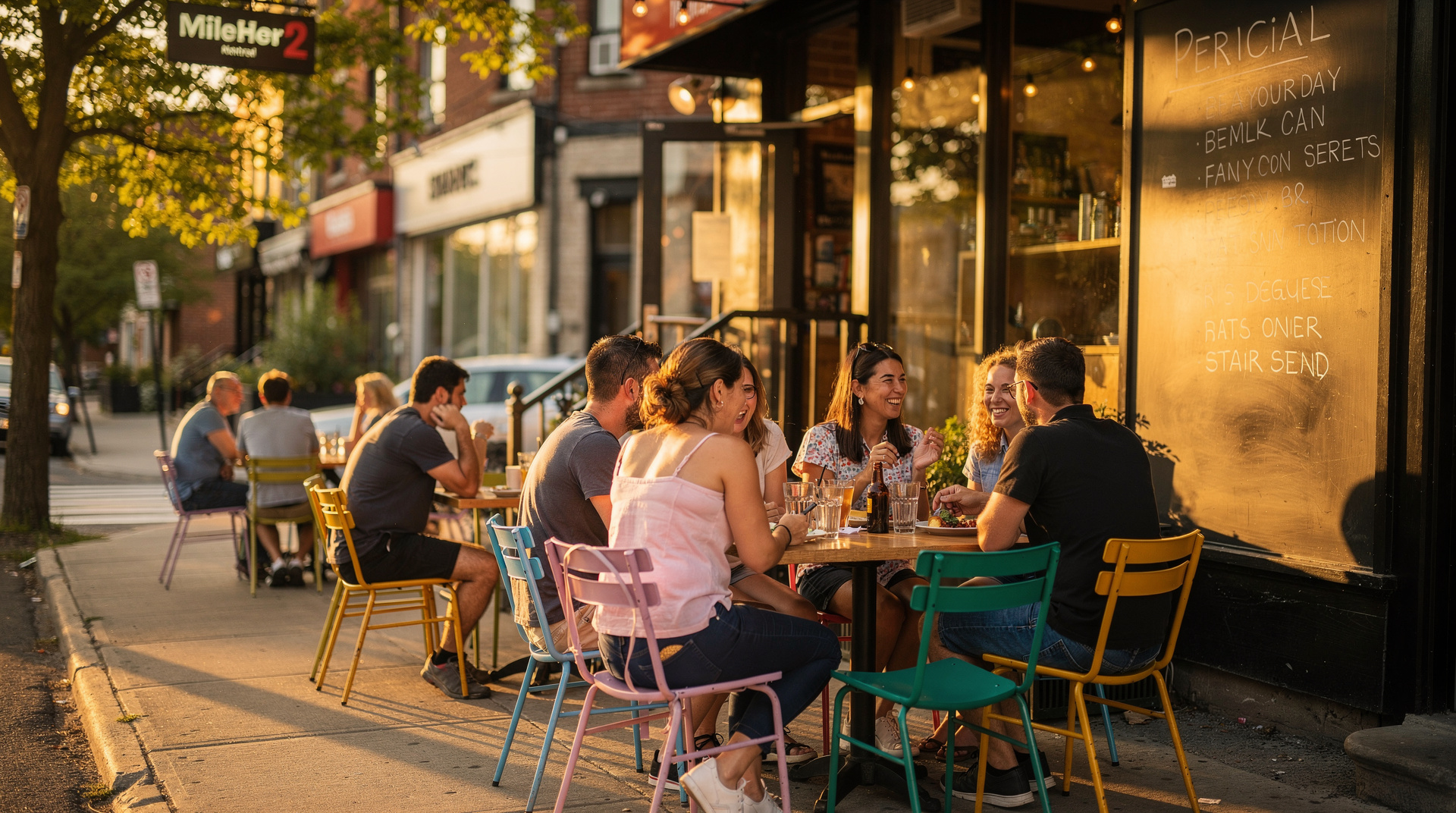
The most convenient hotels are those within walking distance of the Quartier des Spectacles. The Saint-Laurent and Saint-Denis corridors are well-served. If you are comfortable walking 15 to 20 minutes, a hotel in the Plateau Mont-Royal or the Mile End neighbourhood provides a pleasant residential alternative to the festival zone hotels — and you can walk back to your accommodation after late shows without needing the metro.
Food strategy
The food stalls inside the festival zone are expensive and the quality is variable. Standard festival economics: you will pay 15 to 20 CAD for a poutine or a sandwich, and the line will be 15 minutes.
The better approach is to eat in the neighbourhood restaurants before or after the shows. Saint-Denis and the Plateau have a genuine concentration of good restaurants at multiple price points. Many of these are busier than usual during the festival period — book ahead for dinner if you are going somewhere you specifically want to eat.
A few practical notes: the restaurants and cafés near Place des Arts on Sainte-Catherine are tourist-oriented year-round, and festival period inflates the prices and crowds further. Walk three blocks in any direction and the economics change.
The Plateau Mont-Royal neighbourhood — a 15-minute walk from the festival zone — is where a significant portion of the festival’s musicians and visitors end up eating. The concentrations of interesting restaurants on avenue Mont-Royal and in the side streets between Saint-Denis and Saint-Laurent are the places to start.
Plateau Mont-Royal and Mile End walking tour
What I did not expect
The scale and density of sound is genuinely disorienting on the first visit. Multiple outdoor stages operate simultaneously, within earshot of each other on festival evenings. Walking through the festival zone, you move through waves of different music every few hundred metres. Some people find this overwhelming. I found it exhilarating for about three days and slightly tiring on the fourth.
The crowd is more local than you might expect. The Jazz Fest draws heavily from Montréal’s own population — the city takes the festival seriously, and the mixture of French, English, and international visitors at any given outdoor stage is quite different from the typical tourist crowd profile.
The weather in late June and early July in Montréal is warm but unpredictable. Rain is common. Bring a light rain jacket for outdoor evening shows; the stages do not stop for drizzle, but you will be standing there for several hours and getting wet is unpleasant. The big outdoor headline acts play through rain.
Getting around during festival week
The Métro is the backbone of festival logistics, and I would not attempt this any other way. Montréal’s public transport system is frequent, cheap, and — crucially during a heatwave or a downpour — air-conditioned or dry, which a street full of festival-goers is not. A three-day or weekly transit pass makes more sense than single tickets if you are staying more than a couple of days, and it removes the need to think about it at all once you have it loaded.
Ridesharing during peak hours is genuinely unreliable — surge pricing on festival nights routinely doubles fares, and drivers cannot get anywhere near the closed streets around Place des Arts anyway. If your hotel is inside the Quartier des Spectacles footprint, walking is faster than any vehicle regardless of the weather.
Extending the trip beyond the festival
Four or five days of jazz is plenty for most people, but Montréal rewards a longer stay, and several visitors I met at the festival were using it as the anchor for a broader trip. If you have an extra day, the where to eat in Montréal guide is worth reading before you arrive — reservations at the better restaurants fill up fast during festival season, more so than usual.
For evenings after the outdoor stages wind down, the Montréal nightlife guide covers where the city’s bars and late kitchens are, many of them a short walk from the festival zone. And if beer is more your thing than jazz-adjacent cocktails, the craft beer and breweries guide points to a handful of taprooms in the Plateau that are considerably calmer than the festival crowds.
Old Port brewery and beer tasting walking tour
For the complete guide to Québec’s summer music festivals — including the Festival d’été de Québec (held in mid-July in Québec City), the FrancoFolies de Montréal, and smaller regional events — see the music festivals guide.