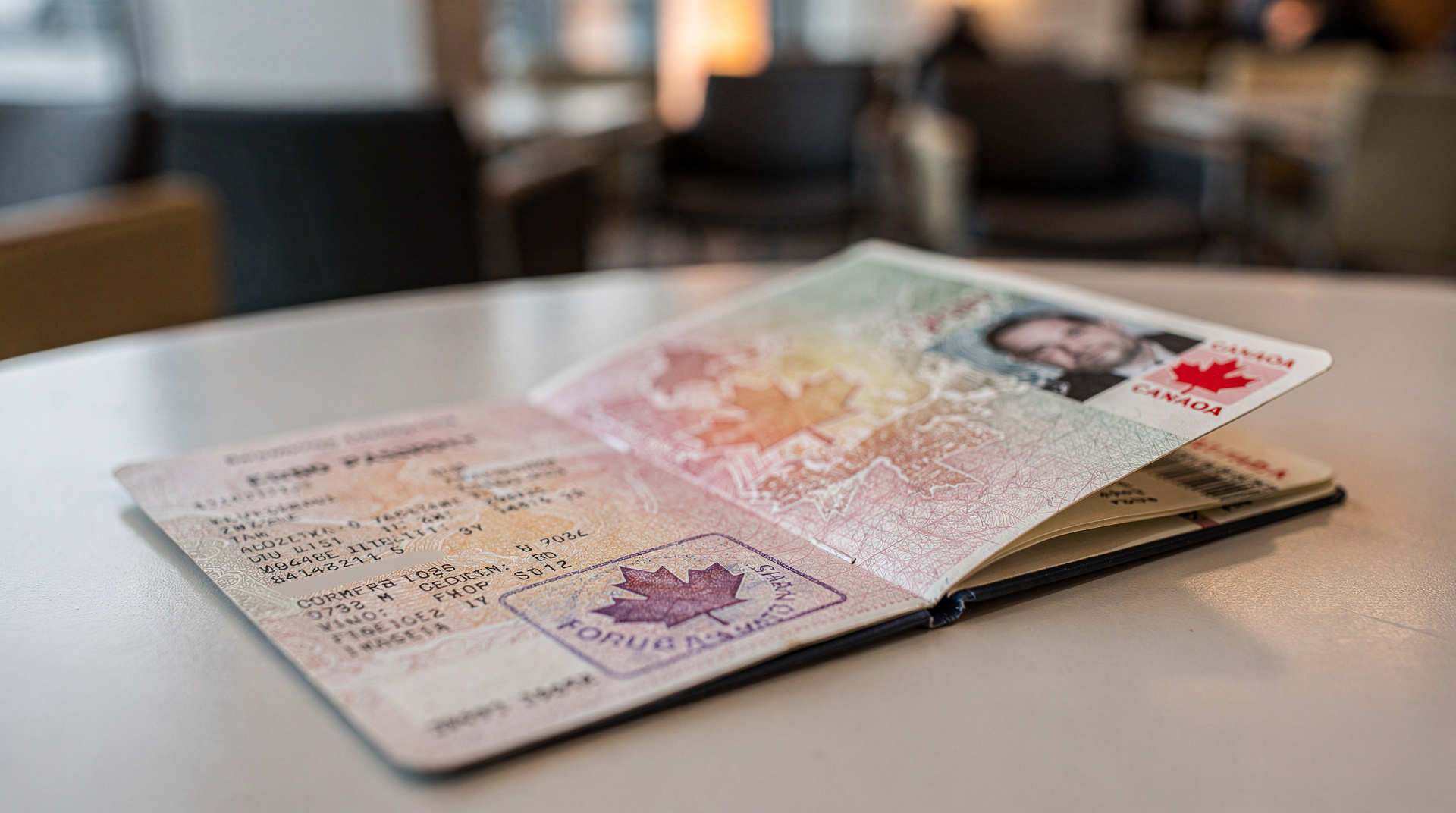
Québec eTA 2025 update for European travellers
The entry requirement that catches visitors by surprise
Every month, European travellers book flights to Montréal or Québec City and then, somewhere in the process of packing or checking in online, discover that they needed to apply for a Canadian eTA before they could board the plane.
This is not a new system — Canada’s Electronic Travel Authorisation has been in effect since 2016 — but it continues to surprise a significant number of European travellers who assume, reasonably, that a visa-exempt country means no pre-travel paperwork. That assumption is wrong, and in 2025 the rules have not changed in any fundamental way, but there are some clarifications worth knowing.
| eTA at a glance | |
|---|---|
| Who needs it | Visa-exempt nationals flying to Canada |
| Who doesn’t | US citizens, Canadians, land/sea arrivals from the US |
| Cost | 7 CAD, official site only |
| Validity | 5 years or until passport expires |
| Apply where | canada.ca (never a third-party site) |
Who needs the Canadian eTA?
If you are a citizen of one of the visa-exempt countries listed by IRCC (Immigration, Refugees and Citizenship Canada), you do not need a visa to visit Canada. But if you are flying to Canada, you do need an eTA — regardless of whether your nationality is on the visa-exempt list.
The key visa-exempt nationalities for European visitors include: France, Germany, Italy, Spain, Portugal, Netherlands, Belgium, Switzerland, Austria, Sweden, Norway, Denmark, Finland, United Kingdom (post-Brexit: UK citizens still qualify), and most other EU and Schengen area countries. Full list is on the IRCC website.
The critical exception: if you are arriving by land or sea from the United States, you do not need an eTA. The eTA requirement applies only to air arrivals.
US citizens do not need an eTA (they use their US passport at the border). Canadian citizens, obviously, do not need one. Permanent residents of Canada do not need one.
What the eTA actually is
The Canadian eTA (Electronic Travel Authorisation) is a digital permission linked to your passport. Once approved, it stays linked to that specific passport for five years or until the passport expires — whichever comes first. It costs 7 CAD (approximately 5 EUR at current rates). It is not a visa and does not guarantee entry, but in practice it is almost always approved.
The application takes about 10 to 15 minutes to complete online through the official IRCC website (canada.ca/en/immigration-refugees-citizenship/services/visit-canada/eta.html — always use the .gc.ca domain, not third-party sites). Processing is usually near-instantaneous — most applications are approved within minutes, and almost all are approved within 72 hours.
The cases where it takes longer are unusual: applications flagged for additional review, mismatched passport data, or applications submitted through third-party sites that are slower to transmit to the government system. Apply directly on the government website.
What changed (or did not change) in 2025
There has been some confusion among travellers about changes to the eTA system in 2025. Let me be clear about what has and has not changed.
What remained the same: The fee (7 CAD), the validity period (5 years or passport expiry), the list of eligible nationalities, and the application process. Fly to Canada, need an eTA, apply online, receive confirmation by email, present your passport at the airport. The eTA is in the system; you do not print it or present a document.
What received attention: IRCC has been gradually improving its processing system to reduce edge cases where automated approvals were delayed. For most European visitors in 2025, the experience has been entirely smooth — apply, wait a few minutes, receive confirmation.
What some visitors confuse with the eTA: Canada’s system is entirely separate from the European ETIAS (European Travel Information and Authorisation System), which was still in the process of being phased in as of early 2025 and applies to non-EU nationals visiting Schengen countries. ETIAS affects visitors to Europe; the Canadian eTA affects visitors to Canada. Two different systems, two different agencies, no connection.
The ETIAS confusion, explained once
I want to spend a moment on this because I have seen it misunderstood multiple times in travel forums.
ETIAS is what non-EU nationals will need to visit Schengen countries once it is fully implemented. Brazilians going to France, Canadians going to Italy, Americans visiting Germany — they will eventually need ETIAS.
The Canadian eTA is what non-Canadians need to fly to Canada. Europeans going to Montréal, Australians going to Vancouver, Japanese tourists going to Québec City — they need the eTA.
These are parallel systems that happen to be named similarly but are entirely independent. Getting an ETIAS does nothing for your Canada trip. Having a Canadian eTA does nothing for your trip to Europe.
The third-party site problem
One persistent issue worth flagging: there are dozens of websites that offer to process your Canadian eTA for fees ranging from 30 to 80 CAD. These sites are intermediaries, not government offices. They take your money, submit the application on your behalf, and return the same approval email you would have received from the government for 7 CAD directly.
Some of these sites are simply overpriced services. Others have been flagged for data security concerns. The government’s website (canada.ca) is the correct place to apply. If a site’s URL does not include “canada.ca” or “gc.ca,” you are on a third-party site.
The government application is straightforward enough that there is no reason to use an intermediary. Budget 15 minutes, have your passport in hand, and do it yourself.
Practical timing advice
Apply for your eTA as soon as you book your flights to Canada. Not three days before departure, not the night before — as soon as you have your booking confirmation. Most applications are approved in minutes, but “usually fast” is not the same as “always fast,” and there is no fee to renew if you end up not travelling.
Once approved, the eTA is linked to your passport number. If you get a new passport before you travel, you need a new eTA — even if your current one has not expired.
Carry your passport number when you check in (online or at the airport). The airline will verify that your eTA is valid for your passport before boarding. You do not need to show a separate eTA document; the airline and border agency systems communicate directly.
At the border
Canada Border Services Agency officers at the airport may ask you questions about your visit: where you are staying, how long you are visiting, what you plan to do. This is normal and not a sign of any problem. Standard answers: hotel name and address, length of stay, whether you are visiting for tourism.
The entry stamp gives you permission to stay for up to six months as a visitor. Most European tourists stay for two to four weeks; the six-month maximum is a legal limit, not an expectation.
For the complete planning checklist for European visitors to Québec — including the eTA, travel insurance, health cards, driver’s licence requirements, and phone plans — see the visa and entry guide.
One more thing: travel insurance
Canada does not have a public healthcare reciprocity agreement with European countries. If you have a medical emergency in Québec, you will be treated, but you will also receive a bill. Hospital costs in Canada can be extremely high — thousands of CAD for a single visit.
European EHIC cards do not work in Canada. Buy proper travel insurance before you leave, confirm it covers emergency medical (not just trip cancellation), and keep the policy number accessible on your phone. This is not optional advice. It is the most important practical step after the eTA itself.
The rest of the pre-trip checklist
Once the eTA is sorted, a handful of other small administrative tasks are worth clearing before you fly rather than discovering at the airport or on arrival. Check the Québec safety and travel tips guide for a general overview of what to expect. If you plan to drive, sort out your licence situation with the driving in Québec from Europe guide well before departure — some provinces require an International Driving Permit alongside your national licence. And if you want your phone to work the moment you land, the internet and eSIM roaming guide is worth ten minutes before you pack.
None of these are as strict or as universally required as the eTA, but together they are the difference between a smooth first day in Québec and a first day spent solving avoidable problems.