Québec fall foliage 2022: a road trip diary
Why we went in October and what we expected
My partner and I left Montréal on a Saturday in late September 2022 with a rented Subaru Forester, a vague itinerary, two changes of clothes, and a disagreement about whether we needed to bring a third change of clothes. (We did.) The plan was to drive north into the Laurentides, then northeast through Charlevoix, and finally to Tadoussac on the Côte-Nord — a route of about 700 kilometres that would take eight days, following the autumn colour peak as it moved from the mountains to the coast.
I had done this route before, in 2019, but never specifically for foliage. The timing felt right: the leaves in the Laurentides typically peak in the last week of September, Charlevoix peaks in early to mid-October, and Tadoussac — further north and exposed to the estuary cold — runs somewhat earlier, usually the last ten days of September. By leaving in late September we were hoping to catch the Laurentides at peak or just past, Charlevoix at early-to-peak, and Tadoussac in its last days.
This is more or less what happened, with one miscalculation I’ll explain.
| Day | Stop | Foliage stage |
|---|---|---|
| 1–2 | Mont-Tremblant | Full peak |
| 3–4 | Charlevoix (Baie-Saint-Paul) | Peak |
| 5 | Tadoussac | Past peak (our error) |
| 6–8 | Return via Charlevoix / Québec City | Late peak |
Day 1-2: Montréal to Mont-Tremblant
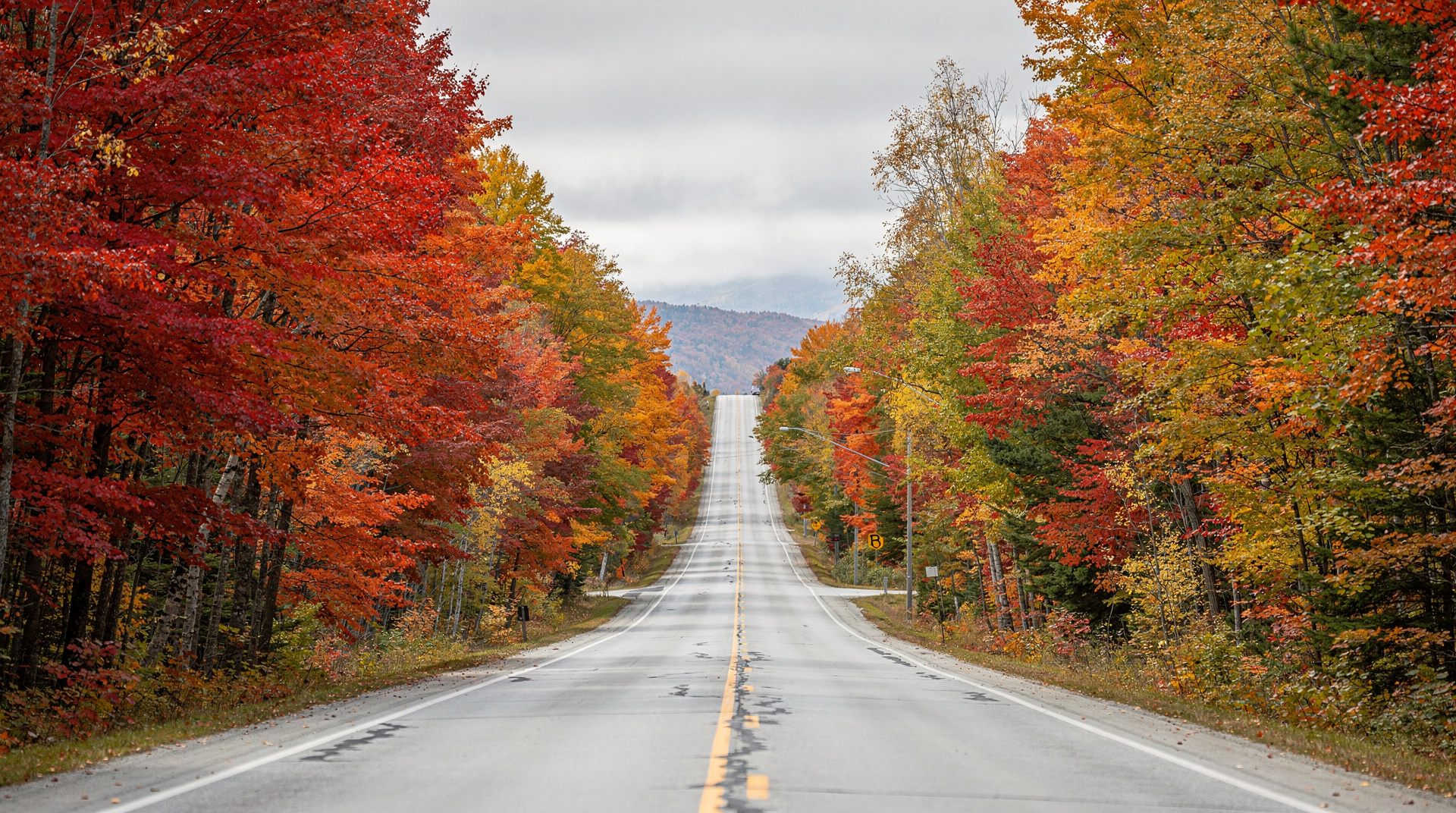
We drove north on Highway 15 toward Saint-Sauveur, then took the smaller roads through the ski village corridor — Sainte-Adèle, Sainte-Agathe-des-Monts — before reaching Mont-Tremblant late on Saturday afternoon. The colours in the lower Laurentides were already full peak: maples in acid orange and crimson, aspens in clear yellow, the occasional white birch with its bark standing out against the colour like a brushstroke. We stopped three times for photographs before reaching the village, which never happens in July.
Mont-Tremblant in late September is in shoulder season — the summer activities are mostly done, the ski season hasn’t started, and the resort village is quieter than at any other time. This turned out to be exactly right for us: we had the hiking trails largely to ourselves, the restaurants had tables available without reservations, and the prices were noticeably lower than the winter or summer peaks.
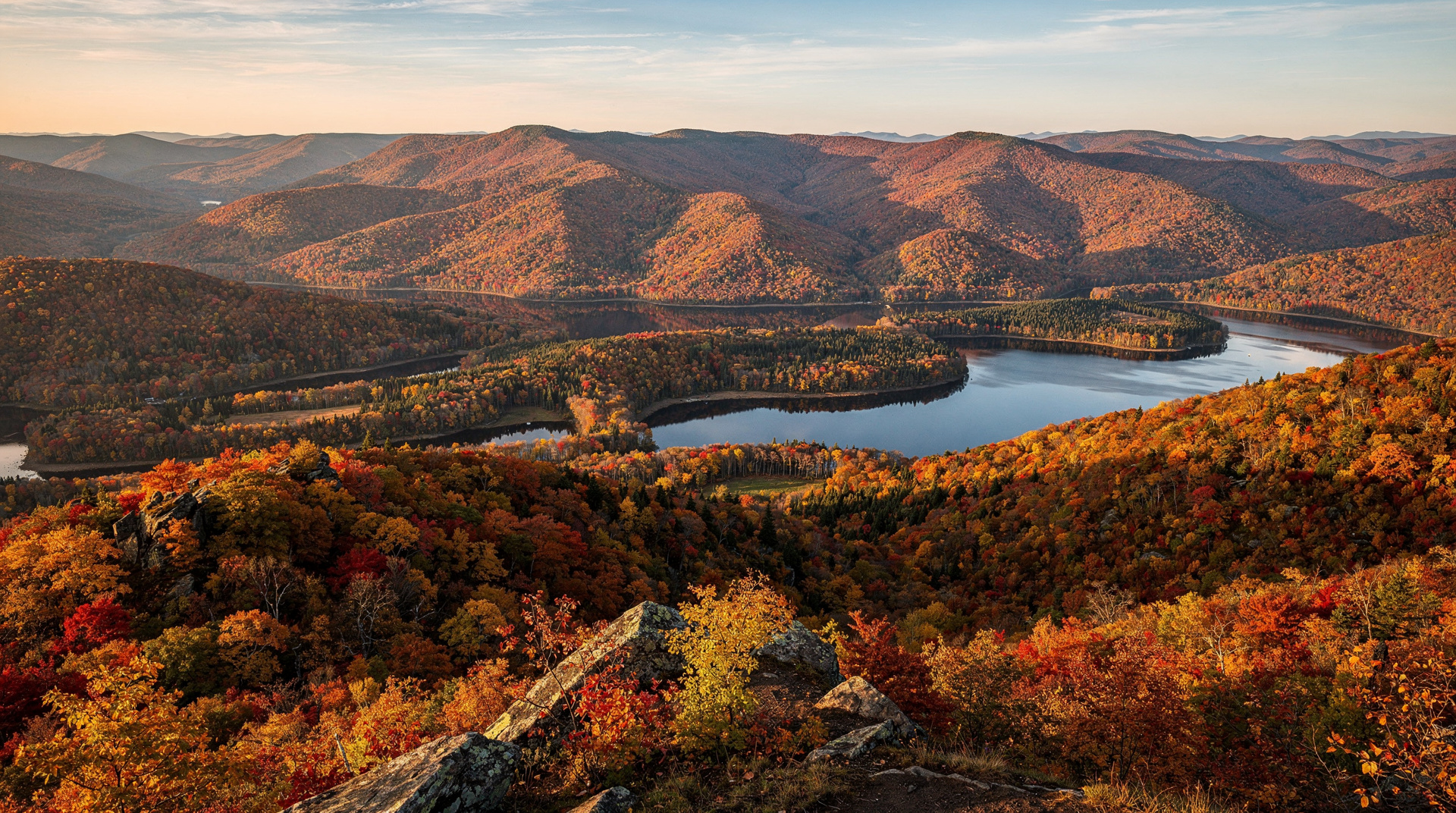
We hiked the La Corniche trail on Sunday morning, which is a moderate 10-kilometre circuit with views from the ridge above the village. The colour from elevation was extraordinary — the valley below was a mosaic of orange, red, and yellow, with the blue of Lac Tremblant visible in the gaps between peaks. We took too many photographs and arrived back at the trailhead at noon, red-cheeked and smelling of autumn forest.
For fall colours around Montréal and the Laurentians, there’s also an organised day trip that covers the highlights:
Laurentian Mountains Fall Leaves Day TripDay 3-4: Charlevoix — the peak we were hoping for
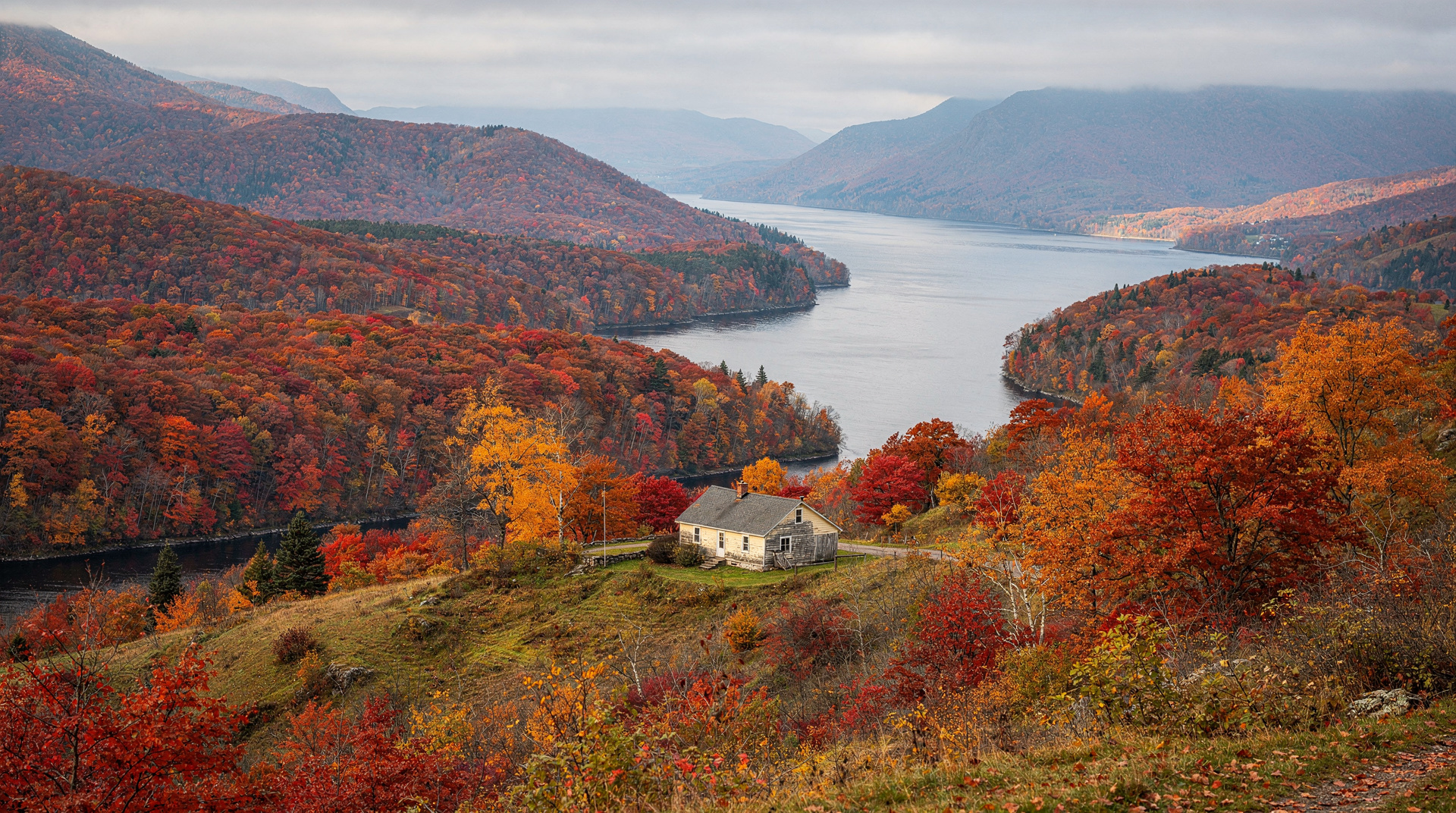
We drove east on Route 138 through Sainte-Jovite and then crossed onto the Charlevoix road, arriving in Baie-Saint-Paul on Tuesday afternoon. Baie-Saint-Paul in early October is one of the most beautiful small towns I have visited in any season — it sits in a bowl of hills where the Gouffre River meets the plain, and the hills behind the town were, on that Tuesday, at absolute peak colour. I am not prone to hyperbole about scenery, but this specific view — the painted hills above the white and grey houses of Baie-Saint-Paul, with the Saint-Laurent visible through the valley — was the most beautiful thing I saw on the entire trip.
We stayed two nights at the Auberge La Muse, a small twelve-room inn on a quiet street near the town centre. The rooms are modest but the breakfast is not — local cheese, fresh bread, maple-cured salmon, jams from the surrounding farms. The owner, a woman who had been running the place for twenty years, gave us a hand-drawn map of the countryside roads she thought we should drive. We followed it exactly on day four and drove through villages with names like Saint-Urbain and Sainte-Agnès, on roads where the canopy of trees overhead was so dense with colour that driving felt like moving through a tunnel of fire.
The Charlevoix landscape is composed of hills that were created by a meteorite impact about 350 million years ago — the impact crater is about 54 kilometres in diameter and is responsible for the unusual bowl-shaped topography. I find this makes the landscape more interesting to look at rather than less. It explains the specific quality of the hills: gentle but dramatic, without the sharp angles of younger mountains.
Day 5: the wrong timing at Tadoussac
Here is the miscalculation. We drove from Baie-Saint-Paul to Tadoussac on Thursday, crossing the Saguenay on the ferry at Baie-Sainte-Catherine. We arrived expecting late-season colour; we found mostly bare trees. The Côte-Nord at Tadoussac runs about two weeks ahead of Charlevoix, meaning the peak had already passed, and what remained was the stripped, grey-brown beauty of early bare-branch winter rather than the colour riot we’d had in Charlevoix.
This was my timing error. The information is there if you look for it: Charlevoix foliage peaks roughly October 1-15; Tadoussac and Côte-Nord peak September 20-30. We arrived at Tadoussac on October 6, and we were too late.
I want to document this because almost every foliage guide online treats Québec as a single colour zone with a single peak, which is wrong. The province is enormous and the timing varies significantly from south to north and from valley to coast. The Laurentides peak first (late September), then Charlevoix (early-to-mid October), then the Eastern Townships (mid-October). Tadoussac is early, not late.
What Tadoussac did have, late-season, was silence and solitude. The whale-watching boats had mostly stopped for the season (the last cruises run in mid-October), and the tourist infrastructure was winding down. We had the Pointe-Noire observation point essentially to ourselves. No whales visible, but a family of harbour seals hauled out on a rock close to shore, which was an unexpected consolation. The Hôtel Tadoussac was serving dinner to a handful of guests rather than the summer crowds, and the food — local fish, Charlevoix cheese, a wine list heavier on Québec and French producers than in summer — was excellent.
What we’d do differently
Earlier. If we were to repeat this trip specifically for foliage, we would leave Montréal on September 20 rather than late September. That would give us Laurentides at early peak (September 22-26), Charlevoix at early peak (September 27-October 2), and Tadoussac at actual peak (September 25-30, approximately). The dates vary by year depending on temperatures — a cold August accelerates the timeline, a warm September delays it.
The fall foliage itinerary I’ve written based on this trip accounts for the timing by region and recommends leaving Montréal in the third week of September. The Charlevoix destination page covers where to stay and what to do in that region in detail. And Tadoussac — even out of season — is still worth the drive.
What made the trip work despite the miscalculation
Even with the Tadoussac timing wrong, the overall shape of the route — Laurentides, then Charlevoix, then the coast — was the right structure, and I would recommend the same order to anyone else building a fall road trip from Montréal. The Laurentides go first because they peak earliest and are closest to Montréal, giving you an easy opening two days before committing to longer drives.
Charlevoix is worth the two nights we gave it rather than a rushed day trip — the hillside roads reward slow driving, and Baie-Saint-Paul itself is worth an evening rather than a passing glance. If I were rebuilding this itinerary from scratch today, I would swap the order for the coast: visit Tadoussac first, on the way up, and let Charlevoix be the grand finale on the way back rather than the middle act.