Wendake: visiting the Huron-Wendat Nation in a day
Getting there and why I almost didn’t go
Wendake is fifteen kilometres from Québec City — about twenty minutes by car, or a bus connection that takes somewhat longer. On the map, it looks like a suburb. I had driven past the exit on previous trips to Québec City without stopping, always telling myself there wasn’t time or I’d do it on the next visit.
On my seventh visit to Québec City, in October 2023, I had no excuse left. I had a free morning on a Tuesday, the Hôtel Château Bellevue where I was staying was quiet, and I had just finished reading Bury My Heart at Wounded Knee on the plane and was thinking more carefully than usual about what it actually means to “visit” a First Nations community as a tourist.
That morning discomfort — the uncertainty about whether visiting as a tourist is appropriate, what it means, what it extracts and what it offers — is worth sitting with before you go. I’ll come back to it.
I drove to Wendake. I parked at the edge of the village and walked in.
| Distance from Québec City | 15 km, about 20 minutes by car |
| Time needed | Half day: 2–3 hours for the site, plus lunch |
| Cultural site cost | Guided visit around 25–30 CAD per adult |
| Restaurant | La Traite, lunch ~65 CAD, tasting menu ~110 CAD |
| Getting there without a car | Bus connection from Québec City, or a guided day trip |
The Huron-Wendat Nation: context before visiting
The Huron-Wendat are an Iroquoian-speaking people whose traditional territory covered a large area of what is now southern Ontario and northern New York State — a region the French called La Huronie. After a series of devastating conflicts with the Haudenosaunee (Iroquois Confederacy) in the 1640s and the destruction of Huronia, a group of Wendat families allied with the French made their way east, eventually settling near Québec City in the 1690s at a location called Jeune-Lorette, which is now Wendake.
The community has been in its present location for more than three hundred years. It is a federally recognised First Nation reserve with a population of about 4,000 members. The community has a distinctive cultural identity that has survived colonisation, displacement, and assimilation policies — there is a living Wendat language programme, cultural institutions, and an economy that includes both traditional trades and contemporary enterprises, including the tourism infrastructure I was visiting. For readers who want the fuller historical arc — the fall of Huronia, the alliance with the French, and the centuries since — the New France history overview covers ground this piece only touches.
The key point for visitors: this is not a heritage reconstruction or a theme park. It is a functioning community that has chosen to share aspects of its culture with visitors as both a cultural and economic decision. The share of visitors who understand this distinction before arriving is, based on conversations I had with staff at the cultural site, lower than you might hope.
Onhoüa Chetek8e: the traditional site
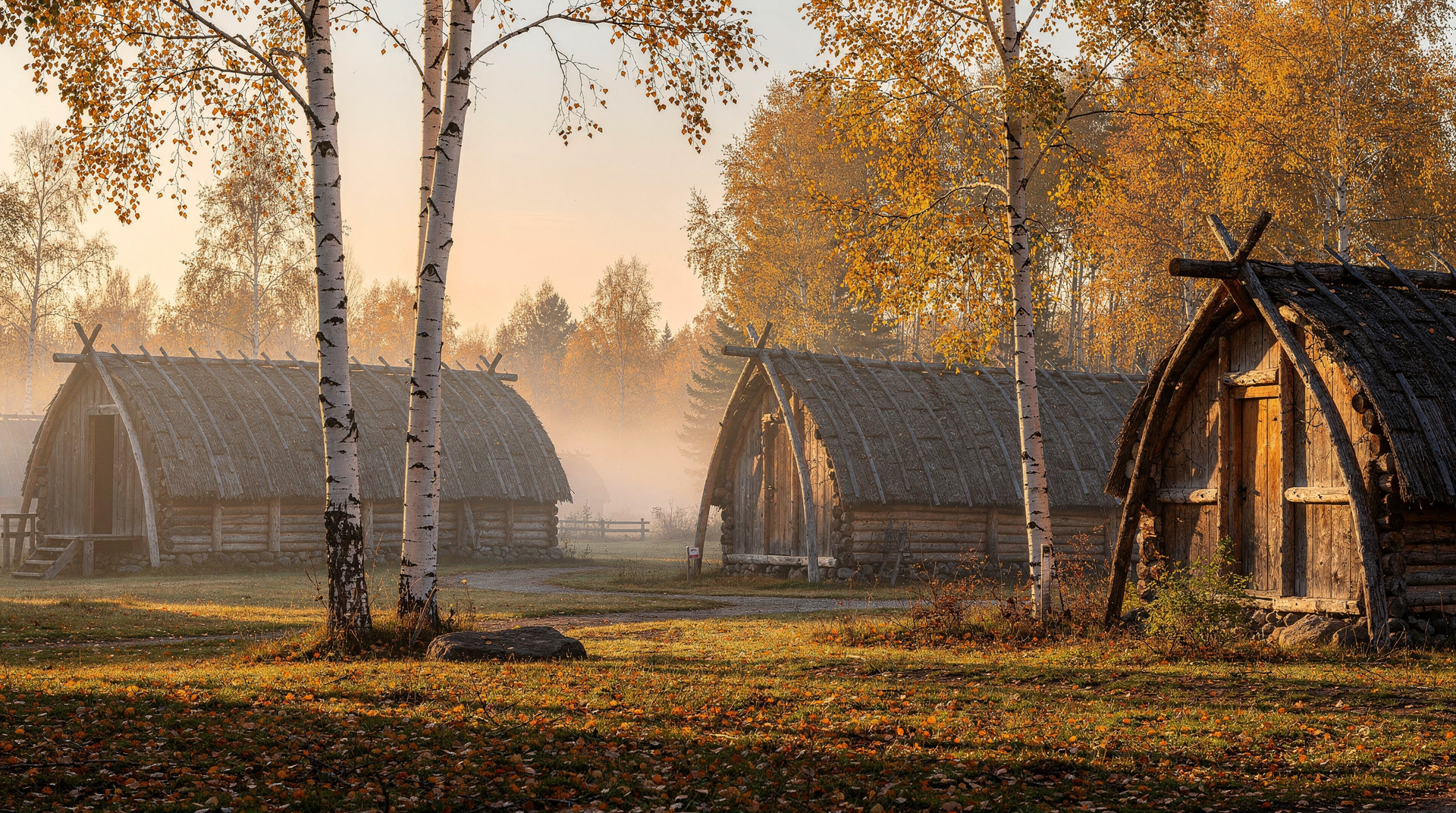
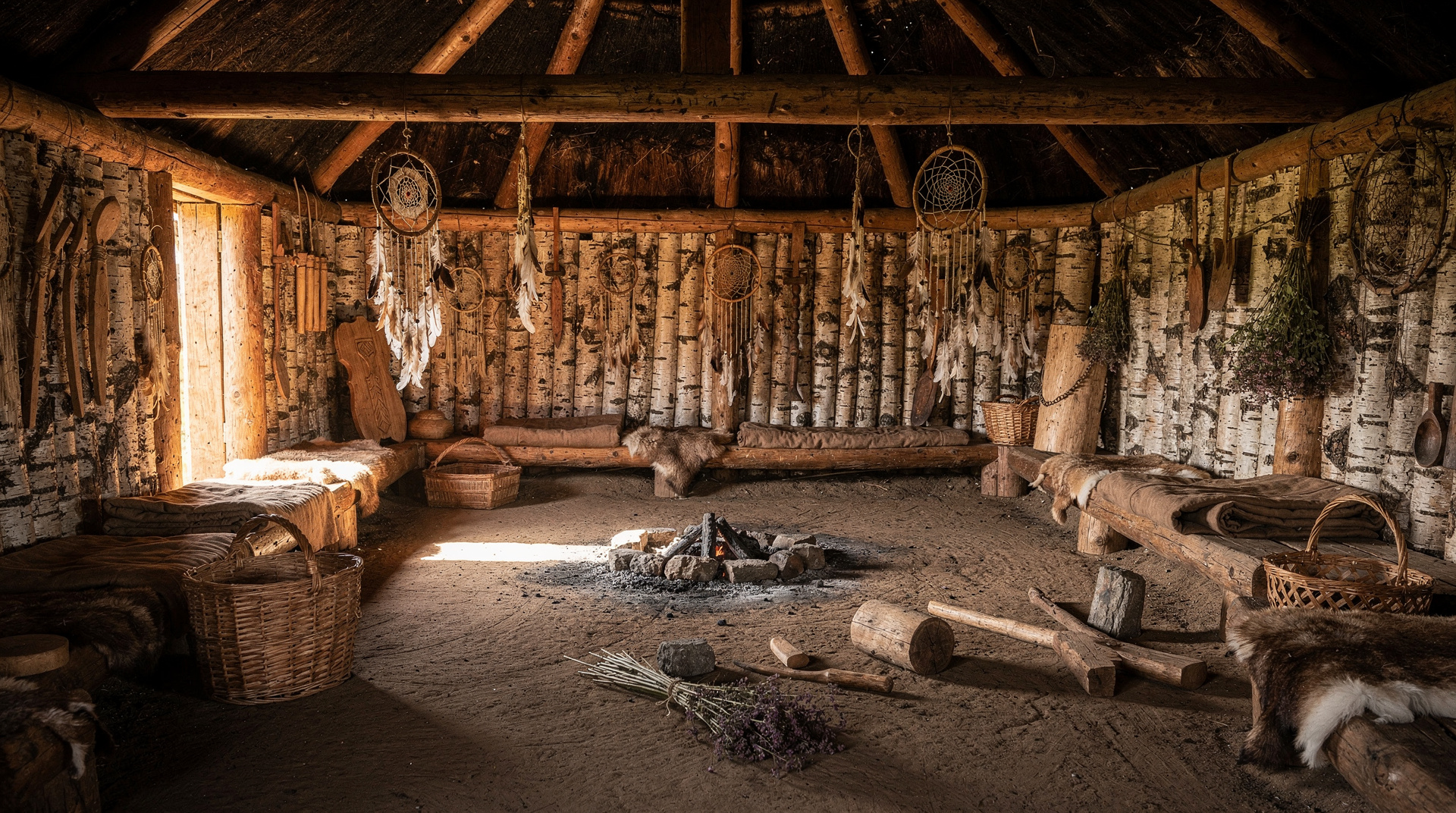
The main cultural attraction in Wendake is the Onhoüa Chetek8e traditional site — the name means roughly “living environment” in Wendat, and the name is significant because the goal is not to display a dead culture but a living one. The site includes a reconstruction of a traditional longhouse village of the kind the Wendat lived in before French contact, with guides who explain what daily life looked like, how the longhouses were built, how the community organised itself.
I walked in at 10am and was met by a guide named François-Xavier, a young Wendat man who introduced himself in both French and English and asked where I was from. When I said England, he said, “Good — I’ll explain everything we don’t have to explain to Canadians.” This was meant as a gentle observation about the differential quality of First Nations education across different systems, and it was accurate.
The longhouse reconstruction is substantial — about 25 metres long, made of bent sapling frames covered in birchbark, with sleeping platforms along the sides and a central fire trench. François-Xavier explained the social organisation of the longhouse (matrilineal and matrilocal — the longhouse belonged to the oldest woman and her daughters), the division of labour, the winter food storage practices, and the relationship between the Wendat and the French fur traders that shaped colonial Québec more than most French-Canadian histories acknowledge.
What struck me was the absence of the museum-display tone I often find in heritage sites. François-Xavier spoke about these things as elements of a culture that continues, not one that ended. He made a point of explaining that certain aspects of traditional practice — the spiritual life, the ceremonial protocols — are not part of the public tour, not because the community is hiding anything, but because they are private and belong to the community rather than to visitors. He said this matter-of-factly and without apology, and it was the clearest statement of appropriate cultural boundaries I have encountered in any heritage tourism context.
The site also includes a canoe-building demonstration, a craft workshop with Wendat artisans, and a shop selling work made by community members. I bought a pair of beaded moccasins — 185 CAD, made by a member of the community — and a small carved wooden bear that I was told was made from white birch, a tree with specific significance in Wendat tradition.
Restaurant La Traite
La Traite is the restaurant at Hôtel-Musée Premières Nations, which is the high-end hotel adjacent to the cultural site. It is one of the most interesting restaurants in the greater Québec City region and is almost completely absent from the usual top-ten lists, which I attribute to it being fifteen kilometres outside the city centre and in a First Nations community rather than in Vieux-Québec.
The menu is focused on Indigenous and local ingredients: smoked trout and pickerel from Wendat-managed waters, wild game (caribou, venison, bison), three sisters (corn, beans, squash in various preparations), bannock (a flatbread introduced through European contact but adopted into Indigenous cooking across North America), maple in multiple applications, and a drinks list that includes teas made from local plants and a Wendat-produced liqueur.
I had lunch: a smoked trout carpaccio to start (delicate, slightly smoky, with a wild berry reduction), then a bison tartare with pickled fiddle-head fern and bannock. Dessert was a maple and wild berry tart with birch syrup crème fraîche. The birch syrup was a revelation — similar to maple in concept, collected from birch sap in early spring, but with a more complex, slightly bitter quality that cut through the sweetness in a way maple alone doesn’t.
The prices are mid-range for the region: the lunch I described was about 65 CAD including coffee and a glass of local wine. For dinner, the tasting menu is around 110 CAD. If you are already planning where to eat around Québec City, La Traite deserves a place alongside the options in the where to eat in Québec City guide — it is easy to overlook simply because of the distance from Vieux-Québec.
For an e-bike tour of the Wendake area that combines the cultural visit with local trails, the following is available:
E-Bike Tour Wendake Huron-WendatThe question I started with
Is visiting Wendake as a tourist appropriate? I came here uncertain and I left more certain.
The Huron-Wendat Nation has built specific tourist infrastructure on its own terms, controlled and operated by community members, with clear protocols about what is shared and what is not. The community derives economic benefit from visitors in a direct way — the staff are community members, the artisans are community members, the hotel generates revenue for the community. This is not a situation where external operators are extracting value from a community’s heritage; the community is the operator.
What visitors need to bring, I think, is a willingness to be educated rather than entertained. The Onhoüa Chetek8e site is not a performance; it is a teaching. The appropriate mode is attention and humility, not photographs taken without asking and questions about “what do you actually believe.”
François-Xavier told me at the end of the tour that the most common question he gets is whether the Wendat have any connection to the Huron in Huronia, the people who appear in French-Canadian history books. “We are those people,” he said, with the quiet patience of someone who has explained this many times and has chosen not to be annoyed by the need to. “The word ‘Huron’ was a French name they gave us. Wendat is what we call ourselves.”
For more detail on planning a visit, the Wendake destination page covers practical logistics. The First Nations and culture guide has historical and cultural context. Wendake is a thirty-minute detour from a Québec City trip; I’d argue it is one of the more important things you can do in the region, and it pairs naturally with the other day trips from Québec City if you have a full week to work with. Museum-goers who want more depth after the site visit should also look at the museums of Québec City guide, several of which cover related history.