Why I fell in love with Québec
The moment I realised this place was different
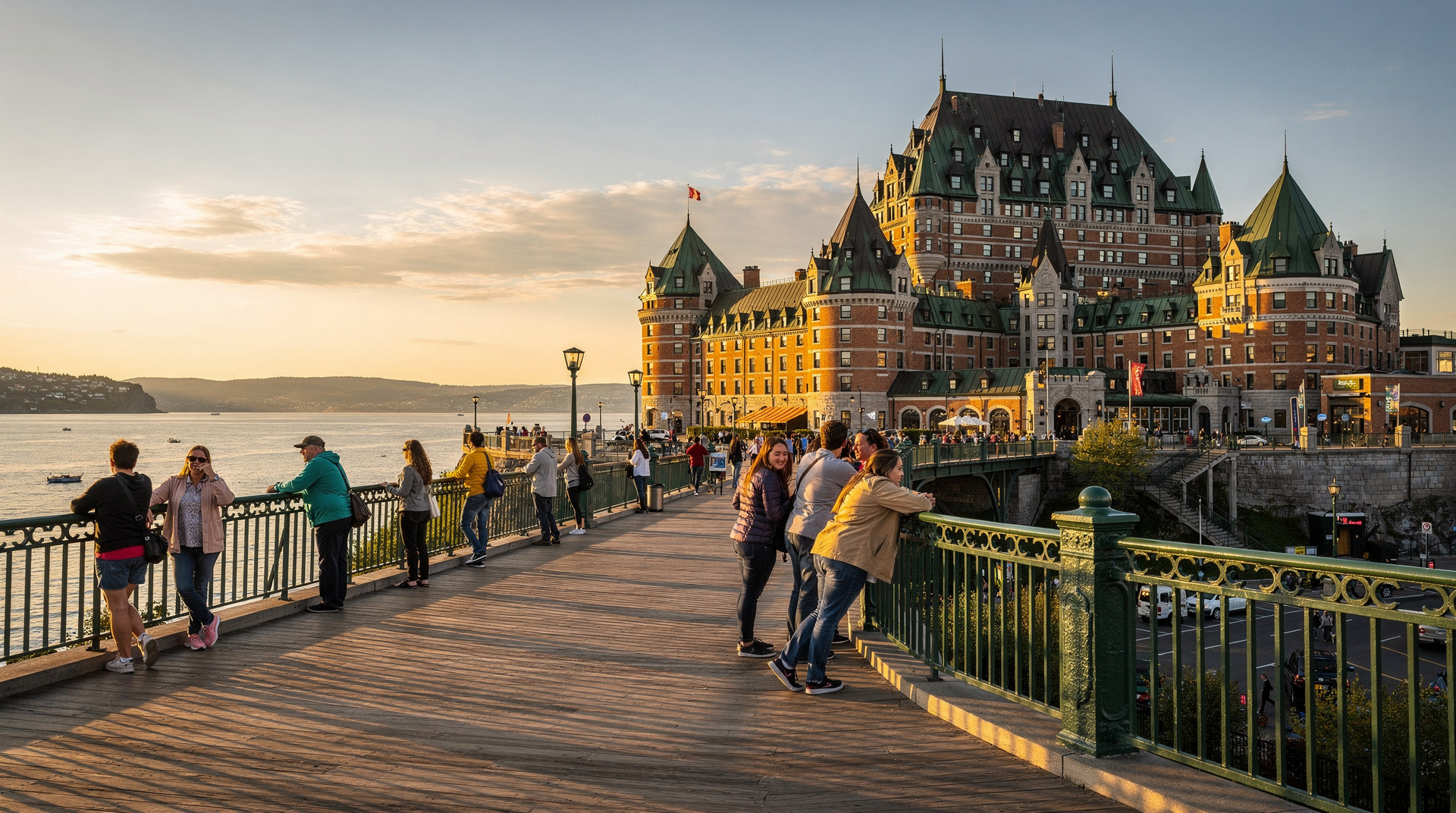
I remember the exact second it happened. I was standing on the Terrasse Dufferin, staring down at the Saint-Laurent spread out below me in mid-April, with small ice floes still drifting past and a wind cold enough to make my eyes water. The Château Frontenac rose behind me like something out of a dream, or maybe a fairy tale that nobody warned me about. I had flown in from Paris the day before, and I was not remotely prepared for what I found.
| First visit | February, Québec City, -25°C |
| Return visits | Four since, in summer, autumn and March |
| What surprised me most | The French, the winter, the warmth of strangers |
| What I’d tell a first-timer | Dress in real layers, whatever the season |
| Where to start | Québec City’s old town, then Montréal |
I had been to Canada once before — a conference in Toronto, three days, mostly inside a glass tower. Canada had felt like a slightly colder, slightly quieter version of a place I already understood. Québec felt like nothing I could have predicted.
The first thing that stopped me was the French. Not the French I speak, not the French of Bordeaux or Lyon or the brasseries of the 11th arrondissement in Paris, but something older and softer and stranger. The vowels are rounder, the intonation sings differently, and certain words arrive that haven’t been heard in France since the seventeenth century. A woman in a café asked me if I wanted a serviette de table and called it a napkin de table, and somehow this small hybrid felt like the whole history of the place compressed into three words.
I am not a French person pretending otherwise. I grew up in the UK, learned French in school, lived in Paris for two years in my late twenties. So I came to Québec with decent French and the quiet assumption that I would feel at home among French speakers. What I found instead was that the language added a layer of mystery. I understood maybe eighty percent. The other twenty percent was a door I couldn’t quite open, and that feeling — of almost-familiarity — kept me alert and curious in a way that rarely happens when you travel to places that feel too obvious.
The winter, which I had not understood
I visited in February, which is the wrong month for someone who has never experienced -25°C. I want to be honest about this: I was completely underprepared. I had a coat that was fine for London winters. It was not fine for Québec winters. Within the first morning I understood why locals describe winter clothing here as a system — layers, face covering, waterproof boots with felt liners, hand warmers you tuck into your pockets.
But here is the thing nobody told me before I went: the cold, once you dress properly for it, is exhilarating. The air is so dry and sharp that breathing feels like drinking something clean. The snow doesn’t feel like the grey slush of northern European cities; it is white and deep and crunchy underfoot, and it stays that way for months because the temperature rarely rises above freezing for a sustained period. The city of Québec doesn’t try to hide from winter — it builds things out of it.
I visited the Hôtel de Glace at Valcartier, a hotel made entirely of ice and snow rebuilt from scratch every January, and I sat in an ice armchair eating a cocktail out of an ice glass, and I thought: this is a culture that has found a way to enjoy the most extreme thing about its geography rather than apologise for it. If you want to actually stay a night there rather than just visit, this is the experience I mean:
Overnight stay at the Hôtel de Glace, Québec
The Carnaval de Québec was in full swing during my visit, and Bonhomme Carnaval — the giant snowman mascot who presides over everything — struck me as the perfect symbol of the local philosophy. Winter is not an enemy. Winter is the party. If February is not your instinct for a first visit, the best time to visit guide lays out the case for winter against the more obvious summer and autumn options, and the Hôtel de Glace guide covers what a visit or a stay actually involves in more practical detail than I have room for here.
The people, who were not what I expected
I had heard that Québécois were reserved. This turned out to be completely untrue, at least in my experience. What I found was a warmth that felt genuine rather than performed, and a kind of pride that was not aggressive but quietly confident.
A man named Denis, who drove me from the airport to my hotel in a battered Dodge Ram, spent forty-five minutes explaining the history of the fleur-de-lis on the provincial flag without me asking. He was not showing off; he just seemed to believe, correctly, that I would find it interesting. He was right. By the time we reached the Auberge Saint-Antoine in Vieux-Québec, where I was staying, I had a primer on New France that no guidebook had given me.
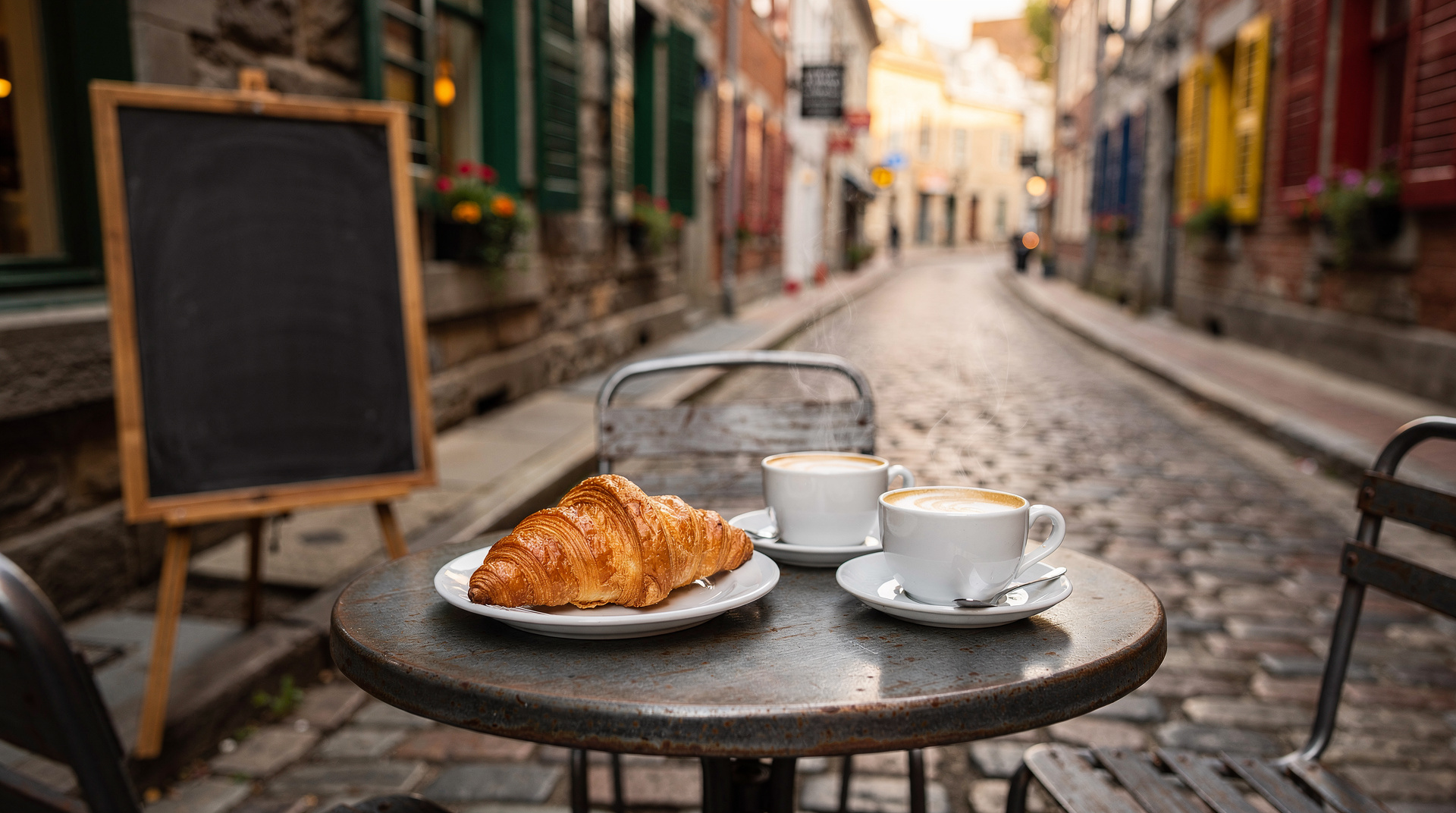
At the auberge, the concierge — Sylvie, whose name I remember because she wrote it on my map with a little star next to the restaurant she recommended — pointed me toward a place called Le Saint-Amour on Rue Sainte-Ursule. She said: “Don’t order the menu, ask for the carte, and tell them what you feel like eating. They’ll make something for you.” She said this as though it were completely normal. I did exactly that, and the chef sent out three courses I hadn’t seen on any menu, finishing with a maple tart that I still think about.
This is a quality I noticed everywhere: a willingness to make things personal, to treat strangers as people with specific tastes and not just tourists to be processed. It is not universal — there are tourist traps in Vieux-Québec where the staff are going through motions, and I’ll come to those — but as a general disposition, it struck me as unusually generous.
What surprises Europeans specifically
I have talked to a lot of European friends who have been to Québec since my first trip, and we keep coming back to the same set of surprises.
The scale. Québec is a province larger than most European countries, and the distances are genuinely staggering. Montréal to Québec City is 250 kilometres — that is three hours by car on a good day — and that is considered a short hop. The Gaspésie peninsula is twelve hours from Montréal by road. This is not a place you tour the way you tour France or Italy, hopping between cities every other day. You need a car, and you need time, and you need to accept that vast stretches of highway will pass between interesting things.
The bilingualism, which is more complicated than it looks. The official language of the province is French, and in Québec City you can spend an entire week barely hearing English. Montréal is more mixed, and in certain parts of the city — Mile End, downtown, Westmount — you might hear more English than French. This creates a linguistic texture that is unique in North America and slightly disorienting, in a good way, for visitors from either language group.
The food. I had prepared myself for poutine, and poutine is indeed everywhere and indeed good, but the serious food culture of Québec — particularly in Montréal and, increasingly, in Québec City — is something else. There is a local cuisine that draws on French technique, North American ingredients, Indigenous traditions, and a very local obsession with fermentation and seasonality.
The maple season, which happens in March and April, is a kind of collective ritual: everyone goes to a cabane à sucre (sugar shack) in the countryside, sits at long tables, and eats ham and beans and oreilles de crisse (fried pork rinds) while being given unlimited amounts of maple syrup on everything. The poutine guide and the sugar shack guide both go into more detail than a first-timer usually expects from what sound like simple dishes.
What gets under your skin
I have been back to Québec four times since that first February visit. I have been in summer, which is a completely different place — warm, festive, the Festival d’été de Québec filling every corner of the old city with music, the terrasses packed until midnight. I have been in autumn, when Charlevoix turns colours I didn’t think were real. I have been in March, for the sugar shacks.
What keeps drawing me back is hard to articulate precisely, but I’ll try. Québec feels like a place that is genuinely itself — not a copy of somewhere else, not performing an identity for tourists. The French language and the North American landscape create something that belongs to neither Europe nor the rest of Canada, and this distinctiveness is held with a quiet pride that doesn’t need to be defended or explained. The culture has enough history, enough confidence, and enough strange cold beauty that it simply exists, and you can enter it or not.
I entered it, and I haven’t quite left.
What I’d tell my first-time self
If I could go back and brief myself before that first February trip, I would say three things. First, buy the coat and the boots before you arrive, not after — the specialist outdoor shops in the Old Port and along Rue Saint-Jean are good, but a jacket bought on day one is a jacket you shiver through until you own it.
Second, do not schedule every day tightly; some of the best hours I have had in Québec were unplanned — the forty-five minutes in Denis’s Dodge Ram, the extra half hour at a café because the owner wanted to talk about her grandmother’s tourtière recipe. Third, learn to hear the difference between Québécois French and the French you may already speak, and do not apologise for needing things repeated; nobody there expects European French vowels, and most people are pleased you tried.
I would also tell myself not to compress Québec City and Montréal into the same few days the way I nearly did on that first trip. They are genuinely different rhythms — one contained, historic, walkable in an afternoon; the other sprawling, mixed, requiring a car or a lot of metro time to get a real sense of. Giving each city its own dedicated stretch, rather than a rushed day trip between them, is the single change that would have improved that first visit the most.
If you’re planning a visit, start with Quebec City — the old city especially, which is unlike anything else on this continent. Then, if you have time, Montréal offers a completely different rhythm. The French language and culture guide I’ve put together will help you navigate the bilingual landscape with less bewilderment than I had on arrival.
One practical note: whatever season you go, dress in actual layers. I cannot stress this enough. The boutique hotels in Vieux-Québec are delightful, but they are not warm enough to compensate for a coat that was designed for London.