Québec City in winter versus summer: which feels more 'Québec'?
Two completely different cities in the same walls
I have visited Québec City four times over the past several years. Two of those visits happened in January, deep in the heart of winter; two happened in August, at the absolute peak of summer tourism. After all those trips, I keep getting asked the same question from friends planning their first visit: when should I go?
The honest answer is that Québec City in January and Québec City in August are almost two different destinations sharing the same stone walls. They have the same Château Frontenac. They have the same Terrasse Dufferin, the same narrow streets of Vieux-Québec, the same funicular connecting Basse-Ville to Haute-Ville. But the atmosphere, the pace, the cost, the crowds, and most importantly the feeling of the place — all of that is completely different.
Here is my attempt to break it down honestly, season by season.
| Summer (August) | Winter (January) | |
|---|---|---|
| Hotel, Vieux-Québec | 200–350 CAD/night | 120–180 CAD/night (spikes during Carnaval) |
| Restaurant waits | 45–60 min without reservation | Usually walk-in |
| Temperature | 24–28°C | -20°C to -5°C |
| Crowds | International, cruise ships | Mostly Québécois, quiet |
| Signature experience | Terrasse Dufferin, river cruises | Hôtel de Glace, ice sculptures |
The summer version: busy, golden, international
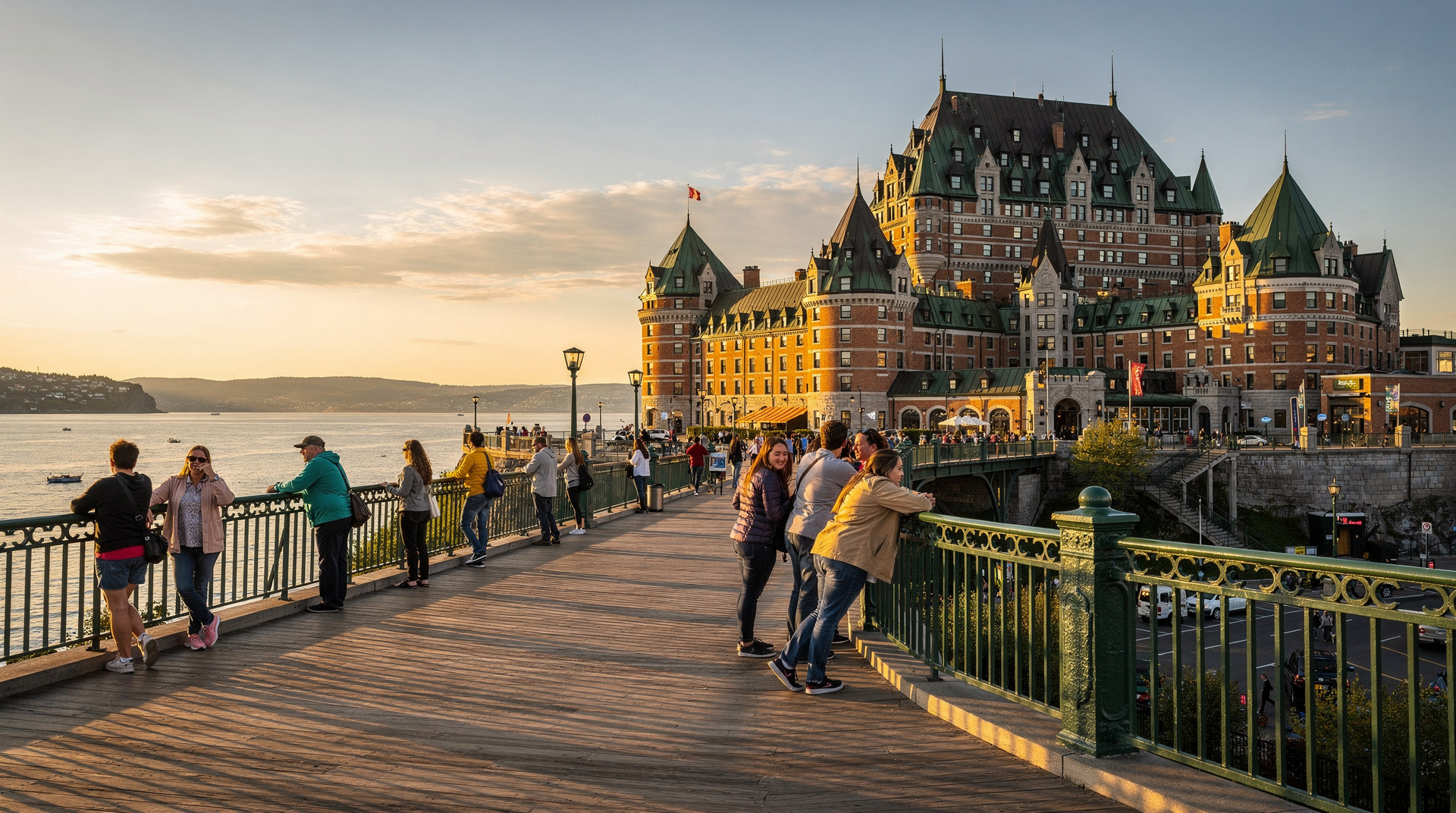
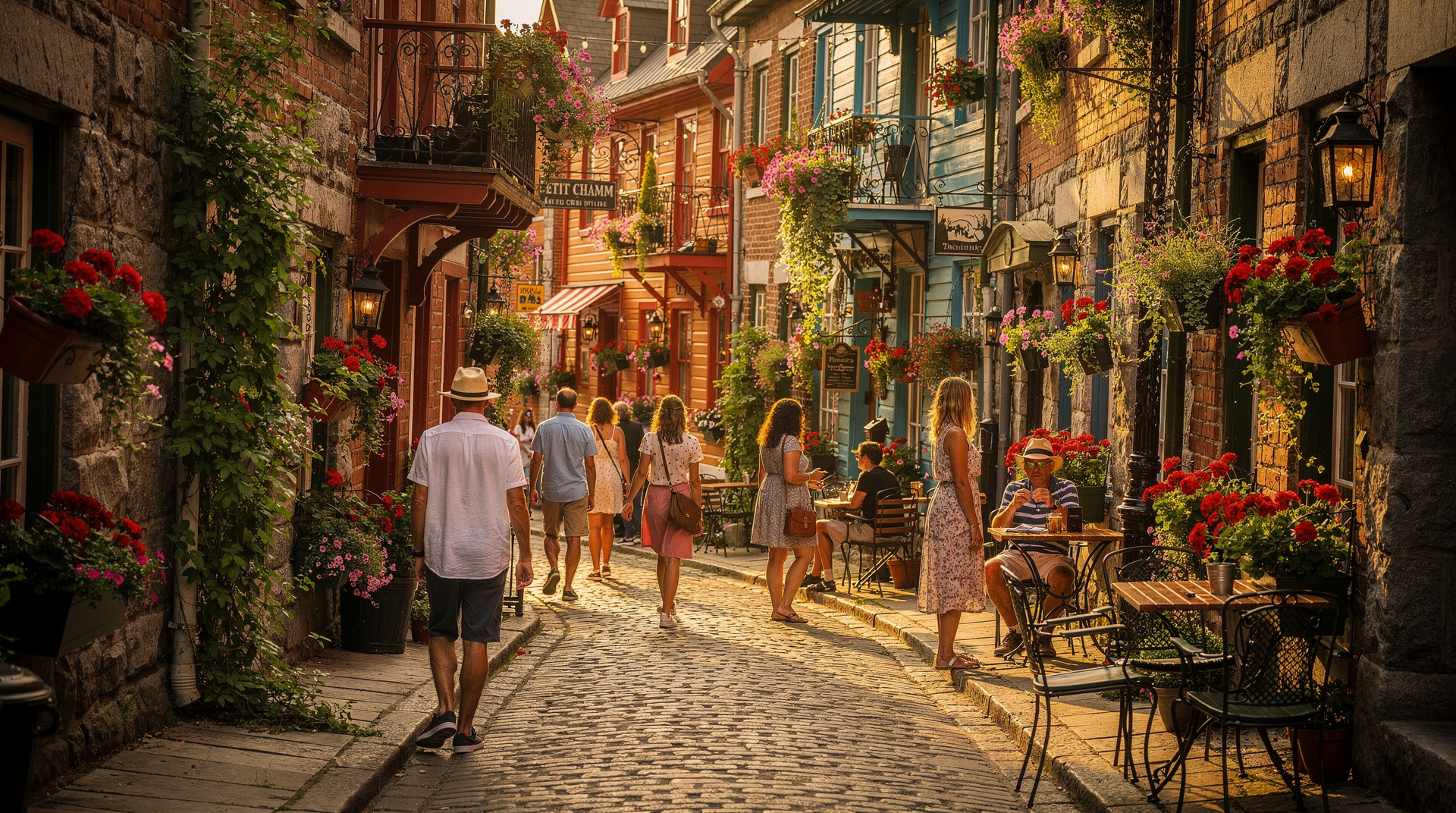
August in Québec City is genuinely beautiful. The light is long. The Terrasse Dufferin fills with people from everywhere — French tourists, Americans who drove up from New England, Germans with guidebooks, school groups from Ontario. The outdoor cafés in Petit-Champlain are packed. The lines for the funicular stretch down the hill. Every restaurant in Vieux-Québec has a wait.
I want to be fair: there are good reasons why August is peak season. The weather is reliable — expect highs of 24 to 28°C, occasional thunderstorms, almost no rain for days at a time. You can walk for hours through the old city without needing more than a light jacket in the evenings. The Saint-Laurent gleams. The Plains of Abraham look like a postcard.
But the crowds are genuinely overwhelming on certain days. When a cruise ship docks in the port (and several dock per week in August), the streets of Vieux-Québec reach a saturation point that makes it hard to feel anything except the presence of other tourists. The rue du Trésor, historically a street where artists sold prints of Québec scenes, is now essentially a tourist trap gauntlet. The restaurants on rue Saint-Louis charge tourist prices that are 30 to 40 percent above what locals pay in neighbourhoods like Saint-Roch or Limoilou.
If you go in August, I recommend spending at least half of your time outside the old city walls. Île d’Orléans is a 20-minute drive and a completely different experience — strawberry farms, small wineries, farm-to-table food, almost no tourists in a hurry. The Montmorency Falls are genuinely spectacular and often less busy in the morning before the tour buses arrive.
Half-day tour to Montmorency Falls and Île d’Orléans
The winter version: colder, emptier, and more itself
I went for the first time in January on a dare, essentially. A friend had gone the previous year during Carnaval de Québec and told me it was the most memorable travel experience of his life. I was sceptical — temperatures of -18°C sounded like punishment, not vacation.
I was wrong about almost everything.
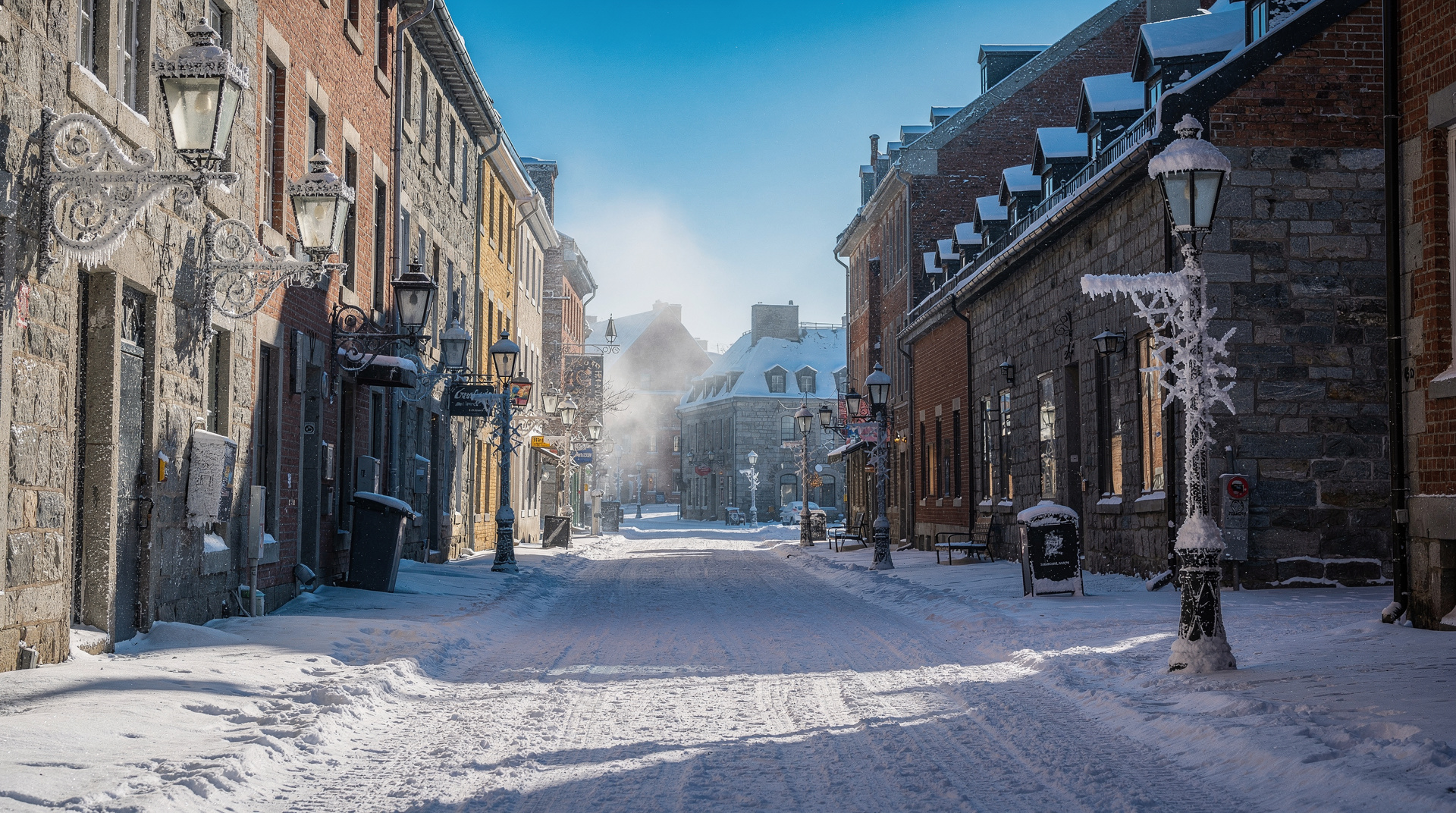
The city in January, outside of the Carnaval period (which runs roughly from late January through mid-February), is uncrowded in a way that is almost surreal. The streets of Vieux-Québec are quiet enough that you can stand on the Terrasse Dufferin and hear the wind off the Saint-Laurent without any other sound. The architecture registers differently when it is not surrounded by summer crowds — you actually see the city. The frosted stone buildings, the ice formations on the cliffs near the Château Frontenac, the glow of the windows in the blue hour of late afternoon.
I want to be specific about the cold because I know it puts people off. In early January, you can expect temperatures between -15°C and -5°C during the day, dropping to -20°C or colder at night. This is real cold — the kind that requires proper layers. A good base layer, a mid-layer, a serious outer shell, and wool or synthetic socks. Your hands and face need coverage. But Québec City is extraordinarily well-adapted to this. The Lower Town is partly sheltered. The restaurants and cafés have proper heating. Nobody is surprised when you walk in from the cold and need five minutes to decompress.
The winter experience that most surprised me was how alive the city felt despite (or because of) the cold. Ice sculptures appear throughout Vieux-Québec. The neighbourhood bakeries and cafés feel like the most inviting places on earth when you step in from the wind. The Hôtel de Glace, located at Valcartier about 30 minutes from the centre, is one of the most genuinely unusual places I have ever slept.
Hôtel de Glace overnight experience
Comparing the practical details
Let me give you the concrete numbers because they matter.
Accommodation costs: In August (peak), a decent hotel in Vieux-Québec costs 200 to 350 CAD per night. In January (outside Carnaval), the same hotel often runs 120 to 180 CAD. During Carnaval itself (late January to mid-February), prices spike back to summer levels — and you need to book months ahead.
Restaurant wait times: In August, popular restaurants in Vieux-Québec have 45-minute to one-hour waits without a reservation. In January, you can often walk in. The restaurants that are open (a handful close for the quieter part of winter) are operating at maybe 60 percent capacity.
Things to do: Summer has more variety on paper. The Plains of Abraham, river cruises, kayaking, bike tours, the outdoor events of the Festival d’été (which runs in July, not August, so you would need to time it carefully). Winter narrows the options but what remains tends to be more distinctive: ice canoeing on the Saint-Laurent, the Valcartier Vacances complex, snowshoeing in the Parc de la Jacques-Cartier, the fat bike tours through Vieux-Québec’s streets.
Crowds and authenticity: This is the crucial variable. In August, Québec City is hosting the world. In January, it is mostly hosting Québécois. You hear more French in January. The shops in Vieux-Québec that remain open are the ones locals actually use, not souvenir shops. The café conversations are local. The entire energy is slower and more genuine.
The honest verdict
I prefer January — but only outside the Carnaval period.
The Carnaval (late January to mid-February) is extraordinary and worth seeing once, but it means crowds, premium prices, and the city operating at a level of performance rather than itself. The two weeks before Carnaval, in early to mid-January, are my favourite window. The city is quiet, cold, beautiful, and more authentically itself than at any other time.
If you need warmth, ease, and maximum options, August delivers all of that. Just budget for the crowds and the prices. And please, spend time outside the walls.
For visitors who can only go once and are genuinely uncertain: go in late September or early October. The foliage in Charlevoix (about 100 km away) peaks in early October, the weather is still manageable (5 to 15°C), the summer crowds have thinned, and the city is in a kind of golden in-between that shows off all its best qualities without the extremes of either full summer or deep winter.
What you will miss in each season
If you go in winter, you miss: the outdoor terrasses, the river excursions, the ease of walking for hours without layering. You miss the golden light that makes the Château Frontenac look like a postcard. You miss the live music that spills out of bars and onto the Terrasse Dufferin in summer.
If you go in summer, you miss: the ice formations on the cliff faces. The sound of a quiet city. The sense that this very old place has a life that exists apart from tourism. You miss the particular light of a -15°C afternoon when the sky is completely clear and the snow on the Plains of Abraham catches the late sun.
Both versions of Québec City are worth knowing. But I would argue that the winter version is the one that feels more honestly, specifically itself.
Planning your visit
A few practical notes:
The Vieux-Québec walking tour with a local guide gives you a very different experience in each season — ask your guide specifically about the history of Québec City’s winters, which shaped its architecture and its culture in profound ways.
Winter walking tour in Old Quebec
Regardless of season, book accommodation early. In summer, because rooms sell out. In winter during Carnaval, because they sell out even faster. Outside those windows, you can usually find space with a week or two of notice.
If you are visiting from Europe and arriving in January, check the Québec eTA requirements before booking — the system is simple but needs to be done in advance of your flight. A few days is enough, but there is no reason to leave it to the last minute.
The walk from the Gare du Palais (where Via Rail trains arrive from Montréal) to the centre of Vieux-Québec takes about 20 minutes on foot. In August it is a pleasant stroll. In January at -18°C, take a taxi. The distance is short but the cold does not care about distances.
Day trips change character by season too
The nearby countryside is not just a summer add-on. Île d’Orléans, the farmland island a twenty-minute drive from the city, is at its best in August and September for the strawberry stands and small wineries, but it also has a genuinely peaceful winter version — snow-covered fields, wood smoke from farmhouses, a handful of producers still open for maple products in late winter. Montmorency Falls, similarly, transforms completely: a roaring curtain of water in summer, a partially frozen “sugarloaf” ice cone in deep winter that draws its own crowd of photographers.
If you are shopping for souvenirs, the season matters here too — the artisan shops of Petit-Champlain are busiest and best-stocked in summer, while winter visits mean smaller selections but far more attention from shopkeepers who are not fielding a queue. The souvenirs guide has specifics on what is actually worth bringing home from either season.
The funicular connecting the Basse-Ville to the Haute-Ville is worth mentioning separately, because it too has two distinct personalities. In August it is a genuine queue, ten to twenty minutes on a busy afternoon, mostly used by visitors who don’t want to climb the Casse-Cou (Breakneck) stairs in the heat. In January it is nearly instant — locals use it as ordinary infrastructure, the way anyone would use a lift, and visitors who are used to the summer wait are often surprised to just walk on. Either way, walking the stairs once for the view is worth doing regardless of season; you only need the funicular for the return trip if your legs are tired.
Montmorency Falls cable car and observation tour
Both seasons offer something the other does not. The question is only what kind of traveller you are, and which version of Québec City speaks to something you are looking for.