Québec in summer vs winter: which season to choose
3-Hour Whale Watching Boat Tour
Duration: 3 hours
Should I visit Québec in summer or winter?
Both are exceptional but radically different. Summer (June–August) means festivals, whale watching, kayaking, and hiking. Winter (December–March) means Carnaval, skiing, Hôtel de Glace, and dogsledding. If you can only go once, late September combines foliage, mild weather, fewer crowds, and lower prices — the best-kept secret of Québec travel.
Québec’s seasons are not gradations of “nice” — they are entirely different worlds
In most destinations, the question of “when to visit” is about degrees: slightly better weather, slightly fewer crowds, slightly lower prices. In Québec, the question is genuinely about which experience you want — because summer Québec and winter Québec have almost nothing in common except geography.
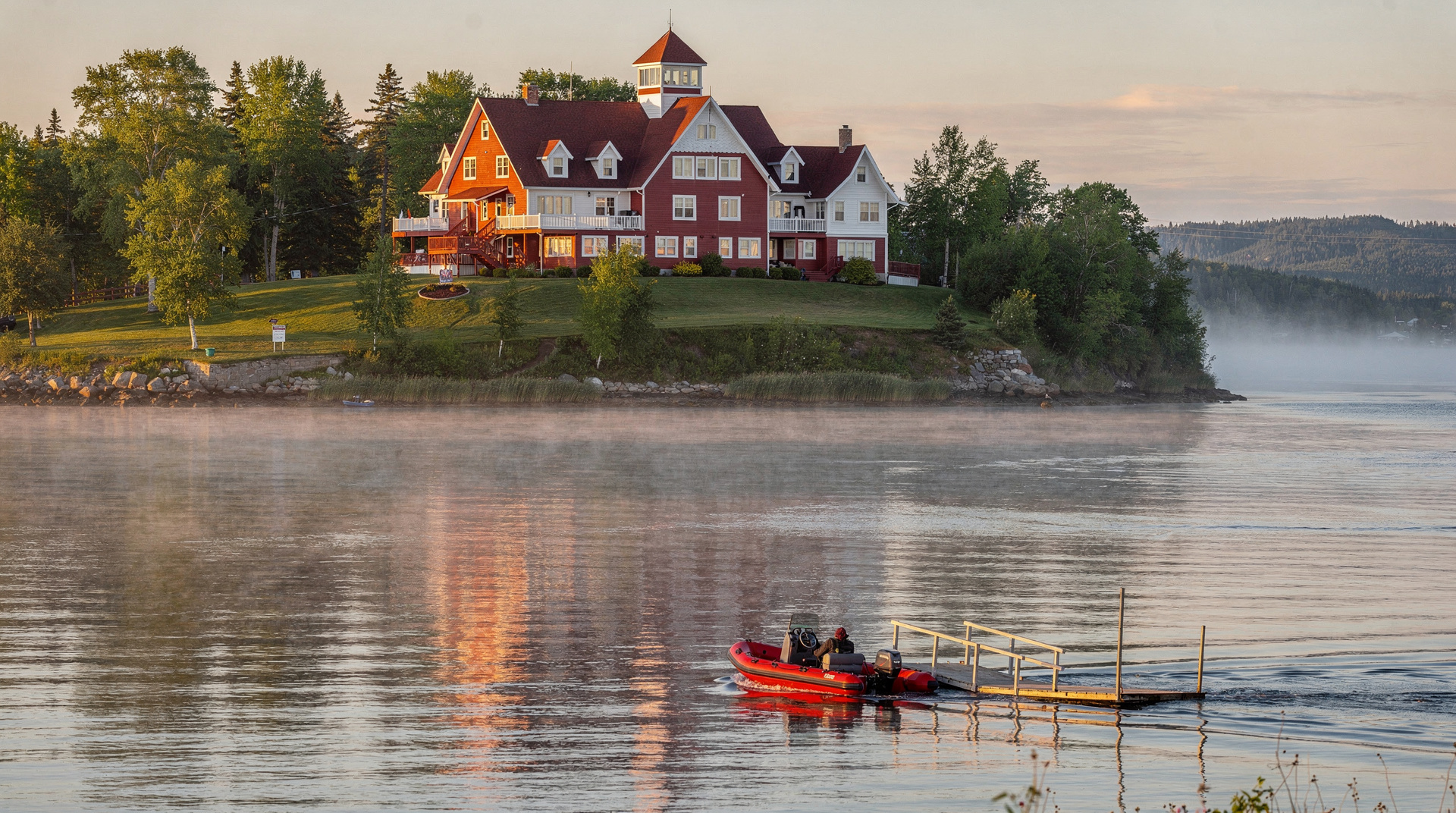
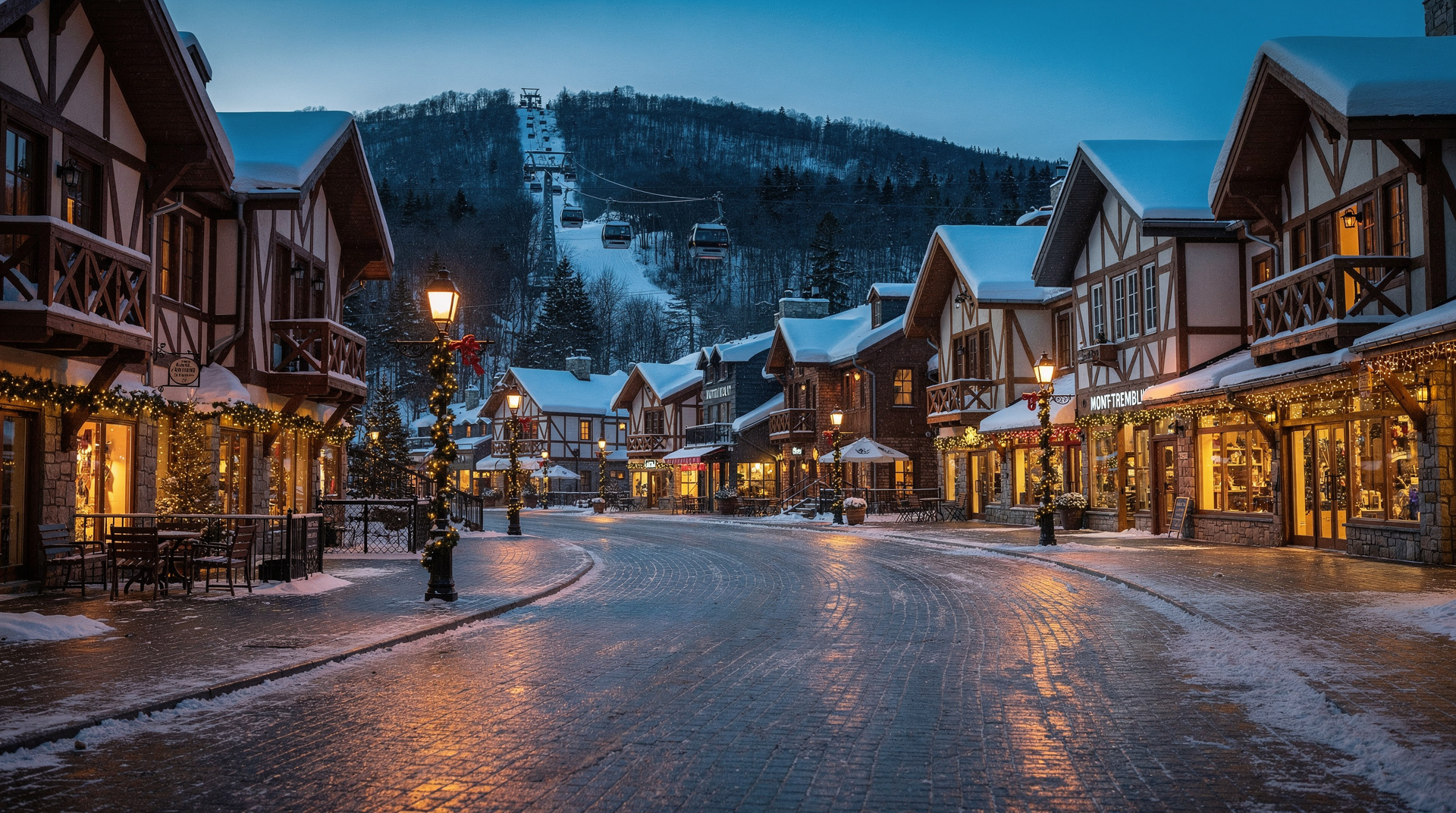
Summer means the St. Lawrence estuary alive with whales, Montréal’s jazz festival drawing 500,000 people to free outdoor stages, Old Québec’s terrace bars overflowing, and hiking trails through forests in full green bloom. Winter means the same streets under two metres of snow, outdoor wood fires burning at Carnaval, skiers carving runs at Mont-Tremblant at sunrise, and the Hôtel de Glace — a hotel built entirely of ice — open for overnight guests from January to March.
This guide compares them honestly, tells you what each season is best for, and explains the third option that most visitors overlook.
| Summer highlight | Whale watching, festivals, hiking, terrace culture |
| Winter highlight | Carnaval, Hôtel de Glace, skiing, dogsledding |
| Best-kept secret | Late September — foliage begins, whales still present, crowds thin |
| Biggest summer cost driver | Peak July-August hotel rates, festival weeks |
| Biggest winter cost driver | Carnaval period, ski weekends at Tremblant/Sainte-Anne |
Summer in Québec (June to August)
What summer looks like
Québec summer is warm to hot, humid in the cities, and spectacularly alive. July and August bring temperatures of 22–28°C in Montréal and Québec City. Long days — sunset after 8:30 pm in July — mean outdoor patios, evening festivals, and a general sense of a city in full celebration mode.
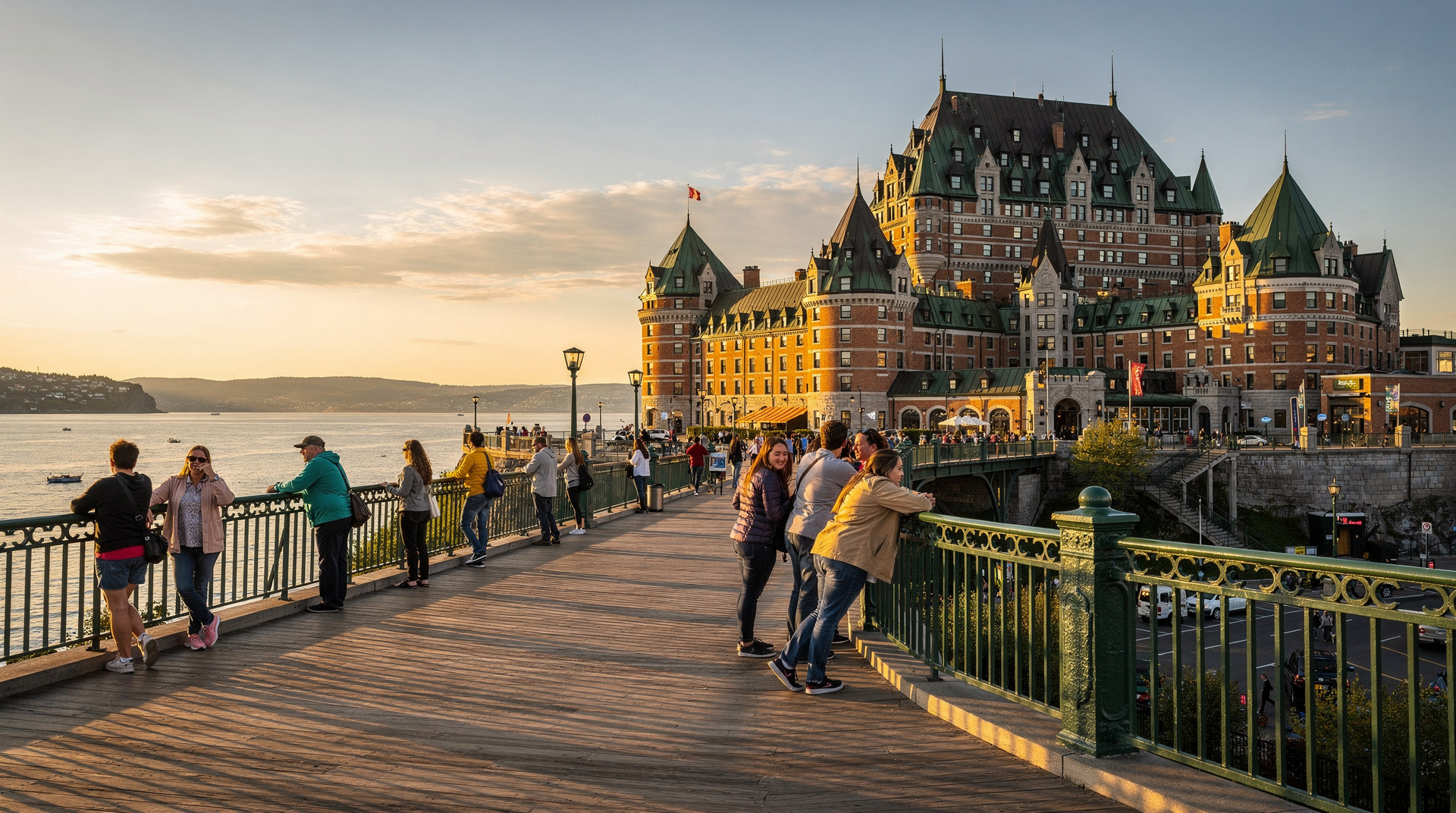
The outdoor terrace culture in Québec is real and wonderful. Nearly every restaurant and bar in Montréal’s Plateau, Mile End, and Vieux-Port has a terrace. Old Québec’s café culture fills the squares and alleyways of Petit-Champlain and the terrasse Dufferin overlooking the river.
Summer highlights
Whale watching at Tadoussac. The standout natural experience of Québec summer. The window runs from May to October, with peak whale activity in July and August. A 3-hour boat tour from Tadoussac puts you near beluga whales, fin whales, humpbacks, and occasionally blue whales — the largest animals on Earth. This is one of the best wildlife experiences in North America. No other season competes for whale watching.
3-Hour Whale Watching Boat TourMontréal festival season. Festival International de Jazz de Montréal (early July) is the world’s largest jazz festival, with 500+ concerts, most of them free and outdoor. Just For Laughs comedy festival (July) takes over the Quartier Latin. Osheaga music festival (August) brings major international acts to Parc Jean-Drapeau. The concentration of world-class free outdoor events in Montréal from late June to early August is matched by few cities on Earth.
Hiking and national parks. Québec’s national parks — Parc de la Jacques-Cartier, Hautes-Gorges-de-la-Rivière-Malbaie in Charlevoix, Forillon in Gaspésie — are at their best in summer. Trails are fully open, rivers are running, and the forests are green and deep. The Gaspésie circuit (7+ days by car) is one of Canada’s great road trips, combining the Chic-Chocs mountains, coastal cliffs, and the Rocher Percé.
Island and water activities. Île d’Orléans, 20 km from Québec City, is an agricultural island with farm stands, cider orchards, and artisan producers. The St. Lawrence River offers sea kayaking, river cruises, and jet boating. Lachine Canal in Montréal is a bike and kayak route through the industrial history of the city.
Summer drawbacks
Crowds. Old Québec in July is very crowded. Montréal during Jazz Fest is very crowded. Tadoussac requires booking whale watching tours days or weeks in advance in peak season. Hotels fill up and prices spike.
Heat and humidity. Montréal in August can be genuinely hot and humid — 30+ °C with humidex making it feel like 38°C. This is uncomfortable for some travellers. Coastal areas (Charlevoix, Gaspésie, Tadoussac) are cooler and often breezy.
Mosquitoes and black flies. Early summer (May–June) in forested areas and near water brings black flies and mosquitoes. By July the black flies have mostly passed; mosquitoes remain through August. Bug spray is essential for any outdoor activity in national parks during this period.
Winter in Québec (December to March)
What winter looks like
Québec winter is not merely cold — it is the defining characteristic of the province’s identity and one of the main reasons to visit. The province receives reliable snowfall every year: Montréal averages 200 cm of snow annually, Québec City 300 cm. This is not the dusting that paralyzed European cities or the occasional snow event that disrupts North American ones. This is deep, reliable, sustained winter, and Québec infrastructure is designed for it.
Roads are cleared within hours of major snowfalls. Citizens dress appropriately and continue their lives outdoors. The attitude is best captured by the Québec phrase: “There’s no bad weather, only bad clothing.”
Winter highlights
Carnaval de Québec. Running from late January to mid-February, Carnaval is the largest winter carnival in the world. The Old Québec streets fill with ice sculptures, night parades, and outdoor events centred around Bonhomme Carnaval — the large snowman who serves as the festival’s mascot. The Caribou, a mix of wine, alcohol, and spices served hot in the streets, is consumed in enormous quantities. Bonhomme’s Ice Palace is built anew each year. This is genuinely unrepeatable.
Hôtel de Glace. Built every January at Village Vacances Valcartier, 20 minutes from Québec City, the Hôtel de Glace is a hotel constructed entirely of ice and snow: 44 rooms, ice beds, ice fireplace, ice bar, ice chapel for weddings. An overnight stay is expensive (250+ CAD per person) but one of the most memorable hotel experiences in North America. Day visits are also available.
Hôtel de Glace Overnight ExperienceSkiing at Mont-Tremblant and Mont-Sainte-Anne. Québec’s ski resorts are among the best in eastern North America. Mont-Tremblant (102 trails, 2,116 ft vertical, 1h30 from Montréal) and Mont-Sainte-Anne (71 trails, 2,050 ft vertical, 40 min from Québec City) both receive 300–400 cm of snow annually and operate modern lift infrastructure. See our comparison guide for details.
Winter Day Trip with Gondola RideDogsledding. The Laurentides and Laurentian mountains offer genuine dogsledding experiences — not the 5-minute tourist version, but 2–3 hour excursions through forested trails. Mont-Tremblant area operators offer excellent programs. See our dogsledding guide for what to expect.
Dogsledding Valley AdventureOld Québec in snow. The walled city under heavy snowfall is one of the most photographed images in Canadian travel. The Château Frontenac lit up against a clear winter sky, the terrace Dufferin overlooking an iced St. Lawrence, and the stone streets of Petit-Champlain in quiet white — this is the version of Québec City that appears in every tourism brochure for good reason. Even if you are not skiing or attending Carnaval, winter in Old Québec has its own magic.
Winter drawbacks
Cold. Genuinely cold. Wind chill of -25°C or below occurs regularly in January. Anyone not accustomed to this climate needs proper gear and to understand that outdoor activities require more preparation, more layers, and a willingness to embrace the cold rather than retreat from it. See our packing guide for winter clothing recommendations.
Some attractions are closed. Whale watching, the Gaspésie loop, Île d’Orléans cycling, and many outdoor summer activities are not available in winter. The province pivots entirely to winter activities.
High prices in peak winter. Carnaval period (late January–mid-February) in Québec City means high hotel prices and advance booking requirements. Ski weekends at Tremblant in January–February are expensive. The cheapest winter months are December (before Christmas) and March (after peak ski season).
The third option: late September
If you can only visit once and you want something that combines pleasant weather, spectacular natural beauty, manageable crowds, and lower prices than peak summer — visit Québec in late September.
The foliage peaks by region: Laurentides around September 21–30, Charlevoix and Tadoussac around October 1–10, Eastern Townships October 5–20. This means that a late September trip can catch:
- Peak foliage colour in the Laurentides and along the Saguenay
- Final weeks of the whale watching season at Tadoussac (September is excellent — fewer crowds, similar whale activity)
- Temperatures of 8–18°C — comfortable for hiking and city walking, cool but not cold
- Hotels 20–30% cheaper than July–August
- Half the crowds of summer peak
The Québec fall foliage road trip — Montréal → Laurentides → Québec City → Charlevoix → Tadoussac → Saguenay — is among the most beautiful drives in North America and is best done in the third week of September. See our 7-day fall foliage itinerary.
Seasonal comparison table
| Factor | Summer (June–Aug) | Winter (Dec–Mar) | Late Sept (secret season) |
|---|---|---|---|
| Temperatures | 18–28°C | -15°C to -2°C | 5–18°C |
| Crowds | Very high | High (Carnaval/ski) | Low–moderate |
| Prices | Peak | Peak (Jan–Feb) | 20–30% below summer |
| Whale watching | Peak (May–Oct) | Closed | Last weeks (Sept) |
| Skiing | Closed | Peak | Closed |
| Foliage | Green | Snow | Peak (Sept–Oct) |
| Festivals | Jazz Fest, etc. | Carnaval | Few |
| Camping/hiking | Excellent | Limited | Good (early–mid Sept) |
| Best for | Festivals, whales, outdoors | Ski, Carnaval, unique experience | Best overall balance |
For full month-by-month detail, see our Québec weather month-by-month guide.
Choosing based on what you actually want to do
If your answer is “I want to see whales and hike,” go summer — nothing in winter replaces that experience, and the Gaspésie loop or a Tadoussac-focused trip only makes sense May through October.
If your answer is “I want to experience real Canadian winter — snow, cold, Carnaval, an ice hotel,” go winter — this is a genuinely different kind of trip, and no amount of summer visiting substitutes for standing in Old Québec under snow or waking up in the Hôtel de Glace.
If your answer is “I want the classic Québec City and Montréal sightseeing, good food, and comfortable walking weather without picking a specific seasonal activity,” the shoulder seasons — late September as covered above, or May — deliver most of what both extremes offer at a fraction of the cost and crowding.
If you’re travelling with young children or older relatives who find extreme cold or extreme heat/humidity difficult, shoulder season again wins on comfort grounds alone, regardless of which iconic activities you’d ideally choose. Shoulder season is also the easiest choice for anyone still deciding between multiple regions to visit, since almost everything covered in this guide — cities, Charlevoix, Île d’Orléans, the Laurentides — is open and pleasant at once, rather than requiring the seasonal trade-offs summer and winter each demand.
What each season means for a road trip
A 7-day classic loop covering Montréal, Québec City, Charlevoix and Tadoussac plays very differently by season. In summer, every stop is open and accessible, but you’re competing with peak crowds and prices at each one. In winter, the same loop is possible but the Gaspésie extension and much of the outdoor Charlevoix activity (hiking, cycling, farm visits) shuts down — winter road trips work better focused on Québec City, Mont-Tremblant and Carnaval rather than trying to replicate the summer itinerary. In late September, the loop runs almost exactly like summer but with better traffic, easier bookings and the added bonus of early foliage.
Frequently asked questions about Québec in summer vs winter: which season to choose
What is the weather like in Québec in summer?
June to August sees temperatures of 18–28°C in Montréal and Québec City. July is often hot and humid, with occasional thunderstorms. Humidity is notable in both cities. Nights are pleasant (15–18°C). Outdoor terraces are everywhere and the city feels alive. Coastal areas like Gaspésie and Charlevoix are cooler (15–22°C) and often windier.How cold does Québec get in winter?
Winter in Québec is genuinely cold. January averages are -15°C to -5°C in Québec City, -12°C to -4°C in Montréal. Wind chill can push perceived temperatures to -30°C or lower in January. Proper cold-weather gear is essential: base layers, insulated waterproof jacket, snow boots rated to at least -25°C, balaclava or neck gaiter, and warm gloves. Montréal is slightly milder than Québec City due to the urban heat island effect.Is Québec more expensive in summer or winter?
Summer (July–August) is the peak season in most of the province, especially in Old Québec, Montréal, and Tadoussac. Hotels are 30–50% more expensive than winter rates in these areas. Winter has its own price peaks: Carnaval period in Québec City (late January–mid-February) drives hotel rates up sharply. Mont-Tremblant and Mont-Sainte-Anne ski weekends (especially January–February) are expensive. The cheapest periods overall are November and April.When is the best time for whale watching in Québec?
Whale watching at Tadoussac runs May to October. The peak is July and August, when all major species — beluga, minke, fin, humpback, and blue whales — are present. June is excellent for blue whales specifically. September still has good sightings with fewer crowds. After mid-October, whale watching tours typically end for the season.What is the foliage season in Québec?
Foliage is Québec's best-kept travel secret. The colour peaks by region: Laurentides (Tremblant area) around September 21–30; Charlevoix October 1–15; Eastern Townships October 5–20; Gaspésie September 25 – October 10. Late September to early October covers most of the province and combines spectacular colour with mild temperatures, lighter crowds than summer, and lower prices.Should I visit the Carnaval de Québec?
Carnaval de Québec (late January to mid-February) is the world's largest winter carnival and one of the most unique festivals in North America — night parades, the Bonhomme Carnaval figure, ice sculptures, outdoor bars serving Caribou (a warm alcoholic drink), and the famous winter spirit that Québecers embrace rather than endure. Hotel prices in Québec City spike 40–60% during Carnaval. Book 3–6 months ahead.
Top experiences
Bookable activities with verified prices and instant confirmation on GetYourGuide.