Dog sledding in Québec: best regions, what to expect
Dogsledding Valley Adventure
Duration: 2-3 hours
Where is the best place to go dog sledding in Québec?
Mont-Tremblant is the most accessible from Montréal (130 km, 1h30). Charlevoix offers the most scenic backdrop. Saguenay and Mauricie give the most remote, authentic experience. Season runs December to March; typical tours last 1.5 to 4 hours and cost 130–200 CAD.
Why Québec is one of the best places in the world for dog sledding
| Where | Mont-Tremblant (most accessible), Charlevoix, Saguenay, Mauricie |
| Cost | Around 130-200 CAD for a standard 1.5-3h tour |
| Season | December to March, best in January-February |
| Included | Guide briefing, gear loan if needed, hot drink |
| Booking | 2-3 weeks ahead for January-February weekends |
Québec does not do winter halfheartedly. From late November to late March, the province receives between 2 and 4 metres of snowfall depending on the region, and average temperatures dip to -15°C across most of the interior. That combination — reliable snow, cold without being life-threatening, and vast wilderness within reasonable distance of major cities — makes it one of the most accessible places on earth to try dog sledding without flying to Scandinavia or Alaska.
The activity itself dates back centuries in this part of North America, used by Indigenous and French-Canadian trappers and traders long before snowmobiles existed. Today it is firmly established as a winter tourism experience, with dozens of licensed kennels spread across the province, ranging from easy 1.5-hour introductory tours to multi-day expeditions into the backcountry.
This guide breaks down the four main regions for dog sledding in Québec, what each offers, what you can expect to pay, what to wear, and how to pick an operator whose dogs are genuinely healthy and well cared for.
The four main regions for dog sledding in Québec
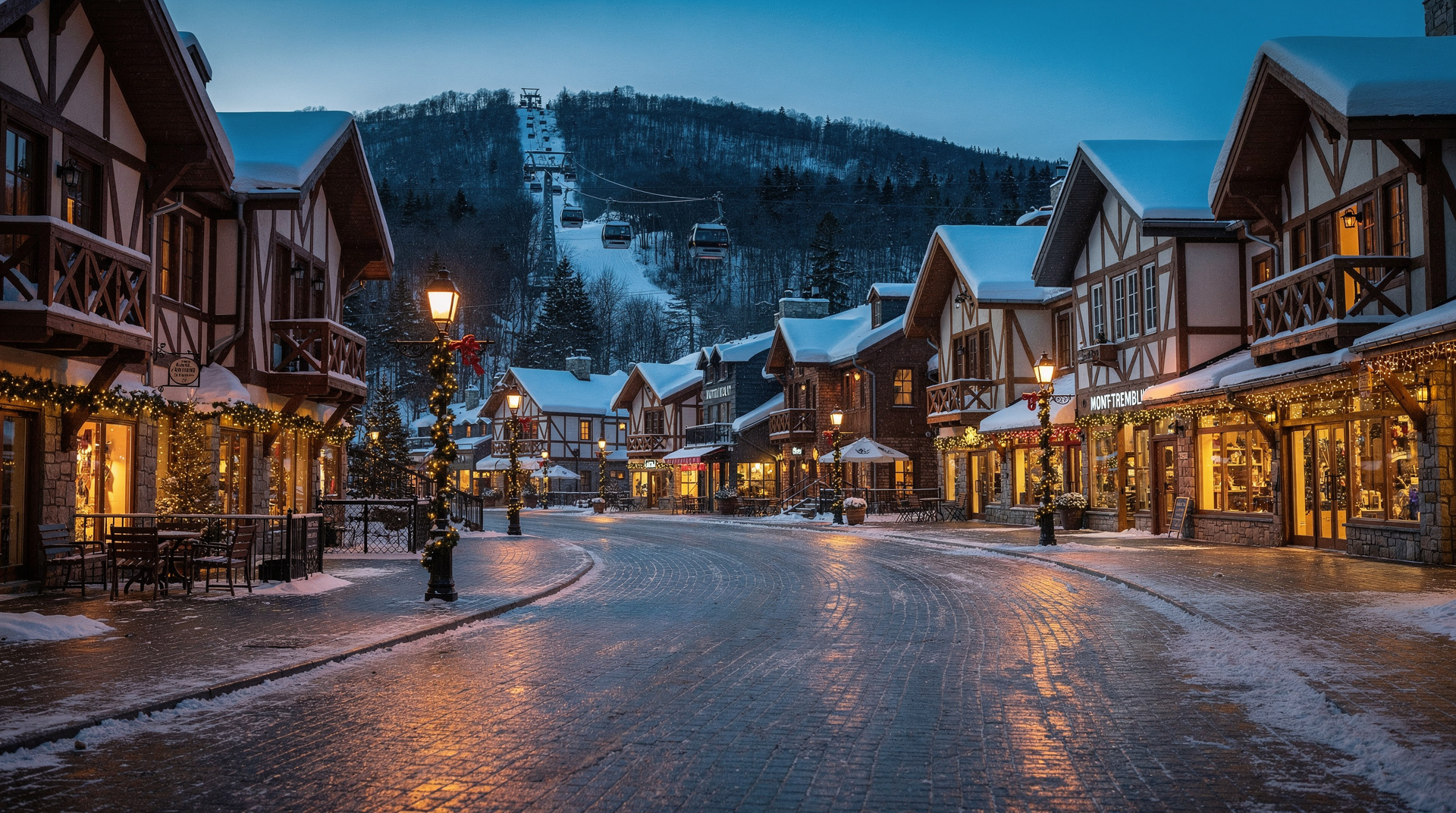
Mont-Tremblant and the Laurentides — most accessible from Montréal
The Laurentides region, anchored by Mont-Tremblant, sits roughly 130 km north of Montréal — about 1 hour 30 minutes by car. This makes it by far the easiest starting point for travellers based in Montréal who want a full dog sledding day without an overnight stay.
The landscape is rolling Laurentian hills, dense boreal forest, and frozen lakes. Trails here are typically well-groomed and suited to groups, including families with younger children. The concentration of tour operators is the highest in the province, which means more choices but also more variation in quality — do your homework.
Several operators run trips directly from the Mont-Tremblant resort village, which also allows you to combine skiing in the morning with dog sledding in the afternoon — a popular combo for families.
Dogsledding Valley Adventure (Mont-Tremblant) — a 2-to-3-hour guided run through forested valleys, suited to first-timers. Pricing around 150 CAD per adult.
Guided Dogsledding Tour with Hot Chocolate (Mont-Tremblant) — a shorter 1.5-hour session ending with a warm drink by the fire, good for families with young children. Around 130 CAD.
Charlevoix — most scenic backdrop
Charlevoix, the region along the north shore of the Saint-Laurent between Québec City and Tadoussac, is one of the most visually striking parts of the province in any season. In winter, the deep river valley, high plateaux, and occasional views of the frozen Saint-Laurent create a backdrop that photographers dream about.
Charlevoix is about 100 km east of Québec City (roughly 1 hour 30 minutes by car). Dog sledding in the region tends to be more wilderness-oriented than at Tremblant, with smaller operators running shorter groups through less commercial trails. The scale of the landscape — open fields interrupted by boreal forest — gives you a stronger sense of isolation even on a 2-hour tour.
Accommodation options in Charlevoix (La Malbaie, Baie-Saint-Paul, Pointe-au-Pic) range from budget auberges to the five-star Fairmont Le Manoir Richelieu, making it easy to build a proper winter weekend around dog sledding.
Expect prices similar to Tremblant: 140–180 CAD for a 2-hour tour. Some operators offer multi-day expeditions with overnight stays at remote camps — an entirely different level of experience, and priced accordingly (from 450 CAD per person per day).
Saguenay and Lac-Saint-Jean — most authentic
Saguenay and the surrounding Lac-Saint-Jean area form the heartland of Québec’s dog sledding tradition. Operators here tend to be smaller, family-run kennels that have been working with sled dogs for generations. You are less likely to find polished, resort-style infrastructure, and more likely to meet mushers who do this because it is their livelihood and passion, not because it is a tourist attraction.
The terrain is wilder. The Saguenay Fjord area and the boreal forests stretching north toward Lac-Saint-Jean are among the coldest and snowiest parts of inhabited Québec. January temperatures regularly hit -20°C or colder. Trails can be longer and more demanding, which experienced mushers appreciate.
Saguenay is approximately 200 km north of Québec City (roughly 2 hours 30 minutes by car). For a day trip from Québec City it is manageable; for the full experience, plan an overnight.
Prices here can be slightly lower than in the more tourist-heavy areas: 120–170 CAD for a standard 2-hour tour, though premium full-day or multi-day trips are priced accordingly.
Mauricie — underrated option from Montréal
The Mauricie region, centred on the Parc national de la Mauricie and the Trois-Rivières area, sits about 150 km northeast of Montréal — roughly 2 hours by car. It is less celebrated than Tremblant for dog sledding but worth knowing about: fewer tourists, similar snow conditions, and operators who are genuinely passionate about their animals.
The Mauricie forests are among the densest in southern Québec, creating long trail corridors through old-growth mixed forest. It is an excellent choice for repeat visitors to the province who have already done the Tremblant circuit and want something different.
Husky vs Alaskan: understanding the dogs
Most visitors arrive without knowing which breed they will be driving. Here is a quick primer.
Siberian Husky — the familiar breed with the wolf-like face and often blue or heterochromatic eyes. Medium-sized (18–27 kg), double-coated, built for moderate loads over medium distances. They are social, vocal, and in a kennel setting often more approachable for children. Most touring operations use Siberians or Siberian crosses.
Alaskan Husky — not a registered breed but a purpose-bred working dog developed for speed and endurance racing (the Iditarod and Yukon Quest use almost exclusively Alaskans). Leaner (16–25 kg), with a shorter coat suited to sustained exertion. You will find them at operators with a racing background. They tend to be more single-minded about running and less interested in being petted mid-tour.
Many kennels use crosses that combine the endurance of the Alaskan with the temperament of the Siberian. For a tourism context, the difference you will actually notice is size and temperament — both types are safe, enthusiastic, and extraordinarily good at their job.
What a typical tour looks like
Arrival and briefing (15–30 minutes)
You will arrive at the kennel and be greeted immediately by the sound of excited dogs. They know the harnesses mean a run is coming and they are vocal about it. Do not be alarmed: this is enthusiasm, not aggression.
Your guide will give a safety briefing covering:
- How to brake (drag brake, foot brake)
- How to steer on turns
- Commands: “hike” or “let’s go” (start), “whoa” or “stop” (halt), “gee” (right), “haw” (left)
- What to do if the sled tips over (stay calm, hold the handlebar, call for your guide)
You will then be fitted with a snowsuit and boots if you have not brought adequate gear. Most operators provide these at no extra charge, but confirm when booking.
Harnessing the dogs (15 minutes)
Guides typically let guests help harness the team — a chaotic and entertaining process. Each dog knows its position in the team (lead, swing, team, wheel) and many will position themselves automatically.
The run itself (1–4 hours)
Standard tours range from 1.5 hours (beginner, families) to 4 hours (half-day, more experienced). Multi-day expeditions exist but are specialty products.
You will drive your own sled with a guide ahead on a lead sled. On most tourist operations, a second guide follows in a snowmobile or on their own sled. Speeds on groomed trails reach 15–25 km/h; in open terrain with a strong team it can feel considerably faster.
Most tours include a stop mid-trail for photos, a snack, and a chance to interact with the dogs. The cold means a hot drink (cocoa or tea from a thermos) is a welcome bonus.
Après-sled (30–60 minutes)
After the run, you help unhitch the dogs (they will drink water and cool down), and most operators have a warm shelter where you can debrief over a hot drink. Premium operations include a light meal or maple products.
Prices and what is included
| Tour type | Duration | Typical price (CAD) | Usually included |
|---|---|---|---|
| Introductory | 1.5 h | 130–150 | Gear loan, hot drink |
| Standard | 2–3 h | 150–180 | Gear loan, hot drink, snacks |
| Half-day | 4 h | 200–280 | Gear loan, lunch stop |
| Full-day expedition | 6–8 h | 350–500 | All meals, gear |
| Multi-day (overnight) | 2+ days | 450+/day | Everything |
Children under 12 are typically charged 50–70% of adult rates when riding as passengers.
Dogsledding Upper Laurentians (Mont-Tremblant) — 1-to-2-hour session, good for families or those with time constraints. Around 130 CAD per adult.
What to wear: the essential packing list
Getting the clothing wrong turns dog sledding from magical to miserable. Québec winters are not to be underestimated.
Base layer — merino wool or synthetic thermal. Do not use cotton: it holds moisture and will make you cold.
Mid-layer — fleece or down vest. A down jacket works well here if you do not have a heavyweight insulated outer.
Outer layer — insulated, waterproof, windproof shell. Ski or snowmobile jackets are ideal. Temperature ratings matter: look for -30°C capacity.
Boots — the single most critical item. Insulated rubber or leather boots rated to -40°C. Your regular waterproof hiking boots will not be adequate for a 2-hour stationary-on-the-sled situation in -15°C. Most operators will lend you proper boots; always confirm in advance.
Extremities — insulated waterproof mittens (warmer than gloves for long exposure), a toque (knit hat), a balaclava or neck gaiter. Helmet liners are available at some operators.
Goggles — not mandatory but recommended at speed. Ski goggles work perfectly.
Dog welfare and ethical operators
This is worth discussing directly. Dog sledding has a chequered history in some parts of the world, and some operations have faced legitimate criticism for animal welfare. Québec has reasonable standards, but they are not uniformly enforced, and operator quality varies.
What to look for in a responsible kennel:
The SDA-Quebec code — The Sled Dog Association of Quebec (Association québécoise des mushers) sets standards for member kennels: adequate rest between runs, access to water, shelter, veterinary care, and minimum rest periods. Ask operators if they are members.
Dog condition — Healthy sled dogs are lean but not thin, with bright eyes, clean coats, and active behaviour. They should show enthusiasm to run — pulling on harnesses, vocalising. Lethargic or frightened dogs are warning signs.
Transparency — Reputable operators are happy to answer questions about their dogs, explain the breeds, and discuss their kennel routines. If questions about welfare are deflected, consider booking elsewhere.
Interaction policy — Good operators let you approach and pet dogs after the run (with guidance). They explain which dogs enjoy contact and which prefer space.
Run frequency — Working sled dogs should run regularly, not just on tour days. Ask how often the dogs run and what their off-season looks like.
Getting there: logistics
From Montréal to Laurentides/Mont-Tremblant: 130 km via Autoroute 15 North, then Route 117. Roughly 1h30 in normal traffic, 2h+ in Friday afternoon rush. A car is necessary — no direct public transport to kennel locations.
From Québec City to Charlevoix: Route 138 east, approximately 100 km, 1h30. Car required.
From Québec City to Saguenay: Route 175 north, approximately 200 km, 2h30. Car required.
Combining dog sledding with other winter activities
Dog sledding pairs naturally with other Québec winter experiences. Common combinations:
- Mont-Tremblant ski + dog sledding — ski in the morning, mush in the afternoon. Several operators offer package rates with the ski resort.
- Hôtel de Glace + dog sledding — stay at the Hôtel de Glace and arrange a half-day mushing excursion from Québec City.
- Snowmobile + dog sledding — complementary experiences: speed and independence with the snowmobile, teamwork and relationship with the mushing. See the snowmobile guide for details on the Laurentides trails.
- Ice canoeing + dog sledding — both are authentically Québécois winter activities. The ice canoeing guide explains the Saint-Laurent crossing experience.
When to book
Dog sledding is a seasonal activity running December to March, with the prime window being January and February when snowpack is most reliable and temperatures are consistently cold enough to keep trails frozen.
Book at least 2–3 weeks in advance for January and February, especially for weekend slots. Some of the smaller Saguenay and Mauricie operators have limited capacity and fill up fast. March is less crowded and still has excellent snow in the Laurentides and north — a good option if you want more flexibility.
Sled Dog Hiking Experience (Mont-Tremblant) — a summer/fall variation where you hike with sled dogs (no snow needed). Worth knowing about for off-season visits. Around 100 CAD.
Key takeaways
Dog sledding in Québec is genuinely excellent — not a tourist gimmick but a deeply rooted tradition with skilled operators and well-trained animals. The Laurentides around Mont-Tremblant are the easiest entry point for most visitors. Charlevoix offers the most photogenic setting. Saguenay and Mauricie deliver the most authentic, remote experience.
Dress appropriately, ask questions about dog welfare, and book your slot well in advance. On a cold February morning with a team of twelve dogs pulling you through frosted boreal forest, you will understand immediately why people come back year after year.
For more on winter activities in the region, see our guides to snowmobile tours in Québec, cross-country skiing, and snowshoeing in Québec.
Comparing the four regions at a glance
| Region | Distance from nearest city | Vibe | Typical price (2h tour) | Best for |
|---|---|---|---|---|
| Mont-Tremblant / Laurentides | 130 km from Montréal (1h30) | Groomed, resort-adjacent, family-friendly | 150-180 CAD | First-timers, day trips, families |
| Charlevoix | 100 km from Québec City (1h30) | Scenic, wilderness-leaning | 140-180 CAD | Photographers, romantic weekends |
| Saguenay / Lac-Saint-Jean | 200 km from Québec City (2h30) | Authentic, family-run, wilder terrain | 120-170 CAD | Repeat visitors wanting authenticity |
| Mauricie | 150 km from Montréal (2h) | Quiet, dense forest, underrated | Similar to Tremblant | Those who’ve already done Tremblant |
Photography tips for a dog sledding tour
Bring a camera with a strap you can secure around your neck or wrist — you will not want to risk dropping a phone into the snow while holding the sled handlebar. The best images usually come from the mid-trail stop, when the dogs are resting and guides are happy to let you approach for close-ups of harnessed teams. Early morning light (the first tour of the day, typically 09h00-10h00) gives the softest light on snow and avoids the flat glare of midday sun. If you want action shots of the team running, ask your guide if a second sled or snowmobile with a photographer is available — some operators offer this as an add-on for an extra fee.
Fitness and physical requirements
Dog sledding has a lower physical barrier than most Québec winter activities. You do not need balance skills (unlike skiing or snowshoeing on uneven terrain), and most of the tour is spent standing steadily on the sled runners or seated in the basket. The main physical demand is standing in cold temperatures for the tour duration and occasionally helping harness dogs, which involves some bending and lifting of harness gear. Anyone in reasonable general health, including many seniors and people with limited mobility (who can ride as passengers rather than driving), can participate. The main limiting factor is cold tolerance, not fitness.
Booking timing and cancellation policies
Most operators require full payment or a substantial deposit at booking, particularly for January-February weekend slots. Cancellation policies vary: some kennels offer full refunds up to 48-72 hours before departure, while others convert cancellations to credit rather than cash refunds. Weather-related cancellations (extreme cold warnings, typically below -30°C windchill) are usually rescheduled at no cost, since the kennel decides whether conditions are safe for both dogs and guests — not the guest. Confirm the specific policy when booking, especially for operators outside Mont-Tremblant, where availability is more limited and rebooking on short notice can be difficult.
Frequently asked questions about Dog sledding in Québec: best regions, what to expect
Do I need a special licence or permit to drive a dog sled in Québec?
No licence is needed when you go with a guided operator. You will receive a briefing before departure covering basic mushing commands and sled operation. Solo or unsupervised mushing requires formal training.How old do children need to be for dog sledding in Québec?
Most operators accept children from age 3-4 as passengers in the sled basket, accompanied by an adult. Children aged 10-12 and over can often try steering on shorter beginner loops. Check each operator's minimum age before booking.What should I wear for dog sledding in Québec winter?
Layer up: thermal base layer, fleece mid-layer, insulated waterproof outer shell. Insulated waterproof boots rated to at least -30°C, warm hat covering ears, balaclava, and waterproof mittens (warmer than gloves). Most operators lend snowsuits and boots if needed — confirm when booking.Are the sled dogs treated well in Québec?
Reputable operators follow the SDA-Quebec (Sled Dog Association of Quebec) code of ethics: dogs must have shelter, adequate rest between runs, veterinary care, and daily exercise beyond pulling. Always look for operators who let you meet the dogs pre-tour and who explain their kennel practices. If an operator refuses questions about dog welfare, look elsewhere.What is the difference between Husky and Alaskan sled dogs?
The Siberian Husky is the breed most people picture — compact, often blue-eyed, suited to moderate distances. The Alaskan Husky is not an AKC-recognized breed but a purpose-bred working dog: leaner, faster, built for endurance racing. Most Québec touring operations use a mix of Siberian Huskies and Alaskan crosses.Is dog sledding safe for people with no winter sports experience?
Yes. Dog sledding requires no prior skill — guides give a short briefing on braking and steering, and beginner tours run at controlled speeds on groomed trails with an experienced musher leading the way. It is considerably lower-impact than skiing or snowboarding since there is no balance requirement; you stand on the sled runners and hold the handlebar.Can I go dog sledding in Québec without staying overnight in the region?
Yes, for Mont-Tremblant and Charlevoix, both of which are feasible as day trips from Montréal or Québec City respectively. Saguenay and Mauricie are more comfortable with an overnight given the extra driving distance, though a determined early start makes a Saguenay day trip possible from Québec City.
Top experiences
Bookable activities with verified prices and instant confirmation on GetYourGuide.