Saguenay (Chicoutimi & La Baie)
Saguenay: Chicoutimi and La Baie on the fjord. Industrial Québec soul, bear watching, fjord cruises from the source, and the region's urban services.
La Baie: 3-Hour Saguenay Fjord Classic Cruise
Duration: 3 hours
Quick facts
- Distance from Québec City
- ~200 km via Route 175 or Route 138, ~2h30
- Population
- Saguenay city: ~145,000 (third city in Québec)
- Districts
- Chicoutimi (admin centre), La Baie (fjord access), Jonquière
- Fjord cruise departure
- La Baie marina
- Currency
- CAD (taxes ~15%)
The city on the fjord
Saguenay is the third-largest city in Québec and the most significant urban centre in the Saguenay–Lac-Saint-Jean region, with a population of about 145,000 across its three main districts: Chicoutimi (the administrative core), Jonquière (the industrial and cultural district), and La Baie (the fjord town). The city was formed in 2002 by the merger of these former municipalities.
| Where | Chicoutimi, La Baie, Jonquière — ~200 km northeast of Québec City |
| Cost | Fjord cruise ~36 CAD; bear observation ~37 CAD |
| Time needed | 1 day for the city, 2 for city + fjord activities |
| Getting there | Route 175 (2h30) or Route 138 (2h45) from Québec City |
| Best time | June–September for fjord and bear-watching; winter for snowmobiling |
For the traveller, Saguenay is primarily a practical and logistical city — the place where you fuel up, find a reasonably priced hotel, and access the Saguenay Fjord by boat or trail. It is not a destination in the way that Tadoussac or the fjord villages are, but it has a genuine urban culture, a strong Québécois identity shaped by its pulp-and-paper industrial history, and enough specific attractions to justify a day.
La Baie: fjord cruise departures
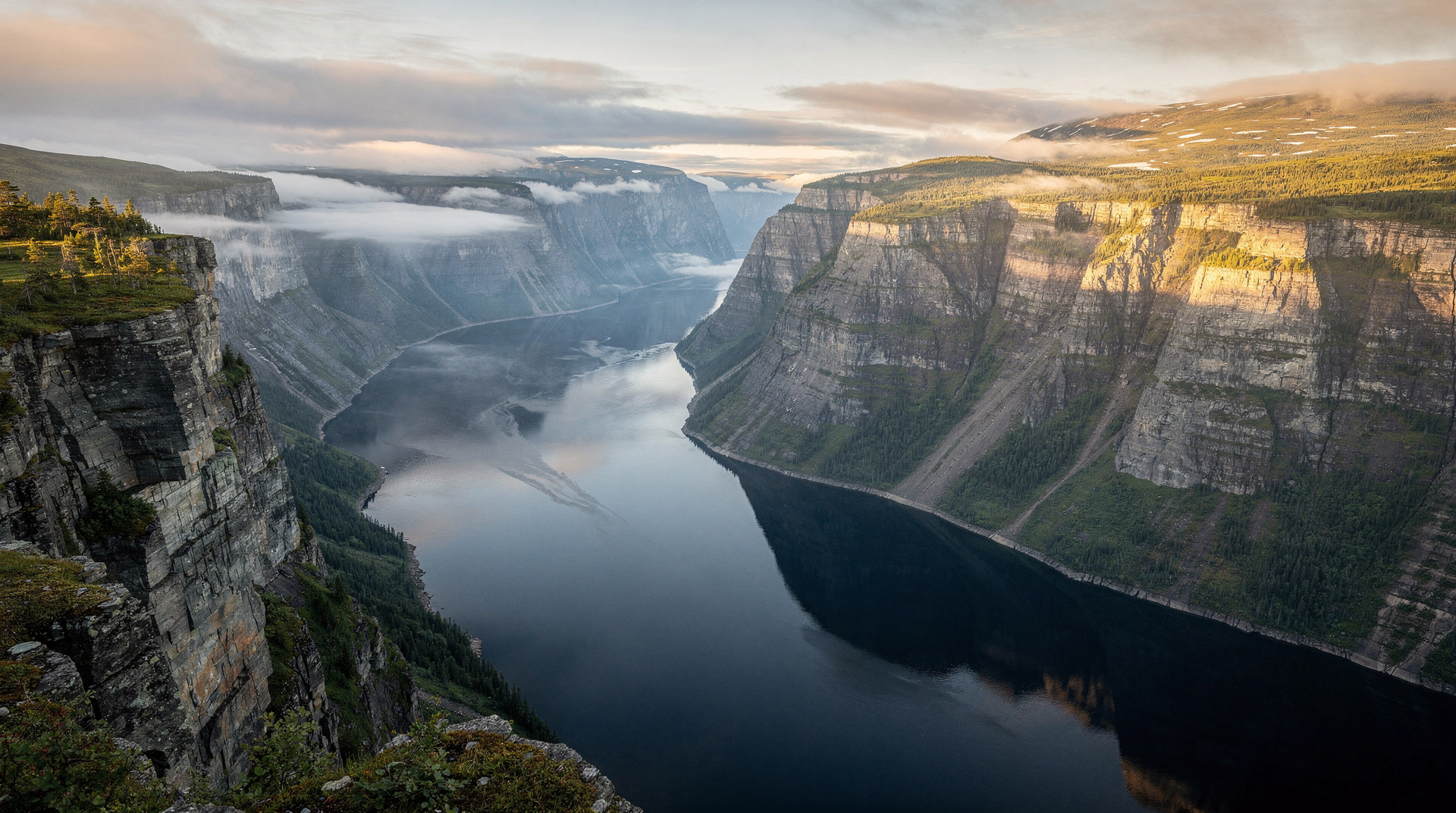
La Baie is the southern terminus of the Saguenay Fjord’s navigable stretch and the launching point for boat tours that travel northeast toward Tadoussac through the most dramatic sections of the fjord.
The La Baie 3-hour Saguenay Fjord classic cruise (around 36 CAD) departs from the La Baie marina and covers approximately 60 km of the fjord round trip, reaching Cap Trinité on the south shore. It is the most affordable major boat experience in the Saguenay system and offers the full drama of the fjord walls without the Tadoussac whale-watching premium. Whale sightings are possible but not as consistent as at the Saint-Laurent end.
The La Baie marina area has a small boardwalk and interpretive panels on the fjord’s geology and ecology — a useful introduction before or after the cruise.
Bear observation at Sacré-Cœur
One of the distinctive wildlife experiences accessible from Saguenay is black bear observation at a managed site near Sacré-Cœur, a village 30 km southwest of Chicoutimi on the north shore of the fjord.
Black bear observation with an expert guide (around 37 CAD, 2 hours) brings participants to a blind near a managed feeding site where black bears reliably appear to eat during the late afternoon and evening. The sightings are close — typically 10–30 m — and almost guaranteed in the operating season (May–October). The guide provides commentary on bear behaviour, ecology, and the history of the operation.
This is a managed wildlife experience, not a wilderness encounter; the bears are habituated to the presence of observers at a specific location. Some wildlife tourists object to this model; others accept it as the most practical way to see a bear in a natural setting at close range without a week of backcountry camping. Make your own call.
Combining the bear observation with an evening in La Baie works well logistically — the site near Sacré-Cœur is roughly 45 minutes from La Baie, close enough for an afternoon-into-evening outing before or after a fjord cruise day.
Chicoutimi: the urban core
The Chicoutimi district has a compact downtown along the Chicoutimi River near its confluence with the Saguenay. The most visited cultural site is La Pulperie de Chicoutimi, a restored paper pulp mill from 1896 that now functions as a regional museum and cultural complex. The industrial heritage is substantial — the scale of the machinery and the 1960s-era photographs of the mill’s peak production give a vivid account of what built the city.
The Village de la Sécurité, an outdoor museum of Québécois rural life from the late nineteenth and early twentieth centuries, is a more family-oriented option — re-created farm and village buildings with period demonstrations.
The Musée du Fjord in La Baie covers the natural and human history of the Saguenay Fjord with permanent and changing exhibitions. It is a competent regional museum rather than a world-class institution, but the geology and marine ecology exhibits are useful context for time spent on the water.
Where to eat
Chicoutimi has a downtown restaurant scene concentrated around rue Racine. La Cuisine Restaurant is the reliable choice for traditional Québécois cuisine in a heritage building — tourtière, pea soup, meat pies, sugar pie. La Voie Maltée is the best craft brewery in the city with a large selection of local beers and a kitchen that takes food seriously. Avoid the chain restaurants on the commercial strips leading to the mall — Saguenay has those in abundance, but they are not what you came for.
Combining Saguenay with the fjord and Lac-Saint-Jean
Most visitors treat Saguenay as a hub rather than an end destination, and the geography supports that: the fjord’s most dramatic villages and the Saguenay Fjord itself are reachable within 20–60 minutes, and Lac-Saint-Jean — Québec’s inland freshwater sea, with its own beaches and blueberry country — starts about 50 km west at Alma. A practical structure for a 3-day regional stay: Day 1 arrive Saguenay, La Baie cruise in the afternoon; Day 2 fjord day trip to Sainte-Rose-du-Nord or L’Anse-Saint-Jean; Day 3 Lac-Saint-Jean loop before continuing on toward Tadoussac or back to Québec City.
Getting there
From Québec City: Route 175 north through the Laurentide Wildlife Reserve (2h30, passing through spectacular boreal forest) or Route 138 east to Tadoussac then north through Sacré-Cœur (2h45, with the option of stopping at Tadoussac). Route 175 is faster; Route 138 is more scenic.
From Montréal: ~500 km, ~5h via Route 40 east to Route 175 north. Direct flights from YUL to Saguenay airport (YBG) operate seasonally.
Connection to the region: Saguenay is the natural base for exploring both the Saguenay Fjord (La Baie 20 km south) and Lac-Saint-Jean (Alma 50 km west).
The Laurentide Wildlife Reserve on Route 175
If you are driving to Saguenay from Québec City on Route 175, the 200 km through the Réserve faunique des Laurentides deserves acknowledgement as a journey in itself. The road runs through boreal forest with essentially no development for 150 km, crossing lakes and rivers and passing through a landscape that registers as genuinely wild even to experienced Québec travellers. Moose sightings along Route 175 are common, particularly at dawn and dusk; slow down and use your headlights at these hours. The wildlife reserve has several staffed access points with lake camping available.
Fuel is available at Stoneham (30 km north of Québec City) and not again reliably until the outskirts of Chicoutimi. Fill your tank before entering the reserve.
Jonquière: the cultural district
Jonquière, the western district of Saguenay city, is where the region’s cultural institutions are concentrated. The Musée d’art contemporain du Saguenay–Lac-Saint-Jean (MAC LAC) is the main contemporary art venue in the region. The Cégep de Jonquière has historically produced a disproportionate number of Québec musicians and artists — Jonquière is understood in the province as a place with a strong cultural identity despite its industrial character.
The Alcan aluminum smelter complex (now Rio Tinto Alcan) at Jonquière is one of the largest in the world and has been the economic foundation of the city since the 1940s. The industrial heritage is substantial; organized tours of the smelter operation are available seasonally.
Accommodation in Saguenay
Saguenay has a range of accommodation options spread across its three districts.
Chicoutimi: The most central for restaurants and services. Hôtel Chicoutimi (the heritage downtown hotel, from 130 CAD), and several chain hotels (Comfort Inn, Delta) from 110 CAD. Best for urban access.
La Baie: Closest to the fjord cruise departure and the fjord south shore. Auberge du Fjord (from 120 CAD) and several B&Bs. Better for fjord-focused visitors.
Jonquière: Quieter, more residential. Less choice but lower prices. Best for those focused on Lac-Saint-Jean access.
The suggestion for most visitors: book in Chicoutimi for the restaurant access; take a day trip to La Baie for the cruise and marina.
Frequently asked questions about Saguenay (Chicoutimi & La Baie)
Is Saguenay city worth visiting, or should I go straight to the fjord villages?
Saguenay city is primarily a practical base — hotels, restaurants, fuel — rather than a destination in its own right. If your time is limited, prioritise the fjord villages (Sainte-Rose-du-Nord, L’Anse-Saint-Jean) over the city itself, but Saguenay is the logistically easiest place to sleep and eat well while accessing them.
Is the bear observation tour ethical?
It’s a managed, habituated-feeding-site model rather than a wilderness encounter, and opinions among wildlife tourists differ on that approach. The operation is transparent about its methods and the guide discusses them openly; if you’re uncomfortable with managed feeding sites, this isn’t the tour for you, but it remains one of the most reliable ways to see a black bear at close range in Québec.
Top experiences
Bookable activities with verified prices and instant confirmation on GetYourGuide.