Whale encounter in Tadoussac: meeting the belugas
The drive down
I drove from Québec City on a Tuesday in early July, which turned out to be a good decision. The route follows Highway 138 northeast along the north shore of the Saint-Laurent, and the river gets wider and stranger as you go — by Baie-Saint-Paul it is already brackish, by Saint-Siméon it looks more like an inland sea than a river. The water is cold and grey-green even in summer, fed by the Saguenay fjord where glacier-cold fresh water meets the saltwater tidal surge of the estuary.
The drive takes about three hours from Québec City with one stop. I stopped at Baie-Saint-Paul for coffee and spent twenty minutes walking through the town, which is small and pretty with a strong gallery culture — Charlevoix has been an artists’ region since the late nineteenth century and the tradition continues. I made a note to come back with more time.
| Drive from Québec City | ~3 hours via Route 138, one free ferry crossing |
| Best free viewpoint | Pointe-Noire Observation Centre, near Baie-Sainte-Catherine |
| Boat cruise cost | Around 70–100 CAD per adult for a 3-hour tour |
| Best months | May to October, with belugas present year-round |
| What to bring | Warm layers even in summer, binoculars, a windproof jacket |
The last stretch before Tadoussac crosses the Saguenay on a ferry — the Camille-Marcoux, free and running every twenty minutes or so in summer — and the moment the ferry pulls away from the dock at Baie-Sainte-Catherine, you understand why this is whale-watching country. The confluence of the Saguenay fjord and the Saint-Laurent estuary creates an underwater upwelling of cold, nutrient-rich water that concentrates plankton and krill, which concentrates capelin and other small fish, which concentrates whales. There are fourteen species in the estuary in summer. In early July, the belugas are reliably present.
I watched from the ferry deck. Nothing was visible yet, but a man next to me with serious binoculars said he’d seen three minkes from this crossing two days before. The sky was clear and the air had that smell of cold seawater that is specific to the north shore — clean and slightly mineral, like the inside of a cave near the sea.
Watching from shore first: Pointe-Noire
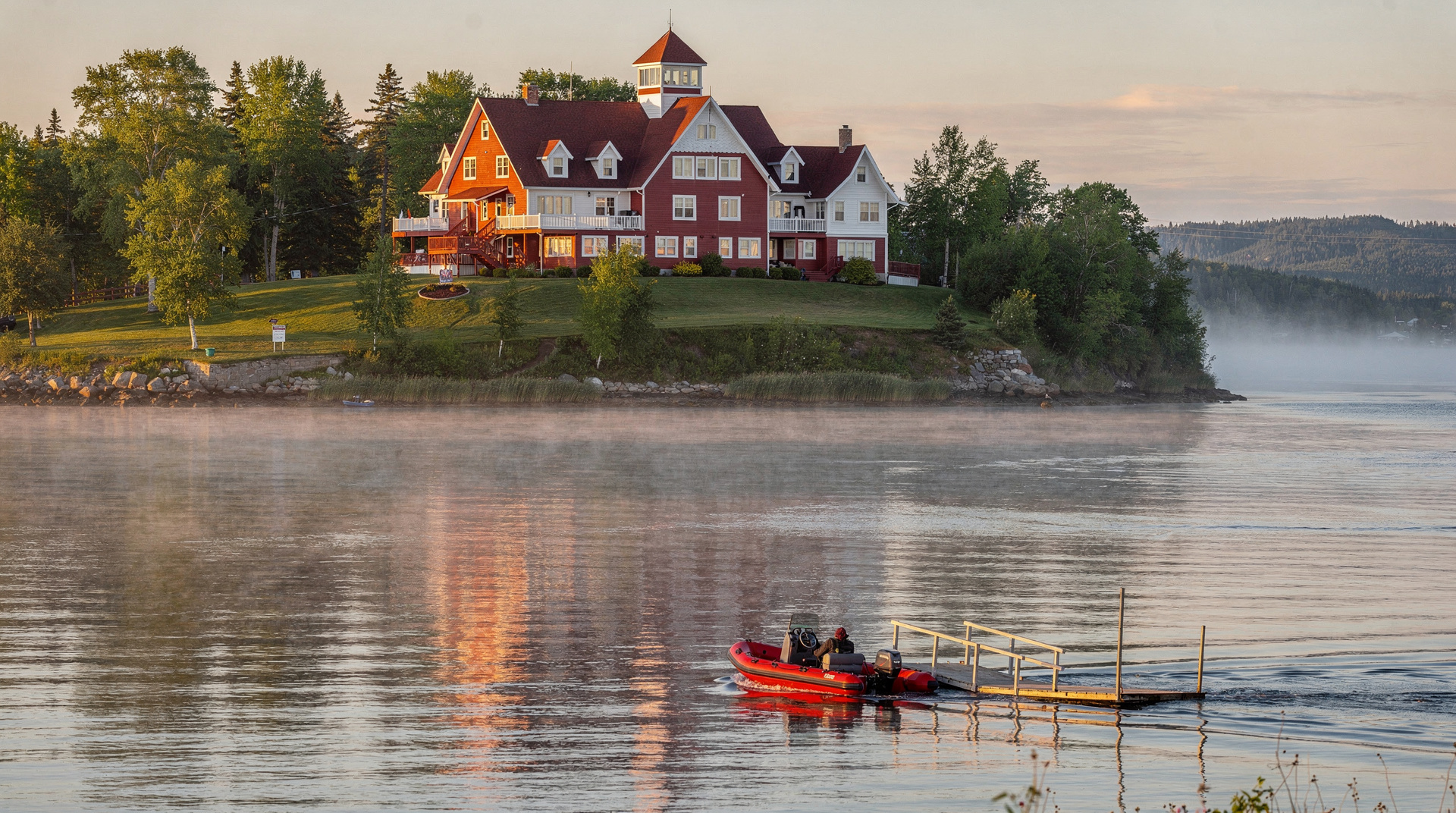
I arrived in Tadoussac around noon and checked into the Hôtel Tadoussac — the grand old red-and-white hotel on the hillside that appears in every photograph of the village. The rooms are not large and the plumbing is characterful, but the location is excellent and the dining room serves good local food. I had reserved a room with a river view, which costs a bit more but gives you the possibility of scanning the water from your window with binoculars in the morning.
But before the boat tour, I drove the fifteen minutes to Pointe-Noire, on the other side of the Saguenay near Baie-Sainte-Catherine. This is where Parks Canada runs the Pointe-Noire Observation Centre — a park on a headland where you watch the confluence from shore. I had been told by a friend who studies cetaceans that watching from a fixed point on land sometimes gives you better extended views of beluga behaviour than a boat does, because the animals come to you and you don’t disturb them.
She was right. Within ten minutes of sitting on the rocky shore with my binoculars, I saw the first beluga. Then three more. The belugas were in a loose group about 200 metres offshore, their white backs curving in and out of the grey water in a slow rhythm. They were unhurried. A naturalist from Parks Canada — a young woman named Isabelle who spoke excellent English and was passionate in a way that made the information stick — told me we were watching a nursery group: adult females and juveniles. The males tend to stay in deeper water.
The belugas surfaced, breathed, dove, surfaced again. From shore they looked almost ghostly against the dark water. Isabelle explained that belugas are one of the few whale species that can turn their heads — their cervical vertebrae are not fused, unlike most whales — and that they use this flexibility in the shallow, rocky estuaries where they feed. She said the Saguenay-Saint-Laurent beluga population is around 900 individuals, isolated from the Arctic population and listed as threatened. I found this information both fascinating and unsettling.
I stayed at Pointe-Noire for two hours. I count it as one of the finest wildlife experiences I have had in any country.
The ferry crossing itself is worth understanding before you go — it is free, runs frequently, and is often the first place visitors spot a whale without meaning to. The ferry and Saint-Laurent guide covers the timing and what else the crossing offers if you want to build in extra time on the water.
The boat cruise
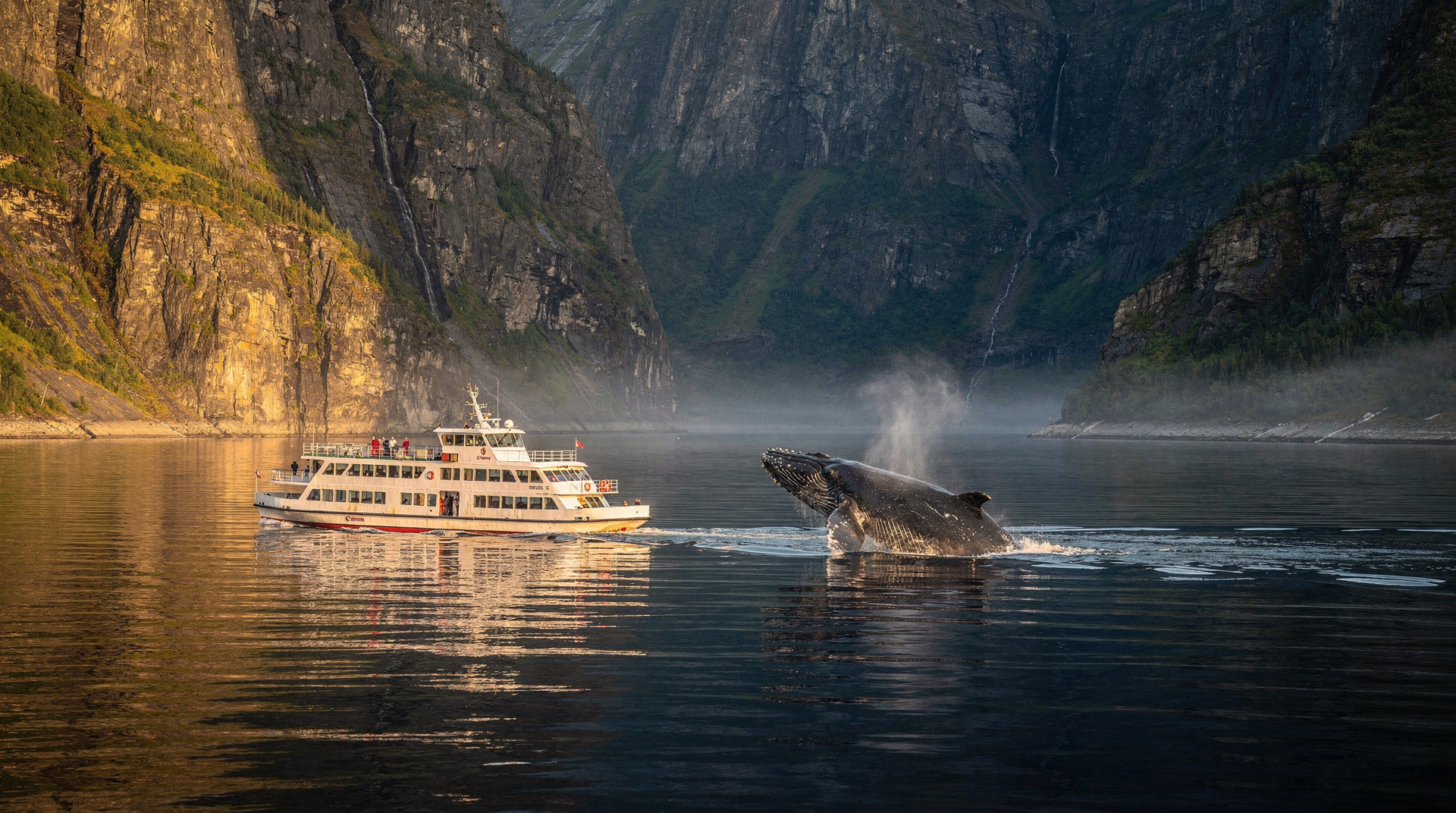
The following morning I took the three-hour whale-watching boat cruise, departing from the Tadoussac dock at 9am. The boat holds perhaps sixty people, and it was almost full on a July morning — I’d booked ahead online, which was wise. The crew included two naturalists who provided commentary in French and English.
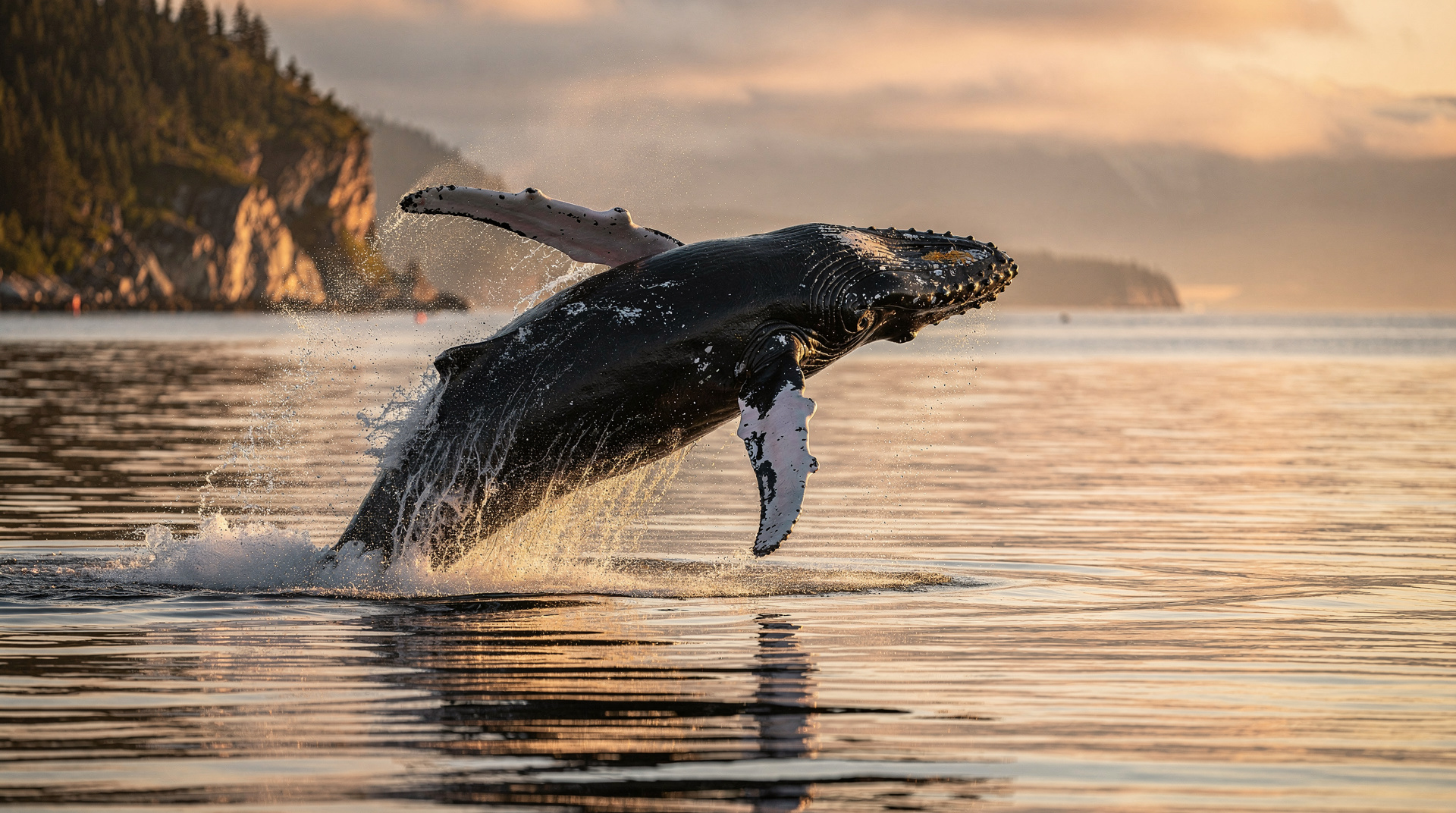
3-Hour Whale Watching Boat TourThe cruise heads out into the estuary and then works the area around the mouth of the Saguenay, where the upwelling is strongest. Within twenty minutes of leaving the dock, we encountered a group of three minke whales — not large, maybe eight metres, but close enough that I could see the white patches on their pectoral fins and hear the exhalation when they surfaced. Then, a few minutes later, a fin whale. The fin whale is the second-largest animal on Earth, and seeing one at close range — its back extending maybe twenty metres from stem to stern, its size making the boat feel trivial — was genuinely overwhelming in the way that very few animal encounters are.
Then the belugas again: a larger group this time, maybe fifteen animals, including several that were grey rather than white — juveniles under five years old, one of the naturalists explained, who only attain full white colouration in their teens. The group surfaced repeatedly near the bow of the boat. People fell silent around me, which is not something crowds of tourists usually do.
I won’t pretend it was a perfect experience. A couple near me were seasick for the last hour and the boat smelled accordingly. The weather shifted mid-cruise and the waves picked up, which the naturalists said was actually good for sighting — the choppier the water, the more surface disturbance that attracts wildlife. But some of the photography I’d hoped for was difficult with the boat moving. You need a camera that handles motion well or you need to accept that some experiences are better held in memory than in a lens.
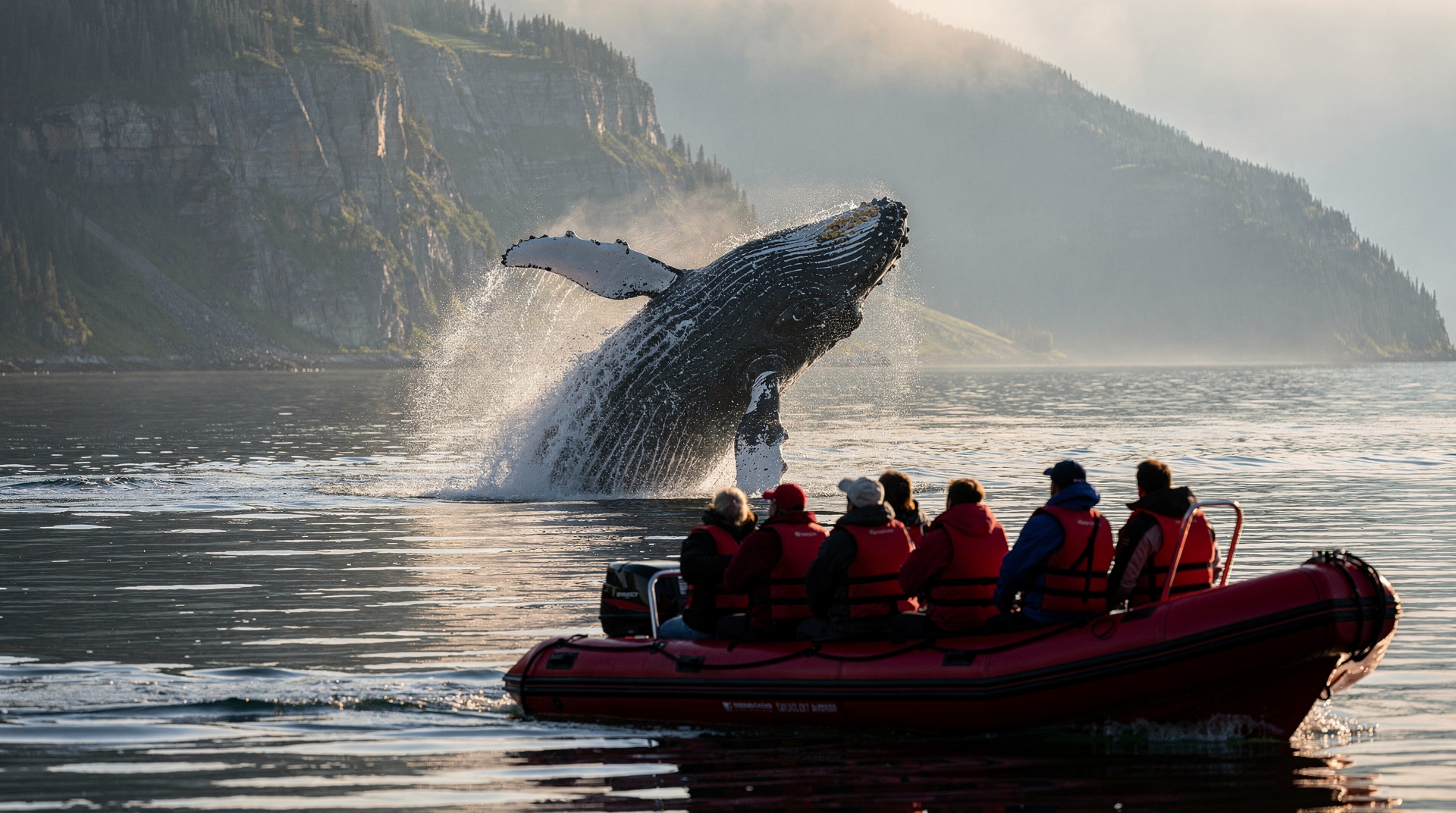
Looking back, I would still choose the large boat for a first visit — the enclosed cabin and the option to move around suited a solo traveller without gear for a cold zodiac. But if I go back specifically for another beluga encounter, I would book a zodiac instead:
Zodiac whale watching tour from Tadoussac
The zodiac versus boat cruise guide goes into the trade-offs I only worked out by trial and error — worth reading before you book either.
What I learned
Tadoussac is genuinely one of the best places in the world to watch whales. I say this not as hyperbole but as a comparative statement — I have watched whales off the Azores, off California, off Iceland, and off New Zealand, and the density and accessibility of whale sightings at Tadoussac is exceptional. The combination of the cold nutrient-rich water, the sheltered geography, and the reliability of the beluga population means you will almost certainly see whales if you visit between May and October.
The belugas specifically are a Tadoussac experience. They are not common elsewhere in the accessible whale-watching world. Seeing a group of them — white, medium-sized, often vocal (belugas are known as the “canaries of the sea” for their range of sounds) — in their actual habitat rather than an aquarium is one of those things that recalibrates your sense of what wildlife encounters can feel like.
From Tadoussac you can also access the Saguenay Fjord, which I’ve covered in the whale and fjord itinerary. The complete whale-watching guide has all the practical information — species by month, boat vs. zodiac comparisons, what to bring.
For the best month to visit, I’ve written a separate piece linked in best time for whale watching in Québec. And if you want to know what you are actually looking at once a dorsal fin breaks the surface, the whale species of the Saint-Laurent guide is the reference I wish I had read before that first ferry crossing.
Go in July. Dress in warm layers even in summer — the estuary wind is cold regardless of the air temperature onshore. And book the boat cruise at least a few days ahead.