When is the best month to see whales in Tadoussac?
The question I get asked more than any other
Every time I write about Tadoussac, I get the same question in the comments and by email: “When exactly should I go to see whales?” The question is reasonable because the whale-watching season at Tadoussac runs from roughly May through October — six months is a long season, and the experience varies considerably depending on when you show up.
I’ve been to Tadoussac for whale watching in five different months now: June 2017, July 2019, August 2021, September 2023, and October 2022 (the last one slightly out of season, when I was there for the fall foliage trip). Here is what I’ve actually found, month by month.
| Season | May through October |
| Peak diversity | July–August |
| Best value / fewer crowds | September |
| Cost | Around 70–100 CAD per adult for a 3-hour boat tour |
| Booking | At least a week ahead in July–August; more flexible outside peak |
Seasonality at a glance:
| Month | Species reliability | Crowds | Best for |
|---|---|---|---|
| May | Belugas certain, minkes possible | Low | Budget, solitude |
| June | Finbacks reliable, blues appearing | Low–moderate | Underrated diversity |
| July | Maximum diversity, blues present | High | Definitive experience |
| August | Maximum diversity continues | Very high | Definitive experience |
| September | Belugas, finbacks, often blues | Moderate | Photography, fewer crowds |
| October | Belugas, some minkes | Low | Only first two weeks |
May: the opening of the season
The whale-watching boats start running in May at Tadoussac, which is early in the season and means the crowds are minimal. The species present in May are primarily the year-round residents: belugas, and occasionally minke whales, with a few finbacks appearing later in the month.
The honest assessment of May: you will almost certainly see belugas (they are present year-round in the Saguenay-Saint-Laurent marine park), and you have a decent chance of minkes. The large whales — finback, blue, humpback — are generally not yet present in force in early May. The weather is cold and variable; bring proper layering even on what looks like a warm day from shore. The estuary wind can drop the perceived temperature significantly.
If crowds and cost are your primary concerns, May offers excellent value and solitude. If your primary goal is maximum whale diversity or seeing blue whales, May is not optimal.
June: improving rapidly
By June, the migration is well underway and the feeding conditions at the confluence of the Saguenay and the Saint-Laurent are excellent. Finback whales — the second-largest whale species, up to 27 metres — are reliably present in June. Blue whales, which are the largest animals on Earth and which feed in the Saguenay estuary in summer, begin to appear in late June. Minkes are abundant.
June is still relatively uncrowded compared to the summer peak. The tour boats are running full schedules, the accommodation in Tadoussac is available without the intense competition of July and August, and the weather, while still variable, is generally mild enough for an outdoor cruise.
I did not visit Tadoussac in June (my June visits were elsewhere), but everyone I know who has gone in June has had excellent whale sightings. This month may be underrated.
July and August: the peak, honestly assessed
July and August are the peak months for whale watching at Tadoussac. This means:
- Maximum species diversity: belugas, minkes, finbacks, blue whales, and occasionally humpbacks and sei whales are all present simultaneously.
- Highest concentration of whales overall, corresponding to the peak of the capelin run (capelin are small fish that the whales feed on intensively in summer).
- Maximum crowds: the tour boats are full every day, accommodation requires booking months in advance, and the village of Tadoussac — which has a permanent population of about 800 — absorbs roughly 100,000 visitors in these two months.
- Highest prices.
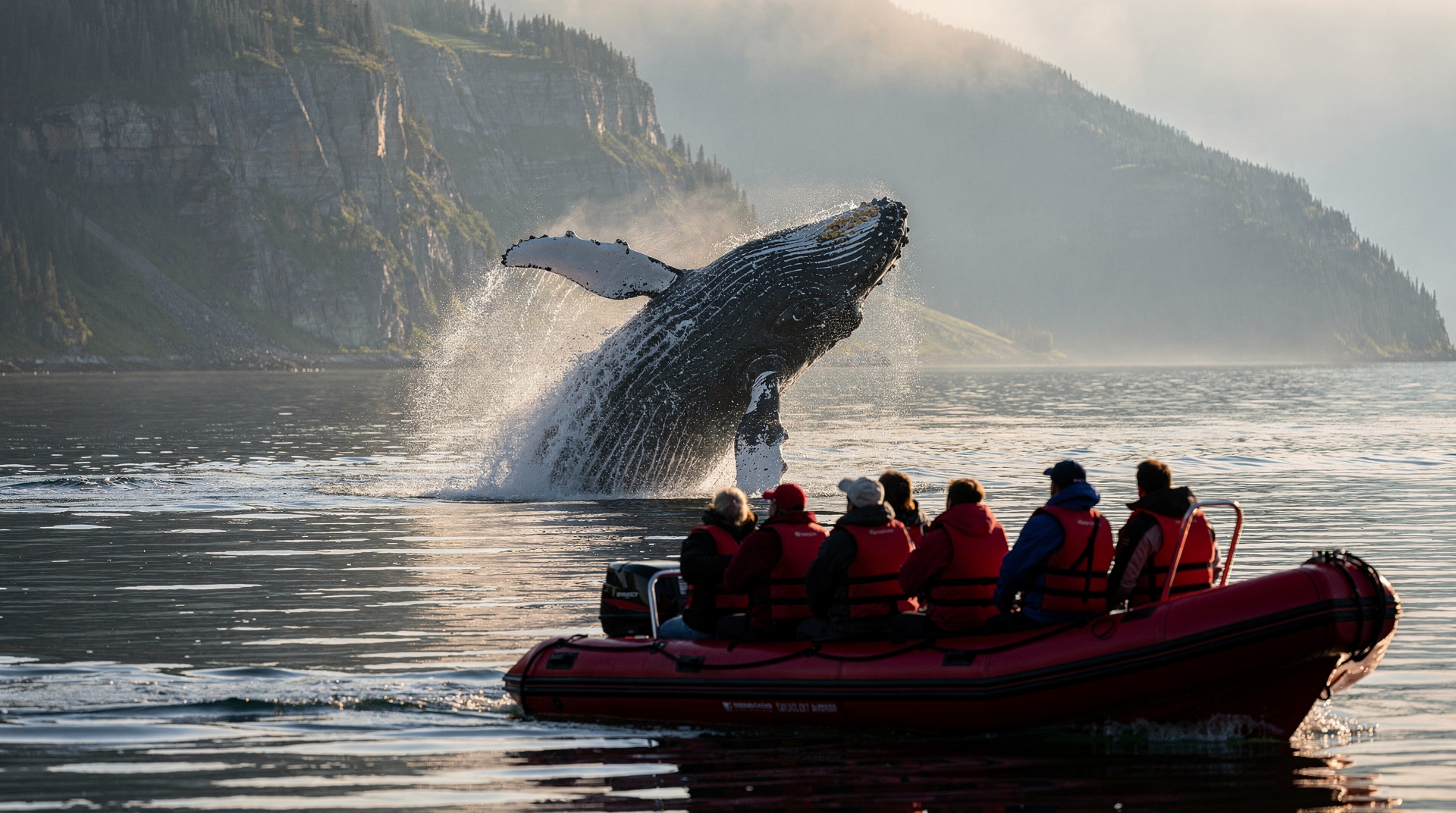
My July 2019 visit was described elsewhere on this site — the short version is that we saw minkes, finbacks, and belugas on a three-hour cruise, and the experience was extraordinary. The cruise was nearly full (about 55 people) and the naturalists on board were excellent.
If you want the definitive Tadoussac experience and whale diversity is the priority, July or August is the answer. Book the cruise at least a week ahead; in peak July, a few days can mean the difference between getting on a boat and being turned away.
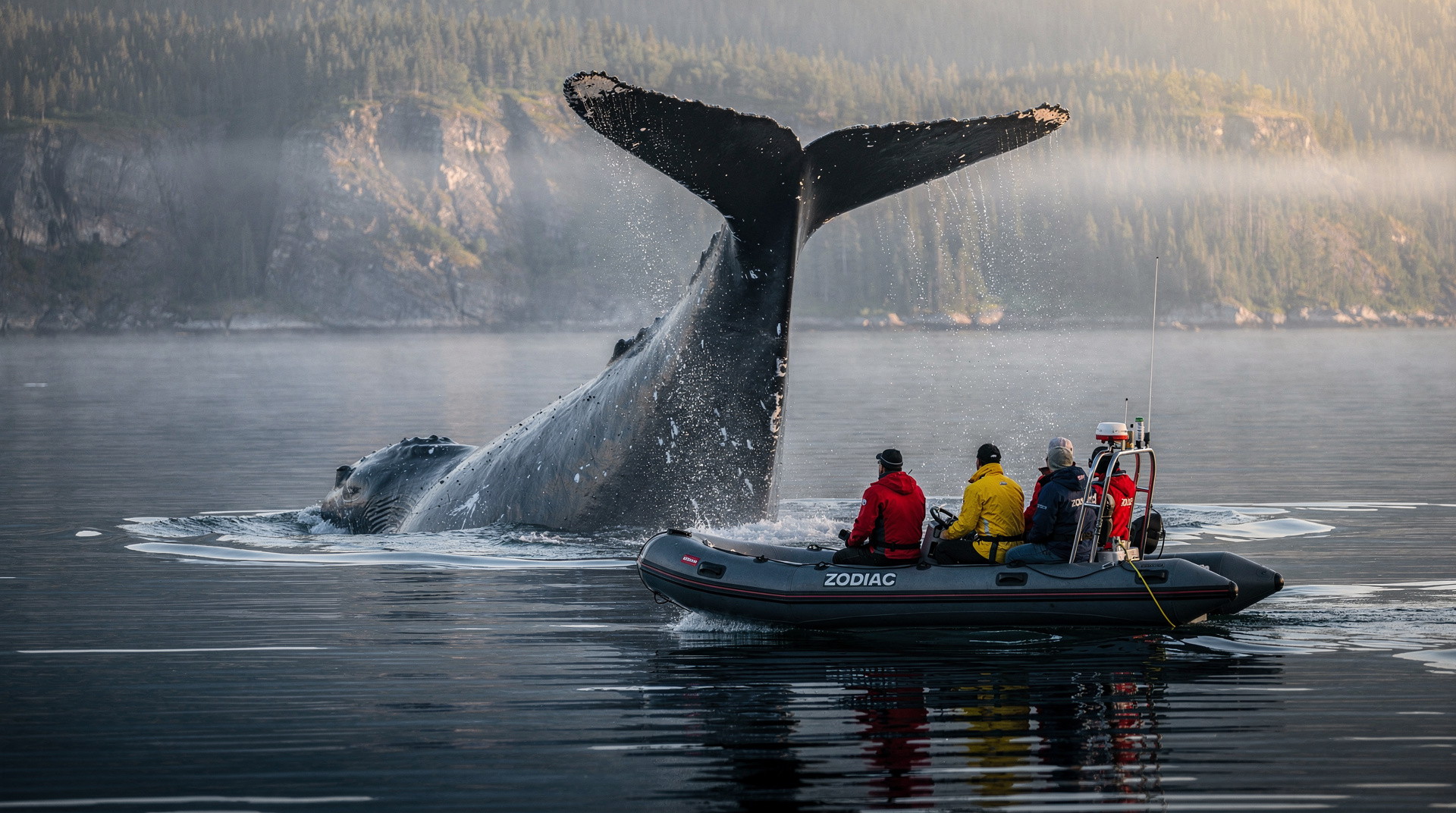
3-Hour Whale Watching Boat TourPeak season is also when the choice between a zodiac and a large boat matters most, simply because both are busiest and you want to book the right one the first time. The zodiac vs boat cruise guide covers that decision in depth if you have not made it yet.
September: the underrated month
I visited Tadoussac in September 2023, specifically to test the late-season experience, and I came away convinced that September may be the best month overall for a certain type of traveller.
What changes in September: The summer crowds drop significantly after the August peak. The belugas are still present, finbacks are still feeding, and blue whales often remain into September before moving south. The weather shifts toward autumn — cooler, clearer, with the northern light taking on the quality that makes September in Québec so photogenic. The accommodation prices drop from their summer peaks.
What is the same or better: Whale sightings remain excellent. September is often cited by the naturalists at Tadoussac as one of the better months for extended blue whale sightings, because the whales are concentrating their feeding before migration. The boat tours are less crowded, which means the naturalists have more time for individual questions and you’re not competing with fifty other passengers for a position at the rail.
What is different: The capelin run has ended, so the whale feeding behaviour changes slightly — the whales disperse over larger areas rather than concentrating in the specific upwelling zones. This can mean longer transit times to reach whale concentrations. The season ends in mid-October, and some operators begin reducing schedules in late September, so confirm the specific departure schedule if you’re visiting in the last week of the month.
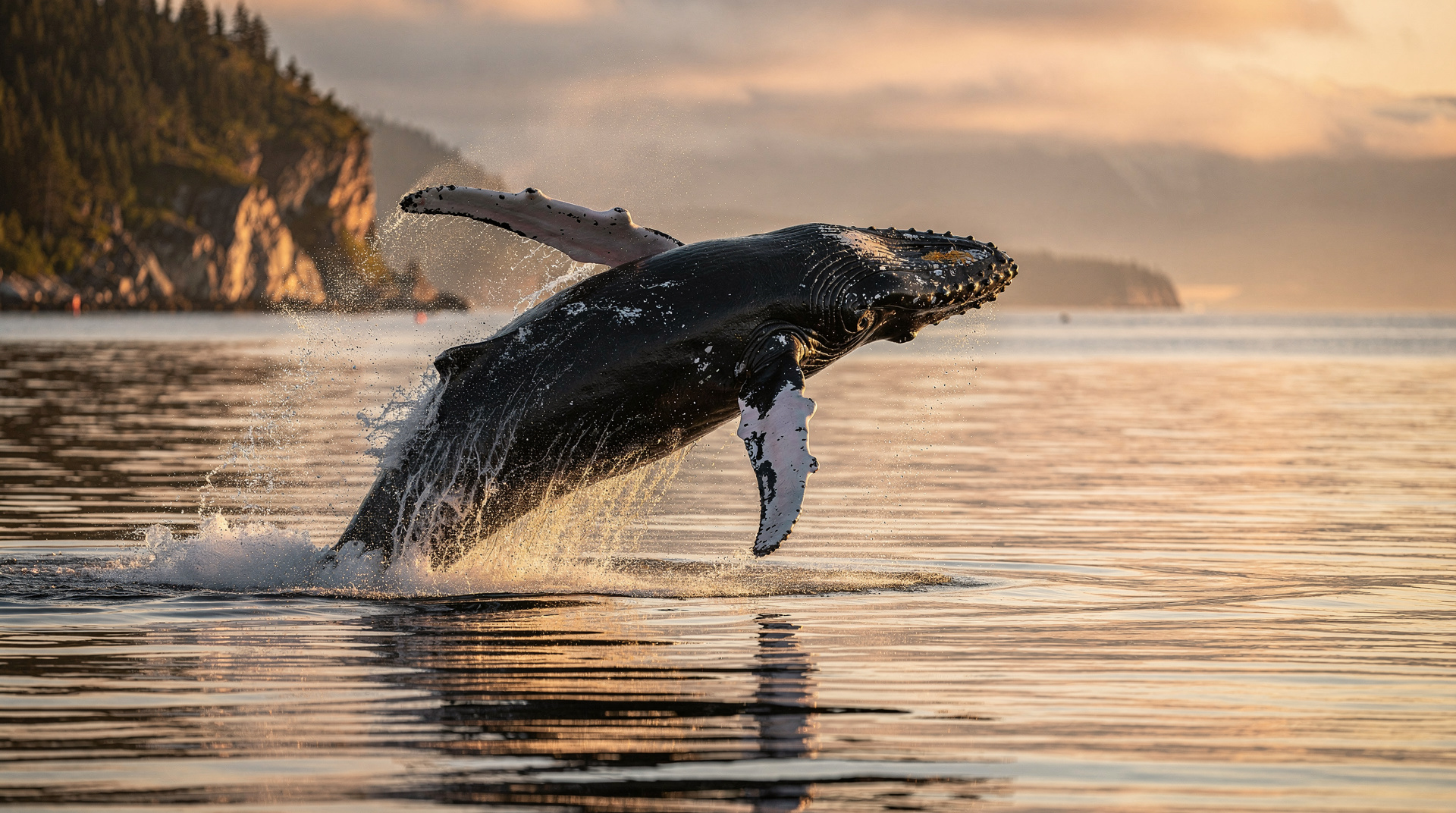
I saw three blue whales in September 2023 — two individually and one in a group with a finback, feeding near the surface. The blue whale encounters were, without qualification, the most impressive wildlife moments I have had in twenty years of nature travel. The size of a blue whale — 25-30 metres, a tail fluke bigger than most cars — is incomprehensible until you see it at range. If you want to know exactly what you are looking at when a fin or a blue surfaces, the whale species of the Saint-Laurent guide is worth reading before any of these trips, not after.
October: the closing of the season
The whale-watching season at Tadoussac officially runs through mid-October, though some operators extend to the end of the month if conditions permit. I was in Tadoussac in early October 2022 for the fall foliage road trip, not specifically for whales — the timing was slightly off for both, as I described in the foliage diary. The whale boats were still running but with reduced frequency.
October can be excellent for minkes and belugas, which are the most cold-tolerant species in the estuary. Finbacks and blues have generally begun their migration south by mid-October. The weather becomes genuinely unpredictable — autumn storms on the Côte-Nord are a real factor, and tours can be cancelled or shortened due to conditions.
If you are going to Tadoussac in October, go in the first two weeks rather than the last two.
The short answer
Best month for maximum whale diversity and certainty of sightings: July, with August as a close second.
Best month for the experience overall (quality sightings, fewer crowds, lower prices, exceptional weather): September.
Best months to avoid, unless you have no alternative: May (early season, variable sightings) and late October (season winding down, weather unpredictable).
For the complete planning guide — including zodiac vs. large boat, what to bring, and how to get to Tadoussac — see the Tadoussac destination page, the complete whale-watching guide, and the best time guide. If you are weighing Tadoussac against the Gaspésie side of the estuary, the Tadoussac vs Percé comparison is worth a look, and the whale and fjord itinerary shows how to build a whole trip around this rather than a single day.