Eastern Townships (Cantons-de-l'Est)
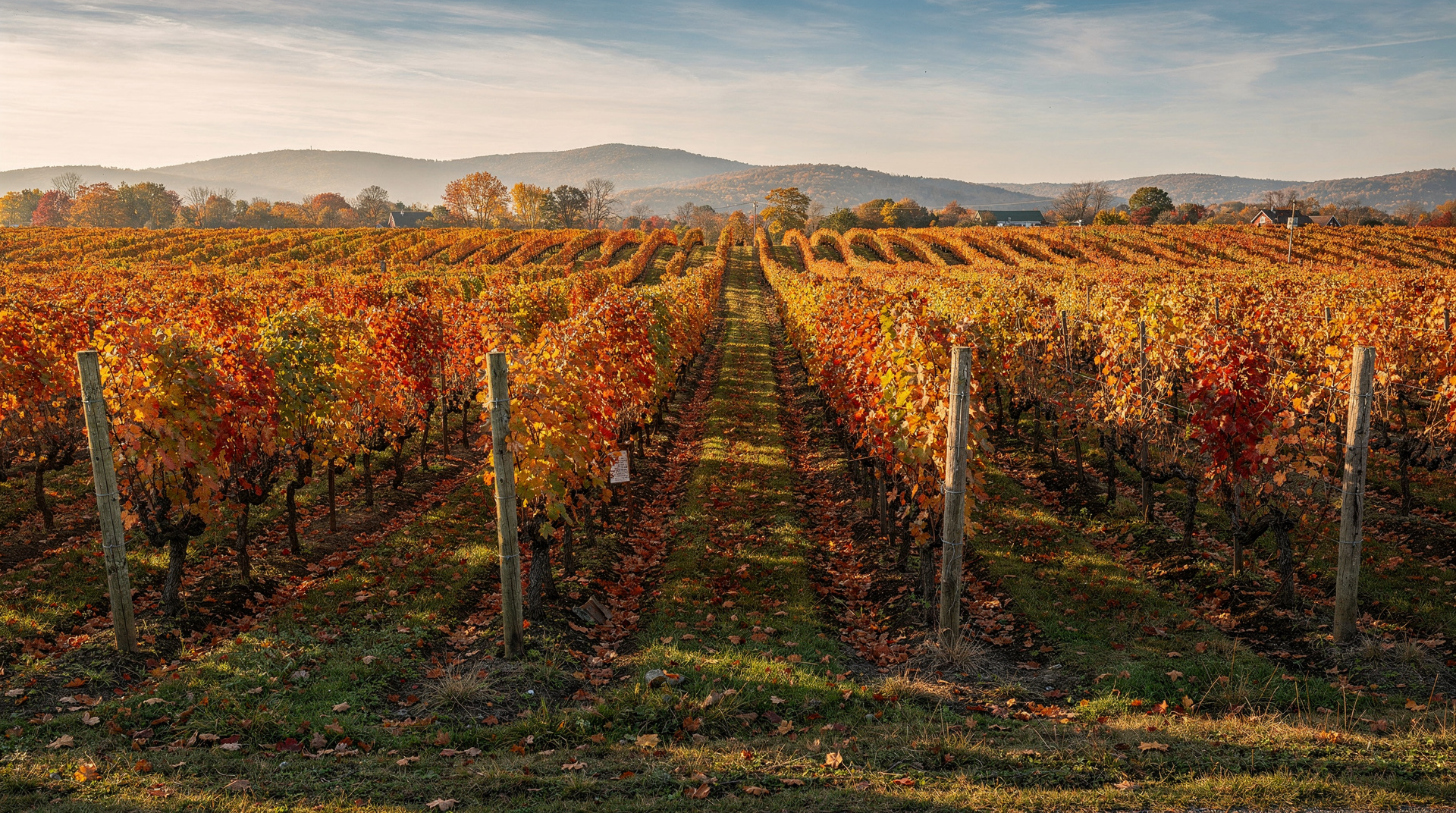
Quebec's wine country: rolling hills, vineyard trails, foliage, and the abbaye de Saint-Benoît-du-Lac — 90 min from Montreal.
3h City Bike Tour with Wine or Beer
Duration: 3 hours
Quick facts
- Distance from Montreal
- 130-150 km (1h30-2h by car)
- Distance from Quebec City
- 170 km (2h by car)
- Region capital
- Sherbrooke
- Foliage peak
- Mid-October (Oct 5-20)
- Wine appellation
- Brome-Missisquoi (AOC Québec)
Where Quebec’s wine country meets fall foliage
The Eastern Townships — known in French as les Cantons-de-l’Est — stretch across Quebec’s southwestern corner in a landscape of gentle hills, glacial lakes, and century-old villages that feel more New England than Montreal. This is Quebec’s original wine country, home to the Brome-Missisquoi appellation and a string of artisan producers who have coaxed Vidal, Marquette, and Frontenac from a climate most winemakers once dismissed as too cold.
Two hours from Montreal and three from Quebec City, the region draws weekend escapees who come for the vineyard circuit, cyclists who tackle the 128-km Route Verte corridor between Sutton and Magog, and autumn pilgrims chasing what locals simply call le foliage — the maple and birch canopy that turns from copper to scarlet each October, peaking around the second or third week of the month.
The region is also a quiet counterpoint to Montreal’s urban density. Villages like Knowlton (Lac-Brome), Sutton, and North Hatley have a lived-in elegance — antique shops, farm-to-table restaurants, and inns in Victorian farmhouses — without feeling contrived. The landscape rewards slow travel.
| Where | Southwestern Quebec, 90 min–2h from Montreal via Autoroute 10 |
| Cost | Tastings around 10–20 CAD; room rates: see the official website of Manoir Hovey |
| Time needed | 2–3 days for a wine circuit plus one or two villages |
| Getting there | Rental car essential — no train serves the region |
| Best time | June–August for vineyards; late September–mid-October for foliage |
Village comparison: where to base yourself
| Village | Character | Best for |
|---|---|---|
| Knowlton (Lac-Brome) | Loyalist-era main street, antique shops, craft brewery | A quieter base with easy access to the wine circuit |
| North Hatley | Lakeside elegance on Lac Massawippi, upscale dining | A splurge stay (Manoir Hovey) or a lakeside lunch stop |
| Sutton | Trailhead village at the base of Mont Sutton | Hikers and mountain bikers in summer, skiers in winter |
| Magog | Larger town on Lac Memphrémagog, more services | A practical base with restaurants, groceries, and gas |
The Brome-Missisquoi wine circuit
Quebec’s wine industry surprised the world when the Brome-Missisquoi appellation earned AOC status in 2020. The microclimate here — warmer summers than the Laurentides, moderated by Lac Memphrémagog and Lac Brome — allows varietals bred for cold resistance to develop genuine complexity.
Vignoble de l’Orpailleur (Dunham) is the region’s oldest winery, founded in 1982 by four associates who bet on this landscape before anyone else. Their ice wine and sparkling Blanc de Blancs remain benchmarks. The tasting room and terrace overlook the vines year-round; tours run mid-May through October (around 15 CAD, book ahead on weekends).
Vignoble Cep d’Argent (Magog), Vignoble Les Pervenches (Farnham), and Domaine Bergeville near Dunham round out a circuit that can fill two half-days without retracing roads. Most estates charge 10-20 CAD for tastings, often credited against purchases.
A practical route: start in Dunham (Orpailleur), head south toward Cowansville along Route 202, loop back via Farnham and end in Bromont or Knowlton for dinner. The circuit is entirely by car — no shuttle service exists, so a designated driver or hiring a local tour operator from Magog is essential.
Abbaye de Saint-Benoît-du-Lac
On a wooded peninsula jutting into Lac Memphrémagog, the Benedictine monks of Saint-Benoît-du-Lac have been making cheese and apple cider since 1937. The abbey is one of the most photographed buildings in Quebec — a neo-Gothic tower reflected in still water, visible from the approach road through the forest. Gregorian chant echoes from the church at morning and evening prayer (open to visitors).
The shop sells four types of cheese (including a famous blue called l’Ermite and a firm Orford), fresh-pressed apple cider, and calvados. Expect a small crowd on autumn weekends; arrive early. Modest dress is required inside the church. Entry to the abbey grounds is free; parking is limited in high season.
Hours vary by season; the shop is open every day, 9h-18h from 1 June to 31 October and 9h-17h from 1 November to 31 May (closed 25-26 December, 1-2 January, Good Friday and Easter Monday). The 30-km drive from Magog takes 30 minutes.
Lac Massawippi and the villages
North Hatley sits at the northern tip of Lac Massawippi and qualifies as one of Quebec’s most beautiful villages — a designation reinforced by its heritage designation and consistent appearance on travel magazines’ best-of lists. The main street has a gallery, bookshop, and a half-dozen restaurants; the lake has a public beach and kayak rentals in summer.
Manoir Hovey (North Hatley) is the reference address in the region — a Relais and Châteaux property modelled on George Washington’s Mount Vernon, with 36 rooms and a kitchen garden that feeds the restaurant directly. Rooms from 400-700 CAD in high season; dinner prix fixe around 120 CAD per person. Worth considering for a one-night anniversary splurge.
Knowlton (technically Lac-Brome) is a quieter option — a loyalist-era village whose main street has barely changed in character since the 1890s, with antique shops, a craft brewery (Brasserie Knowlton), and the Brome County Historical Museum. The annual duck festival in late September is beloved locally and chaotic in the best way.
Cycling and outdoor activities
The Eastern Townships have invested heavily in trail infrastructure. The Corridor Appalachien connects several parks and private forests with marked hiking trails from the US border northward; the section near Sutton has technical terrain for experienced hikers. Sutton mountain (Mont Sutton) becomes a mountain biking centre in summer and Quebec’s most snow-sure ski resort in winter.
The Route Verte cycling network passes through the region with three dedicated corridors. The Magog-Sherbrooke corridor (40 km, mostly flat along the St-François valley) is suitable for families. The Sutton-Knowlton loop (55 km, hillier) rewards confident cyclists with vineyard views.
The Orford Arts Centre at the base of Mont-Orford has been hosting the music festival Orford Musique each July and August since 1951 — chamber music and orchestral concerts in a forest setting, with picnic dinners on the lawn. Tickets 25-60 CAD.
When to go and what to expect by season
Spring (May-June): The cabin-à-sucre season extends into early April in the region, then vineyards begin spring work. This is the quietest period, ideal for a mid-week escape at reduced hotel rates.
Summer (late June-August): Vineyard tastings, cycling, lake swimming, Orford Musique festival. Hotels fill on weekends; book 3-4 weeks ahead. Temperatures average 24°C with low humidity compared to Montreal.
Autumn (September-October): The reason most visitors come. The foliage peaks mid-October — a full week later than the Laurentides. The palette moves from yellow birch to orange maple to scarlet sumac across the hills. The wine harvest (vendanges) runs late September to mid-October; many estates organize harvest weekends. Roads around Dunham and Sutton can see weekend traffic approaching that of ski season.
Winter (November-March): Mont Sutton is the area’s primary ski destination — known for tree skiing (glades) and a more local, less resort-heavy atmosphere than Tremblant. Cross-country skiing at Orford. This is genuinely off-season for wine tourism.
Where to eat and stay
Au Chapître (Sherbrooke): regional produce-driven menu, highly rated among Sherbrooke’s better restaurants. Budget 65-90 CAD per person with wine.
Café Massawippi (North Hatley): relaxed lakeside spot for lunch or weekend brunch, known for local duck and artisan cheeses.
Brasserie Knowlton (Knowlton): craft brewery in a historic building, good burgers and chicken, pints 8-9 CAD.
Hovey Manor (North Hatley): luxury benchmark, see above. For a mid-range alternative, Auberge des Défricheurs (Eastman) is quieter and well-positioned for vineyard visits, rates on its official website.
Ripplecove Hotel (Ayer’s Cliff): lakeside inn with good food and a spa, from 200-350 CAD.
Getting there and around
There is no train service to the Eastern Townships from Montreal. A rental car is essential. From Montreal, take Autoroute 10 Est (the Cantons-de-l’Est Autoroute), then exit at Bromont (exit 74), Cowansville (exit 68), or Magog (exit 118) depending on your first stop. The drive to Magog is 1h30 with no traffic.
Parking: free in most villages and at wineries. Magog’s lakefront can fill in summer on weekends.
Fuel: gas stations in Magog, Sherbrooke, Cowansville, and Granby. Stations rare in smaller villages.
Practical tips
- eTA: required for EU, UK, Australian, and most non-US international visitors arriving by air. Apply at least 7 days before travel (7 CAD).
- Currency: CAD. Prices above are approximate 2026 figures, taxes (15% TPS+TVQ) not included. Most wineries accept credit cards.
- Language: the Eastern Townships are historically bilingual (English Loyalist heritage + French majority). English is widely understood; French is expected and appreciated.
- Cell coverage: reliable in Magog, Sherbrooke, and main roads. Patchy in forest areas near Sutton and the abbey.
A note on the nordic spas
The Eastern Townships also have a well-regarded nordic spa circuit that pairs naturally with a wine-country weekend — cold plunge, sauna, and thermal pool sequences are a popular way to end a day of tastings or cycling. For a comparable spa experience with details on etiquette and pricing, see the Ström Sherbrooke guide; the wider nordic spas guide covers the province’s other options if you are combining this trip with Montreal or Quebec City.
Shaping a first weekend
Most first-time visitors try to see too much. The region is spread out, the roads between villages are scenic rather than fast, and the best moments tend to happen when you stop planning: a roadside stand selling apples, a bench above a lake, a tasting room where the owner starts pouring something that is not on the list. A realistic weekend has one anchor activity per half-day and nothing more.
A sensible Saturday starts with the vineyard circuit in the morning, while tasting rooms are quiet and the driver is still fresh. Break for a long lunch in a village rather than a quick sandwich, then spend the afternoon on something gentle: a stroll along the main street of Knowlton, a short cycle on a flat stretch of the Route Verte, or an hour by the water in North Hatley. Sunday can then be given to the abbey and the lake, with the drive home timed to avoid the worst of the return traffic on autumn weekends.
If you have a third day, use it for the mountains. Sutton rewards a proper walk, and Mont-Orford and its surroundings offer a different mood from the vineyard country, more forest and less farmland. Pair it with the lakeside atmosphere of Magog and Lac Memphrémagog for a rounder picture of the region. The 3-day Eastern Townships itinerary lays out one way to link these stops without backtracking.
Eating and drinking the region well
The food here follows the farms. Menus lean on local duck, cheese, apples, maple, and whatever the kitchen garden is producing that week, and the better restaurants will tell you which farm a dish came from. Ask for the regional wine by the glass before ordering a bottle from elsewhere: it is the easiest way to understand what the appellation actually tastes like, and servers are usually proud to talk about it.
Cider and cheese deserve as much attention as wine. Between the abbey shop, village markets, and farm stands, you can assemble a picnic that beats most restaurant lunches, and a picnic by a lake on a clear day is among the great low-cost pleasures of the region. For wider context on what to try across the province, the Quebec cider route on Île d’Orléans is a useful comparison, and the sugar shack guide explains the maple tradition that shapes so many local menus. The broader Eastern Townships wine route guide goes deeper on individual estates.
Travelling with others
The region suits couples and small groups of friends particularly well, because the pace is slow and the evenings are quiet. Families do well too, provided the days are kept short: lake swimming, a flat bike ride, and an early dinner will serve young children better than a full vineyard itinerary. The family guide to Quebec has general advice that applies here. Groups that plan to taste wine should settle the driving question before the trip begins, not on the road.
Winter visitors should know that the region changes character completely. The vineyards go quiet, but the ski slopes, cross-country trails, and cosy inns fill up. The cross-country skiing guide and the downhill ski resorts guide will help you decide whether a cold-season visit suits you.
Before and after the Townships
Many people fold the region into a longer trip. If you are starting in the city, a few hours exploring Montreal on two wheels before heading out makes a good warm-up, and a guided city bike ride with wine and beer tastingsGYG ↗ is one way to begin the food-and-drink theme before you reach the vineyards. Our Montreal destination page covers the city side of the trip, and the Montreal airport guide helps if you are arriving by plane and driving out the same day.
If your route continues to the provincial capital, a guided walking tour of Old QuebecGYG ↗ is a good way to get your bearings after the long drive, and the Old Quebec guide shows what else is within walking distance.
Combining with other destinations
The Eastern Townships pair naturally with a loop from Montreal: drive down via Granby and Bromont, spend time at Magog and Lac Memphrémagog, and return via Sherbrooke. Alternatively, continue east toward Quebec City via the Route des Sommets through Thetford Mines.
For a Gaspésie road trip, the Eastern Townships make an odd detour — add them to a Montreal-centred itinerary separately. See the 10-day Quebec road trip itinerary for a practical route.
Wine enthusiasts should read the food and drink guide to Quebec before planning the vineyard circuit. If you are coming from Montreal specifically, the Montreal to Eastern Townships day trip guide covers the shorter single-day version of this trip, and our Eastern Townships vineyards blog post is a more personal, opinionated take on which estates are worth the detour.