Best time to visit Québec: month-by-month breakdown
The Original Old Montréal Walking Tour
Duration: 2 hours
When is the best time to visit Québec?
Québec has no single best time — it depends on what you want. June to August is peak summer (festivals, outdoor life, whale watching). Mid-September to mid-October is foliage season (spectacular colours, lighter crowds). January to February is peak winter (Carnaval, skiing, Hôtel de Glace). Spring (April-May) is the quietest and cheapest.
Québec has four seasons. All four are worth a trip.
Most destinations have a “best time to visit” that’s obvious — the season when weather is good, crowds are manageable, and prices are reasonable. Québec is different. Its four seasons are so distinct that the best time depends almost entirely on what kind of traveller you are.
Summer means festivals, outdoor patios, whale watching in Tadoussac, hiking in the national parks, and warm evenings in Montréal’s Plateau neighbourhood. Autumn means forest trails turning red and gold across the Laurentides and Charlevoix, with quieter roads and cheaper hotels than summer. Winter means Carnaval de Québec, the iconic Hôtel de Glace, dogsledding in the Laurentians, and ski runs at Mont-Tremblant. Spring means sugar shacks (cabanes à sucre), maple syrup season, and almost empty hotels.
This guide goes month by month with real temperatures, key events, crowd levels, and recommendations by traveller type.
| Peak season | July–August (summer festivals, whale watching) |
| Best value | September, October, April |
| Coldest | January (-25°C possible with wind chill) |
| Warmest | July (up to 30°C in Montréal) |
| Winter highlight | Carnaval de Québec, late January–mid-February |
Month-by-month breakdown
January
Average temperatures (Québec City / Montréal): -15°C to -5°C / -12°C to -4°C What’s happening: Carnaval de Québec preparations begin in the last week of January. Igloofest outdoor electronic music festival in Montréal (January–February). Hôtel de Glace opens at Village Vacances Valcartier. Ski resorts at full operation. Crowd level: High in Québec City (Carnaval season). Moderate in Montréal. Who it’s for: Winter sports enthusiasts, Carnaval visitors, those wanting a unique cold-weather experience.
Pack: thermal base layers, insulated waterproof jacket, snow boots rated to -30°C, balaclava, gloves. January can see wind chill pushing perceived temperatures to -35°C.
See our detailed Québec in January guide for full event listings and tips.
February
Average temperatures: -13°C to -3°C / -10°C to -2°C What’s happening: Carnaval de Québec runs through mid-February (the world’s largest winter carnival). Hôtel de Glace remains open. Igloofest continues. Ski season at peak — Mont-Tremblant, Mont-Sainte-Anne, and Stoneham are busy. Crowd level: Very high in Québec City during Carnaval. High at ski resorts. Who it’s for: Families, couples, ski travellers.
Book Carnaval-period accommodation 3-6 months ahead. Prices jump 30-50% for Québec City hotels during Carnaval.
See Québec in February for a full Carnaval guide.
March
Average temperatures: -8°C to 3°C / -6°C to 5°C What’s happening: Ski season continues through March (best snow quality at Mont-Tremblant). Maple syrup season begins in earnest in mid-March — cabanes à sucre (sugar shacks) open across the province. Hôtel de Glace closes around early March. Crowd level: Moderate. Shoulder between Carnaval and summer. Who it’s for: Maple syrup fans, late-season skiers, budget travellers.
The cabanes à sucre experience — a traditional Quebec meal in a sugar shack with unlimited maple-based dishes and live music — is one of the most authentically Québécois activities you can do. Runs from mid-March to mid-April.
See Québec in March.
April
Average temperatures: 0°C to 12°C / 2°C to 14°C What’s happening: Sugar shack season continues until mid-April. Ski season ends mid-month at most resorts. Rivers flood slightly (“spring freshet”). Mud season in rural areas. Crowd level: Low. Cheapest month overall. Who it’s for: Budget travellers, those who prefer quiet cities and half-price hotels.
April is the off-season valley: ski is mostly done, summer hasn’t started, whale watching hasn’t begun. Hotels and flights are often 30-40% below summer rates. Montréal remains fully active; Québec City and rural areas are quieter.
See Québec in April.
May
Average temperatures: 6°C to 20°C / 8°C to 22°C What’s happening: Whale watching season opens in Tadoussac (blue whales and fin whales return). Cycling paths open along the St. Lawrence. Île d’Orléans apple orchards begin to bloom. Festivals return to both cities. Crowd level: Low to moderate. Excellent value. Who it’s for: Nature travellers, budget-conscious visitors who want good weather without summer crowds.
May is underrated. Temperatures are pleasant, prices are low, and the arrival of whales in Tadoussac makes it one of the best months for wildlife-focused trips.
See Québec in May.
June
Average temperatures: 12°C to 25°C / 14°C to 27°C What’s happening: Festival season begins — Jazz Fest Montréal (late June to early July). Fête nationale (Saint-Jean-Baptiste Day) on June 24 — biggest celebration of the year across the province. Long daylight hours (sunset after 9pm). Hiking season fully open. Crowd level: Moderate. Pre-peak. Who it’s for: Festival-goers, hikers, those wanting summer weather without July crowds and prices.
Saint-Jean-Baptiste (June 24) is Québec’s unofficial national holiday and the most festive day of the year. Streets fill with music, bonfires, and parades. If you can be in Québec City or Montréal that day, don’t miss it.
See Québec in June.
July
Average temperatures: 16°C to 28°C / 18°C to 30°C What’s happening: Festival d’été de Québec (mid-July — 11 days, 250+ shows). Jazz Fest Montréal continues into early July. Osheaga Music Festival in Montréal (late July/early August). Whale watching at Tadoussac at peak. National parks packed. Île d’Orléans e-bike tours. Crowd level: Very high. Peak tourist season. Who it’s for: Everyone who wants maximum sunshine and festival energy.
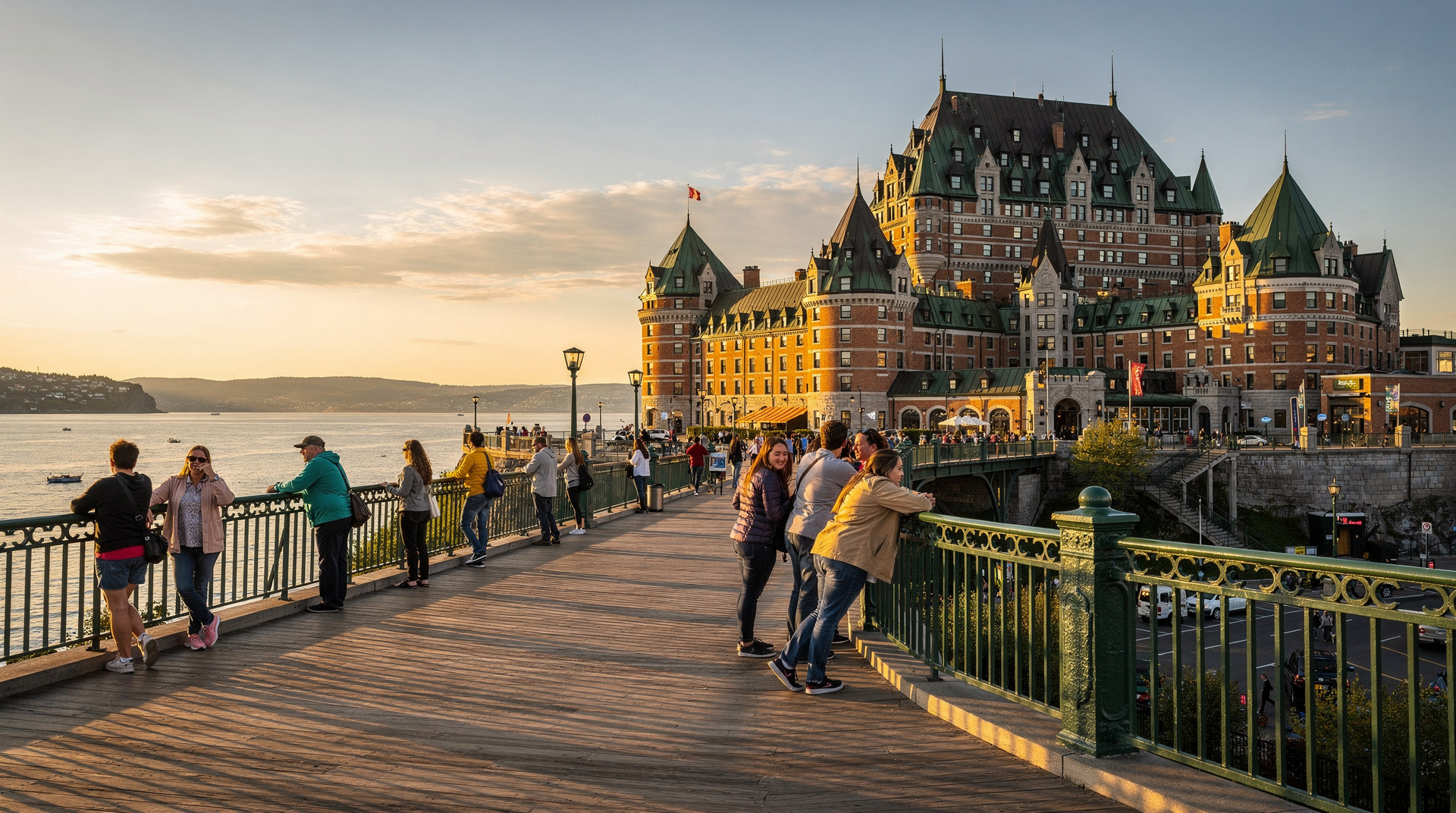
July is when Québec is at its most vibrant — and most expensive. Hotel prices peak, particularly in Old Québec and Old Montréal. Book everything months ahead. Lines at major attractions (Château Frontenac, Montmorency Falls) are long.
3-Hour Whale Watching Boat TourSee Québec in July.
August
Average temperatures: 15°C to 27°C / 16°C to 28°C What’s happening: Fêtes de la Nouvelle-France in Québec City (early August — historical re-enactment festival). Osheaga ends. Summer atmosphere continues. Whale watching still excellent. Charlevoix and Gaspésie hiking in full season. Crowd level: High — slightly less than July. Who it’s for: Summer travellers who missed July or want a slightly calmer peak season.
August offers most of the same summer appeal as July with marginally lower prices in the second half of the month. Foliage begins at the very end of August in the northernmost areas (Charlevoix highlands, Gaspésie summits).
See Québec in August.
September
Average temperatures: 8°C to 20°C / 10°C to 22°C What’s happening: Foliage begins in the Laurentides (~September 21-30 peak). Whale watching continues. National parks open but quieter. Hiking conditions excellent. Labour Day weekend (first Monday September) brings a brief crowd spike. Crowd level: Moderate and decreasing. Who it’s for: Foliage chasers, hikers, couples wanting romantic autumn atmosphere.
September is possibly the best all-around month for first-time visitors who prioritise value and scenery. Temperatures are comfortable, the province is gorgeous, and prices are 20-30% below summer. The Laurentides turn gold and red from the third week onwards.
See Québec in September.
October
Average temperatures: 2°C to 13°C / 3°C to 15°C What’s happening: Charlevoix foliage peaks October 1-15. Eastern Townships (Cantons-de-l’Est) peaks October 5-20. Thanksgiving (second Monday in October) — restaurants and activities busy that weekend. Whale watching season ends mid-October. Halloween events in Montreal. Crowd level: Moderate in first half, low in second half. Who it’s for: Foliage road-trippers, wine route visitors (Cantons-de-l’Est harvest), photography enthusiasts.
October is the prime foliage road trip month for Charlevoix and the Eastern Townships. The Charlevoix region in early October — golden birches against the fjord and the St. Lawrence — is one of the most beautiful landscapes in Canada.
See Québec in October.
November
Average temperatures: -3°C to 6°C / -2°C to 8°C What’s happening: Hunting season. First snow arrives in the Laurentides and Charlevoix. Most outdoor attractions close or reduce hours. Ski resorts typically open mid-to-late November with snowmaking. Crowd level: Very low. Who it’s for: Budget travellers only. November is the hardest month to justify a trip to Québec.
Montréal remains fully active with restaurants, arts, and culture. Québec City is quieter but the lower town is still lively. If you are primarily a city traveller and want hotels at their cheapest, November can work — just don’t expect outdoor appeal.
See Québec in November.
December
Average temperatures: -10°C to -1°C / -8°C to 0°C What’s happening: Christmas markets in Québec City (Old Town, beautiful) and Montréal. First reliable snow by mid-December. Ski resorts open fully by Christmas. New Year’s Eve celebrations in both cities. Crowd level: High around Christmas and New Year’s. Low in early December. Who it’s for: Christmas market fans, skiers, winter romantics.
Old Québec at Christmas is genuinely magical: stone buildings, lantern-lit streets, snow-covered Château Frontenac. The markets in Place d’Youville and the lower town run from late November through Christmas. Prices are high for the last two weeks of December.
See Québec in December.
By traveller type: when to go
| Traveller type | Best months |
|---|---|
| Summer culture and festivals | July, June |
| Fall foliage | Late September, early October |
| Skiing and winter sports | January, February, March |
| Carnaval | Late January, February |
| Whale watching | July, August (peak), June-October |
| Budget travel | April, May, November |
| Families with children | July, August, December-February (winter activities) |
| Couples (romantic) | October, February (Carnaval), June |
| Photography and nature | September, October, January |
| First-time visitors | June, September |
Seasonal price index (relative to summer peak)
| Season | Hotel price index | Notes |
|---|---|---|
| July-August peak | 100% | Highest prices, book far ahead |
| Carnaval (late Jan-Feb) | 130% in Québec City | Hotel premium during Carnaval |
| Christmas-New Year | 110% | Urban hotels at premium |
| June, September | 75-85% | Good value with good weather |
| October | 65-75% | Best value with good scenery |
| May | 60-70% | Low crowds, reasonable weather |
| April | 50-60% | Cheapest, least atmospheric |
| November | 50-60% | Cheapest, least appealing |
Shoulder season: the honest sweet spot most visitors miss
If you can only pick one non-obvious window, make it the first three weeks of September. Summer crowds and prices have dropped, whale watching in Tadoussac is still excellent (often better than August, according to naturalists — see the whale watching timing guide), the weather is comfortable without the wet-cold edge of October, and hotel rates sit 15-25% below peak.
The trade-off is that you miss both the festival energy of July and the deepest foliage colour, which peaks slightly later. Late April is the other underrated window but for a different reason entirely: it’s the only time you can combine sugar shack season with genuinely rock-bottom hotel prices, at the cost of grey, muddy scenery and closed outdoor attractions.
How rain and snow actually affect a trip
Québec receives precipitation fairly evenly across the year — summer thunderstorms are usually short and don’t derail a day’s plans, but a rainy stretch in the Gaspésie or Charlevoix in September-October can turn scenic hikes muddy and reduce visibility on mountain viewpoints for days at a time. Winter is the opposite problem: snow is the point, not an inconvenience, but a genuine snowstorm can close highways in rural regions (Gaspésie, Saguenay) for a day. Build a one-day buffer into any winter road trip beyond the Montréal-Québec City corridor, and check Québec 511 road conditions before driving anywhere outside the two main cities between November and April.
Matching your trip length to the season
A short 3-4 day trip works well any time of year, since it can focus on Montréal and Québec City where infrastructure runs year-round regardless of weather. A 7-day trip benefits most from summer or the September-October shoulder, when you can comfortably add the Charlevoix or Eastern Townships loop without worrying about closures. A 10-14 day trip that reaches Gaspésie or the Saguenay is best attempted June to September — several of the region’s key activities (whale watching boats, Chic-Chocs hiking, ferry crossings) simply don’t run outside that window, so a longer winter itinerary should stay closer to the two main cities and the ski resorts instead.
Plan your Québec trip
- Québec weather month by month (with temperatures) — rain, snow, degrees
- How much does a Québec trip cost? — real CAD budgets
- Québec public holidays and festival calendar — dates and impact
- 7-day Québec classic loop — summer or autumn road trip
- Québec 7-day fall foliage road trip — September/October
- Winter in Québec 7 days — Carnaval + ski + Hôtel de Glace
- Whale watching in Tadoussac — full guide
- Québec with kids: family guide — seasonal tips
Start your Québec City visit with the grand walking tour of Old Québec — available year-round:
Old Quebec City: Grand Walking TourFrequently asked questions about Best time to visit Québec: month-by-month breakdown
Is Québec worth visiting in winter?
Absolutely. Winter in Québec is one of the most distinctive travel experiences in North America. Carnaval de Québec (late January to mid-February), Hôtel de Glace, dogsledding, snowshoeing, and world-class ski at Mont-Tremblant and Mont-Sainte-Anne are all reasons to go. Temperatures can reach -25°C in January, so pack accordingly.When is the fall foliage in Québec?
Fall foliage peaks at different times by region: Laurentides around September 21-30, Charlevoix around October 1-15, Eastern Townships around October 5-20, and Gaspésie around September 25 to October 10. For a reliable foliage trip, plan for late September to early October.What is the cheapest time to visit Québec?
April and November are the cheapest months. They fall between the ski season and summer peak. Hotels can be 30-40% cheaper than summer rates, fewer crowds, and many restaurants have off-season menus. The trade-off: some attractions are closed or operate reduced hours.Is Québec crowded in summer?
Yes, July and early August are the busiest. Old Québec and Old Montréal are extremely crowded, especially during Carnaval de Jazz de Montréal (early July) and Festival d'été de Québec (mid-July). Book accommodation 3-6 months ahead for these dates. Tadoussac whale watching also peaks in July-August.When does whale watching start in Québec?
Whale watching in Tadoussac and the St. Lawrence runs from May to October, with peak sightings in July and August. Blue whales appear more frequently in June-July. Belugas are present year-round but more active near the surface in summer.What is the weather like in Québec in June?
June brings pleasant temperatures (10-25°C), long daylight hours, and the beginning of festival season. Rain is common in early June. It's an excellent time to visit — summer prices haven't peaked yet and the crowds are lighter than July-August.When should I avoid visiting Québec?
November is widely considered the least attractive month: ski season hasn't started, foliage is over, rain and early snow create grey conditions. Late April (mud season) is similar. That said, these are the cheapest periods and cities like Montréal remain lively year-round.
Top experiences
Bookable activities with verified prices and instant confirmation on GetYourGuide.