Montréal to Mont-Tremblant: day trip vs overnight
Guided Tour Laurentides Mont-Tremblant
Duration: 8-10 hours
Is Mont-Tremblant worth doing as a day trip from Montréal?
Yes, a day trip to Mont-Tremblant from Montréal is very doable — it's 1h30-1h45 drive northwest. You get 8-10 hours on the mountain, which is enough for the gondola, the pedestrian village, a hike, and lunch. That said, one overnight is optimal: you get the sunrise on the mountain and avoid the rush.
Montréal’s backyard mountain
Mont-Tremblant is Montréal’s weekend playground. At 130 km northwest, it’s close enough for a genuine day trip but rewarding enough that most visitors wish they’d booked a night. This guide tells you honestly when a day trip is enough and when it isn’t.
| Where | 130 km northwest of Montréal via A-15 and Route 117 |
| Drive time | Around 1h30–1h45 |
| Cost | Free village + lake; gondola/ski add-ons vary by season |
| Getting there | Car, organised day tour, or winter airport shuttle (Keolis Skyport) |
| Best for | Summer gondola and lake; winter skiing (book lift pass ahead) |
How to decide before you book anything
The honest question is not whether Tremblant is worth visiting. It is how much of your day you want to spend in the car and how many things you want to fit in. A day trip works best when it has one clear purpose: a gondola ride on a clear day, a ski day, a hike, or a long lunch by the lake. Trying to stack all four is how a pleasant outing turns into a rushed one.
If you are still comparing options around the city, our guide to day trips from Montréal lays out the alternatives side by side. If your plans lean toward the mountain itself, Mont-Tremblant in summer vs winter helps you pick the season that suits your group, and the best time to visit Québec puts the resort in the context of the whole year.
Travelling with children changes the maths too. The lake, the village and the gentler activities suit them well, and our family guide to Mont-Tremblant goes deeper on pacing, rest stops and what to skip.
Getting there from Montréal
By car
Route: Montréal → Autoroute 15 north → Saint-Jérôme → Route 117 north → Saint-Jovite → Route 327 → Resort Village.
Time: 1h30-1h45 in normal traffic. Add 30 minutes in winter if there’s snowfall or freezing rain. On Friday afternoons in ski season, the A-15 northbound can back up significantly — leave by 13h30 or accept delays.
Parking: See the official Tremblant website for current parking rates.
Practical tips for the drive: fill the tank and sort out coffee before you leave the city, because the stretch after Saint-Jérôme is where the road starts to feel like the countryside. In winter, check the road and weather forecast the night before and again at breakfast. If you have never driven in snow or on a Québec highway, read our driving in Québec from Europe guide first, and if you still need a vehicle, how to rent a car in Québec explains the process. Arriving from the airport? The Montréal-Trudeau airport guide covers getting out of the airport and onto the highway.
By organised tour
The most practical option without a car — guided day trips from Montréal typically depart around 08h00-08h30 and return by 19h-20h:
Guided Tour Laurentides Mont-TremblantAn organised tour trades flexibility for ease. You do not drive, you do not park, and you do not worry about winter roads on the way back. The cost is a fixed schedule: you leave when the group leaves. For people who like to linger over lunch, a car gives more freedom; for people who want everything handled, the tour is hard to beat.
What to do: summer (June–mid-October)
The gondola and pedestrian village
The pedestrian village at the base of Mont-Tremblant is the social hub. Built in a faux-Québécois village style, it’s genuinely attractive — covered walkways, colourful buildings, outdoor terraces, a central plaza with fountain. In summer, live music plays most evenings.
The gondola rises 875 metres to the summit. On a clear day, views extend across the Laurentian plateau with Lac Tremblant glittering below. The gondola runs in summer for sightseeing (from $33 CAD for adults, mid-May to mid-October 2026). Worth it on a clear day; skip it if overcast.
For a private day trip that combines the gondola with the Sentier des Cimes treetop walk:
Mont-Tremblant: Private Day Trip with Treetop Walk & GondolaA good rhythm for a summer day is the gondola first, while the air is clear and the queues are short, then lunch in the village, then the lake in the afternoon. Reversing the order tends to work against you, since haze and cloud build later in the day and the lake is just as pleasant at four o’clock as at noon.
Lac Tremblant
The beach at Lac Tremblant (on the lake side of the resort village, 5-minute walk) is free and one of the best mountain swimming spots in Québec. Paddleboard, kayak, and canoe rentals are available from about 27 CAD/hour. The water is clear and cold even in August. In summer, this is the main reason families come to Tremblant.
Hiking in Mont-Tremblant National Park
Note: Mont-Tremblant National Park is a separate entity from the resort, whose Diable sector is about 12 km from the resort’s North Side. Don’t confuse the two. The park has exceptional hiking on the Laurentian plateau — the Lac-Poisson trail (7.4 km round trip, 2.5 h), the La Corniche ridge trail (3.4 km round trip, 1.5 h), and the La Roche viewpoint trail (5.4 km round trip, 2 h) are the highlights.
The park rewards early starts and sturdy footwear, and it is much quieter than the resort village. Our hiking guide to Mont-Tremblant National Park describes the trails in more detail, and best hikes in Québec shows how they compare with other options in the province. If the lake appeals more than the trail, paddleboarding in Québec lakes is worth a read.
For a guided hiking day from Montréal to the national park (not the resort):
Mont-Tremblant National Park Hiking DayWhite water rafting on the Rouge River
The Rouge River (Rivière Rouge) runs through the foothills east of the Tremblant resort (the rafting base is about 1 h 15 from the resort). Class III-IV rapids make this one of the best rafting experiences in Québec. Half-day or full-day trips are available from 1 May to 27 September 2026:
Half-Day White Water Rafting (Rouge River)Rafting is a full commitment of wet clothes and a long drive home, so bring a change of clothes and a dry bag for your phone. For other options on this river, see rafting on the Rouge River near Mont-Tremblant.
What to do: winter (November–mid-April)
Skiing and snowboarding
Mont-Tremblant’s ski resort has 103 runs across 4 mountain faces, 15 lifts, and a vertical drop of 645 metres. Snow quality is excellent — a combination of natural snowfall and extensive snowmaking. The ski season typically runs late November to mid-April.
Day pass cost: $156 to $195 CAD for adults before taxes (book online — cheaper than at the window). Equipment rental: 85 CAD. Lessons: from 142 CAD.
Day trip from Montréal by car: leave by 07h00 to be on the mountain by first lift (08h30). Return by 17h00 before traffic builds. A full ski day requires an early start.
If skiing is the whole point of your trip, the Mont-Tremblant ski guide covers the mountain in more depth, and Mont-Tremblant vs Mont-Sainte-Anne helps if you are weighing it against a resort near Québec City. For a wider view, see downhill ski resorts in Québec. Dress in layers: the wait at the base and the ride up the lift feel colder than the walk through the village.
Snow tubing
No experience needed. The Tremblant snow tubing park uses a mechanical lift — no walking uphill. Sessions run 2 or 4 hours and typically cost 36 to 46 CAD. Great for families and non-skiers.
Dogsledding
Multiple operators in the Laurentides run dogsledding experiences near Tremblant — one of the most memorable winter activities in Québec. Dogs are Siberian huskies; routes go through old-growth boreal forest. Half-day tours depart near Tremblant:
Dogsledding Valley AdventureFor more on this activity beyond Tremblant, our dog sledding in Québec guide explains what to expect. After a cold day outside, a Nordic spa is a good way to warm up; see Nordic spas in Québec.
Day trip vs overnight: honest verdict
| Scenario | Day trip | Overnight |
|---|---|---|
| Summer gondola + village + lunch | Sufficient | Better but not necessary |
| Summer hiking (National Park) | Full day, tight | Recommended |
| Summer rafting + resort | Good day | Better |
| Winter skiing | Feasible but tiring | Recommended |
| Winter village + cosy evening | No | Essential |
| Families with kids | Works well | Better (morning mountain, no rush) |
One night optimum: if you can afford it, even one night changes the experience entirely. You’ll catch the sunrise on the mountain, explore the village at dusk, and actually relax at dinner instead of watching the time for the drive back.
Day trip is fine if: you’re tight on time, you’re doing a single activity (gondola or ski), you don’t want to deal with accommodation logistics.
If you are building a longer stay, the Tremblant overnight fits naturally into a wider route, such as the 4 days in Montréal itinerary or the 7-day classic loop. The nearby Saint-Sauveur and Sainte-Agathe-des-Monts are also worth a look if you want a quieter base in the Laurentides. A mid-week stay is usually calmer than a weekend, which matters more than the room itself.
Where to eat
In the village (resort-level prices): Windigo (burgers, busy), La Savoie (fondue and raclette, dinner only), Les Artisans (Québec craft beer, good snacks).
In the historic village (Saint-Jovite, 10 min drive): more authentic, cheaper. Le Shack (local chain with good poutine), Épicerie La Gare (groceries and sandwiches).
Eating in the historic village is also a good way to see a side of the area that most day trippers miss. Plan to eat before the evening rush if you are driving back to Montréal, and keep a snack in the car for the return leg.
Foliage season note
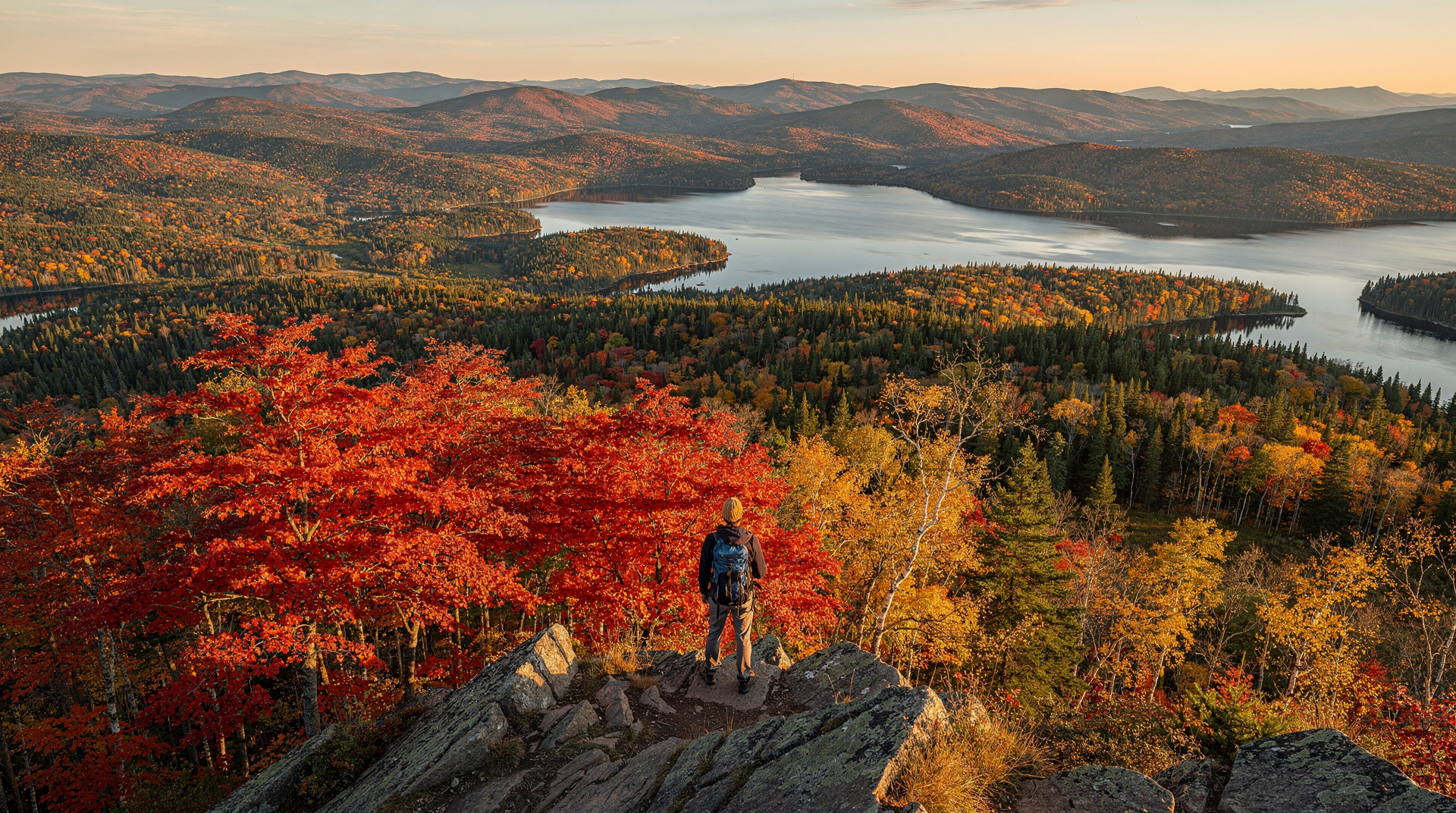
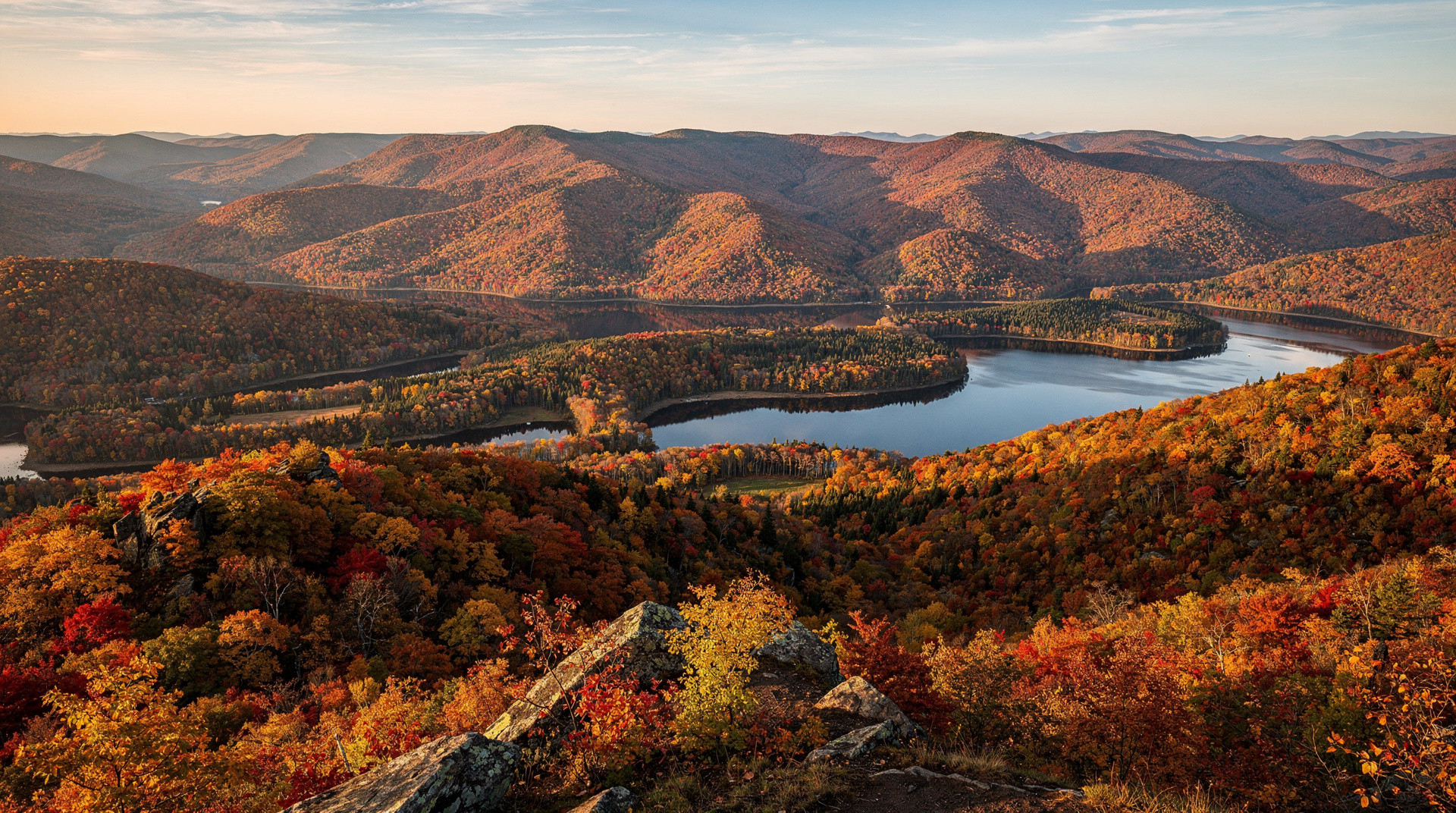
The Laurentides hit peak foliage earlier than elsewhere in Québec — typically September 21-30. A Tremblant day trip in the last week of September is spectacular: the mountain turns red and orange, the crowds are smaller than summer, and the air is crisp. One of the best value experiences in Québec for the effort.
If you’d rather see foliage on a different circuit, our Eastern Townships day trip peaks about two weeks later and combines it with wine tasting.
For a first-hand account of the shoulder season at the resort, read Mont-Tremblant in summer and the shoulder season, and see the Mont-Tremblant skiing with kids blog post if you are bringing the family in winter. Our Québec in September guide adds context for the foliage window.
Free and low-cost ways to enjoy Mont-Tremblant
If you’re on a tight budget or simply don’t want to pay for the gondola or ski passes, the resort still rewards a visit. The pedestrian village is free to wander, the path along Lac Tremblant costs nothing, and the mountain views from the base are pleasant even without going up. A coffee, a walk by the lake, and a stroll through the village fills a satisfying couple of hours for under $30 CAD per person.
Related guides
- Day trips from Montréal
- Mont-Tremblant destination guide
- Laurentides region guide
- Driving in Québec from Europe
Frequently asked questions about Montréal to Mont-Tremblant: day trip vs overnight
How long is the drive from Montréal to Mont-Tremblant?
Approximately 130 km, 1h30-1h45 by car. Take Autoroute 15 north from Montréal to Saint-Jérôme, then Route 117 north to Saint-Jovite, then Route 327 to the resort village. Friday evenings in ski season (November–April) can add 45-90 minutes of congestion on the A-15 corridor — leave before 15h00 or after 20h00.Is there public transport from Montréal to Mont-Tremblant?
There is no regular public transport from downtown Montréal. In winter (17 December 2026 to 4 April 2027, Thursday to Sunday) a Keolis Skyport shuttle sold through Orléans Express links Montréal-Trudeau airport to the resort. The practical options are: rent a car, join an organised day trip from Montréal, or take a private transfer. Most visitors drive.What can you do at Mont-Tremblant in summer?
In summer (June–October): gondola ride to the summit (from $33 CAD for adults), Lac Tremblant beach and paddleboarding, hiking in Mont-Tremblant National Park (Diable sector about 12 km from the resort's North Side), mountain biking, the Sentier des Cimes treetop walk, white water rafting on the Rouge River. The pedestrian village has restaurants and bars open daily.What can you do at Mont-Tremblant in winter?
Mont-Tremblant is one of the best ski resorts in eastern Canada: 103 runs, 15 lifts, reliable snow coverage from late November. Snow tubing, dogsledding, ice climbing, ice skating on the resort's outdoor rink, and the illuminated pedestrian village with outdoor terraces. Adult one-day lift ticket: $156 to $195 CAD before taxes (booking online in advance costs less than at the ticket window).How much does a day trip to Mont-Tremblant cost?
Budget for: gondola from $33 CAD (adult), lunch ~$25-40 CAD, plus parking (see the official Tremblant website for current parking rates). Ski day: add the lift ticket ($156 to $195 CAD) + 85 CAD for equipment rental. An organised day trip including transport from Montréal costs $100-130 CAD and handles all logistics.Where to stay overnight at Mont-Tremblant?
The Fairmont Tremblant is the landmark hotel in the resort village. More affordable options: Hôtel Mont-Tremblant in the historic village, various chalets and condos on VRBO/Airbnb (excellent for groups, $200-400/night for 4-6 people). The resort village and the historic village (Saint-Jovite, 10 min drive) both have accommodation options.Is Mont-Tremblant worth visiting without skiing or a summer activity budget?
Yes — the pedestrian village itself is free to walk around, the Lac Tremblant beach and lakeside path cost nothing, and the views from the base of the mountain are pleasant even without paying for the gondola. Budget travellers can enjoy a full afternoon in the village, a walk by the lake, and a coffee for well under $30 CAD, skipping the paid attractions entirely.How busy does Mont-Tremblant get on weekends?
Winter Saturdays in ski season and summer long weekends are the busiest — expect full parking lots by mid-morning, a livelier but more crowded village, and lift lines at peak hours. Arriving early (before 09h00) largely avoids the worst of it. Weekday visits, even in peak season, are noticeably calmer and are the better choice if your schedule allows it.
Top experiences
Bookable activities with verified prices and instant confirmation on GetYourGuide.