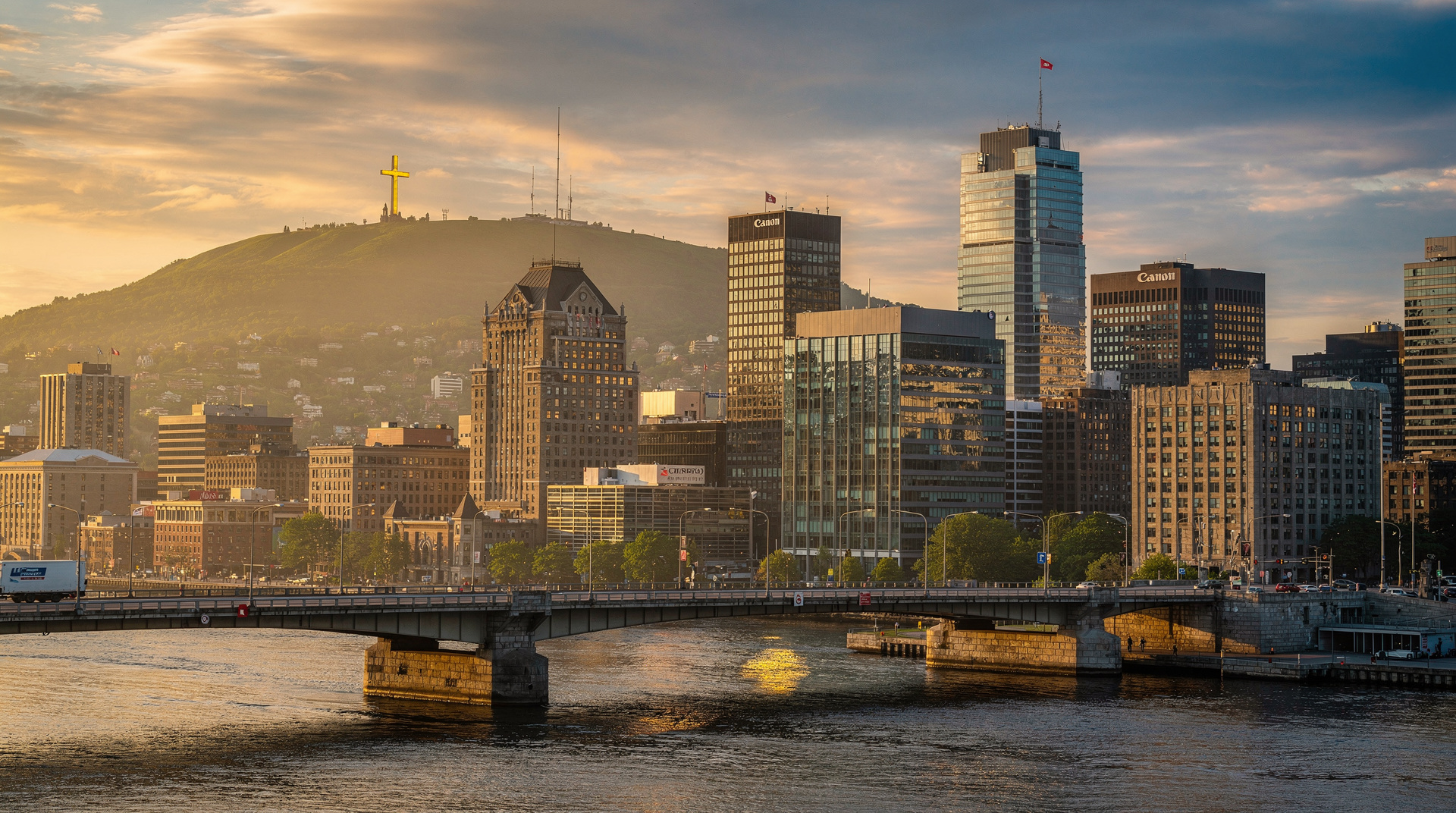
Montréal tourist traps: 7 to skip and 7 to do instead
Mount Royal Tour
Duration: 2-3 hours
What are the biggest tourist traps in Montréal?
La Grande Roue Ferris wheel (27 CAD for a view Mount Royal gives for free), the Underground City (it is a mall), tourist restaurants in Vieux-Montréal's cobblestone area, La Ronde on peak summer days (queues of 90+ minutes for major rides), and souvenir shops on rue Sainte-Catherine. All have better alternatives.
Montréal is excellent — in the right places
Montréal is a genuinely great city. The food scene, the festivals, the neighbourhoods — there is a reason it appears on every “best cities to visit” list. But the same things that make it attractive (a concentrated historic core, a famous basilica, an unusual underground network) have also generated a cluster of tourist-targeting experiences that are expensive, crowded, or simply overhyped.
This guide goes through them honestly: what they are, what they cost, and what you should do instead.
| Trap | Cost | Free/cheaper alternative |
|---|---|---|
| La Grande Roue | ~27 CAD | Mount Royal lookout (free) |
| Underground City as an “attraction” | Free but a mall | Canal Lachine bike ride |
| Vieux-Montréal cobblestone restaurants | 35-55 CAD/main | Plateau/Mile End bistros |
| Notre-Dame daytime ticket only | 10-15 CAD | AURA evening light show |
| Souvenir shops on Sainte-Catherine | Marked-up | Marché Jean-Talon |
1. La Grande Roue de Montréal (Old Port Ferris Wheel)
What it is: A 60-metre Ferris wheel on the Old Port waterfront, opened in 2017. What it costs: 27 CAD per person for a standard gondola. Heated premium gondolas cost more. What you get: A 20-minute ride to 60 metres with views of Old Port, the St. Lawrence, and parts of the city. The honest verdict: Decent view, not great value. At 60 metres, you are not high enough to see the full city panorama. The novelty wears off quickly.
Better alternative — Mount Royal lookout: Free. Walk 25–30 minutes from the Mont-Royal metro station through the Parc du Mont-Royal (one of the most pleasant urban parks in North America) to the Kondiaronk Belvedere. At 233 metres, the panoramic view covers the entire island, the St. Lawrence, downtown, and the mountains of Vermont on clear days. The walk itself is beautiful. Cost: zero.
Better alternative — Olympic Tower: 25 CAD gets you to 175 metres — almost three times the height of the Ferris wheel — with a 360-degree view from the Tour de Montréal at the Olympic Stadium.
Mount Royal TourSee our dedicated Ferris wheel guide for the full breakdown.
2. The Underground City (RÉSO): it is a mall
What it is: A 33-km network of underground corridors connecting metro stations, shopping centres, hotels, and office towers in downtown Montréal. What visitors expect: A subterranean world of cafés, markets, and hidden Montréal life. What it actually is: Commuter infrastructure. Long corridors with mall chains, fast food, and the occasional convenience store. Useful in a February blizzard. Not a tourist attraction.
Travel content frequently describes the Underground City as a “hidden city beneath Montréal” or “the world’s largest underground complex.” Both descriptions are accurate in a literal sense. Neither prepares visitors for the experience of walking through what is essentially a long mall corridor.
Better alternative — Vieux-Port and Canal Lachine by bike: Rent a BIXI bike (electric or standard) and cycle from the Old Port west along the Canal Lachine, through the Atwater Market, and back. This covers genuinely beautiful parts of Montréal at eye level — industrial heritage, waterway, market life — for about 10 CAD in bike rental costs.
3. Tourist restaurants on the Vieux-Montréal cobblestones
The trap: The pedestrian sections around Place Jacques-Cartier, rue Saint-Paul, and the immediate tourist zone in Vieux-Montréal have restaurants charging 35–55 CAD for main courses that locals would consider 20–30 CAD meals. The menus are tourism-facing (lots of poutine, smoked meat, maple glaze), the wine lists are marked up sharply, and the service is designed for tourist turnover.
The honest note: Some excellent restaurants exist in Vieux-Montréal — Maison Boulud, Garde Manger, Le Club Chasse et Pêche — but they are clearly distinguished from the tourist-trap strip by their menus and prices. The dangerous zone is the “middle market” tourist restaurants with patio heaters and generic menus facing the most photographed streets.
Better alternative — Plateau Mont-Royal and Mile End: Walk 15–20 minutes north of Vieux-Montréal into the Plateau. On boulevard Saint-Laurent (the Main) and avenue du Mont-Royal, you find independent restaurants, wine bars, and bistros at genuinely reasonable prices where actual Montréal residents eat. Rue Jean-Talon through Little Italy has some of the best neighbourhood restaurants in the city.
Best of Montreal Food Walking Tour4. Notre-Dame Basilica daytime ticket without AURA
The trap: Not quite a trap — the basilica is worth seeing — but the basic daytime ticket (10–15 CAD) is the least good way to experience it. The architecture is extraordinary, but guided daytime visits are brief, crowded, and lack context.
Better alternative — AURA light show: The AURA immersive experience projects a custom-made light show onto the basilica’s interior, transforming it into something otherworldly. Tickets run 48–60 CAD — more than the daytime visit, but the experience is incomparable. Runs Tuesday through Sunday evenings. If you only experience Notre-Dame Basilica one way, make it AURA.
AURA at Notre-Dame Basilica + Cruise5. Schwartz’s Deli: real but overhyped management
The trap — sort of: Schwartz’s on boulevard Saint-Laurent is a Montréal institution, and the smoked meat is genuinely excellent. The problem is the experience around it: the queue extends down the street in summer (can be 45–90 minutes), the counter-service environment is intentionally basic, and the prices — once a point of pride for its accessibility — have crept up significantly. Tourists are directed here as if it is a must-do; locals are equally likely to go to Lester’s or Main Deli for the same quality without the wait.
Better alternative — Lester’s Deli (1057 avenue Bernard Ouest, Outremont): smaller queue, same category of Montreal smoked meat, in a neighbourhood that is itself worth visiting. Or Main Deli (3864 boulevard Saint-Laurent, near Schwartz’s) — almost no wait, strong local following.
6. La Ronde on a peak summer Saturday
The trap: La Ronde is a real amusement park — a Six Flags property with genuine rollercoasters. But on peak summer weekends (July and August Saturdays especially), the queues for major rides (Goliath, Le Vampire, Ednör) run 60–90 minutes. At 65–85 CAD entry, you can easily pay that price and do four rides in 5 hours.
When it works: Arrive at opening (10 am), buy tickets online (saves 10–15 CAD versus the gate), target major rides before noon. Early weekday visits in late August see manageable queues.
Better outdoor alternative: Mont-Tremblant summer activities — zip-lining, alpine coaster, via ferrata, white-water rafting — offer outdoor thrills with no significant queues and more natural surroundings. See our La Ronde full review.
7. Souvenir shops on rue Sainte-Catherine: skip for Marché Jean-Talon
The trap: The tourist souvenir shops concentrated around the Peel and Guy-Concordia metro stations on Sainte-Catherine sell mass-produced maple syrup, hockey jerseys, and Montréal-branded items at significant markup. Much of the “local” merchandise is not made in Québec.
Better alternative — Marché Jean-Talon (7075 avenue Casgrain, Little Italy): the largest outdoor market in North America. Local farmers, Québec artisanal food producers, preserves, cheeses, local apples, cideries, maple products sourced directly from small producers. This is where Montréalers shop and where your maple syrup money actually reaches a Québec farmer rather than a distributor. The market is open year-round, outdoor in summer, indoor in winter.
The Original Old Montréal Walking Tour8. Horse-drawn calèche rides around Old Montréal
The trap: Calèche rides circling Old Montréal typically cost 50-90 CAD for a 30-45 minute loop. You could walk the same ground in less time, for free, and stop wherever you like. Animal-welfare concerns around city-street carriage horses have also made the practice increasingly controversial in recent years.
Better alternative: A guided walking tour covers the same historic streets with more context and flexibility.
Old Montréal walking tour9. Montréal Science Centre without children
The trap — situational: The Montréal Science Centre in the Old Port is genuinely good for families with children aged 6-14, with hands-on exhibits and an IMAX cinema. For adults without children, it’s comparatively thin.
Better alternative: Adults with limited time are better served by the Biodome and Botanical Garden cluster, which delivers more depth per hour even without children in tow.
What is genuinely worth doing in Montréal
Not all tourist attractions are traps. These deliver real value:
- Old Montréal walking tour with a local guide: the history is real, the architecture is genuinely old (17th–19th century), and a knowledgeable guide makes it live.
- Mount Royal and Parc du Mont-Royal: Free, spectacular, and deeply Montréalais. More than a viewpoint — the park has trails, beaver ponds, the historic chalet, and in winter, cross-country skiing.
- Botanical Garden + Insectarium: Genuinely excellent. The Japanese Garden and Chinese Garden are world-class. The Insectarium post-renovation is extraordinary and strange. Combined tickets are available with the Biodome at better value than individual entry.
- Mile End food exploration: Bagels at St-Viateur (158 rue Saint-Viateur Ouest, open 24 hours), smoked meat exploration, coffee culture — the neighbourhood rewards aimless wandering.
- Jazz Festival (early July): Hundreds of free outdoor concerts. One of the world’s great free cultural events.
For deeper restaurant recommendations, see our where to eat in Montréal guide. For a complete Montréal itinerary, see our 4-day Montréal plan.
Frequently asked questions about Montréal tourist traps: 7 to skip and 7 to do instead
Is La Grande Roue (Old Port Ferris Wheel) worth it in Montréal?
Not particularly. At 27 CAD per person for a 20-minute ride to 60 metres, the view is pleasant but limited — you can see Old Port, the St. Lawrence, and Mount Royal. Mount Royal's belvedere lookout gives you an equal or better panoramic view for free, after a 25-minute walk through a beautiful park. The Olympic Tower at 25 CAD reaches 175 metres (almost three times the height) and gives a much more commanding view. The Ferris wheel is not bad, but it is not good value.Is the Underground City a tourist attraction in Montréal?
Not really. The RÉSO (underground network) is a functional system of underground corridors connecting metro stations, shopping centres, and office towers across about 33 km of tunnels. It is useful for commuters and convenient in winter. As a tourist experience, it is fundamentally a mall with long corridors. Marketing around it sometimes implies it is a unique attraction. If you go in expecting a subterranean city, you will be underwhelmed.Are the cobblestone restaurants in Vieux-Montréal bad?
Some are decent, but many are in a tourist-markup zone. The concentration of tourist restaurants on the pedestrian sections of rue Saint-Paul and around Place Jacques-Cartier charge significantly more than equivalent meals in the Plateau or Mile End. Service can be rushed when restaurants are targeting tourist tables. Two or three neighbourhoods away, the same budget buys significantly better food and atmosphere. Locals almost never eat on the tourist cobblestone circuit.Is La Ronde worth visiting in Montréal?
For thrill-ride fans (especially children 8–16), La Ronde has legitimate rides: Goliath, Le Vampire, Ednör, and Vipère are genuine rollercoasters. The problem is operational: on peak summer days (July–August weekends), major rides have queues of 60–90 minutes. At 65–85 CAD per day entry, the value depends entirely on your capacity to queue. Buy online, arrive at opening (10 am), and target major rides first. For a more satisfying outdoor adventure, Mont-Tremblant's summer activities cost less and have no queues.Where should I actually eat in Vieux-Montréal?
Vieux-Montréal has good restaurants — you just need to look past the tourist-trap strip. Maison Boulud (Ritz-Carlton) is exceptional. XO Le Restaurant, Garde Manger, and Le Club Chasse et Pêche are excellent. The key is to avoid restaurants whose primary marketing is the view of cobblestones and target restaurants with Québécois or creative menus that attract local business diners. Alternatively, walk 15 minutes north to the Plateau or 10 minutes to the Quartier Latin for genuinely local options.What is the best free view in Montréal?
Mount Royal's Kondiaronk Belvedere, at 233 metres above sea level, offers a 180-degree panoramic view of the entire island of Montréal, the St. Lawrence River, and on clear days the Vermont mountains to the south. The walk from the Mount Royal metro station takes 25–30 minutes through forest. This is one of the best free urban viewpoints in North America.Is the Notre-Dame Basilica daylight visit worth it?
The architecture is genuinely stunning and at 10–15 CAD for daytime entry, the value is reasonable for those interested in religious architecture and history. The interior — particularly the main nave with its blue vault and gold ornamentation — is among the most impressive in North America. However, the real experience is the AURA light show held after closing hours (48–60 CAD). If you are going to pay for the Basilica, the AURA immersive show is a significantly better use of your money than the standard daytime ticket.Are horse-drawn calèche rides a tourist trap in Montréal?
Calèche (horse-drawn carriage) rides around Old Montréal are pricey for what they deliver — typically 50-90 CAD for a 30-45 minute loop you could walk in less time for free, and the animal-welfare concerns around city-street carriage horses have made the practice increasingly controversial. A self-guided or guided walking tour covers the same ground with more flexibility to stop, and costs far less.Is the Montréal Science Centre worth visiting?
It depends on your interests. The Montréal Science Centre (Old Port) is genuinely good for families with children aged 6-14, with hands-on exhibits and an IMAX cinema, but adults without children often find it thin compared to the Biodome or Botanical Garden cluster. If you have limited time and no children along, prioritise the Espace pour la vie attractions instead.
Top experiences
Bookable activities with verified prices and instant confirmation on GetYourGuide.