4 days in Montréal
The Original Old Montréal Walking Tour
Duration: 2 hours
Why Montréal deserves four full days
Montréal is one of North America’s most underrated cities for first-time visitors. Four days lets you move past the tourist surface and experience what makes it genuinely extraordinary: the food scene (honestly competing with Paris and New York), the multilingual street culture, the effortless coexistence of centuries-old architecture and inventive contemporary art, and a density of neighbourhoods each with a distinct personality.
No rental car needed. The STM metro covers all major sites, the BIXI bike share is excellent in the warm months, and the city is flat enough for comfortable walking. See the Montréal public transport guide for transit tips.
| Where | Old Montréal, Plateau Mont-Royal, Mile End, Mount Royal |
| Cost | around 1 300-1 900 CAD/person, mid-range, before taxes |
| Time needed | 4 days; 2 is workable but rushed |
| Getting there | YUL airport, 25 min to downtown by 747 express bus or taxi |
| Best time | June-August for festivals; September-October for foliage and lower prices |
Day 1: Old Montréal (Vieux-Montréal)
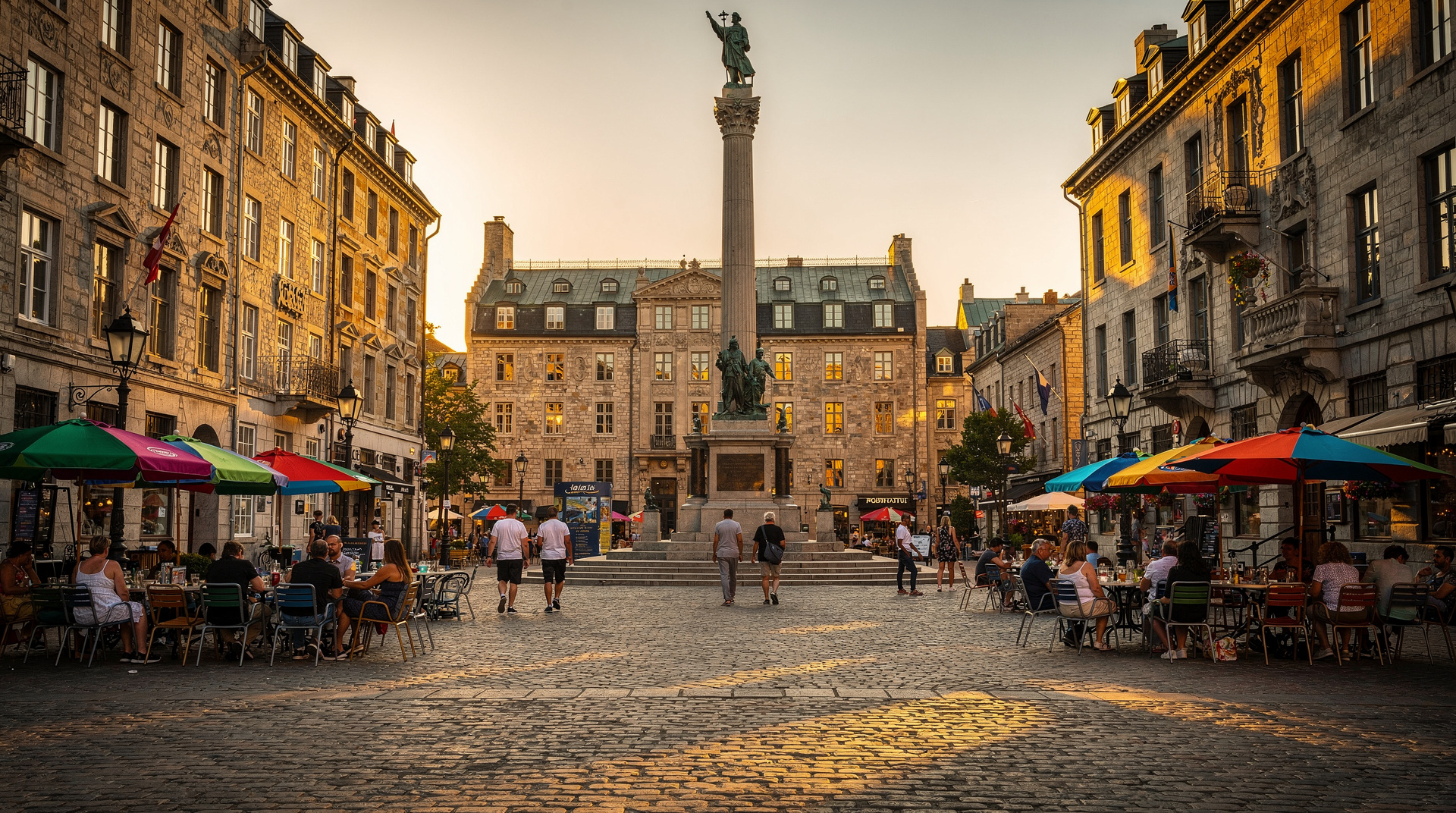
Morning — historic core on foot. Start at Place d’Armes, the square anchored by the Gothic Revival Notre-Dame Basilica. The Original Old Montréal walking tour is the most efficient orientation: 2 hours covering the cobblestoned streets of the Vieux-Port, the magnificent Place Jacques-Cartier, the Old Courthouse, and the Saint-Laurent riverfront. The guides are knowledgeable locals who explain the city’s French colonial history without turning it into a lecture.
Midday — Old Port lunch. The Marché Bonsecours (now a design and artisan market) makes an excellent brief stop. Lunch on the waterfront at Olive + Gourmando (cash only, worth the queue) or Crew Collective in the old Royal Bank building — one of the most spectacular café spaces in North America.
Afternoon — Notre-Dame Basilica and AURA. Book the AURA light show at Notre-Dame Basilica with river cruise . The AURA show (evenings) is a stunning light projection across the interior of the church — reserve in advance as it sells out in summer. The 1-hour cruise afterward offers the best city skyline photographs you will take.
Evening — Vieux-Montréal by night. Dinner in Old Montréal itself is acceptable if you choose carefully — Toqué! and Garde-Manger are landmark restaurants but require booking weeks ahead. A more accessible option is Brasserie T! or Bonaparte, both within 5 minutes of Place d’Armes.
Day 2: Plateau Mont-Royal and Mile End
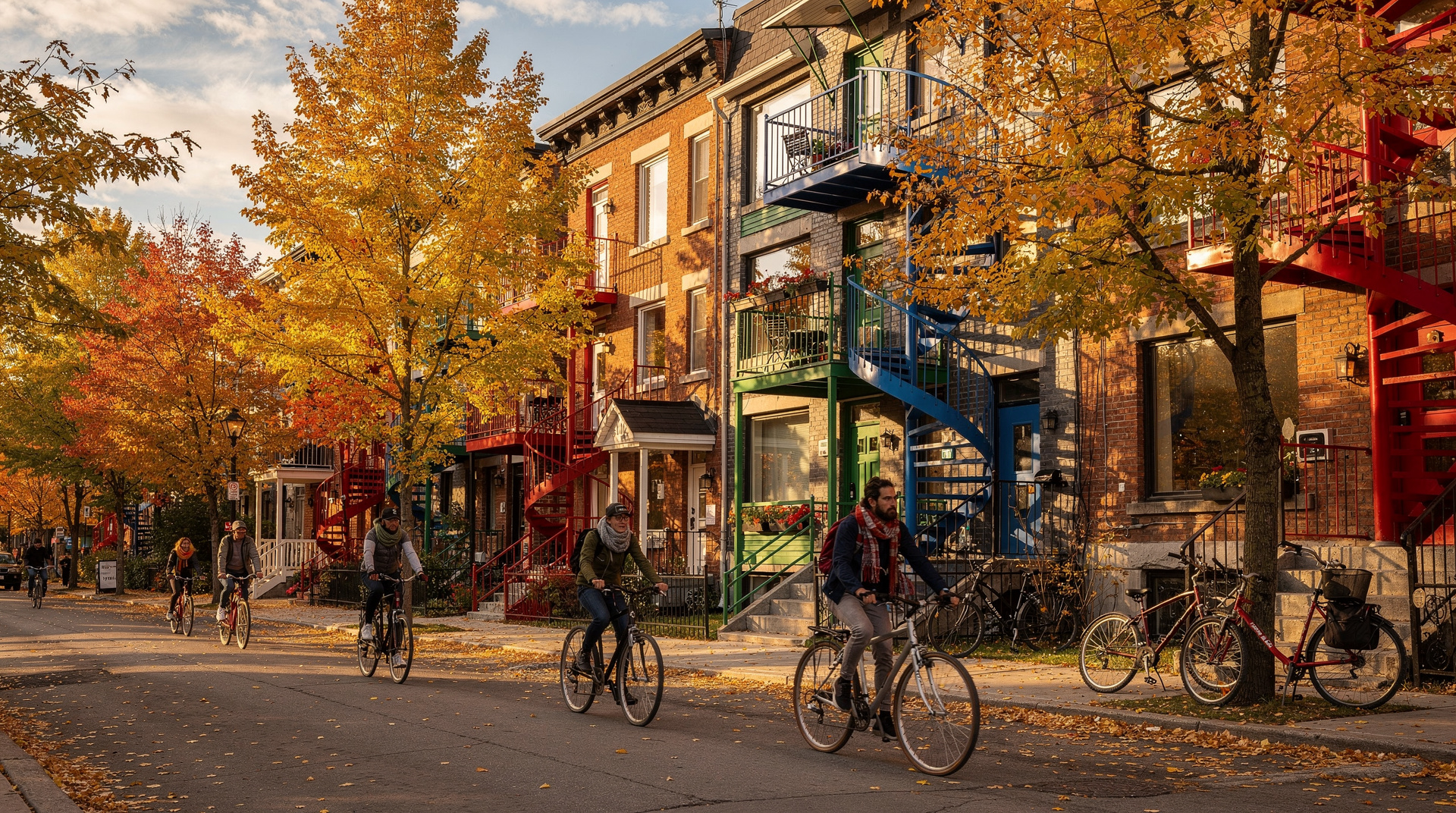
Morning — the Plateau on foot. Take the metro (orange line, station Mont-Royal) to the heart of the Plateau. This neighbourhood is the bohemian soul of Montréal: Victorian duplexes with spiral exterior staircases, dozens of independent cafés, bookshops, and a street art scene that rivals Berlin. Rue Saint-Denis and Rue du Plateau are the main pedestrian arteries. Pick up coffee at Café Olimpico or Café Névé — both are institutions.
Late morning — Jean-Talon Market. The metro to Jean-Talon station takes 10 minutes. The Marché Jean-Talon is the best farmers’ market in Québec, operating year-round. In summer, the fruit and vegetable stalls overflow onto the surrounding streets. In fall, it fills with apple cider, local squash, and foliage-season produce. Even just walking through it is worthwhile.
Afternoon — Mile End and the bagel experience. The Montréal Bagel Tour is one of the city’s most fun and genuinely educational experiences. Montréal bagels (wood-fired, hand-rolled, boiled in honey water) are entirely different from New York bagels — smaller, denser, slightly sweet. The tour visits both Saint-Viateur Bagel and Fairmount Bagel for a side-by-side comparison, plus stops for smoked meat and local specialities. Highly recommended for food enthusiasts.
Evening — Rue Saint-Laurent. The Boulevard Saint-Laurent (the “Main”) is Montréal’s historic cultural divide between English west and French east. Today it is a lively restaurant strip. Try Lawrence, Joe Beef (book far ahead) or Au Pied de Cochon for Québécois classics. Budget 70-100 CAD per person with drinks.
Day 3: Mount Royal and Outremont
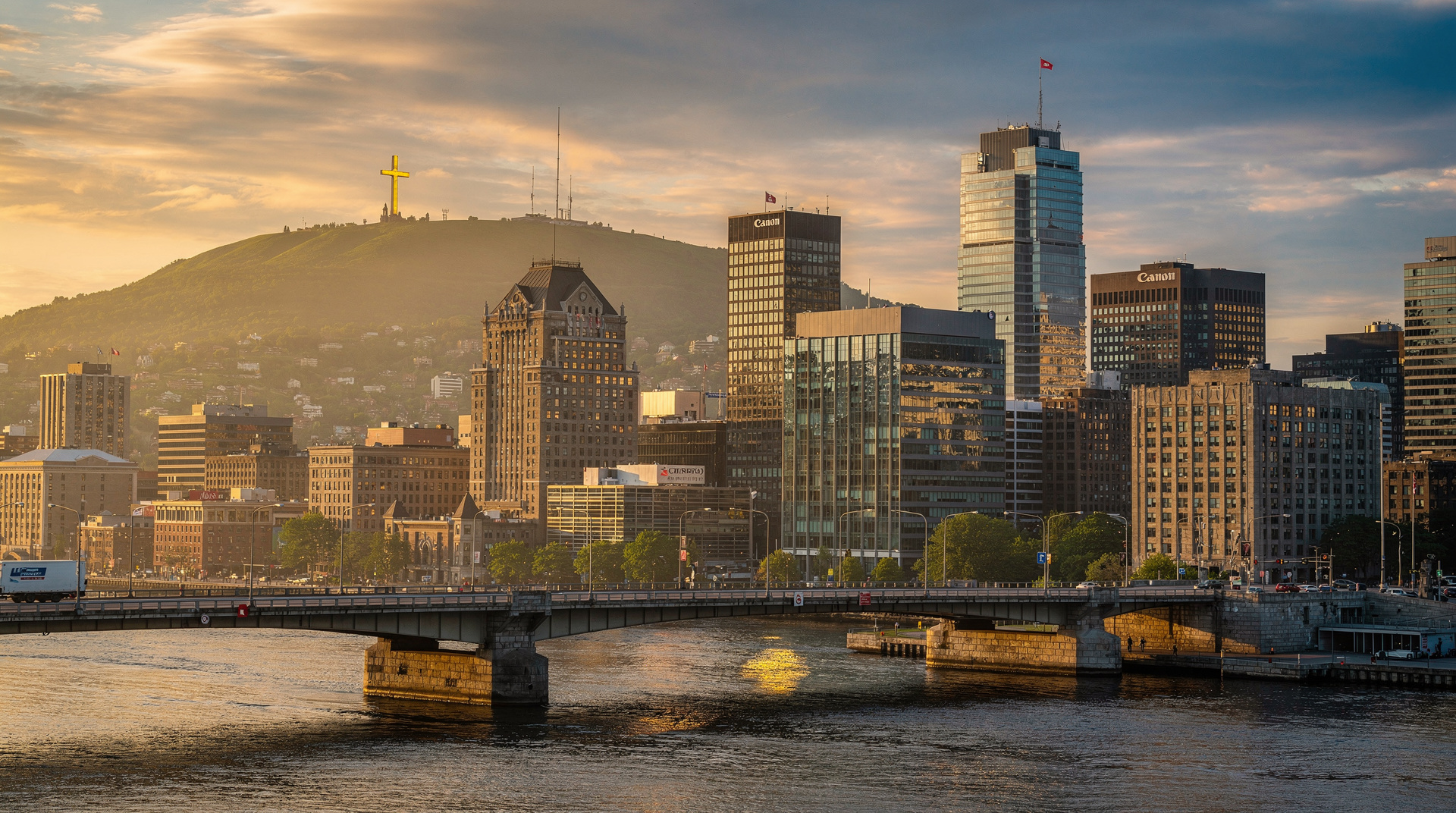
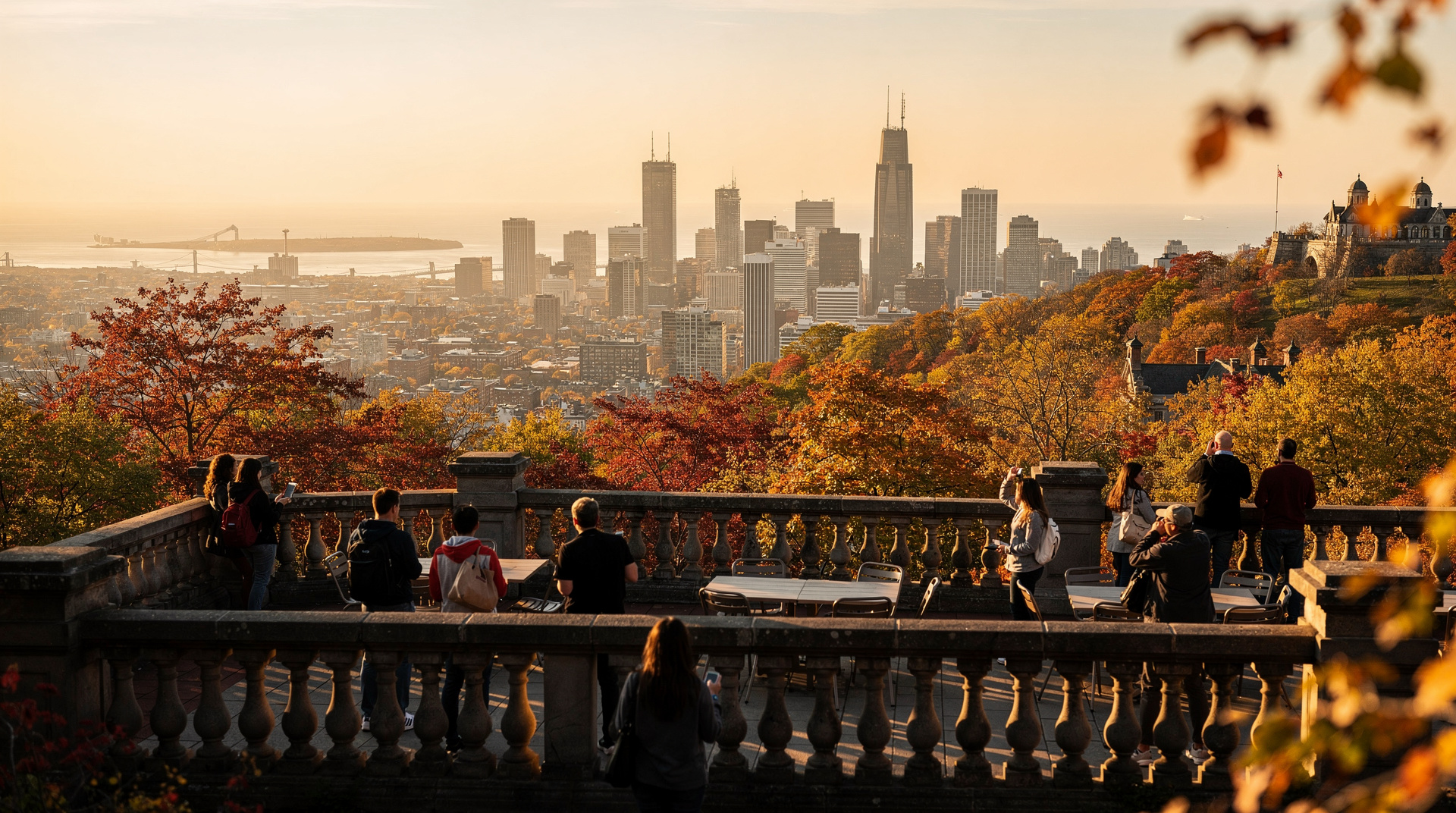
Morning — Mount Royal. The extinct volcanic mound rising above the city at 233 metres is the spiritual heart of Montréal — locals call it simply “la montagne.” The Electric fat bike ride on Mount Royal is the most enjoyable way to cover the park: the 1.5-hour guided ride circles the summit, stops at the Kondiaronk Belvedere lookout (the best city panorama in Montréal), and passes through the forested trails above the Plateau. No fitness required — the electric assist handles all slopes.
Midday — Outremont for lunch. On the north slope of the mountain, the Outremont neighbourhood has some of the city’s best French-influenced bistros. Le Moineau Masqué or Bistro Lustucru serve excellent lunches for 20-35 CAD.
Afternoon — Olympic Stadium or Saint-Roch. If architecture interests you, the 1976 Olympic Stadium (designed by Roger Taillibert) is 20 minutes by metro (green line). The inclined tower is the tallest leaning structure in the world and the panoramic tower elevator offers a 360-degree city view. Alternatively, the Botanical Gardens next door (combined ticket with Insectarium: ~25 CAD) are among the world’s finest and particularly spectacular in fall during the Gardens of Light installation.
Evening — jazz and live music. Montréal has one of North America’s great live music scenes. The Quartier des Spectacles around Place des Arts hosts hundreds of free outdoor concerts throughout summer, including during the world-famous Montréal International Jazz Festival (late June-early July). Check the Quartier des Spectacles calendar online and plan around what is playing.
Day 4: final morning and departure
Morning — choose your final neighbourhood. Four options depending on energy and time:
- Griffintown: The former industrial district turned urban innovation hub, with excellent coffee at Pikolo and brunch at LOV.
- Quartier Latin: Around UQAM university, bohemian cafés and the Grande Bibliothèque du Québec (beautiful building, free to enter).
- Little Italy: The café culture around the De La Roche market area, excellent espresso at Caffè Italia.
- Canal Lachine: A 14-km cycling path along the 19th-century industrial canal — rent a BIXI bike and cycle westward toward Atwater Market.
Midday — final food stop. Smoked meat at Schwartz’s (queue outside, always worth it: ~20 CAD), or poutine at La Banquise (open 24 hours). These are Montréal institutions for good reason.
Afternoon — airport transfer. YUL (Montréal-Trudeau International Airport) is 25 minutes by taxi (~50 CAD) or by the 747 express bus from downtown (11 CAD). If you need a stress-free departure, consider booking the private airport transfer which includes meet-and-greet and luggage assistance.
Getting around Montréal without a car
The STM metro has 4 lines and covers all major tourist sites. A single trip is 3.75 CAD, a 1-day pass is 11 CAD, a 3-day pass is 21.25 CAD. BIXI bikes are available at 500+ docking stations (20 CAD/day, 80 CAD/month). Walking is realistic within individual neighbourhoods. Avoid renting a car — parking downtown is expensive (20-40 CAD/day) and traffic is frustrating.
Budget estimate for 4 days
| Category | Low end (CAD) | Mid-range (CAD) |
|---|---|---|
| Accommodation (per room/night) | 120-160 | 200-300 |
| Meals (per person/day) | 50-70 | 90-130 |
| Tours and activities | 100-150 | 200-300 |
| Transport (metro/BIXI) | 30-50 | 50-80 |
| Total per person (4 days) | 700-1 000 | 1 300-1 900 |
Prices are before taxes. Add ~15% for TPS + TVQ. Restaurant tipping: 15-18%.
When to visit Montréal
Summer (June-August): Peak season. Temperatures 20-28°C. Jazz Festival (late June), Just for Laughs (July), Festival d’Osheaga (August). Extremely lively but accommodation books up early.
Fall (September-October): The most comfortable season. Foliage colours on Mount Royal peak around early October. Festivals continue. Accommodation easier to find.
Winter (December-March): The city does not shut down in winter — Montrealers embrace the cold with outdoor skating, the Igloofest electronic music festival, and the food scene is at its most cosy. Temperatures range -20 to -5°C. Dress for it.
Spring (April-May): Sugar shack season. The sugar shack maple day trip with lunch from Montréal is a quintessential Québec experience — a 5-hour excursion to a working cabane à sucre for maple syrup tapping, taffy on snow, and a traditional meal.
Rainy-day alternative
Montréal’s museums make a good fallback if a scheduled outdoor activity gets rained out. The Musée des beaux-arts de Montréal (free permanent collection) and the Pointe-à-Callière archaeology museum in Old Montréal both work well slotted into any afternoon without breaking the day’s rhythm. If Day 3’s Mount Royal e-bike ride is cancelled for weather, the Biodôme and Botanical Gardens complex near the Olympic Stadium is the best indoor-adjacent substitute, and it is already mentioned as a Day 3 afternoon option — simply move it earlier in the day.
Extending toward Québec City
Four days in Montréal pairs naturally with a further trip east. The Via Rail train to Québec City takes exactly 3 hours from Gare Centrale and requires no car. For travellers with the extra time, the 5-day Montréal and Québec City itinerary restructures this exact Montréal plan into a shorter 2-day version and adds 2.5 days in the fortified old city, or use the 7-day classic loop to add Mont-Tremblant in between the two cities.
Frequently asked questions about 4 days in Montréal
Is Montréal safe for tourists?
Yes, Montréal is one of the safest major cities in North America. Standard city precautions apply (watch your belongings in crowded areas). The tourist zones of Vieux-Montréal, the Plateau, and the downtown core are all safe at night.
Should I speak French in Montréal?
Montréal is the most bilingual city in Québec. English is widely spoken everywhere tourists go. Using “Bonjour” as a greeting and “Merci” is appreciated and will earn you warm responses. Service in hotels, major restaurants and tourist sites is fully bilingual.
What is the best neighbourhood to stay in?
The Plateau Mont-Royal offers the most authentic neighbourhood experience. Old Montréal is best for convenience to the historic sites. Downtown (around Rue Sainte-Catherine) is central but more anonymous. For families, the McGill area is quiet and central.
How do I get from YUL airport to downtown Montréal?
The 747 express bus (11 CAD) runs 24 hours between the airport and downtown, stopping at the Lionel-Groulx metro station. A taxi costs 45-55 CAD depending on traffic. Uber and rideshares operate from the arrivals level.
What is Montréal famous for food?
Montréal is famous for its wood-fired bagels, smoked meat (charcuterie style brisket), poutine (fries with cheese curds and gravy), and one of North America’s best restaurant scenes overall. The city has more restaurants per capita than New York City.
Is 4 days enough for Montréal?
Yes, for a first visit — this itinerary comfortably covers Old Montréal, the Plateau, Mile End and Mount Royal. Food-focused travellers or those wanting a side trip to the Eastern Townships wine route should consider 5-6 days instead.
Should I add Québec City to a Montréal trip?
If you have the time, yes. The two cities feel like different countries despite being only 250 km apart, and the Via Rail train connects them in 3 comfortable hours. See the 5-day Montréal and Québec City itinerary for how to combine both without rushing either.
Top experiences
Bookable activities with verified prices and instant confirmation on GetYourGuide.