Québec tourist traps to avoid (and what to do instead)
Old Quebec City: Grand Walking Tour
Duration: 2 hours
What are the worst tourist traps in Québec City?
The main ones: Château Frontenac high tea (80–120 CAD for mediocre quality), restaurants on rue Saint-Louis (tourist markup 40–60%), calèche horse carriages (overpriced and controversial), hop-on hop-off bus (superficial and slow), and rue du Trésor caricature artists (50 CAD for 5 minutes). All have better, cheaper alternatives.
Québec City is genuinely wonderful — and it knows how to extract money from visitors
Old Québec is one of the most beautiful and historically significant cities in North America. The walls, the Château, the stone streets of Petit-Champlain — it is all real, and it is all worth seeing. The problem is that its concentrated tourist appeal has spawned a cluster of overpriced, underdelivering experiences that target visitors who do not know better.
This guide identifies the worst offenders, explains what you actually get versus what you pay, and tells you what local residents do instead.
| Worst offenders | Château Frontenac high tea, calèches, rue Saint-Louis restaurants |
| Typical markup | 40–60% versus a few blocks outside the tourist core |
| Best fix | Walk (Old Québec is ~2km wide) and eat in Saint-Roch or Limoilou |
| Genuinely worth it | Montmorency Falls, guided walking tour, funicular |
| Best time to plan around this | Shoulder season (May, September) when prices soften slightly |
1. Château Frontenac high tea: 80–120 CAD for disappointment
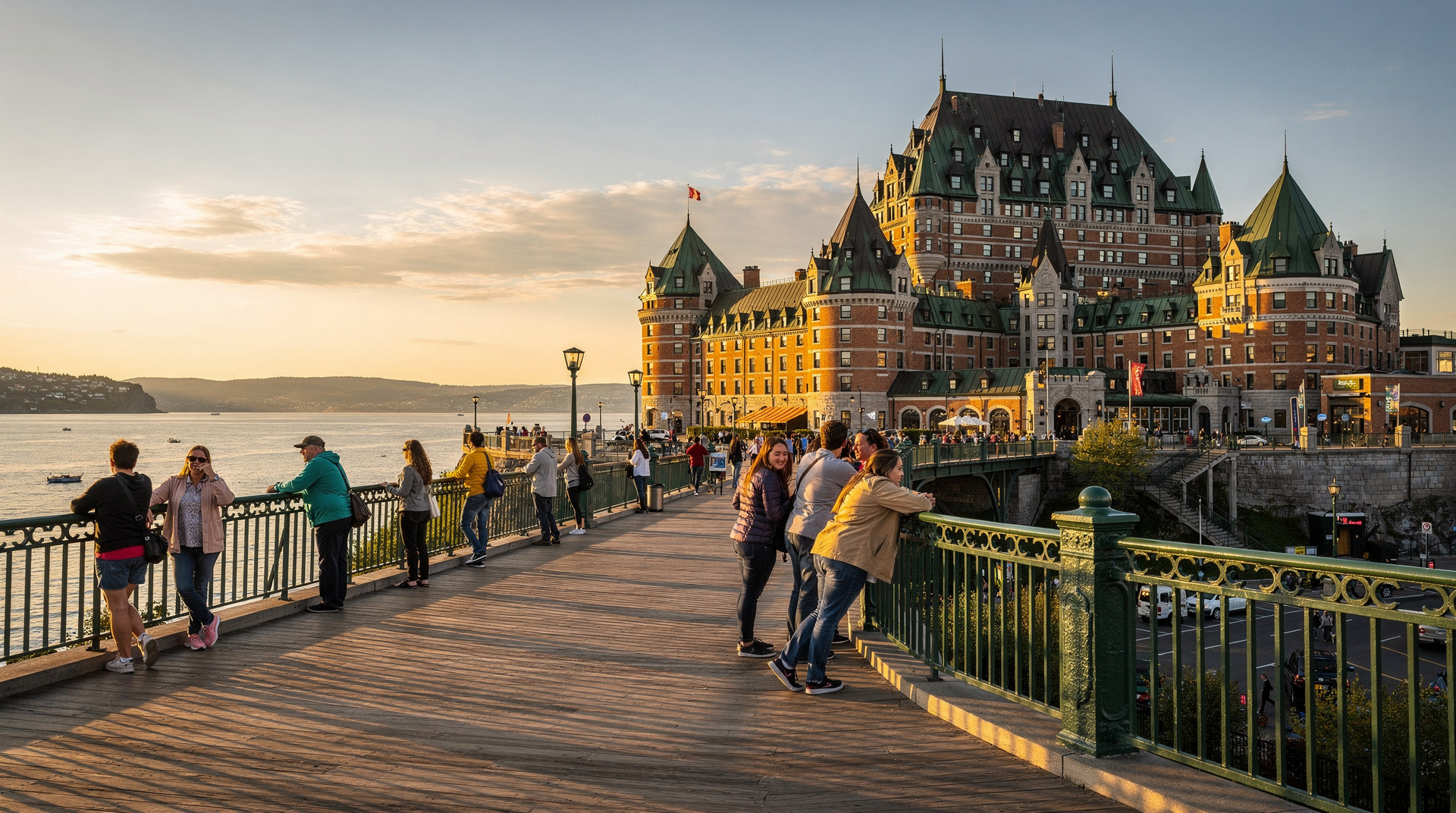
The Château Frontenac is the most photographed hotel in Canada and one of the most recognisable buildings in North America. The building is legitimately magnificent and worth seeing. The high tea service is not.
At 80–120 CAD per person for afternoon tea in the hotel’s dining room, expectations are high. What visitors typically report (TripAdvisor, Google reviews): mass-produced scones with minimal flavour, tea served from commercial bags rather than loose leaf, modest finger sandwiches, and service that is professional but not warm. The room is beautiful. The food and value are not proportional to the price.
The Château’s 1608 Wine and Beer Bar — on the Terrasse Dufferin, overlooking the St. Lawrence — is a much better way to experience the hotel’s atmosphere. A glass of wine or a local craft beer costs 15–25 CAD. You get the view, the architecture, and the Château experience without paying 100 CAD for mediocre scones.
Better alternative — Café-Boulangerie Paillard (1097 rue Saint-Jean, Upper Town): one of the finest bakery-cafés in Québec City. Croissants, pastries, sandwiches, and excellent coffee for 10–15 CAD. This is where the people who live in Québec City actually have their morning coffee and afternoon treats. A Paillard almond croissant at 4 CAD outperforms a Château Frontenac scone at 25 CAD by a wide margin.
See our dedicated Château Frontenac high tea guide for the full analysis.
2. Restaurants on rue Saint-Louis and the tourist core: 40–60% tourist markup
The streets immediately around the Château Frontenac — particularly rue Saint-Louis, rue d’Auteuil, and the côté-touristique end of rue Saint-Jean — are lined with restaurants targeting first-time visitors on a single trip. The food is often passable. The prices are not.
A basic entrée (main course) in these areas runs 30–50 CAD. The same quality of cooking in Saint-Roch — the Lower Town neighbourhood that has become Québec City’s genuine dining destination — costs 20–35 CAD. The menus in tourist-zone restaurants also tend toward safe, international-ish versions of Québécois classics (poutine, tourtière, maple everything) rather than the creative modern cuisine that the city’s actual food scene offers.
The walk from Old Québec to Saint-Roch takes about 15 minutes downhill. The neighbourhood around rue Saint-Joseph Est has independent restaurants, wine bars, and bistros that are where young Québec City residents eat. Limoilou, one neighbourhood further, is even less expensive.
Recommended areas: Saint-Roch (rue Saint-Joseph Est, Côte-d’Abraham); Limoilou (3e Avenue, 1re Avenue); Saint-Roch lunch spots around the food market.
Old Quebec City Food Tour with 10+ Local Tastings3. Rue du Trésor caricature artists: 40–60 CAD for 5 minutes
Rue du Trésor, a narrow pedestrian alley between Grande Allée and the Château Frontenac area, is famous as an artists’ alley. Painters and printmakers sell Québec-themed art there, and the art ranges from decent to genuinely lovely. Worth walking through.
The caricature artists that set up near the entrances are a different matter. Prices of 40–60 CAD for a black-and-white caricature are standard. The quality varies from adequate to poor. Most visitors who do it find the result disappointing for the price.
If you want a genuine souvenir from Québec City, the independent boutiques in Petit-Champlain (Lower Town) sell local craft, handmade jewellery, and prints at fair prices with significantly better quality.
4. Hop-on hop-off bus: 30 CAD to sit in traffic
Old Québec is approximately 2 km wide at its widest point. The historic core that most visitors want to see is walkable in 20–30 minutes at a leisure pace. A hop-on hop-off open-top bus tour costs 30 CAD and covers the city at walking pace in traffic, with recorded commentary through headphones.
The buses are slow, the commentaries are formulaic, and a city designed for pedestrians does not reveal itself from a bus window. The time you spend waiting for the next bus could be used walking to the next attraction.
Better alternative: Walk. Rent an audio guide app for 5 CAD if you want commentary. Or book a proper guided walking tour — a knowledgeable local guide in a small group tells you things a recording never will, and answers questions.
Old Quebec City: Grand Walking Tour5. Calèche horse carriage rides: expensive and contested
The calèches — horse-drawn carriages — are one of the most visible tourist offerings in Old Québec. A 30–45 minute ride costs 75–120 CAD. The animals are contested: animal welfare groups have raised concerns about horses working on asphalt in summer heat. The city of Québec has discussed regulations or banning. Beyond the ethical question, the rides are slow, expensive, and provide no access to anything you cannot see on foot.
We do not recommend them, on both value and ethical grounds.
6. Generic “Québécois” gift shops on Grande Allée: overpriced tchotchkes
The souvenir shops concentrated on Grande Allée and the tourist sections of Upper Town sell the expected range of maple syrup products, stuffed beavers, hockey jerseys, and items labelled “Made in China.” The markup is high and the quality of food-related souvenirs is generally inferior to what you find in specialty shops.
Better alternatives for Québec City souvenirs:
- Marché du Vieux-Port (160 quai St-André, Lower Town): local producers selling actual Québec products — cheeses, jams, artisan products, ciders from Île d’Orléans, maple syrup from small producers.
- Boutiques in Petit-Champlain: Local artisans, jewellery, prints, craft beer from local breweries.
- Île d’Orléans wine tour: The island 20 km from Québec City is covered in orchards, cider producers, and small farms. A day trip returns you with genuinely local food products.
7. Niagara Falls day trips from Québec City: a logistical trap
Various tour operators offer Niagara Falls day trips from Québec City. The drive alone is approximately 9 hours round trip. You would spend most of a 14-hour tour day on a bus for 1–2 hours at Niagara. This is a version of the same problem that Montréal-based Niagara day trips have — the distance is simply too great for a sensible day trip.
Niagara Falls from Toronto (2 hours) is a reasonable day trip. From Québec City or Montréal, it is not.
What is genuinely worth doing in Québec City
Not everything around Old Québec is a trap. These experiences deliver:
- Montmorency Falls with cable car: The falls are 83 m high — taller than Niagara — and accessible by cable car or suspension bridge for a genuine sense of scale. About 30 minutes from Old Québec, 25–35 CAD for cable car. Worth every cent.
- Guided walking tour of Old Québec: A knowledgeable guide on a 2-hour walking tour teaches you things that plaques and bus commentaries do not. The UNESCO Old Québec walking guide covers the same ground self-guided if you’d rather explore alone, and the Old Quebec Grand Walking Tour is well-reviewed and priced fairly at ~30 CAD.
- Funicular (Upper to Lower Town): 5 CAD and a pleasant way to descend to Petit-Champlain. A Québec City experience in itself.
- Plaines d’Abraham: The historic battlefield where France and Britain decided the fate of North America in 1759. Free to walk, with an excellent interpretive museum for those who want context (15 CAD) — see our museums of Québec City guide for the full list.
- Helicopter tour: For a genuinely spectacular view of the city, the St. Lawrence, and the surrounding landscape, a 15-minute helicopter tour is expensive (~160 CAD) but memorable and completely different from anything at ground level.
Trap vs. alternative: the real cost comparison
| Tourist trap | Typical cost | Better alternative | Alternative cost |
|---|---|---|---|
| Château Frontenac high tea | 80–120 CAD | 1608 Bar terrace drink + Paillard pastries | 15–25 CAD |
| Rue Saint-Louis restaurant | 30–50 CAD/entrée | Saint-Roch or Limoilou bistro | 20–35 CAD/entrée |
| Calèche horse carriage | 75–120 CAD/45min | Guided walking tour | ~30 CAD/2hrs |
| Hop-on hop-off bus | 30 CAD | Walking + funicular | ~5 CAD |
| Rue du Trésor caricature | 40–60 CAD/5min | Petit-Champlain boutiques | Varies, better value |
Keeping a rough daily budget in mind helps spot a trap before you pay for it — our Québec budget guide breaks down realistic CAD costs by category, and the Québec City Pass guide explains when bundling paid attractions actually saves money. For food specifically beyond the tourist core, see where to eat in Québec City for the honest poutine picks.
For restaurant recommendations by neighbourhood, see our where to eat in Québec City guide. For a complete first-timer’s itinerary, see our 3-day Québec City itinerary.
Frequently asked questions about Québec tourist traps to avoid (and what to do instead)
Is the Château Frontenac high tea worth it?
Generally no. At 80–120 CAD per person, the Château Frontenac high tea is one of the most expensive tea services in Canada. Multiple visitors report industrial scones, weak tea, and service that does not match the price. The hotel's 1608 Terrace Bar is a much better alternative — a drink on the terrace costs 25 CAD and gives you the view and atmosphere without the inflated food bill. For a proper Québec City café experience, Café-Boulangerie Paillard on rue Saint-Jean serves exceptional pastries and coffee for under 15 CAD.Are Old Town restaurants in Québec City bad?
Not all of them, but rue Saint-Louis and the streets immediately around the Château Frontenac carry a significant tourist markup — expect 40–60% more than equivalent meals in the Saint-Roch or Limoilou neighbourhoods. The menus are often generic, the service tourist-speed, and the atmosphere designed for one-time visitors rather than repeat customers. Two or three blocks outside the tourist zone, the quality-to-price ratio improves dramatically.Is the hop-on hop-off bus in Québec City worth it?
For most visitors, no. Old Québec is compact and extremely walkable — the historic core is about 2 km across. A hop-on hop-off bus (30 CAD) covers the city superficially from behind glass, with recorded commentary. Walking tours or simply wandering with a map gives a far better experience of Old Québec. If mobility is an issue, the Old Quebec Grand Walking Tour with funicular is a better alternative.Are the calèche horse carriage tours ethical?
This is contested. Calèche operators say the horses are well cared for. Animal welfare groups and many Québec residents disagree, citing concerns about horses working in summer heat, on hard asphalt, in traffic. The City of Québec has considered banning them. Beyond the ethical question, the tours are expensive (75–120 CAD for 45 minutes) and give you no access the city itself. On both value and ethical grounds, we do not recommend them.What is the best alternative to the HOHO bus in Québec City?
Walk. Old Québec is UNESCO-listed and built for pedestrians. The funicular from Terrasse Dufferin to Petit-Champlain costs about 5 CAD and is itself an experience. A guided walking tour with a knowledgeable local guide gives you the history, architecture, and context that a recorded bus commentary cannot. See the Old Quebec Grand Walking Tour below.Is rue du Trésor worth visiting?
Rue du Trésor is an alley where artists sell prints, watercolours, and sketches of Québec scenes. The art itself ranges from decent to tourist-grade. The caricature artists charge 40–60 CAD for a 5-minute sitting — steep for what you get. It is pleasant to walk through briefly, but most visitors will find better souvenir value at the Marché du Vieux-Port or in independent boutiques in Petit-Champlain.Where do locals actually eat in Québec City?
The best local dining is in Saint-Roch (the trendiest neighbourhood, 10 minutes by foot from Old Québec), Limoilou (unpretentious, excellent value), and the streets south of Grande Allée. Restaurants like Le Cercle, Chez Rioux & Pettigrew, and Battuto are where Québec City residents actually eat. The difference in both quality and price versus Old Town tourist restaurants is significant.Is the Québec City Pass worth buying to avoid overpaying?
It can be, if you plan to visit several paid sights such as the Citadelle, the Musée de la Civilisation and a guided walking tour, since the pass bundles them at a discount versus paying each entry separately. It will not protect you from tourist-trap restaurants or the calèche, since those are not covered — it only helps with legitimate paid attractions. Compare the bundled price against what you would actually visit before buying.Is it worth paying more to stay right inside the walls of Old Québec?
Not necessarily for value, though it is convenient. Hotels inside the walls charge a location premium similar to the restaurant markup nearby, while accommodation a short walk away in Saint-Jean-Baptiste or near Gare du Palais costs noticeably less for comparable quality. Since Old Québec is small enough to walk everywhere within 10–15 minutes, staying just outside the walls is often the better-value choice.
Top experiences
Bookable activities with verified prices and instant confirmation on GetYourGuide.