3 days in Québec City
Old Quebec City: Grand Walking Tour
Duration: 2 hours
Why three days is the ideal Québec City trip
Québec City is compact enough to walk end-to-end, yet rich enough that three days only scratches the surface. The key is staying inside or immediately adjacent to the fortified walls — this puts the Plains of Abraham, the Château Frontenac, the funicular, Petit-Champlain and Terrasse Dufferin within fifteen minutes on foot of each other. You will cover all the UNESCO highlights, eat well in neighbourhoods that locals actually use, and still have half a day for the spectacular Montmorency Falls before your departure.
No rental car is needed. The historic core is entirely walkable, taxis and rideshares are plentiful for day-trip excursions, and the city’s RTC bus system reaches the lower town and Saint-Roch in minutes.
| Where | Old Québec (Vieux-Québec): Château Frontenac, Petit-Champlain, Place-Royale, the ramparts |
| Cost | around 950-1 400 CAD/person, mid-range, before taxes |
| Time needed | 3 days; add a day for Île d’Orléans or Charlevoix |
| Getting there | Via Rail from Montréal (3h) or fly into YQB (20 min taxi to old city) |
| Best time | September-mid-October for cool weather and fewer crowds |
Day 1: arrival and first taste of Old Québec
Morning — settle in and find your bearings. Arrive by Via Rail from Montréal (3 hours, departures every morning from Gare Centrale) or fly into Jean-Lesage airport (YQB), 20 minutes by taxi to the old city. Check into a hotel inside or beside the walls — Auberge Saint-Antoine in Lower Town and Le Château Bonne Entente in Sainte-Foy are popular mid-range picks; the Fairmont Le Château Frontenac itself is iconic but expensive at 400-600 CAD/night.
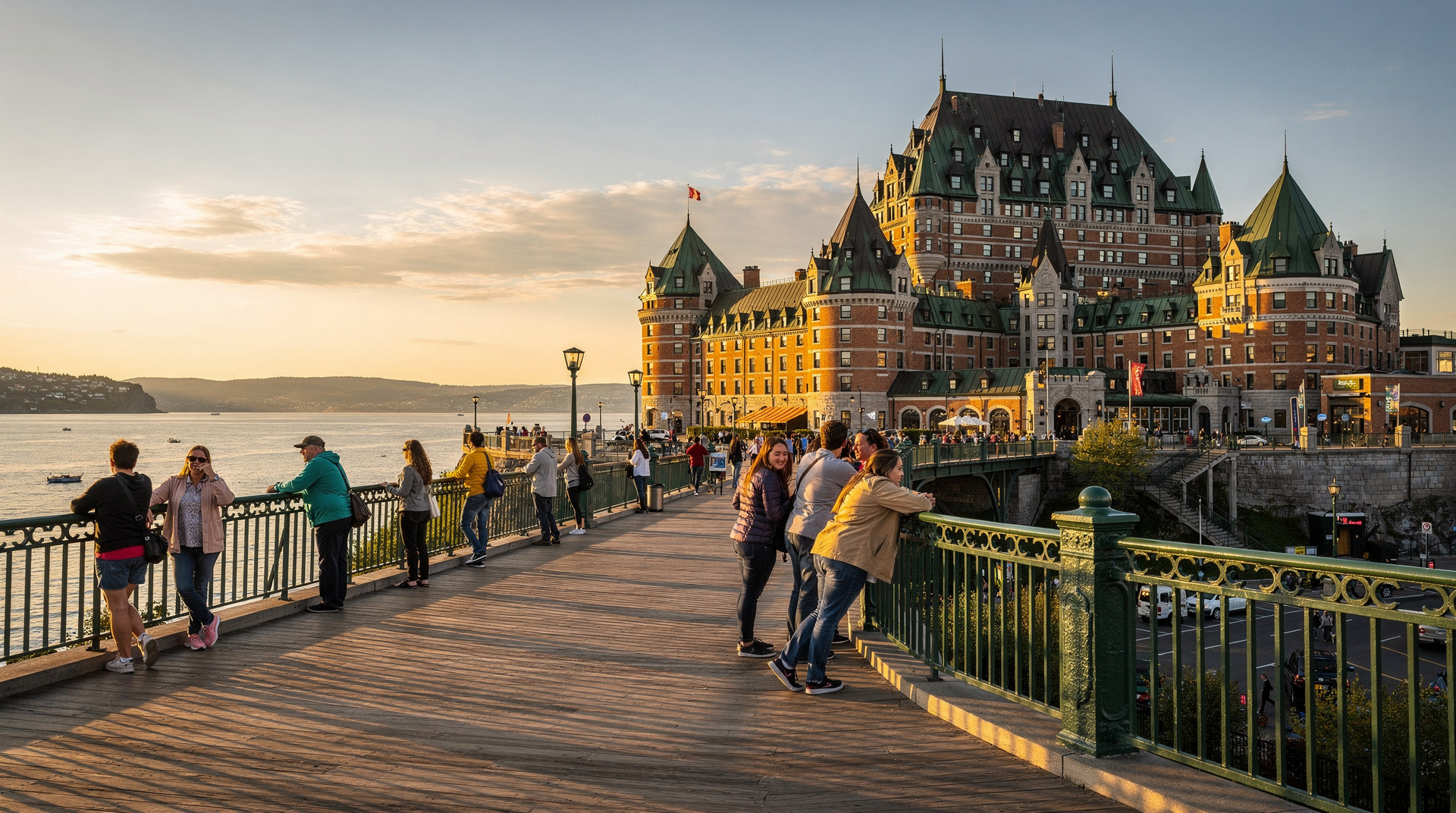
Afternoon — the grand walking tour. Do not waste your first afternoon wandering aimlessly. Book the Old Québec 2-hour grand walking tour which leaves from near the Château Frontenac and covers the Citadelle walls, the historic streets of Upper Town, the funicular ride down to Petit-Champlain and back. The guide provides context for the French-British history that shaped every cobblestone. After the tour, explore Rue du Trésor (the artists’ lane) and walk the Terrasse Dufferin boardwalk for your first panoramic view over the Saint-Laurent.
Evening — eat where locals eat. Skip the tourist restaurants on Rue Saint-Louis — prices are 30-40% higher for similar quality. Instead, walk 10 minutes north to the Saint-Roch neighbourhood (Rue Saint-Joseph Est) for genuine Québec cuisine at a fraction of old-city prices. Restaurants like Chez Boulay, Le Cercle, or Nourcy serve seasonal Québécois cooking in unpretentious settings. Budget 50-80 CAD per person with wine. Return to the hotel on foot through the illuminated gate of Saint-Jean — magical at night.
Day 2: deep dive into the old city
Morning — the Upper Town in detail. Start at the Citadelle de Québec, the star-shaped British fortress still garrisoned by the Royal 22e Régiment. The changing of the guard (late June to Labour Day, 10:00) is worth watching. Then visit the Plains of Abraham — this vast park where the battle that decided Canada’s fate took place in 1759 is now one of the city’s great open spaces, with stunning views over the river.
Midday — Château Frontenac and Dufferin Terrace. The Château Frontenac needs no introduction, but skipping the overpriced high tea (80-120 CAD for mediocre scones) is wise. Instead, take the quick guided interior tour for 19 CAD to understand the hotel’s history, then have coffee and pastries at Paillard (Rue Saint-Jean, 5-8 CAD) — one of the city’s best bakeries and a local institution.
Afternoon — food tour through Old Québec. The best way to understand the culinary culture is with a guide. The Old Québec food tour with 10+ local tastings covers poutine, maple products, local cheese, charcuterie and craft cider in a 3-hour walk through the historic market and the lower town. It departs in early afternoon and ends in Petit-Champlain.
Evening — Petit-Champlain and Lower Town. After the food tour you will already be in Petit-Champlain — North America’s oldest commercial street. Browse the local craft shops (avoid the generic souvenir stores), then have a quiet dinner at one of the intimate bistros on Rue Sous-le-Fort. Le Lapin Sauté and Café du Monde offer excellent river views. Budget 60-90 CAD per person.
Day 3: Montmorency Falls and departure
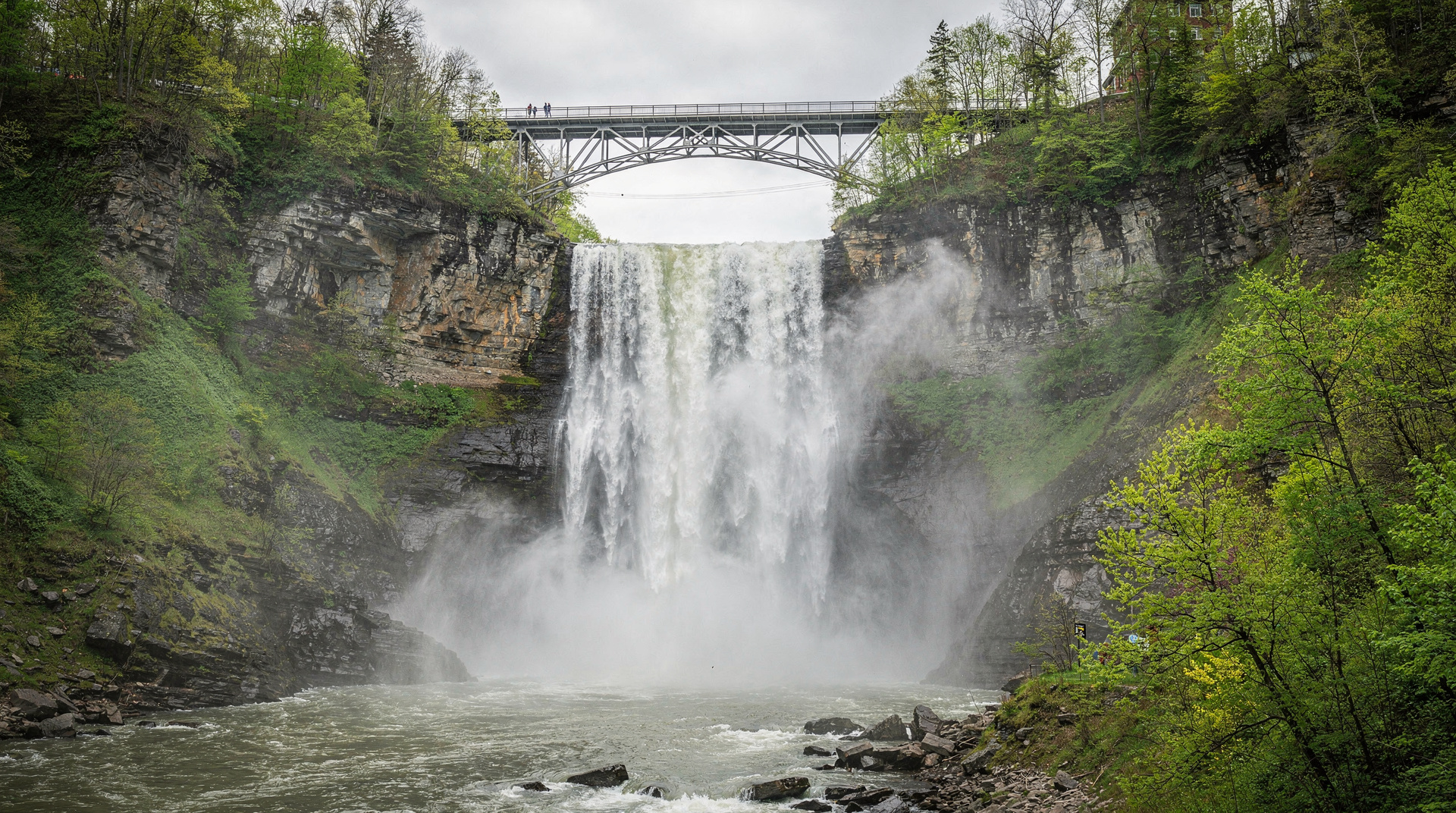
Morning — Montmorency Falls. At 83 metres, Montmorency Falls is higher than Niagara by a third, yet almost nobody outside Québec has heard of it. It is 15 minutes by bus (line 800) or 20 CAD by taxi from old city. The Montmorency Falls with cable car gives you the full experience: cable car ride to the summit, suspension bridge crossing directly over the falls, and a zipline option for the adventurous. Allow 2-3 hours. The surrounding park has pleasant walking trails along the river.
Late morning — optional Île d’Orléans viewpoint. The bridge to Île d’Orléans is visible from the falls viewpoint. If your schedule allows, combine this morning with the Montmorency Falls and Île d’Orléans half-day tour which includes a scenic drive around the island. Otherwise, return to old city for a final lunch.
Midday — last lunch and departure. Have a final poutine at L’Épicerie Européenne or a crêpe at Le Petit Coin Latin in the old city, then head to the train station or airport. If your Via Rail train departs late afternoon, consider a quick helicopter flight to cap the visit — the 15/30/45-minute scenic helicopter tour over the Château Frontenac and the Saint-Laurent is unforgettable and available year-round.
If you have a spare half-day: Lévis or Wendake
Three days leaves surprisingly little slack, but if a tour finishes early or you build in a fourth half-day, two options extend the trip beyond the fortified walls without requiring a car.
Lévis, on the south shore of the Saint-Laurent, is reachable by a 12-minute pedestrian ferry from the Old Québec waterfront (departures roughly every 30-60 minutes, a few dollars each way). The payoff is the view: the reverse angle back at the Château Frontenac and the fortified skyline is arguably better than anything photographed from the Québec City side, and it costs only the ferry fare. Lévis also has its own 19th-century forts and a compact riverside walk if you want to stretch it into a half-day rather than a 45-minute round trip.
Wendake, the Huron-Wendat First Nation community inside the city’s urban boundary, is about 15 minutes by taxi from Old Québec. The reconstructed 18th-century longhouse village (Onhoüa Chetek8e) and the Musée huron-wendat offer a First Nations perspective on the Saint-Laurent valley that the New France narrative in the old city does not cover. The Wendake e-bike tour combines the village with the Akiawenrahk riverside trail. See the Wendake and Huron-Wendat guide for the fuller history.
Visiting in winter: Carnaval and the Hôtel de Glace
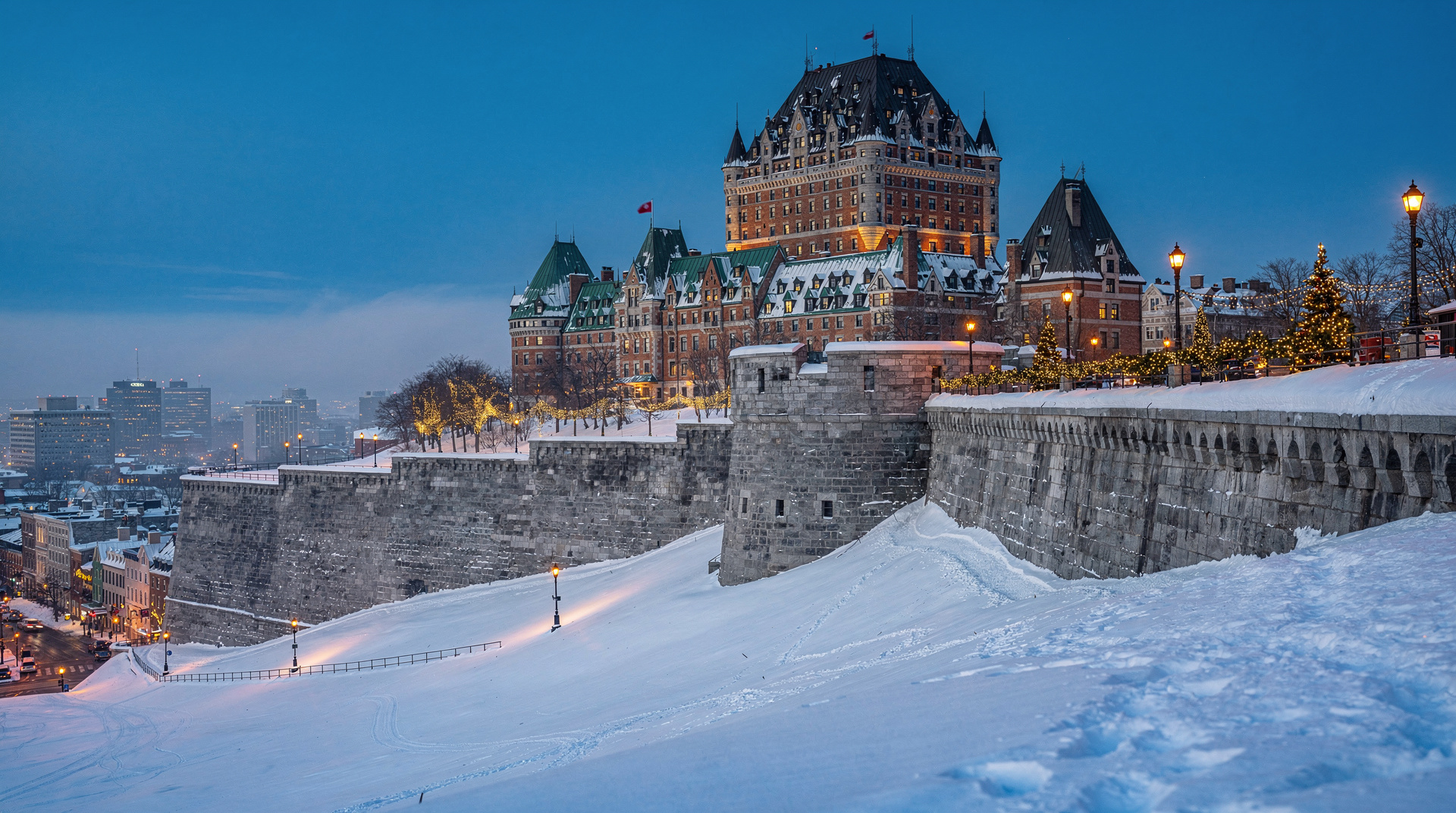
This three-day plan works in every season, but winter (December-March) changes its character substantially. The Carnaval de Québec (late January-mid-February) fills the old city with ice sculptures, night parades and the Bonhomme mascot — book accommodation well ahead, as this is the one winter week when the city rivals summer for crowds.
Just outside the city, the Hôtel de Glace rebuilds itself entirely from snow and ice each winter; even travellers not sleeping there can visit for a couple of hours to see the ice bar and sculpted rooms. For a different kind of winter afternoon, a traîneau à chiens (dog-sledding) excursion in the countryside just outside the city adds the classic Québec winter experience that the fortified-walls itinerary alone does not include. Dress for -15 to -5°C: wool base layer, down mid-layer, waterproof outer shell.
Getting around Québec City without a car
The entire old city is walkable — Upper Town and Lower Town are connected by the funicular (4 CAD one way) or by the steep Escalier Casse-Cou (free). The RTC bus system runs frequent service on Rue Saint-Jean and Rue Grande Allée. For Montmorency Falls, take bus 800 from downtown (3.50 CAD) or grab a taxi (15-20 CAD). A rideshare app (Uber operates in Québec City) is the most practical option for late nights.
See the Québec City transport guide for full details on Via Rail schedules and airport connections.
Budget estimate for 3 days
| Category | Low end (CAD) | Mid-range (CAD) | Notes |
|---|---|---|---|
| Accommodation (per room/night) | 100-150 | 200-350 | 3 nights |
| Meals (per person/day) | 45-60 | 80-120 | 3 meals + coffee |
| Tours and activities | 80-120 | 150-250 | 2-3 guided activities |
| Transport (local) | 15-25 | 30-50 | Taxi + bus |
| Total per person (3 days) | 500-700 | 950-1 400 | Before taxes (add ~15%) |
Taxes in Québec (TPS 5% + TVQ 9.975%) add roughly 15% to goods and services. Tipping at restaurants is 15-18% of the pre-tax amount.
When to visit
Summer (June-August): The most popular season. Festivals abound — the Festival d’Été de Québec (mid-July, free outdoor stages across the city) is unmissable. Expect 20-28°C and some rain. Book accommodation 2-3 months ahead.
Fall (September-mid-October): Ideal conditions. Cooler temperatures, fewer crowds, and the first foliage colours appearing in Charlevoix — visible from the city’s viewpoints. Many consider this the best month for Québec City.
Winter (December-March): Magical but cold (-15 to -5°C). The Carnaval de Québec (late January-mid-February) transforms the city with ice sculptures, parades and the famous Bonhomme. Book the Hôtel de Glace for a unique winter experience. Dress in layers: wool base, down mid-layer, waterproof outer shell.
Spring (April-May): Mud season and the quietest period. Sugar shack season (March-mid-April) is charming — take a day trip to a cabane à sucre for maple taffy pulled fresh from the snow.
Frequently asked questions about 3 days in Québec City
How many days do I need in Québec City?
Three days is the minimum to see the UNESCO core comfortably. Four days allows you to add Île d’Orléans and a day trip to Charlevoix. One week lets you extend to Tadoussac for whale watching. See the 5-day Montréal and Québec City itinerary if you want to combine both cities.
Is Québec City walkable?
Yes. The entire fortified old city (Vieux-Québec) covers about 2 km² and is best explored on foot. The funicular connects Upper Town and Lower Town. Wear comfortable shoes — the streets are cobblestoned and hilly.
Do I need to speak French?
English is widely spoken in the tourist areas, hotels and major restaurants. A few words of French (bonjour, merci, s’il vous plaît) are always appreciated. Outside the old city and in smaller shops, French is the primary language.
Is 3 days enough for Montmorency Falls?
Montmorency Falls is a half-day excursion from the old city. Three days in Québec City is enough to include it comfortably on the morning of your departure day.
What is the best neighbourhood to stay in?
Stay inside or immediately adjacent to the fortified walls for maximum convenience. Upper Town puts you near the Château Frontenac and Plains of Abraham. Lower Town (Petit-Champlain) is charming but requires the funicular to reach the main sites. Saint-Roch is emerging as a foodie neighbourhood 15 minutes by bus.
How far is Québec City from Montréal?
250 km by road — approximately 3 hours by car or by Via Rail train. The train is the most comfortable option and deposits you in the heart of the city. See the Montréal to Québec City travel guide for all options.
Is Québec City worth visiting in winter?
Yes, especially around the Carnaval de Québec (late January-mid-February), when ice sculptures, parades and the Bonhomme transform the fortified city. Expect genuinely cold temperatures (-15 to -5°C) and dress in proper layers. Outside Carnaval, winter is quieter and hotel prices are lower than summer.
Can I visit Wendake or Lévis without a car?
Yes. Lévis is a 12-minute pedestrian ferry ride from the Old Québec waterfront, and Wendake is a short taxi ride (about 15 minutes) or reachable on a guided e-bike tour. Neither requires renting a car for a 3-day, car-free Québec City trip.
Top experiences
Bookable activities with verified prices and instant confirmation on GetYourGuide.