First time in Old Québec: a three-day weekend, honestly
Day one: arrival, impressions, and a bad dinner
| Where I stayed | Hôtel Manoir d’Auteuil, inside the walls, ~195 CAD/night |
| Getting in | VIA Rail from Montréal to Gare du Palais |
| Best free thing | Walking the ramparts at dusk |
| Best splurge | Laurie Raphaël tasting menu, around 130 CAD |
| Biggest mistake | Eating on Rue Saint-Louis on night one |
I took the VIA Rail from Montréal on a Thursday morning. The train pulls into Québec City at Gare du Palais, which is itself a minor architectural event — a château-style station from 1916, with a copper roof and stone towers, sitting in the Lower Town. I had been told the walk from the station to most hotels in Vieux-Québec was twenty minutes. This is technically true if you walk very fast uphill. In September heat with a rolling suitcase, it was thirty-five minutes and I arrived slightly damp.
I was staying at Hôtel Manoir d’Auteuil on Avenue d’Auteuil, about a hundred metres from one of the old city gates. I had chosen it for two reasons: the price was reasonable for September (around 195 CAD a night for a double) and the location inside the walls meant I could walk everywhere. The room was small — genuinely small, the wardrobe opened into the bed frame — but the building itself is an art deco manor from the 1930s and the common spaces have the kind of worn-in beauty that new hotels can’t manufacture. The staff were patient with my questions about where to eat, which matters.
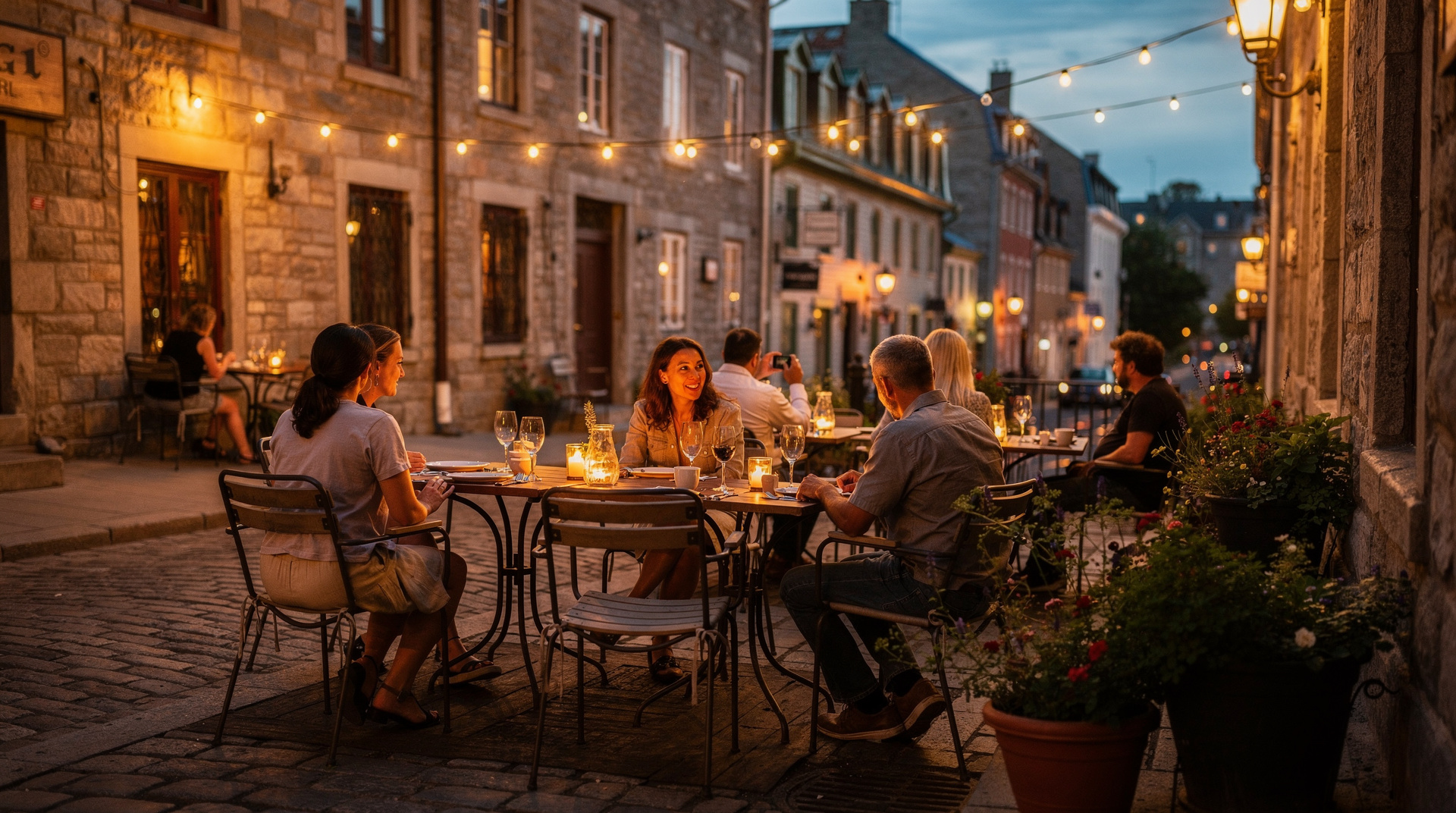
On day one, I made the tourist mistake. I was tired and hungry and I walked along Rue Saint-Louis until I found a restaurant with a nice-looking terrace and sat down. The menu was fine. The food was fine. The bill was 78 CAD for two courses and a glass of wine, and I have zero specific memories of what I ate. This is the classic Vieux-Québec tourist circuit mistake: Rue Saint-Louis and the streets immediately around it are heavily tourist-optimised, which means mediocre food at premium prices served to people who are too jet-lagged to make better choices. I was that person on day one.
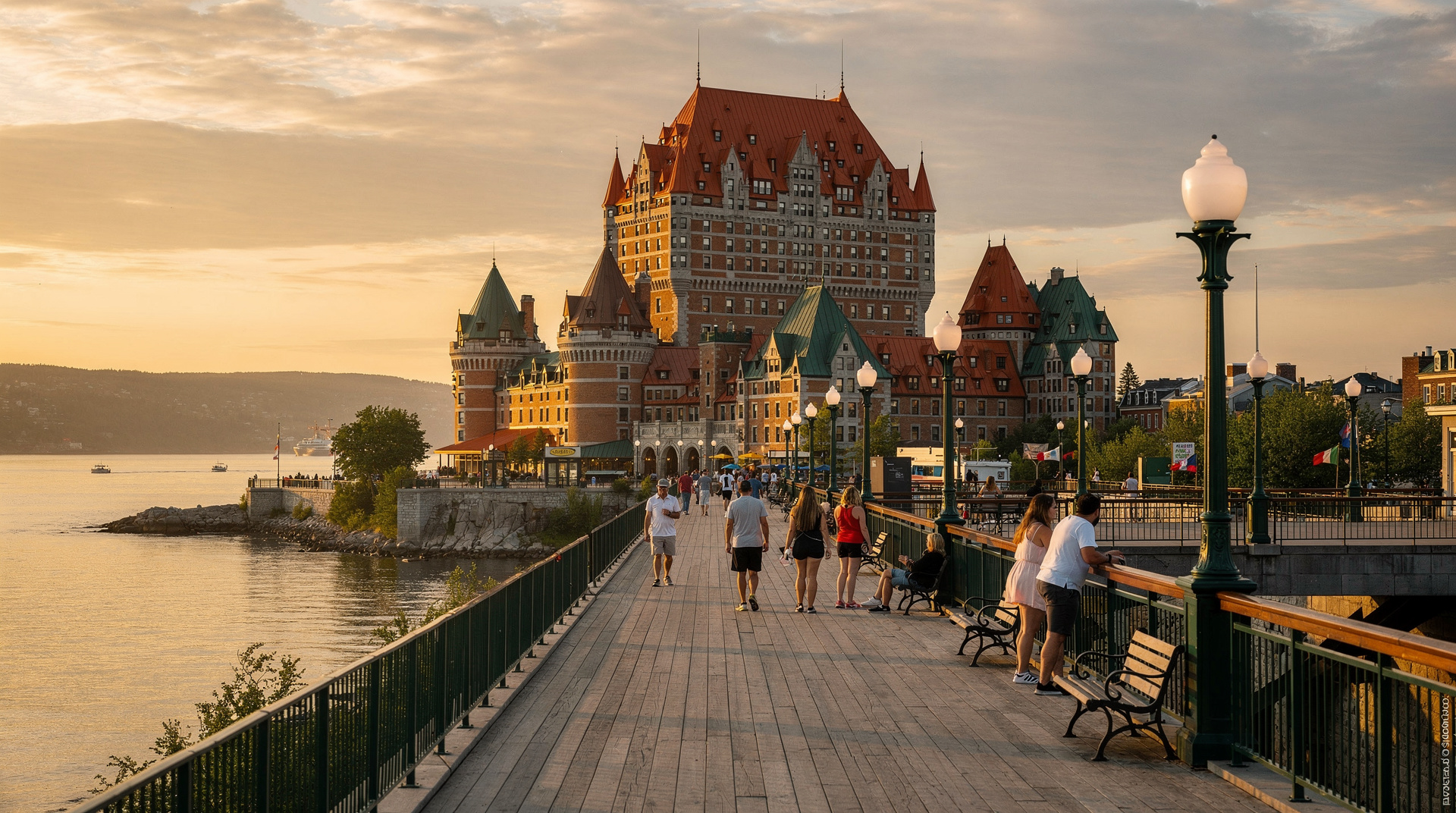
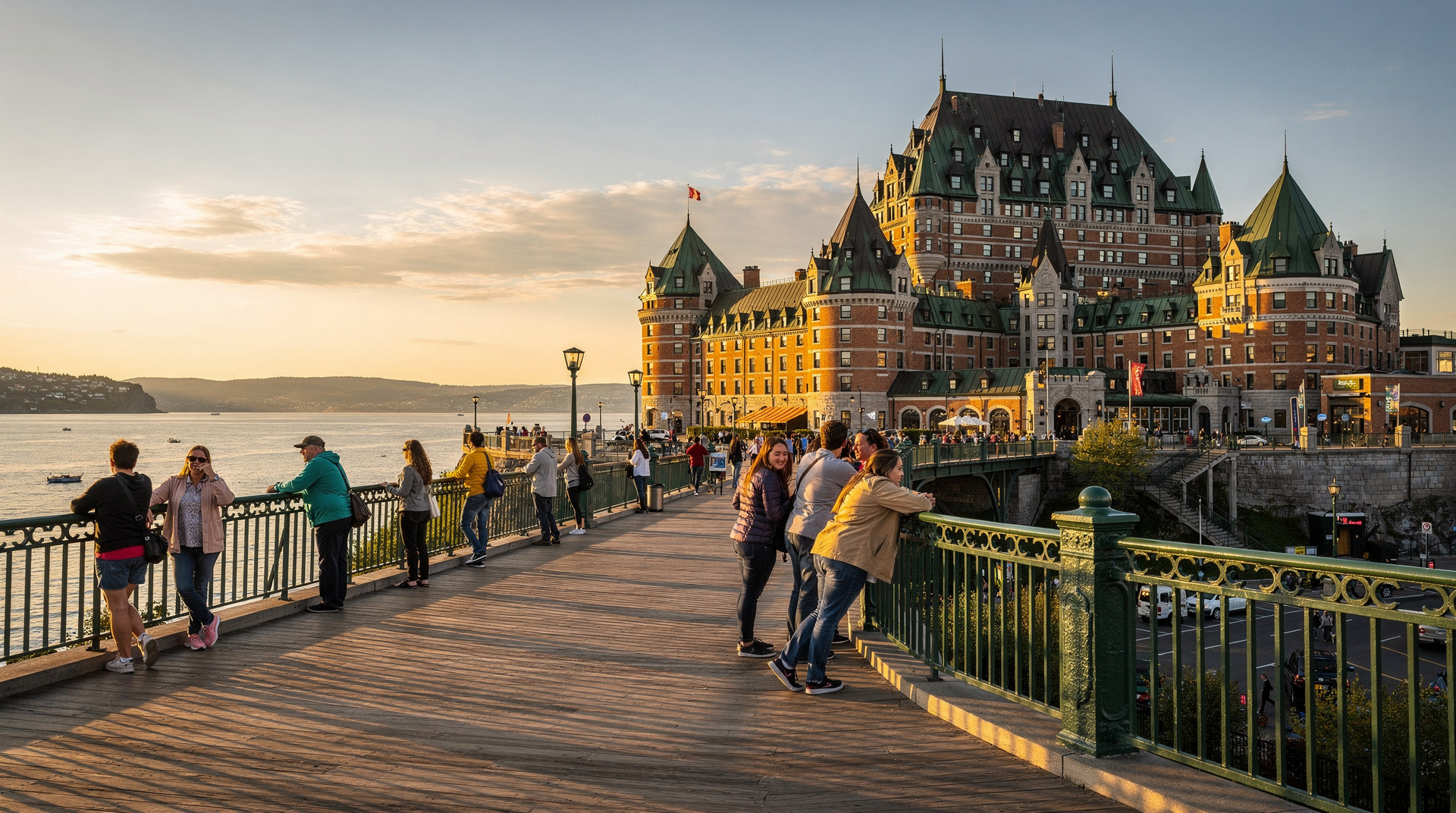
That evening I walked the ramparts at dusk, which cost nothing and was extraordinary. The walls around Old Québec are the only remaining fortified city walls in North America, and you can walk most of their length on a footpath that runs along the top. The light at 7pm in September turns the stone a warm ochre, and the view north toward the Saint-Laurent is genuinely one of the finest urban views I have encountered anywhere.
Day two: doing it better
I had breakfast at Paillard on Rue Saint-Jean — a bakery and café that is locally beloved and reasonably priced, where I had a croissant that had actual lamination and a café au lait that tasted like actual coffee. This is my standing recommendation for morning in Vieux-Québec: Paillard for breakfast, then walk.
The walk I did in the morning was along Rue du Trésor, then through Place d’Armes, then down the funiculaire to Lower Town and Petit-Champlain. The funiculaire is a small cable car that descends the cliff face of Cap Diamant — it costs a few dollars, and it is entirely worth it as a piece of experience even though you could also walk down the staircase.
Petit-Champlain is the oldest commercial district in North America and is, frankly, adorable in a way that can tip into theme-park territory if you’re not careful. The short pedestrian street is lined with seventeenth and eighteenth-century stone buildings that have been converted into boutiques, galleries, and cafés. In September the cobblestones are still warm and the window boxes are full of late-season flowers. I bought a small painting from a local artist — something I almost never do — because the work was genuinely good and the price was reasonable.
For lunch I walked through the Lower Town to Le Lapin Sauté on Rue du Petit-Champlain, which is known for its rabbit dishes and its terrace view toward the cliff. I had the rabbit brochettes with maple glaze. They were excellent. The restaurant is busy in September; I’d booked ahead based on a recommendation, which was wise.
The afternoon I spent at the Musée de la Civilisation, which is free on Sundays but open on Saturdays too at a modest entrance fee. The permanent collection covers Indigenous cultures of Québec in a way that is thorough and genuinely moving — the section on the Huron-Wendat people in particular. I spent two hours here and could have spent longer.
For dinner I had done my research and made a reservation at Laurie Raphaël on Rue Dalhousie. This is a fine-dining restaurant — tasting menus start around 130 CAD — and it is genuinely worth the price if you care about food. Chef Daniel Vézina’s cooking draws on Québec terroir in a way that feels specific and thought-through rather than decorative. I had a nine-course menu that included a cured trout from a local river, a mushroom bouillon that tasted like autumn in solid form, and a dessert involving pine bark and wild berries. The sommelier steered me toward a Québec ice wine with the dessert course. I was skeptical. I was wrong to be skeptical.
Day three: the things that didn’t work and the things that saved the day
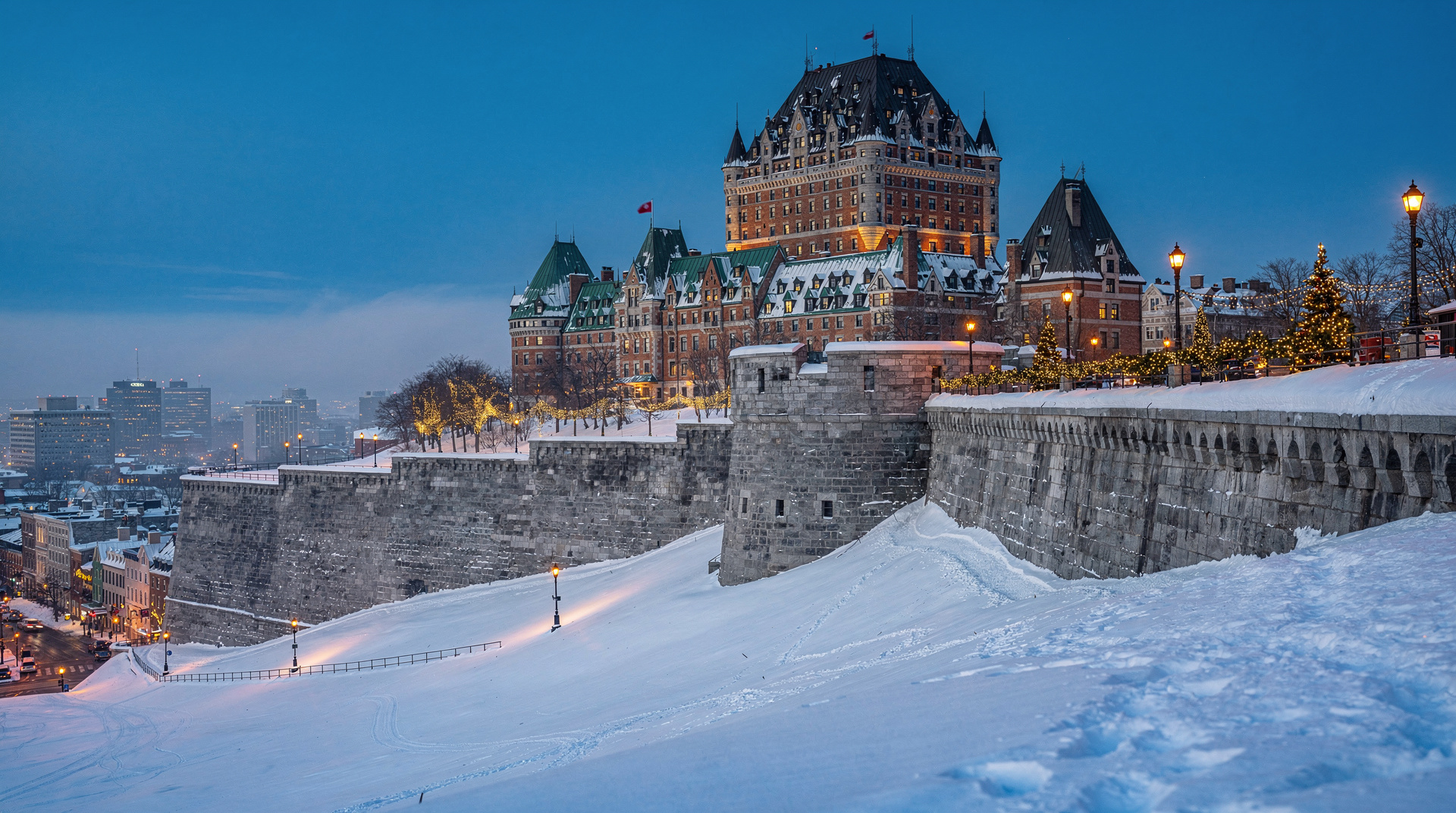
Sunday morning I tried to visit the Château Frontenac as a tourist would — specifically, I looked into the famous high tea. After a short conversation with myself about the 95 CAD price tag, I decided against it. Friends who had done it described it as underwhelming for the price: fine pastries in a beautiful room, but nothing you couldn’t approximate at a fraction of the cost in several cafés nearby — the is Château Frontenac high tea worth it guide goes into this in more detail if you’re weighing it up.
I am not saying don’t go inside the Château Frontenac — it is genuinely spectacular architecture and the public spaces in the lobby area are worth a visit — but the high tea is one of those experiences that gets its prestige from the building rather than the food.
Instead, I walked out to the Plains of Abraham, which is a large open park on the edge of the old city where a decisive 1759 battle between French and British forces determined the fate of New France. The Musée des plaines d’Abraham is here, with a well-presented historical exhibition. I walked for an hour in the park, which in September has a quiet beauty — families with dogs, a few cyclists, the river visible below. This is free. It is better than high tea.
Sunday afternoon, I took the bus to Montmorency Falls, which is fifteen minutes from the old city and consistently underrated in travel writing. The falls are 83 metres high — higher than Niagara — and in September the water level is still considerable after summer rainfall. There is a cable car, a suspension bridge, and trails along both sides. I was there for two hours and got thoroughly misted by the spray. Good.
My last dinner was at Chez Boulay Bistro Boréal on Rue Saint-Jean — a restaurant that focuses on Nordic and boreal Québec ingredients: spruce tips, wild herbs, local fish, game. The caribou was not on the menu that night (seasonal), but the duck confit with cloudberry sauce was, and it was remarkable. This is one of the best meals I’ve had in Vieux-Québec, and it is far enough from the main tourist corridor to feel like a local place, which it mostly is.
What I’d change
Looking back on three days, I would change two things. First: I would not eat on Rue Saint-Louis or the streets immediately adjacent on the first night. Walk an extra five minutes, read a menu properly, choose somewhere that has locals in it. Second: I would stay slightly longer than three nights, because three days in Vieux-Québec alone is perfectly manageable, but it leaves no room for a half-day in Saint-Roch (the younger, less touristy neighbourhood to the north) or a morning on Île d’Orléans, both of which I did on subsequent visits and found excellent.
For a first visit, three days is enough to see the essential Old City without feeling rushed. You’ll want more. That’s the point.
If you get a fourth day
On later trips I’ve used a fourth day for Île d’Orléans — a fifteen-minute drive from the old city that feels like a different province entirely, with cider mills and farm stands along the coastal road — or for a slower morning in Saint-Roch, the neighbourhood downhill from the walls where locals actually eat and drink. Both are worth it once you’ve done the essential Old City circuit above and don’t feel obligated to see everything twice. Montmorency Falls, mentioned below, is the easiest of the three to slot into a half-day if you’re tight on time.
The tourist-trap list, for next time
Rue Saint-Louis dinner aside, a few other things I’d now flag for a first-time visitor: overpriced calèche rides that mostly retrace what you can walk in the same time, souvenir shops selling the same maple-leaf merchandise at inflated prices right by the Château, and paying for parking inside the walls when the Old Québec area is genuinely this walkable. The Québec tourist traps to avoid guide has the fuller list if you want to plan around them before you go.
Frequently asked questions about First time in Old Québec: a three-day weekend, honestly
Is three days enough for a first visit to Old Québec? Yes, for the essential sights — the ramparts, Petit-Champlain, the Château Frontenac area, Montmorency Falls, and a couple of proper dinners. It won’t leave room for day trips to Île d’Orléans or Charlevoix; save those for a return visit or a fourth day.
Do I need a car for a Vieux-Québec weekend? No. The old city is entirely walkable, and Montmorency Falls is reachable by public bus in about fifteen minutes. A car only becomes useful if you’re extending the trip to Île d’Orléans, the Côte-de-Beaupré, or further into Charlevoix.
For the full version of what I’d do in three days, the Quebec City 3-day itinerary covers the planning in more detail. The Old Québec destination page has more context on the history and the specific sights. And for walking tours of the old city, the Grand Walking Tour is one of the better organised ones — worth doing on arrival to orient yourself:
Old Quebec City: Grand Walking Tour