Lévis
The best view of Quebec City is from the other shore: 10-min ferry, the Frontenac panorama, Fort no 1, and a food tour of Lévis's underrated streets.
History and Food Tasting Walking Tour
Duration: 2 hours
Quick facts
- Ferry from Vieux-Québec
- 10 minutes (Traverse Québec-Lévis)
- Ferry frequency
- Every 20-30 min in peak hours, 24h service
- Ferry fare (2026)
- ~4.50 CAD per person
- Population
- ~155 000
- Fort no 1 heritage status
- National Historic Site of Canada
The view that Quebec City doesn’t show you
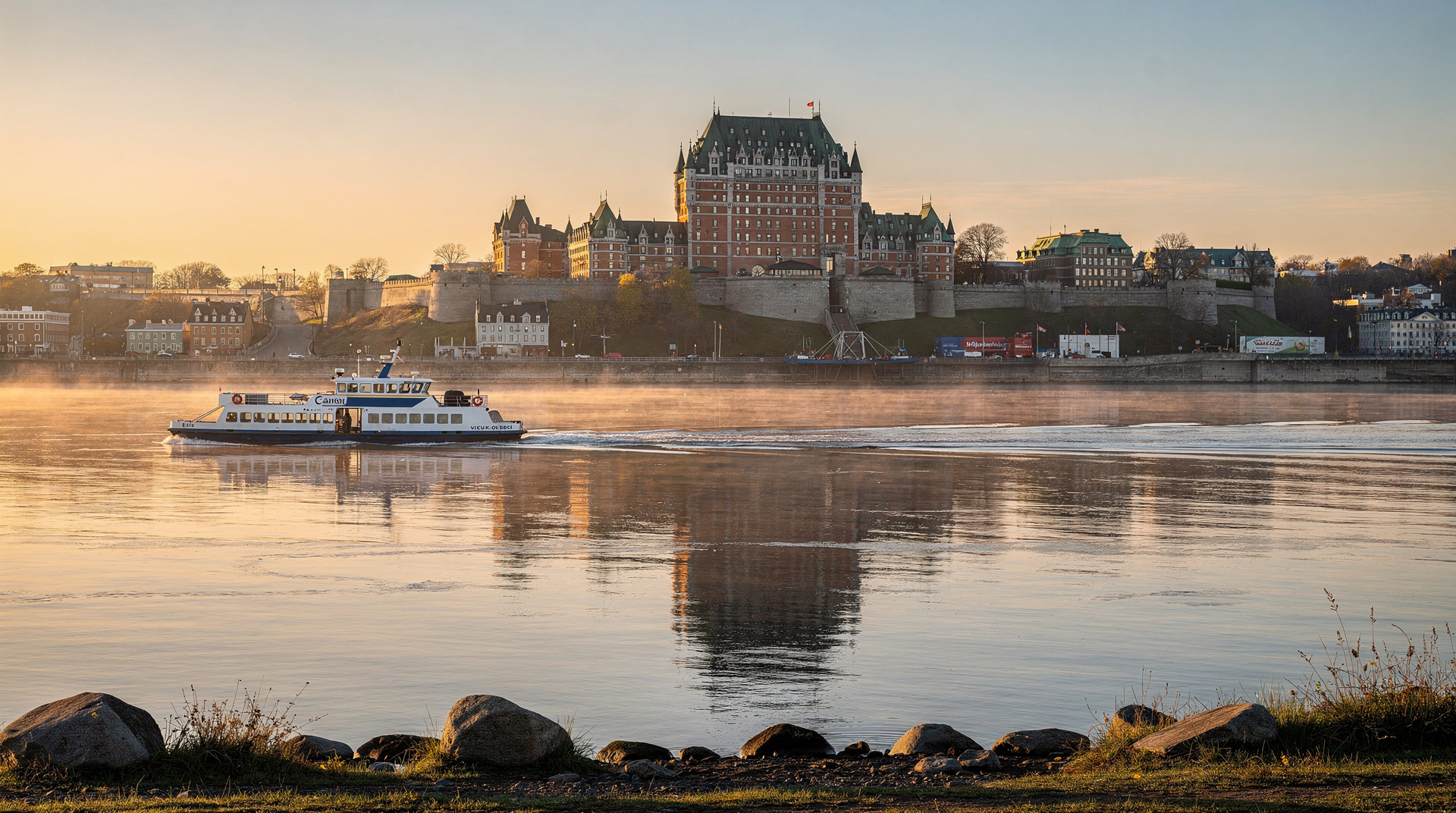
Every photograph of Château Frontenac that graces a travel magazine, desktop wallpaper, or Canadian passport was taken from Lévis. The view — the fortified cliff of the Haute-Ville, the copper turrets of the Château Frontenac, the St-Lawrence in the foreground — is one of the most recognized in Canada. And yet most visitors to Quebec City never cross the river to take it in properly.
Lévis is 10 minutes away by ferry. The Traverse Québec-Lévis has operated this crossing continuously since 1812 (the current fleet uses diesel-electric ferries), and the ride itself, at 4.25 CAD each way for an adult on foot, delivers what a helicopter tour costs 160 CAD to approximate. On a clear October morning, with ice beginning to form on the river in late December, or at the blue hour before sunset in August, this crossing earns its reputation.
Lévis is not just a viewpoint. It is a city of 155 000 with its own food scene, a National Historic Site at Fort no 1, and the maple taffy season that Quebec City tourists don’t always know about.
| Where | South shore of the Saint-Laurent, 10-min ferry from Vieux-Québec |
| Time needed | Half a day; a full day with the sugar shack or Fort no 1 tour |
| Getting there | Ferry (foot passengers) or car via Pont Pierre-Laporte/Pont de Québec |
| Cost | Ferry ~4.50 CAD; food tour ~60 CAD; fort tour ~50 CAD |
| Best time | Year-round; clear autumn/winter mornings for photography |
The Terrasse de Lévis and Frontenac panorama
From the ferry terminal in Lévis, a short walk (500 m) up the hill via Rue Saint-Laurent leads to the Terrasse de Lévis — an elevated promenade that is the primary viewpoint for the Château Frontenac panorama. The best photography light varies by season: early morning in summer (the Château catches the sunrise from this angle), golden hour in autumn, and late afternoon in winter when the shadows deepen the fortifications.
The view from the Terrasse de Lévis shows the cliff of the Haute-Ville, the Frontenac tower, the Citadelle fortifications, and the Lower Town waterfront in a single composition. Most visitors spend 20-30 minutes here; serious photographers stay longer.
Tip: the view on a clear winter morning with ice in the river is extraordinary and almost entirely crowd-free. The ferry runs 24 hours; a 7h crossing in January, when the river is at its most dramatic, is a worthwhile deviation.
Why the crossing belongs in your Quebec City plan
Most visitors treat Quebec City as a single-shore destination: the Upper Town, the lanes of Petit Champlain, the ramparts. Lévis changes the angle. Seen from the water and from the opposite bank, the city reads as what it was built to be, a fortress on a cliff guarding a river narrows. That context makes the sights you visit on the other side more meaningful, especially if you read the Quebec history overview beforehand.
The crossing also works as a low-effort break. After a morning of cobblestones and stairs in Quebec City’s Upper Town, a ferry ride sitting down, with the skyline slowly changing in front of you, is a rest that still feels like sightseeing. Bring a jacket in every season: the river generates its own wind, and the deck is open to it.
If you plan to photograph the skyline, check the weather the evening before and again at breakfast. A clear sky matters far more here than at most viewpoints, because the whole composition depends on seeing the cliff and the Château in sharp outline. Haze or low cloud flattens it, and in that case the history walk or the food stops make a better use of your time.
Food and history walking tour
The streets of Lévis’s historic centre (Vieux-Lévis, around Rue du Sault and Rue de la Pointe-Lévy) have been through a quiet renaissance. The Lévis history and food tasting walking tour (2h, ~60 CAD) covers the city’s heritage buildings and their history while stopping at local producers and artisan food shops. The route includes the old church, heritage ironwork, and the story of the Lévis industrial and military past — a side of the Quebec City story that most tourists never encounter.
Forts nationaux historiques de Lévis
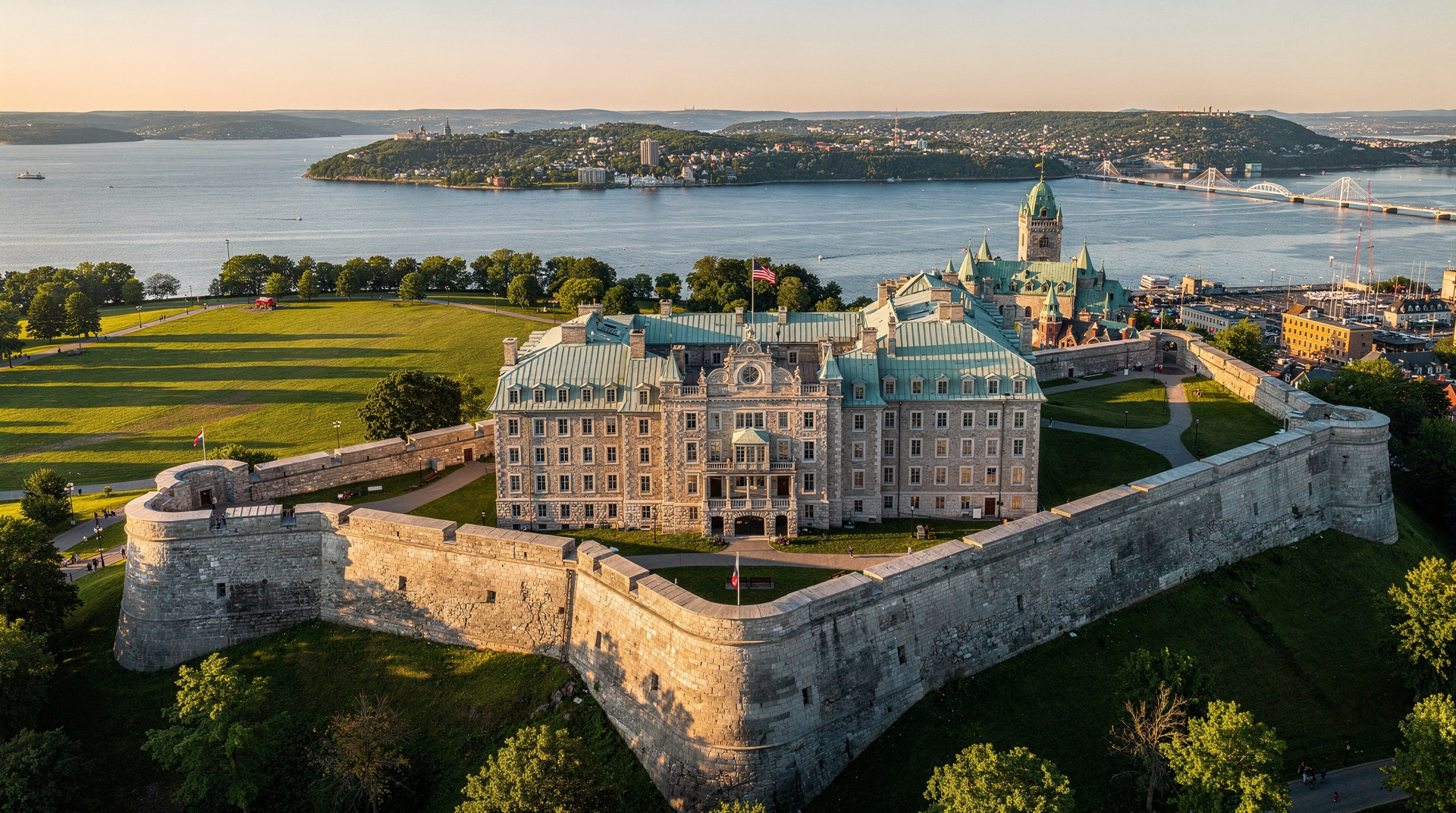
The Forts-de-Lévis National Historic Site (Fort no 1) sits on the Pointe-de-Lévy, overlooking the river narrows. The three Lévis forts were built by the British between 1865 and 1872 as part of a defensive perimeter protecting Quebec City from potential American attack — part of the British response to the American Civil War and the Fenian raids.
Fort no 1 is the best-preserved Victorian fort complex in Quebec, with dry moats, a magazine, caponier, and the original 1865 construction largely intact. Guided tours run from the national historic site during summer; the Lévis Forts guided tour (~50 CAD, 1.5 hours) includes the 19th-century military history and architectural context that the site signage alone doesn’t fully convey.
The fort site is open mid-May to October. The walking path around the ramparts gives additional views of the river and the Quebec City skyline.
Sugar shack and maple season
Every March to mid-April, the maple season transforms Quebec’s countryside. Lévis has its own sugar shack operations within easy reach of the ferry, and the Lévis sugar shack and maple taffy on snow experience (~45 CAD, 2-3 hours) lets visitors experience the full tradition: tire sur la neige (hot maple syrup poured on snow and rolled onto a stick), a traditional sugar shack meal (pea soup, baked beans, tourtière, maple pie), and the production facility tour. This is the real thing, not a tourist pastiche — the same families have been running these shacks since the 19th century.
Season: early March to mid-April only. Book at least 2 weeks ahead for weekends; weekdays are generally more available.
Where to eat in Lévis
Bistro Mon Chou-Chou (Lévis): seasonal menu with local produce, the best restaurant in the city proper. 65-90 CAD per person with wine. Reservations required.
L’Apothicaire (Lévis): craft cocktails and small plates in a converted pharmacy building, 30-50 CAD. Good for a drink and snack after the fort visit.
Brasserie Générale (Lévis): microbrewery with a good tap list and pub food, 25-40 CAD. Popular with the local after-work crowd.
Marché Lévis (public market, seasonal): Saturday morning, May-October. Local cheese, maple products, vegetables, and prepared foods. A 15-minute walk from the ferry terminal.
Best photography season, at a glance
| Season | Light | Crowds at Terrasse | Notes |
|---|---|---|---|
| Summer | Early morning sunrise on the Château | Busiest | Best with an early start before 9h |
| Autumn | Golden hour, deepening shadows | Moderate | The classic magazine-shot season |
| Winter | Late afternoon, ice on the river | Nearly empty | Extraordinary and crowd-free; dress warmly |
| Spring | Variable, thaw conditions | Light | Least reliable light, but quiet |
Eating well on both shores
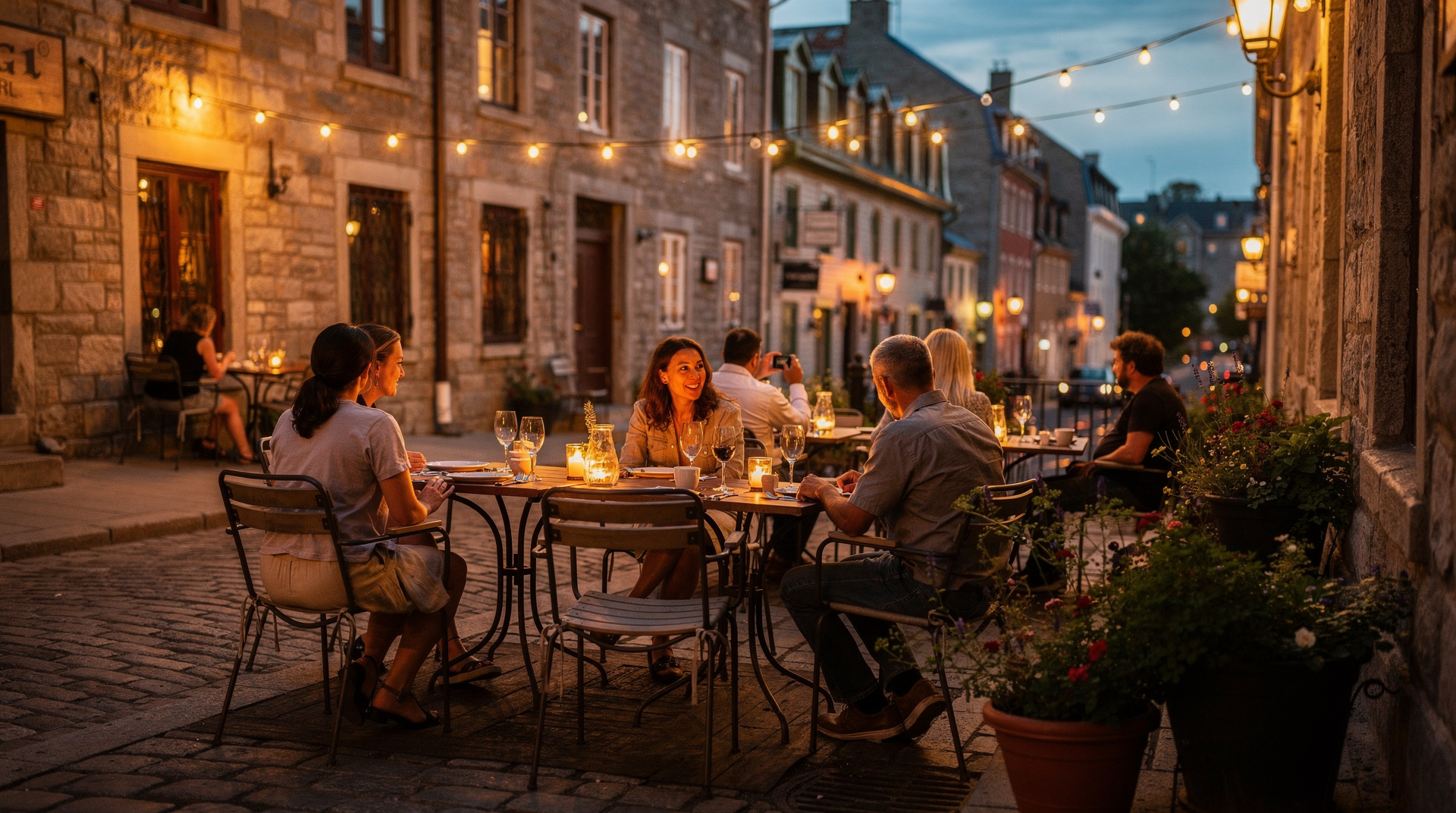
Lévis works best as the quiet counterpart to the dining scene across the river. If you want the busy, tourist-oriented side of Quebec City eating, the where to eat in Quebec City guide covers it, and the poutine guide is useful if the Lévis stops leave you wanting something heavier. Lévis is the place for a slower meal, a drink in a converted building, or a market stroll where most of the customers live nearby.
Plan the meals around the crossing rather than the other way round. A late lunch in Lévis followed by the evening ferry back lets you see the Château lit up from the water, which is a different picture from the daytime one. For travellers who prefer a guided introduction to local flavours on the Quebec City side, a guided food walk through the old city streets pairs naturally with an afternoon in Lévis on another day.
Seasons in Lévis
The seasonal rhythm shapes what you do here. Autumn is the classic photography season, and the Quebec in October guide explains how the colour moves through the region. Winter brings the ice-on-the-river drama and almost no crowds; the Quebec in February guide helps with clothing and planning for the cold. Spring is the maple season, covered in more depth in the sugar shack guide, and summer suits early starts and long evenings by the water.
Because the ferry runs through the year, Lévis is one of the few day trips that does not depend on a season at all. Only the fort and the sugar shack have limits, so the viewpoint, the walk and the food stops can fill a gap in almost any itinerary.
Getting there
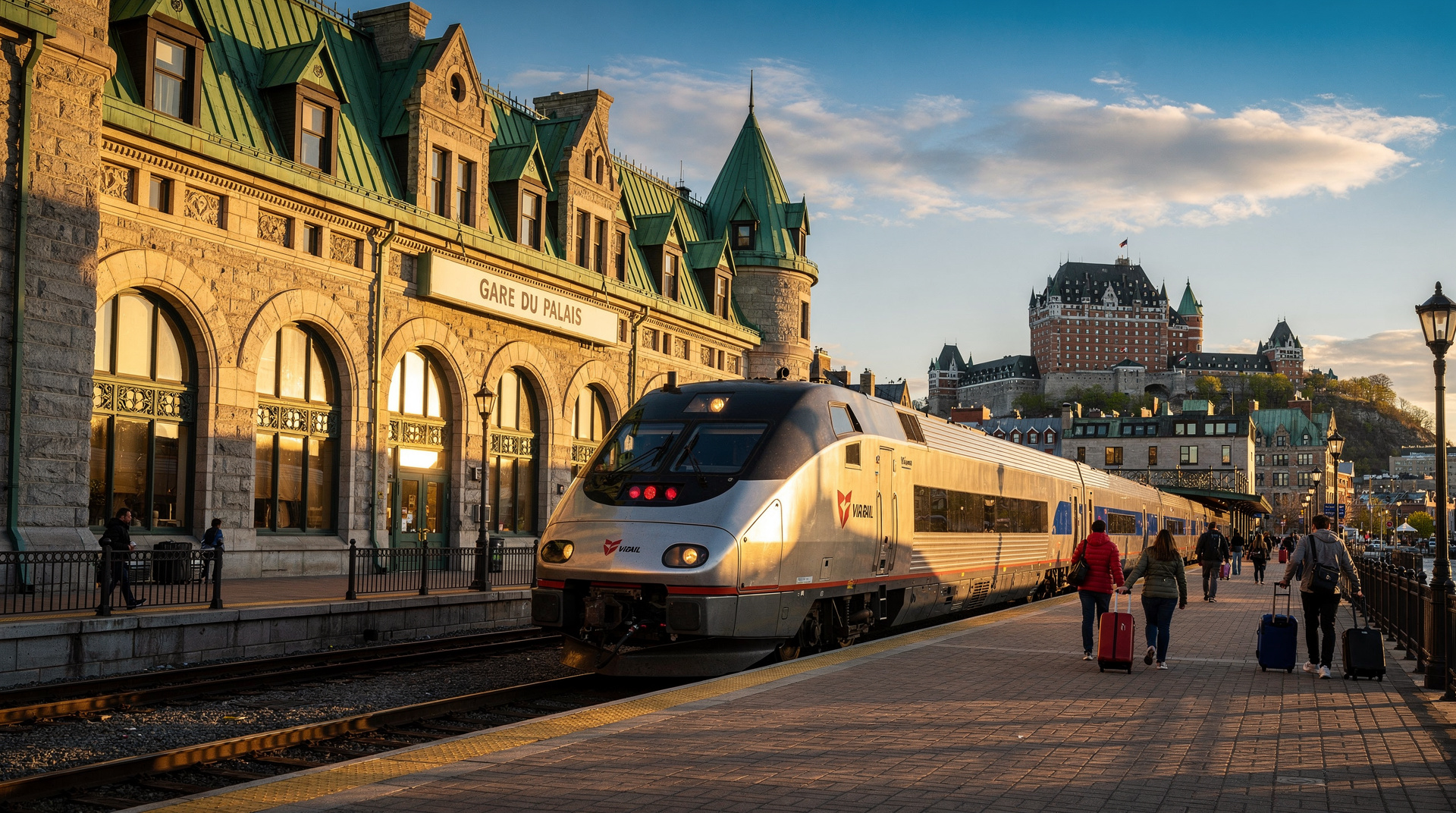
By ferry (Traverse Québec-Lévis): from the ferry terminal in Vieux-Québec (Rue Dalhousie, Lower Town). Check current departure times at traversiers.com. Journey time: 10 minutes. Fare: 4.25 CAD each way for an adult on foot (16–64), 3.60 CAD for 65+, 2.95 CAD for ages 6–15, free under 6; cyclists pay the foot-passenger fare. Pay on board or use the TAC transit card.
The ferry is foot-passenger only for most visitors (car transport available on some sailings but the wait for car spaces can be 45-90 min in summer — walking is far faster).
By car from Quebec City: via the Pont Pierre-Laporte or Pont de Québec (highway bridges). 15-20 minutes by car, though finding parking in Lévis costs 3-8 CAD/h.
From Montreal: 270 km via Autoroute 20 (south shore), exit for Lévis, 2h45 minimum.
Practical itinerary for a half-day from Quebec City
A half-day from Vieux-Québec (no car needed):
- Morning: take the 9h ferry from Vieux-Québec (10 min crossing). Walk to the Terrasse de Lévis (500 m, 10 min). Photograph the Château Frontenac view in morning light.
- Mid-morning: walk to the historic centre (20 min) or join the food walking tour if booked.
- Lunch: Bistro Mon Chou-Chou or Marché Lévis (Saturday).
- Afternoon: Fort no 1 guided tour (1.5h), then return to ferry terminal (15 min walk).
- Return: ferry departs every 20-30 min, last service after midnight.
Sugar shack season variant (March-April): replace the afternoon fort visit with the sugar shack experience. Both can be combined in one full day.
Combining with other destinations
Lévis is naturally paired with Quebec City, which is 10 minutes away. It is also the gateway to the Chaudière-Appalaches region south of the St-Lawrence — particularly the Beauce (Route 173 south from Lévis), which is Quebec’s least-touristed agricultural region and one of its most authentic.
For Quebec City visitors who want the complete Lévis experience, see the Quebec City 3-day itinerary which includes the ferry crossing on Day 2. The Château Frontenac guide explains the Quebec City side of the same panorama.
Other easy additions to a Quebec City stay include the Île d’Orléans, reachable on its own half-day, and Montmorency Falls. For a wider choice of excursions, see the day trips from Quebec City. If you are deciding how to split your time between the two big cities, the Montreal versus Quebec City guide and the Quebec City walking guide to the UNESCO district will help you place Lévis in the bigger picture.
Frequently asked questions about Lévis
Is Lévis worth visiting if I only have one day in Quebec City?
Yes, if a few hours are free — the ferry crossing alone takes 10 minutes each way, and the Terrasse de Lévis viewpoint plus a coffee can be done in under 90 minutes round trip. A full half-day adds the Fort no 1 tour or the food walk; skip those specifically if your single day is already tightly booked in Old Quebec itself.
Do I need to book the ferry in advance?
No. The Traverse Québec-Lévis runs regularly (check current departure times at traversiers.com) with no reservation system for foot passengers — buy a ticket or tap a transit card at the terminal and board the next departure.
Top experiences
Bookable activities with verified prices and instant confirmation on GetYourGuide.