Mauricie
Quebec's forest heartland: canoe routes, moose, and the national park that first taught Canadians wilderness preservation — 2h from Montreal.
Quebec City + Montmorency Falls Full Day
Duration: 12 hours
Quick facts
- Distance from Montreal
- 170 km (2h by car)
- Distance from Quebec City
- 145 km (1h40 by car)
- Region capital
- Trois-Rivières
- Main park
- Parc national de la Mauricie
- Snowmobile network
- Trans-Québec trail #3 passes through region
Between Montreal and Quebec City: Quebec’s quiet middle
The Mauricie region sits in the geographic centre of the Quebec tourist corridor — 2 hours from Montreal, 1h40 from Quebec City, and consistently overlooked by travellers rushing between the two cities. This is a mistake that experienced Quebec visitors have learned to correct.
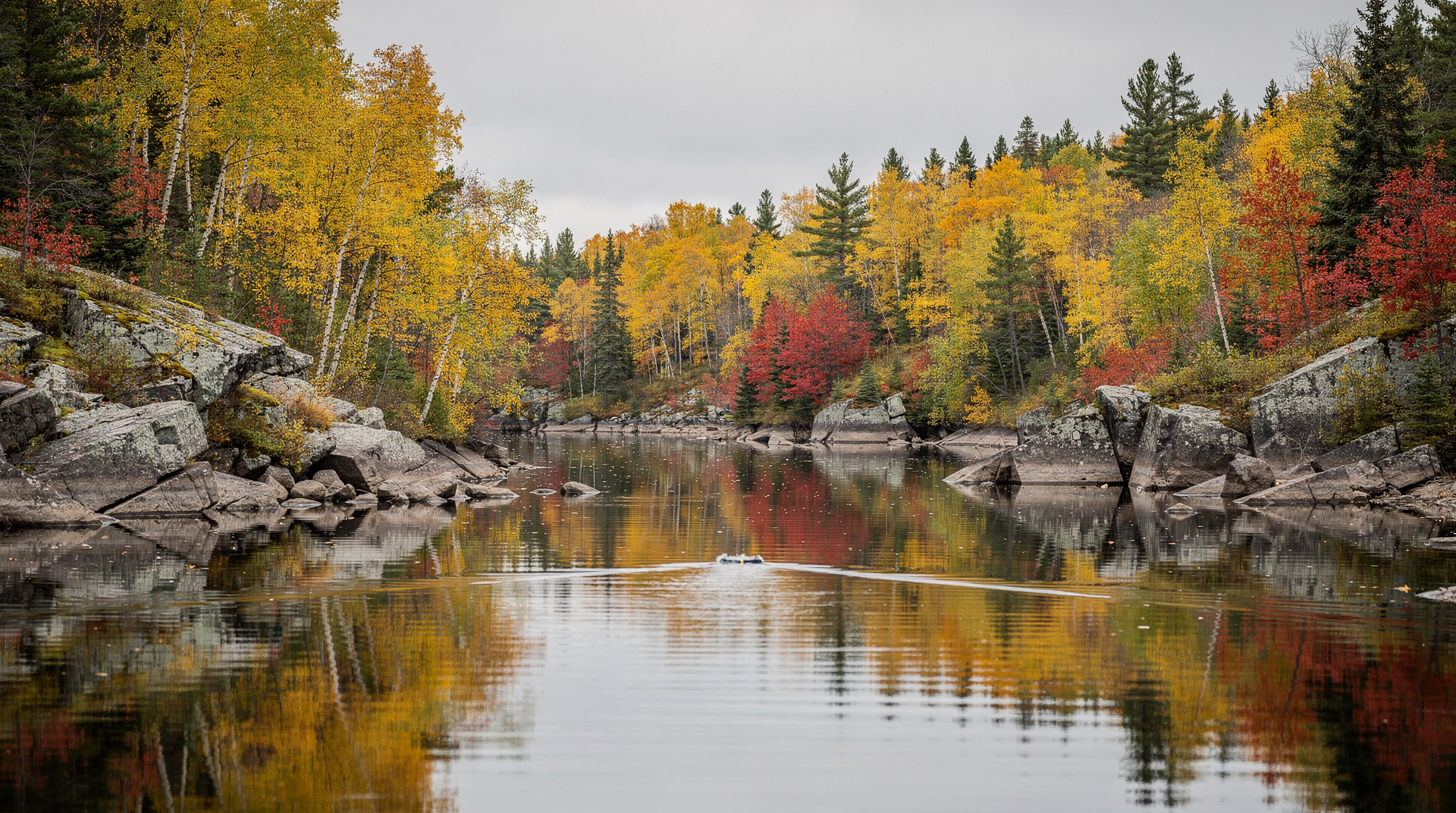
The region is defined by two things: water and forest. The St-Maurice River flows south through the region for 563 km, connecting a chain of lakes and rapids that form the backbone of one of Quebec’s oldest canoe culture areas. The Parc national de la Mauricie preserves the most accessible section of the Laurentian Shield wilderness — a landscape of rounded granite domes, boreal lakes, and mixed forest that looks essentially unchanged from what the Attikamekw nations have paddled for thousands of years.
Trois-Rivières, the region’s capital, adds an urban dimension: it is Quebec’s second-oldest city (founded 1634) and has a functioning Old Town, an industrial art museum, and a restaurant scene that punches above its size.
| Where | Between Montreal (170 km) and Quebec City (145 km) |
| Time needed | 2 days minimum for city + park |
| Getting there | Car via Autoroute 40; Via Rail serves Trois-Rivières only |
| Cost | Park entry 10 CAD/adult/day in regular season, free for ages 17 and under |
| Best time | Jun–Oct for canoeing/hiking, Sept for foliage and moose, Feb–Mar for snowmobile |
The region at a glance
The Mauricie divides naturally into three zones for visitors:
The city zone (Trois-Rivières): museums, Old Town, restaurants, services. See the Trois-Rivières page for full detail.
The park zone (Parc national de la Mauricie): the federal national park covering the shield wilderness. See the Parc national de la Mauricie page for trail and canoe detail.
The St-Maurice valley (north of Trois-Rivières): the industrial corridor of Grand-Mère, Shawinigan, and La Tuque — less touristy but with interesting industrial heritage (the pulp and paper economy that shaped 20th-century Quebec).
The forest canoe circuit
The Mauricie’s most authentic activity requires commitment but rewards it proportionally: a multi-day canoe trip through the park’s interior lake circuit. The Rivière Cachée loop takes several days, but the isolation — no motors, no roads, loons calling at 6h — is a different quality of experience from anything available closer to the cities.
For day visitors, the park’s Lac Wapizagonke (Masson Beach and surrounding area) offers guided canoe rentals from the park outfitter and flat water suitable for beginners. The lake’s eastern arm extends 15 km into undisturbed forest.
Wildlife in the Mauricie
Moose: the Mauricie has one of the highest accessible moose densities in Quebec. Dawn drives on the park’s unpaved interior roads (early morning, 6h-8h, June-October) regularly produce sightings — cows with calves in summer, bulls in September rut. The park staff can advise on current sighting locations.
Black bears: present but rarely seen unless you’re camping the multi-day route. Follow bear canister protocols on overnight trips.
Loons: the park’s lakes have high breeding densities of common loons (huard in French). Their call is the unofficial soundtrack of the Mauricie interior.
Waterfowl and raptors: September-October sees large concentrations of migrating waterfowl on the larger lakes. Ospreys and bald eagles fish the park waterways.
Shawinigan: industrial heritage detour
Shawinigan (40 km north of Trois-Rivières) was the silicon valley of early 20th-century Canada — the falls on the St-Maurice River powered the first aluminum smelting and the first electric tramway in North America. The Cité de l’Énergie interpretive complex turns this industrial history into a genuinely compelling museum experience, with the original 1899 generating station still intact.
For travellers interested in the story of how electricity transformed Quebec, Shawinigan is a 2-hour detour worth making.
Snowmobile country
The Mauricie is serious snowmobile territory in winter. Trans-Québec Trail #3 runs through the region, connecting with the provincial network of more than 32 000 km. Shawinigan and Saint-Michel-des-Saints are major snowmobile hubs with rental shops, trail access, and hotels catering to the snowmobile market. Rental rates and trail access fees vary; see the official Fédération des clubs de motoneigistes du Québec website for current fees.
Fall foliage timing
The Mauricie’s foliage peaks slightly earlier than the Eastern Townships — typically the last week of September, with peak colour at low elevations in the first week of October. The park roads and the St-Maurice valley road between Grandes-Piles and La Tuque are among the most photographed foliage routes in Quebec during this period.
Mauricie vs Lac-Saint-Jean: two different “middle of Quebec” stops
Travellers looking for an inland break between the Saint-Laurent cities sometimes weigh Mauricie against Lac-Saint-Jean further north. Mauricie is easier to reach (a straight 2h from Montreal on the highway) and rewards a shorter, canoe-and-wildlife-focused visit; Lac-Saint-Jean requires a longer detour but offers a genuinely different lake-and-blueberry landscape. For a break in the Montreal–Quebec City drive itself, Mauricie is the natural, low-effort choice; Lac-Saint-Jean suits a dedicated Saguenay–Lac-Saint-Jean trip rather than a highway stopover.
How to pace two days in the Mauricie
The region rewards a slow rhythm. Most visitors who feel underwhelmed tried to compress the city, the park, and a detour to Shawinigan into a single afternoon. Treat the two zones as separate moods: Trois-Rivières is for walking, eating, and browsing; the park is for early starts, quiet water, and no schedule beyond sunset.
A sensible first day keeps the car parked for most of the afternoon. Wander the Old Town on foot, stop at a café, and let dinner be the main event. The next morning, leave early for the park so that the moose window and the calm morning light on the lakes are both yours. By midday the lakes can fill with other paddlers, so the best hours belong to those who arrive first.
If you only have a single day, choose the park over the city and accept that you will see Trois-Rivières on a later trip. The city is easy to combine with a Montreal or Quebec City stay; the park is not.
What to pack and how to prepare
The Laurentian Shield is forgiving in summer but unforgiving when the weather turns, so a few simple habits make the visit smoother:
- Layers, even in July. Mornings on the water are cooler than the highway suggests, and a light waterproof shell earns its place in the bag.
- Insect protection. Forest and lake country means mosquitoes and black flies in the warmer months, especially near still water at dusk. Pack repellent and light long sleeves.
- Offline maps. Mobile coverage thins out once you leave the main road into the park. Download maps and trail notes before you go; the Quebec internet and eSIM guide covers staying connected on the rest of the trip.
- Water and snacks. Services inside the park are limited, so carry what you will need for the day.
- Binoculars. For loons, ospreys, and distant moose, a small pair transforms the experience.
Because the park roads are unpaved in places and wildlife can step out without warning, drive slowly in the early morning. If you are renting a car for the first time in the province, the car rental guide and the guide to driving in Quebec from Europe explain the practical basics.
Who the Mauricie suits best
Couples and solo travellers who want a break from city noise will find the quiet lakes and the loon calls a welcome reset between two busy urban stops.
Families can keep things easy with the flat-water day canoe option and a short trail, then reward children with an evening in Trois-Rivières. See the Quebec with kids family guide for how to balance activity and rest on a longer trip.
Photographers will want to plan around dawn and the autumn colour window described above, since the mist on the lakes and the changing leaves reward patience more than a rushed visit.
Wildlife enthusiasts should lean on the early-morning drive and ask park staff where animals were seen recently; recent local knowledge beats any fixed schedule.
It suits less well anyone who needs nightlife, large-scale attractions, or a packed list of sights. That is part of its charm, but it is worth knowing before you commit a night here.
When the weather does not cooperate
Rain does not ruin a Mauricie day, but it changes the plan. On a wet morning, shift to the indoor side of the region: the museum and Old Town in Trois-Rivières, or the Cité de l’Énergie in Shawinigan, which makes a good rainy-day anchor. Save the canoe for the clearing that often follows, when the lakes are still and the forest smells of wet pine.
In winter, the opposite logic applies. Snow transforms the same landscape, and the region becomes a place for sleds rather than paddles. Check trail conditions with the local clubs before you book a rental, and plan your layers accordingly. For more on cold-season trips across the province, read the Quebec in February guide and the snowmobile tours guide.
Making the Mauricie part of a bigger trip
Because the region sits on the corridor between the two big cities, it slots into almost any longer itinerary. If you are comparing how to travel between them, the Montreal to Quebec City travel guide lays out the options, and breaking the journey here is the easiest upgrade.
Travellers without a car sometimes prefer a structured option. a full-day guided tour between Montreal and Quebec CityGYG ↗ will not stop in the Mauricie, but it can be a useful comparison point when deciding how much of the trip to do independently and how much to hand over to a guide.
Once you reach the end of the circuit, Quebec City is a natural finish. A relaxed introduction to the walled city is a guided walk through Old Quebec that includes the funicularGYG ↗ , which pairs well with a quiet few days of canoeing and forest behind you. For wider context, the Quebec City destination page and the Old Quebec page explain how to organise the city leg, while the classic 7-day loop shows a route that could easily absorb a night in the Mauricie.
If you are continuing north rather than east, the Charlevoix page and the Saguenay page are the next logical chapters, and the best time to visit Quebec guide helps you match the season to the route.
Getting there
From Montreal: Autoroute 40 Ouest to Trois-Rivières, then north on Route 55. 170 km, 2h.
From Quebec City: Autoroute 40 Ouest to Trois-Rivières. 145 km, 1h40.
Parc national de la Mauricie (Saint-Mathieu-du-Parc entrance): 60 km north of Trois-Rivières on Route 55 North. 2h40 from Montreal, 2h30 from Quebec City.
Via Rail serves Trois-Rivières on the Montreal-Quebec City corridor — but connecting to the park requires a car or taxi. There is no public transit to the park.
Where to stay in the region
Trois-Rivières: see Trois-Rivières for hotel options. For most national park visitors, basing in Trois-Rivières and day-tripping to the park is practical.
Saint-Mathieu-du-Parc (park gateway): several small inns and B&Bs. Auberge Le Baluchon (nearby) is the premium option — a full resort with spa, golf, and farm activities; see the official Le Baluchon website for rates.
Inside the park: campgrounds and backcountry sites — see the Parc national de la Mauricie page.
Combining with other destinations
The Mauricie occupies the gap between Montreal and Quebec City that most travellers bridge in 2.5 hours on the highway. By breaking the drive here — one or two nights — you convert a transfer into an experience.
A practical circuit from Montreal: Day 1 drive to Trois-Rivières (2h), explore the Old Town and dine. Day 2 drive to Parc national de la Mauricie (1h from Trois-Rivières), hike or canoe. Day 3 continue to Quebec City (1h40).
See the Quebec City 10-day itinerary for how the Mauricie fits into a longer provincial circuit. The Trois-Rivières page has city-specific detail.
Frequently asked questions about Mauricie
Is Mauricie worth a stop if I’m just driving between Montreal and Quebec City?
Yes, if you have even one extra night to spare — breaking the 2.5-hour highway drive with a night in Trois-Rivières and a morning in the national park converts a transfer into an actual experience, and it requires no major detour from the direct route.
Do I need to book a canoe trip in advance?
For the day-use Lac Wapizagonke rentals, no — walk up to the park outfitter. For the multi-day Rivière Cachée loop, yes: portage permits and backcountry camping spots should be booked through Parks Canada well ahead, especially for July–August.