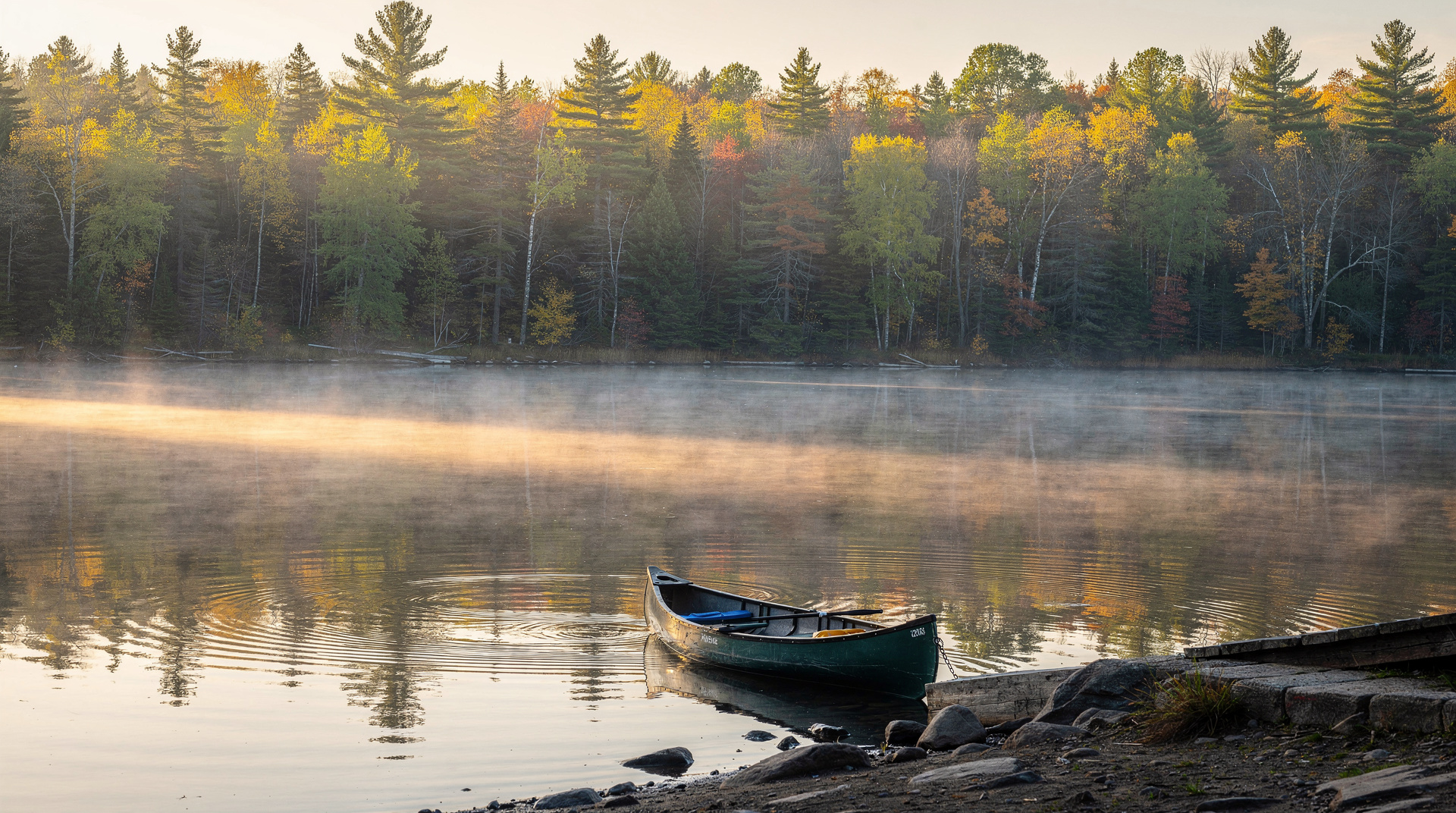
Parc de la Gatineau
361 km² of Laurentian Shield wilderness at Ottawa's doorstep: hiking, fall foliage, the Mackenzie King Estate, and cross-country skiing 10 min from Parliament.
Quick facts
- Distance from Gatineau (Hull)
- 10 km
- Distance from Ottawa
- 20 km
- Park area
- 361 km²
- Highest point
- King Mountain (383 m)
- Foliage peak
- Mid-October
| Where | 10 km from Gatineau (Hull), 20 km from Parliament Hill, Ottawa |
| Cost | Free hiking; summer weekend parking 5–10 CAD; Mackenzie King Estate free (parking ~10 CAD) |
| Time needed | 1 day for a hike and the estate; 2 days to add Lac Philippe and a ski or paddle session |
| Getting there | Car in 15–30 min from Gatineau/Ottawa; cycling via the NCC pathway network |
| Best time | October for foliage; June–August for hiking and swimming; December–March for skiing |
Wilderness beside a capital city
Parc de la Gatineau is one of the most unusual conservation areas in Canada: 361 km² of the Laurentian Shield, with exposed granite ridges, boreal forest, and a chain of lakes — located 10 km from the centre of Gatineau and 20 km from Parliament Hill in Ottawa. Federal politicians, diplomats, and public servants use it as their weekend escape. Tourists largely overlook it, which keeps the trails pleasantly un-crowded compared to similarly sized parks elsewhere.
The park is administered by the National Capital Commission (NCC) rather than Parks Canada — a distinction that matters for fees (no daily charge for hiking, but parking costs apply in summer) and for rules (dogs permitted on most trails on-leash, cycling on designated routes).
The park’s best known feature to Canadians is not its wilderness but its historic estate: the Mackenzie King Estate, summer retreat of Canada’s longest-serving Prime Minister (1921-1948), who had an eccentric taste for medieval ruins and a fondness for Scottish terriers.
What to do
Hiking
The park has 165 km of hiking trails across three main sectors:
Sector Gatineau (southern, most accessible): the main visitor centre and most popular trails. The King Mountain trail (8.5 km loop, 250 m elevation, 3h) is the park’s signature hike — rocky ridges, panoramic views over the Ottawa River valley, and reliable foliage in October. Marked easy-to-moderate; suitable for fit hikers of all ages.
Champlain Lookout trail (3 km from parking, easy): the famous viewpoint over the Ottawa River valley, accessible by a short hike or a drive to the parking area. The Champlain Lookout has one of the best fall foliage views in eastern Canada — the Ottawa Valley below turns crimson and gold in a panorama visible for 40 km. Best visited on a weekday in October to avoid weekend crowds.
Lusk Cave trail (11 km round-trip, moderate, 4h): through boreal forest to a marble cave, wading required through the cave interior (waterproof boots essential). A genuinely adventurous day hike for families.
Mackenzie King Estate
The summer estate of William Lyon Mackenzie King (Prime Minister 1921-26, 1926-30, 1935-48) is one of the more eccentric historic sites in Canada. The estate has three buildings set in formal gardens — Moorside (the main house), Kingswood (the guest cottage), and the Farm House — plus King’s collection of faux-medieval ruins assembled from salvaged Ottawa Parliament and government buildings.
The ruins are the most photographed feature: archways, columns, and stone façades from demolished 19th-century buildings, deliberately arranged to look weathered and ancient, in the middle of the Laurentian forest. King had a taste for romantic-era landscape design and a spiritual life that included séances and conversations with the spirit of his late mother; the estate reflects both.
Practical: the estate is open mid-May to mid-October, 10h-17h. Entry free (parking approximately 10 CAD). Guided tours available on weekends (approximately 10 CAD extra). The tearoom serves light lunches in summer.
Lac Philippe and camping
Lac Philippe (north sector) is the park’s main swimming and camping lake. The beach is supervised mid-June to late August and has kayak and paddleboat rentals (25-40 CAD for 2h). The campground here (75 sites) requires NCC advance booking for July-August weekends.
The Étienne Brûlé lookout near Lac Philippe gives north-facing views over the boreal interior of the park.
Cross-country skiing and winter
The park has 200 km of groomed cross-country ski trails — the best network accessible from Canada’s capital region. Trails are maintained by the NCC and are open to classic and skate skiing. Trail pass approximately 15-20 CAD/day. Lessons and rental equipment available at the Lac Beauchamp visitor centre (south sector).
The season typically runs late December to mid-March, depending on snowfall. The park can get good natural snow when Ottawa/Gatineau receives 20+ cm dumps.
Fat biking: sections of the trail network are designated for winter fat biking. Rentals available.
Which day hike to pick
With limited time, most visitors choose one signature hike. This comparison narrows it down:
| Trail | Distance | Difficulty | Best for |
|---|---|---|---|
| King Mountain | 8.5 km loop, 3h | Easy–moderate | Signature ridge views, reliable October foliage |
| Champlain Lookout | 3 km, ~1h | Easy | Fastest payoff, best single foliage panorama |
| Lusk Cave | 11 km round-trip, 4h | Moderate | Families wanting an adventurous, wetter hike |
If you only have two hours, drive straight to Champlain Lookout. With a full morning, King Mountain gives the more complete Shield-landscape experience. Lusk Cave is worth the extra effort if travelling with older children who will enjoy wading through the cave interior.
Cross-country skiing detail and how it compares
The 200 km groomed network here is the largest accessible from a Canadian capital, and it draws a different crowd from Parc national de la Mauricie’s trails further east — mostly local skiers rather than tourists, meaning tracks stay well groomed but weekend parking at the Lac Beauchamp and Visitor Centre sectors fills by mid-morning on good-snow weekends. See the cross-country skiing in Québec guide for how Gatineau Park stacks up against other networks in the province, and the snowshoeing guide if you prefer a slower winter pace without the technique of skiing.
Wildlife
The park is within the Ottawa Valley forest transition zone — the boundary between the eastern deciduous forest and the boreal. White-tailed deer are abundant and approachable; black bears are present but rarely encountered. Red foxes are common near the estate and picnic areas. Ruffed grouse and pileated woodpeckers are the most reliably seen birds.
Foliage season
The park’s foliage season peaks mid-October — slightly later than the Laurentides but earlier than the Eastern Townships. The Champlain Lookout during peak colour is one of the most photographed scenes in the National Capital Region. Expect weekend crowds at the lookout parking area from the first to third weekends of October; weekdays are significantly quieter.
The foliage drive along Chemin de la Promenade (the parkway that runs through the park) is excellent for photographers — the parkway closes to cars on Sunday mornings for cyclists and walkers.
Getting there
From Gatineau (Hull): 10 km north on Boulevard Gréber and then Chemin de la Gatineau. 15-20 minutes.
From Ottawa: cross the Portage Bridge or Alexandra Bridge, then north through Hull on the parkway. 25-30 minutes to the main visitor centre.
By bike from downtown Ottawa or Gatineau: the NCC’s Gatineau Park Recreational Pathway connects the park to the Ottawa River Pathway network. A fit cyclist can reach the southern park entrance from Parliament Hill in 45-60 minutes.
Parking: main parking areas at the Visitor Centre (Philippe Lake Road), Champlain Lookout, and Mackenzie King Estate. Summer weekend parking fees: 5-10 CAD. Arrive before 9h on October weekends for the Champlain Lookout to find a space.
Practical tips
- Trail maps: available at the main visitor centre (34 Scott Road, Gatineau) or printable from ncc-ccn.gc.ca.
- Dogs: permitted on most trails on-leash. Not permitted on beach areas.
- Fires: not permitted in the park (this is strictly enforced).
- Water: no potable water sources in the interior. Carry all water for day hikes.
- Bugs: blackflies and mosquitoes are aggressive in late May and June at lower elevations. Bug spray essential; July-August is significantly more tolerable.
Combining with other destinations
Parc de la Gatineau is the outdoor complement to Gatineau’s cultural attractions. A logical 1-day circuit: morning at the Musée canadien de l’histoire, lunch in Hull, afternoon hike in the park to the Champlain Lookout or King Mountain, return to Gatineau for dinner.
For a second day, the Mackenzie King Estate merits a half-day on its own. See the Outaouais regional guide for the wider region beyond the park, and the Ottawa-Gatineau day trip guide for the cross-border experience. If you’re basing yourself further afield, the day trips from Montreal guide covers whether Gatineau Park is a realistic addition to a Montreal-based trip (short answer: it’s a long day, better as an overnight from Ottawa/Gatineau). For foliage timing specifically, the Québec in October guide compares the Gatineau peak against other regions’ foliage windows.
Frequently asked questions about Parc de la Gatineau
Do I need a car to visit Gatineau Park?
A car makes the park far easier to use fully, but it’s not strictly required — the NCC’s Gatineau Park Recreational Pathway connects to the Ottawa River Pathway network, so a fit cyclist can reach the southern entrance from Parliament Hill in 45–60 minutes. Public transit does not serve the interior sectors (King Mountain, Champlain Lookout, Lac Philippe) directly.
Is Gatineau Park worth visiting outside foliage season?
Yes. Summer brings hiking, swimming at Lac Philippe, and cycling the parkway; winter brings one of the best groomed cross-country ski networks accessible from a Canadian capital. October foliage is the single most photographed period, but it’s also the busiest — weekday visits in June–August or the ski season are quieter and just as rewarding for their respective activities.