Quartier Latin & Gay Village
Montreal's student quarter and vibrant Gay Village: bistros, theatres, bookshops, and the city's best nightlife east of downtown.
Haunted Downtown Ghost Walking
Duration: 1.5-2 hours
Quick facts
- Metro stations
- Berri-UQAM, Beaudry, Papineau (line 1)
- Key street
- Rue Saint-Denis (Quartier Latin), Rue Sainte-Catherine Est (Gay Village)
- Best time for nightlife
- Wednesday to Saturday from 21h
- Proximity to Old Montreal
- 15 min walk / 5 min metro
| Where | East of downtown Montreal, along Rue Saint-Denis and Rue Sainte-Catherine Est |
| Cost | Free to walk; cover charges 10–20 CAD (often waived before 22h); meals 15–25 CAD |
| Time needed | Half a day; a full evening if combining dinner with nightlife |
| Getting there | Metro Berri-UQAM, Beaudry, or Papineau (all Line 1) |
| Best time | Wednesday–Saturday from 21h for nightlife; summer for the Village’s pedestrianised street |
East of downtown, where the real Montreal lives
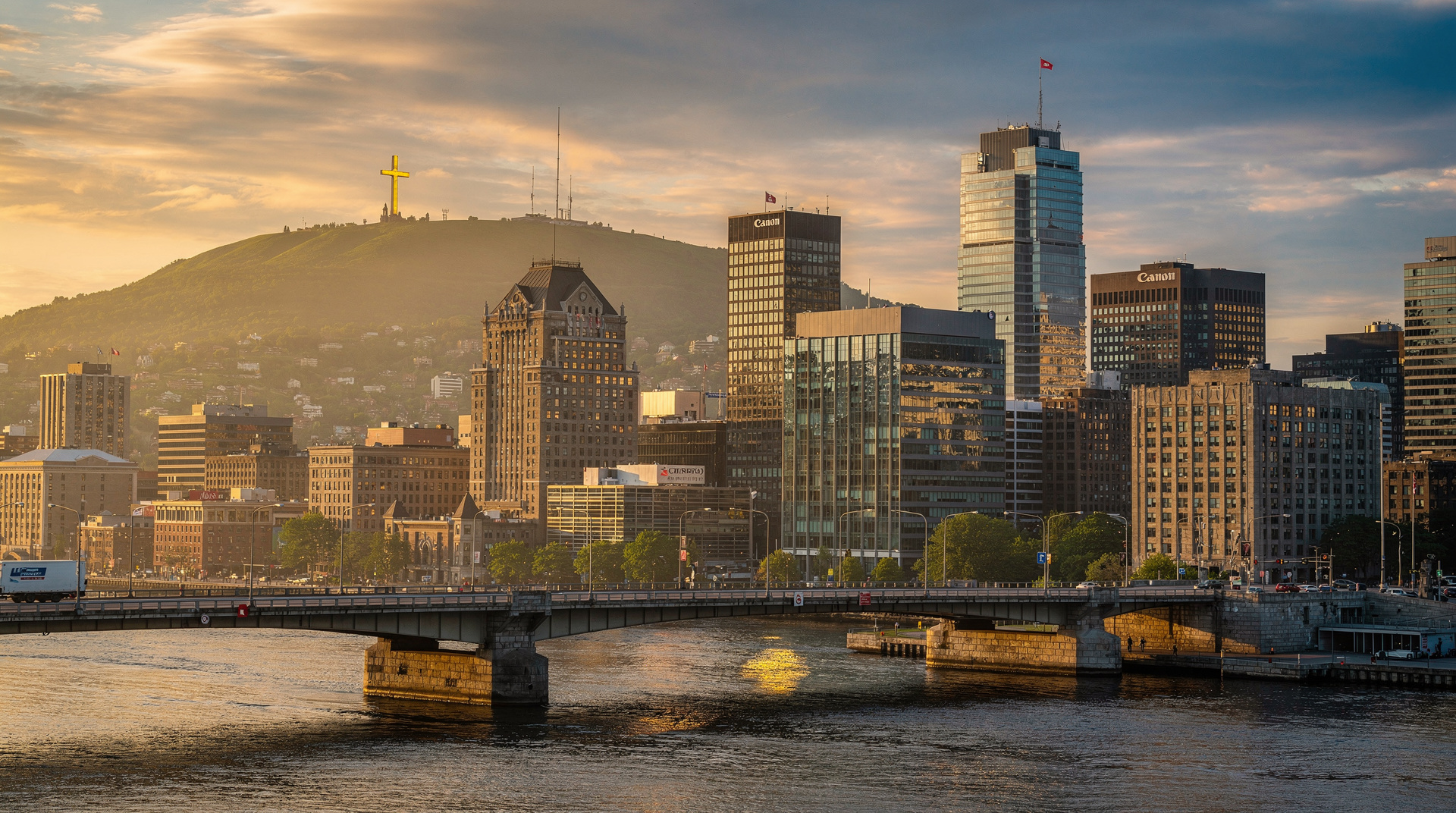
Montrealers will tell you that downtown ends at Boulevard Saint-Laurent — a meridian the city calls “the Main” — and that what begins on the east side is something altogether different. The Quartier Latin is the city’s university district, built around l’Université du Québec à Montréal (UQAM) and still shaped by the rhythms of student life: cheap eats, independent bookshops, late-night bars, and a density of theatres that would be remarkable for a city twice the size.
Two minutes further east along Rue Sainte-Catherine, the neighbourhood shifts again into the Gay Village — a 1.5-km stretch of Sainte-Catherine Est between Rue Amherst and Rue Papineau that has been the centrepiece of Montreal’s LGBTQ+ community since the 1980s. In summer, the entire street is pedestrianised and strung with hundreds of multicoloured balls that have become one of the city’s most photographed installations. In winter, the bars and clubs carry on with equal energy, indifferent to the temperature outside.
Together, these two neighbourhoods give you one of the most genuinely lived-in half-days in Montreal — more honest than the curated polish of Old Montreal, and far more interesting than the anonymous mall-and-chain corridor of downtown Rue Sainte-Catherine Ouest.
The Quartier Latin in detail
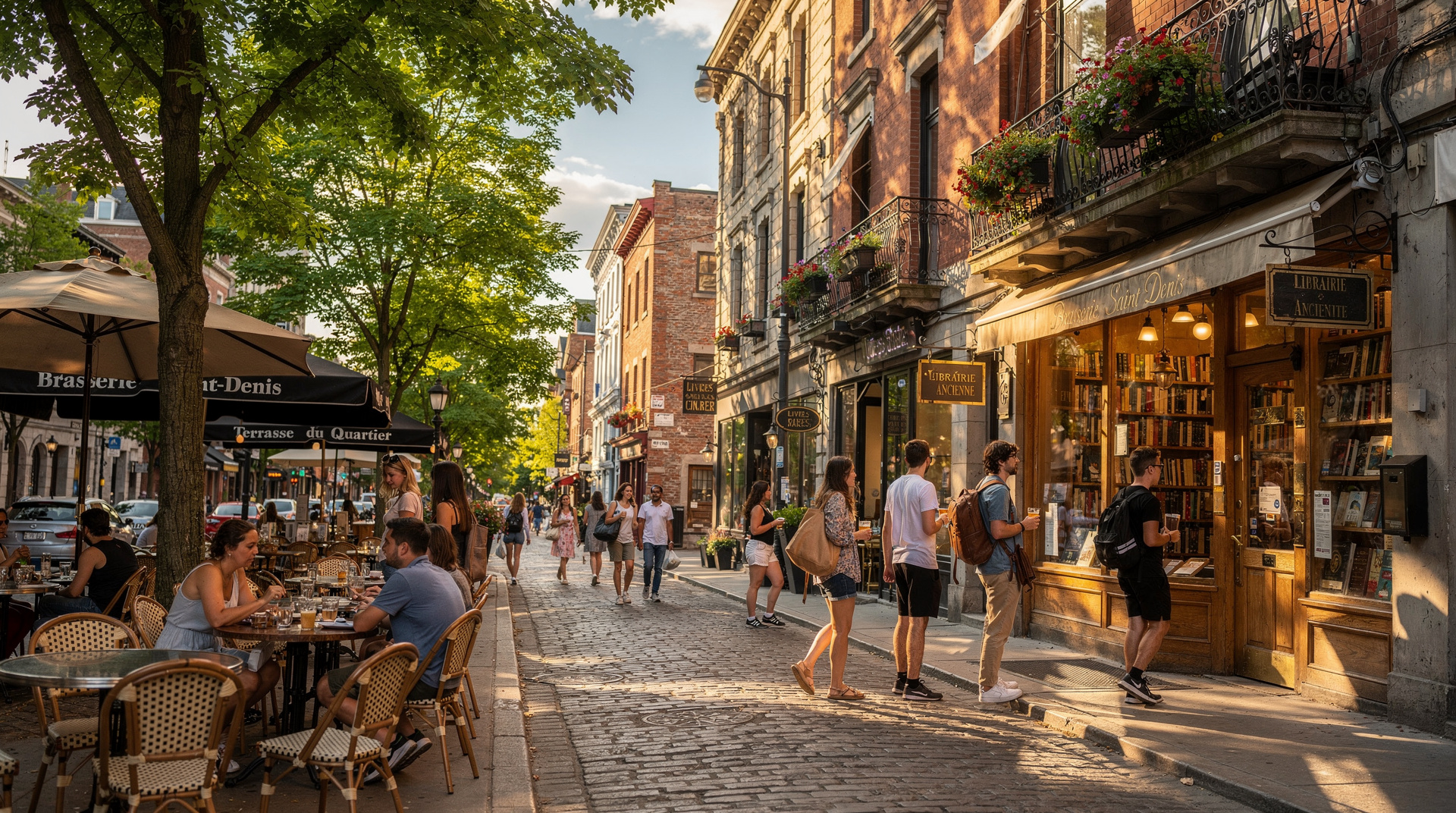
The beating heart of the Quartier Latin is Carré Saint-Louis, a Victorian square ringed by Second Empire houses and fronted by a fountain. It was once a wealthy French-Canadian enclave; today it functions as a neighbourhood salon where students, artists, and the occasional chess player converge in warm months. The square opens onto Rue Prince-Arthur Est, a pedestrian street of terrasse restaurants that serve affordable meals from spring to October.
Rue Saint-Denis is the main artery — a 3-km stretch of bistros, bookshops, and café terrasses that runs from the Old Port north into the Plateau-Mont-Royal. In the Quartier Latin section (roughly between Boulevard de Maisonneuve and Avenue du Mont-Royal), you’ll find Librairie Gallimard, one of the city’s best French-language bookshops, and a string of bars that fill well before midnight on weekends.
The Grande Bibliothèque (Grande BibliothèqueQC, Rue Berri) is an architectural landmark — an enormous glass and wood complex opened in 2005 that has become one of the most visited buildings in Quebec. Even if libraries aren’t your thing, the interior atrium is worth five minutes. Entry is free; temporary exhibitions rotate regularly.
Théâtre Saint-Denis (1594 Rue Saint-Denis) is one of Montreal’s largest performing arts venues, hosting concerts, comedy, and theatrical productions year-round. Check the programme before your visit — catching a Francophone comedian here gives you a cultural context that no walking tour can replicate.
For food: Café Cherrier (3635 Rue Saint-Denis, corner Cherrier) has been a neighbourhood institution since 1983, with one of the largest terrasses in the Quartier Latin and a reliable brunch and lunch menu. Budget 15-25 CAD for brunch. Schwartz’s Deli is technically a few blocks west on The Main, but worth including — the Montreal smoked meat sandwich (10-13 CAD) is genuinely one of the city’s defining bites, and the wait is shorter than the legend suggests if you arrive before noon or after 14h.
The Gay Village
The Gay Village is a year-round neighbourhood, but its character changes dramatically by season. In summer — roughly mid-June through September — Rue Sainte-Catherine Est becomes a pedestrian festival. The installation Boules Roses (or its annual variation; the theme changes each year), designed by artist Claude Cormier, turns the street into an outdoor living room. Terrasses spill onto the closed road; restaurants stay open past midnight; the energy on a Saturday evening between Beaudry and Papineau is unlike anywhere else in Canada.
The Village’s nightlife needs little introduction internationally, but a few addresses are worth naming. Bar Le Stud (1812 Sainte-Catherine Est) has been a Village anchor for decades and still draws mixed crowds for its nightly events. Sky Pub and Sky Club (1474 Sainte-Catherine Est) operate as a complex across three floors, with a rooftop terrasse that offers one of the better skyline views in central Montreal for the price of a drink. Cabaret Mado (1115 Sainte-Catherine Est) showcases Montreal’s drag scene — Mado Lamotte has been a Village fixture since 1989 and the shows run most nights.
Beyond bars, the Village is a functioning residential neighbourhood. Complexe Bourbon and the blocks surrounding Beaudry metro station have pharmacies, grocery stores, cafés, and some of the city’s better all-day breakfast spots. Le Saloon (1333 Sainte-Catherine Est) serves solid diner food at any hour.
The annual Divers/Cité festival (late July) is North America’s largest free outdoor LGBTQ+ festival. Fierté Montréal Pride (early August) adds a further week of programming, culminating in a parade along René-Lévesque. If your trip coincides with either, book accommodation well in advance — hotel rates in the Village double or triple.
Haunted Montreal and the darker history
Montreal’s nighttime walking tours often cross through the Quartier Latin precisely because this part of the city has a genuinely complicated history: religious institutions, working-class tenements, the red-light district of the early 20th century, and a wave of social upheaval in the 1960s and 1970s that reshaped Quebec identity. The ghost tours offered by Montreal’s established operators cover this ground without reducing it to kitsch.
The haunted downtown ghost walking tour (from $25, ~1.5-2h) starts in this neighbourhood and weaves through its past with a mix of documented history and local legend. It’s a solid evening option that puts the neighbourhood’s architecture in context.
For those who want the nightlife in organised form, the guided pub crawl of skyline bars covers several rooftop and elevated bars in central Montreal with a guide who handles the logistics of entry and queuing ($60, 3h). For a deeper dive into Montreal’s speakeasy history and underground club scene, the speakeasies and clubs crawl covers the Prohibition-era venues and their contemporary heirs ($60, 3-4h).
Quartier Latin vs the Gay Village: which fits your evening
Both neighbourhoods sit along the same metro line, but they serve different purposes:
| Quartier Latin | Gay Village | |
|---|---|---|
| Character | Student, bookish, Francophone bistros | LGBTQ+ nightlife, bars, drag shows |
| Best days | Any evening, especially with a Théâtre Saint-Denis show | Wednesday–Saturday from 21h |
| Peak season | Year-round | Summer (pedestrianised street, Divers/Cité, Fierté) |
| Typical spend | 15–25 CAD dinner | 10–20 CAD cover, 7–9 CAD beers |
| Good for | Dinner, a bookshop browse, a Francophone show | A proper night out, Pride-season visitors |
A logical evening combines both: dinner around Carré Saint-Louis or Rue Saint-Denis, then a short walk east into the Village once the bars fill up after 21h.
Getting there and around
Both neighbourhoods are served by Line 1 (green) of the Montreal metro:
- Berri-UQAM is the main interchange station and sits at the edge of the Quartier Latin. From here Rue Saint-Denis is a 2-minute walk north.
- Beaudry drops you directly into the Gay Village, at the corner of Beaudry and Sainte-Catherine Est.
- Papineau marks the eastern boundary of the Village, useful if you’re approaching from the east.
From Old Montreal, the walk up Rue Saint-Denis from the Old Port takes about 15 minutes and is pleasant in any weather. From Plateau Mont-Royal, you’re walking south down Saint-Denis — 10-15 minutes.
Night buses (55, 24, 45) cover the main corridors after the metro closes at 00h30 on weeknights and 01h30 on weekends (extended during summer events). Bixi bike-sharing has stations throughout both neighbourhoods.
What to combine
The Quartier Latin and Gay Village are natural companions to a Plateau Mont-Royal half-day. From Carré Saint-Louis, walk north on Saint-Denis 20 minutes to reach the Plateau’s café strip and Rue Rachel terrasses.
Heading south, Old Montreal and the Old Port of Montreal are walkable in 20-25 minutes. A logical day combines the Old Port in the morning, lunch in the Quartier Latin, and then the Village from early evening into night.
The nightlife guide to Montreal covers the full city but dedicates significant space to these two neighbourhoods. The LGBTQ+ Quebec Village guide goes into more detail on annual events, specific bars by night of the week, and practical tips for LGBTQ+ visitors from outside Canada.
Practical notes
- Budget: Montreal is cheaper than Toronto or Vancouver for nightlife. Cover charges at Village clubs run 10-20 CAD, often waived before 22h. Beers in bars average 7-9 CAD. Meals on Rue Prince-Arthur and around Berri run 15-25 CAD.
- Safety: both neighbourhoods are among Montreal’s busiest and most surveilled districts. Standard urban precautions apply late at night, as in any city.
- Language: the Quartier Latin is primarily Francophone. The Village is bilingual by necessity and habit. English is understood everywhere; attempting French earns consistent warmth.
- Seasonal closures: terrasses close in October; the pedestrianisation of Sainte-Catherine Est typically runs June through September. The indoor bars and clubs operate year-round.
For the fuller citywide nightlife picture beyond these two neighbourhoods, see the nightlife in Montreal guide. If you’re deciding between Montreal and Quebec City for your trip, the Montreal vs Quebec City guide covers how each city’s nightlife and culture compare.
Frequently asked questions about Quartier Latin & Gay Village
Is the Gay Village only for LGBTQ+ visitors?
No — it’s a welcoming, mixed neighbourhood, and the pedestrianised summer street, the drag shows, and the rooftop bars draw a broad crowd. That said, it remains the centre of Montreal’s LGBTQ+ community and culture, and events like Fierté Montréal Pride and Divers/Cité are built around that identity.
What night of the week is best for Village nightlife?
Wednesday through Saturday from around 21h, when bars and clubs are at their liveliest. Sundays and Mondays are noticeably quieter. If your trip coincides with Divers/Cité (late July) or Fierté Montréal Pride (early August), book accommodation well in advance — Village hotel rates double or triple during these events.
Top experiences
Bookable activities with verified prices and instant confirmation on GetYourGuide.