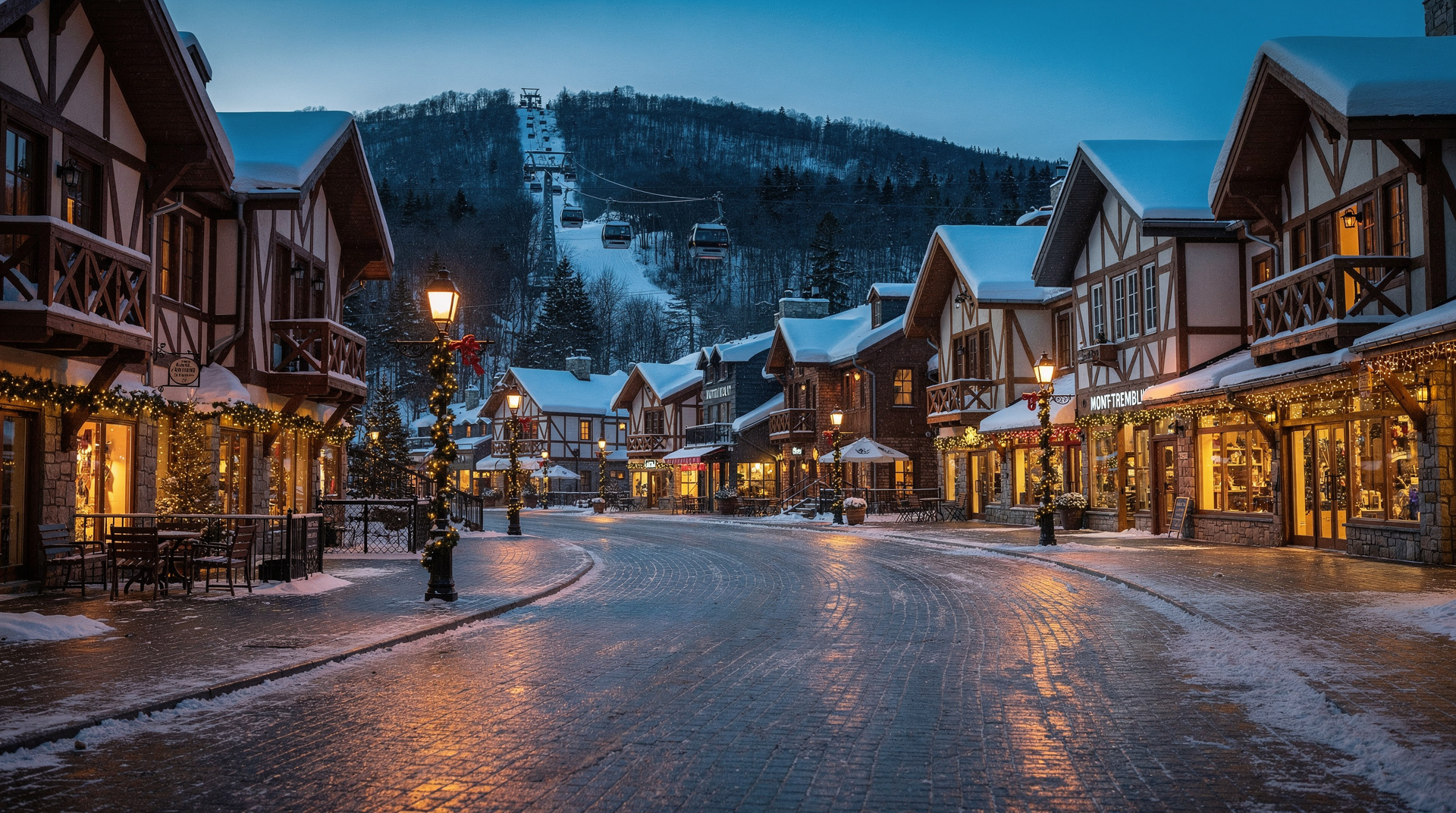
Ice climbing in Québec: from Mont-Tremblant to Pont-Rouge
Ice Climbing Initiation in Mont-Tremblant
Duration: 2-3 hours
Where can you go ice climbing in Québec?
Mont-Tremblant offers the best beginner ice climbing initiation (guided, ~90 CAD, all equipment provided). Pont-Rouge near Québec City is the most celebrated site for advanced climbers. Season runs December to March.
Why Québec is exceptional for ice climbing
Québec winters are intense. Between December and March, the province receives sustained cold — temperatures averaging -15 to -25°C across most of the interior — combined with adequate precipitation to freeze thousands of waterfalls, seepage walls, and creek drainages. The result is one of the densest concentrations of ice climbing terrain in North America, much of it within 2 hours of Montréal or Québec City.
Unlike the Canadian Rockies, where most famous ice routes require a full alpine expedition approach, Québec’s ice climbing is accessible. The Pont-Rouge area near Québec City has roadside cascades you can reach in 10 minutes from your car. Mont-Tremblant’s frozen waterfalls are 5 minutes from a ski resort. Canyon Sainte-Anne offers ice routes beside a tourist attraction. This approachability — combined with a strong guiding culture and high-quality initiation programs — makes Québec one of the best places in the world for first-time ice climbers.
| Where | Mont-Tremblant (beginner), Pont-Rouge (advanced), Canyon Sainte-Anne (beginner) |
| Cost | Around 90 CAD for a guided beginner initiation |
| Time needed | 2–3 hours for a first session |
| Getting there | Car recommended; Tremblant sites are close to the resort |
| Best time | January and February, sustained cold below -10°C |
Who ice climbing in Québec suits
A guided initiation suits anyone with reasonable fitness and no fear of heights that would prevent them from trying — no climbing background is needed, and most first-timers complete several real pitches within a couple of hours. It does not suit anyone hoping to climb independently on their first outing: Pont-Rouge and the advanced sites are for experienced climbers with their own gear and rope systems, not a casual add-on to a ski trip. If you’re unsure which end of that spectrum you’re on, the Tremblant initiation is the correct starting point regardless of your general outdoor experience — it’s designed for zero prior exposure to ice or rock climbing.
Mont-Tremblant: the best beginner initiation
For travellers who want to try ice climbing without prior experience, Mont-Tremblant has the most accessible and professionally managed initiation program.
Ice Climbing Initiation — Mont-TremblantPrice: approximately 90 CAD per person. Duration: 2–3 hours. All equipment provided (crampons, ice axes, harness, helmet).
The course is run on one of several frozen cascade sites within 10–20 minutes of the resort village. Your guide starts on the ground: crampon fitting, ice axe grip, the basic movement principle of ice climbing (kick-kick-plant-step). You progress onto low-angle ice before working up to the full route height.
This is a genuine first ascent — not a simulated experience in an artificial environment. By the end of a 2.5-hour session, most participants have completed 3–5 pitches on real outdoor ice, which feels like a meaningful accomplishment.
The initiation is suitable for ages 10 and above (most guides recommend 12+) and for people of normal fitness with no climbing background.
Season and conditions at Tremblant
Mont-Tremblant’s ice climbing season runs from mid-December to early March in a typical year. January and February are the most reliable months. The resort’s ski infrastructure means accommodation, restaurants, and warm-up spaces are available nearby — a significant advantage over more remote sites.
Pont-Rouge: Eastern Canada’s premier ice climbing area
Pont-Rouge, a small town 40 km west of Québec City on Route 138, has become the most celebrated ice climbing destination in Eastern Canada. The reason is geological: the area has a high concentration of seepage walls, frozen waterfalls, and canyon sections that produce an extraordinary range of routes from beginner (WI2) to seriously advanced (WI5-6).
The most famous area is the Vallée de la Jacques-Cartier (the same river valley used for summer rafting — see Jacques-Cartier rafting guide), where frozen drainages on the valley walls produce dozens of climbable routes accessible on foot from parking areas.
Additional notable sites near Pont-Rouge include:
- La Fontaine (WI3-4): one of the longest single-pitch routes in the region, 20–25m of consistent WI3 ice with a steeper crux at the top
- Le Fantôme (WI4): a sought-after moderate route in a narrow canyon
- Calumet (WI2-5): several routes of varying difficulty on the same approach, good for groups with mixed levels
Pont-Rouge is not served by organised guided tours to the same extent as Tremblant — it is a destination primarily used by experienced climbers who bring their own gear. If you want to climb Pont-Rouge without gear, arrange a guide in advance through the Fédération québécoise de la montagne et de l’escalade (FQME) or contact a Québec City climbing club. Prices for private guide days range from 250–400 CAD depending on group size.
Canyon Sainte-Anne: ice climbing with a dramatic backdrop
The Canyon Sainte-Anne park, 40 km northeast of Québec City near Sainte-Anne-de-Beaupré, is primarily a tourist attraction with a suspension bridge and gorge views. In winter, however, the canyon walls freeze into accessible ice climbing terrain, and the park runs supervised ice climbing sessions alongside its regular winter program.
This is a more structured, less intimidating option than the independent Pont-Rouge sites: changing facilities, warming huts, and the visual drama of the gorge make it an excellent setting for a beginner experience. Guided sessions are bookable seasonally through the park.
Val-Bélair and Québec City area cascades
Several frozen cascades near Québec City’s urban periphery are used by the local climbing community, particularly Val-Bélair (10 km from the city centre) and the cliffs above the Jacques-Cartier river valley. These are less formal — no set tour operations — but the Québec City climbing club (Club d’escalade de Québec, CLÉQ) organises regular ice climbing outings open to visiting climbers for a small fee. This is the best way to access local knowledge, established top ropes, and safe anchors without a full private guide day.
Gear: what to bring to an ice climbing session
For a guided beginner course (Tremblant initiation), the operator provides:
- Ice axes (2 per person for technical climbing)
- Crampons
- Harness
- Helmet
- Ropes and belay equipment
You provide:
- Thermal base layer (merino wool or synthetic — no cotton)
- Insulated mid-layer (fleece or down — you will cool down fast when standing at the base)
- Waterproof insulated outer jacket and trousers
- Insulated waterproof gloves (critically important — your hands grip ice and cold metal for hours)
- Insulated winter boots rated to at least -20°C; if they have a stiff enough sole, crampons will attach directly; if not, operators usually have rentals
- Balaclava and warm hat (your helmet goes over these)
- Water and a snack
Ice climbing and the Québec winter experience
Ice climbing pairs naturally with other Québec winter activities. If you are spending a week in the province in January or February:
- Combine ice climbing initiation at Tremblant with dog sledding (both are Tremblant-based; see our dog sledding guide)
- Add ice canoeing on the Saint-Laurent for the full suite of cold-weather adventure — see ice canoeing guide
- Use Québec City as a base for Pont-Rouge (40 min drive), ice canoeing on the Saint-Laurent, and the Hôtel de Glace experience
- The Carnaval de Québec (late January-mid February) provides an evening cultural context around a day of ice climbing — Carnaval details in the January guide
Quick reference
| Site | Level | Guided | Price | Distance from QC City | Distance from Montréal |
|---|---|---|---|---|---|
| Mont-Tremblant | Beginner + | Yes (GYG) | ~90 CAD | 3h30 | 1h30 |
| Pont-Rouge | Intermediate-Advanced | Via FQME/clubs | 250–400 CAD (guide day) | 40 min | 2h30 |
| Canyon Sainte-Anne | Beginner | Via park | Seasonal pricing | 40 min | 3h30 |
| Val-Bélair / CLÉQ | All levels | Via club | Low cost | 10 min | 3h |
After the climb: warming up and next steps
Whichever site you climb at, plan for the come-down properly. Fingers and toes take time to rewarm after a session gripping ice and cold metal — most Tremblant sessions end with time in a warm base area, and it’s worth using it rather than rushing off. If the initiation left you wanting more, the natural progression is a private day at Pont-Rouge with a certified guide through FQME, or joining a CLÉQ outing near Québec City to build skills with the local community before attempting anything independently. Either way, do not treat a single beginner session as sufficient preparation to climb unsupervised — the gap between guided initiation and independent climbing is significant.
Related guides
- Dog sledding in Québec
- Snowmobile tours in Québec
- Ice canoeing on the Saint-Laurent
- Québec in January: winter activities
- Rafting the Jacques-Cartier River (summer version of the same valleys)
Frequently asked questions about Ice climbing in Québec: from Mont-Tremblant to Pont-Rouge
Do I need rock climbing experience to try ice climbing in Québec?
No. Ice climbing and rock climbing use different techniques. A beginner ice climbing initiation course in Québec starts from scratch: your guide teaches ice axe use, crampon technique, and basic movement on the ice before you ever leave the ground. Most people climb their first ice pitch within 30 minutes of arriving at the site.What equipment is provided for ice climbing in Québec?
On guided courses, all technical equipment is provided: ice axes (two per person), crampons, climbing harness, helmet, and belay device. You need warm winter clothing (thermal layers, insulated and waterproof outer layer), insulated waterproof gloves, and appropriate winter footwear. Some operators lend boots compatible with crampons if yours aren't suitable.How cold does it need to be for ice climbing in Québec?
The ice routes form reliably when sustained temperatures drop below -10°C, typically December to early March. The best conditions are -15 to -20°C — cold enough that the ice is consolidated and predictable, warm enough that it doesn't shatter unexpectedly. January and February are the prime months. A sudden warm spell (above -5°C) can degrade routes quickly.What are the famous ice climbing sites in Québec?
Pont-Rouge (west of Québec City) is the most celebrated concentration of ice routes in Eastern Canada, with dozens of routes from WI2 to WI6. Canyon Sainte-Anne (northeast of Québec City) has accessible beginner routes alongside dramatic gorge scenery. The Laurentides have scattered cascade sites around Mont-Tremblant, Saint-Donat, and Saint-Côme. Val-Belair near Québec City has several frozen waterfalls popular with the local climbing community.Is ice climbing in Québec dangerous?
Ice climbing carries inherent risks — falling ice, unpredictable conditions, cold-related injuries — but on properly managed guided beginner courses, the risk profile is similar to other supervised adventure sports. Guides choose appropriate routes, monitor conditions, and manage the rope system. Never attempt ice climbing independently without proper training, certified anchors, and rescue capability.
Top experiences
Bookable activities with verified prices and instant confirmation on GetYourGuide.