Montréal vs Québec City: which to visit (or both)?
The Original Old Montréal Walking Tour
Duration: 2 hours
Should I visit Montréal or Québec City — or both?
With 5+ days, visit both. With 3 days, choose: Québec City for a European-feeling UNESCO walled city with history and architecture; Montréal for cosmopolitan energy, world-class food, nightlife, and multicultural neighbourhoods. They are 3 hours apart by train.
Two cities, one province, completely different vibes
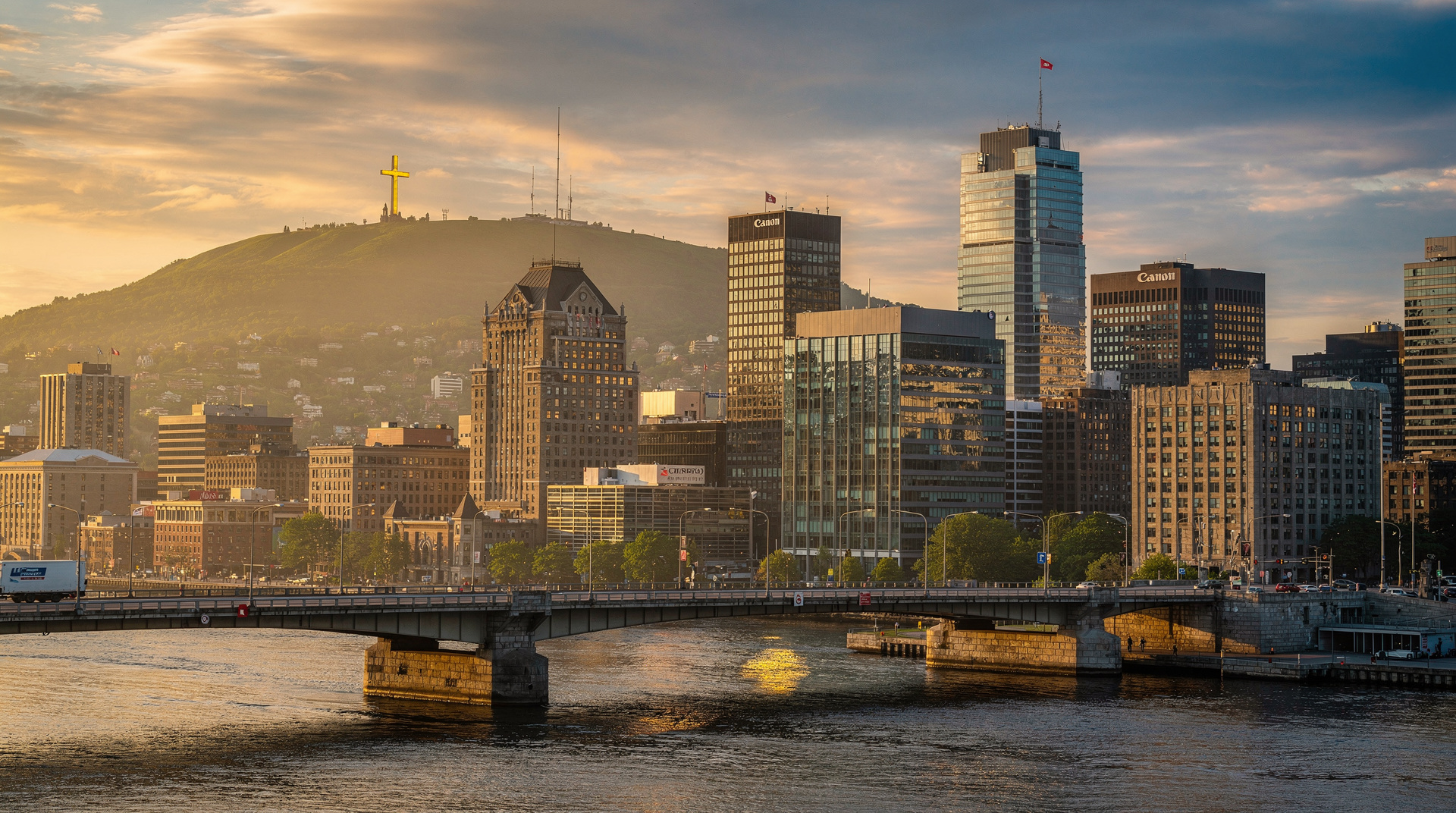
Montréal and Québec City are 250 km apart and they feel like two different countries. Montréal is a cosmopolitan North American metropolis with 2 million people, a thriving immigrant population, a globally respected food scene, and a nightlife culture that runs past 3 am. Québec City is a compact, French-speaking walled city of 550,000 that looks and feels more like Bordeaux or Bruges than any other city in Canada.
Visitors with more than five days should strongly consider both. Visitors with three or four days will need to choose — or at least choose a primary base with a day trip to the other. This guide makes that decision systematic.
| Distance apart | 250 km, ~3h by train |
| Best for a short trip (1 night) | Québec City — walkable Old Town |
| Best for 5+ days | Both, split 3 nights / 2-3 nights |
| Winter icon | Québec City (Carnaval, Hôtel de Glace) |
| Food and nightlife depth | Montréal |
Side-by-side comparison
| Factor | Montréal | Québec City |
|---|---|---|
| Population | 2.1 million (metro 4.2M) | 550,000 (metro) |
| Language | Bilingual (French dominant) | Strongly French |
| UNESCO site | No | Yes — Old Québec (Vieux-Québec) |
| Historic core | Old Montréal (1 km²) | Old Québec (walled, 1.9 km²) |
| Walkability | High (central neighbourhoods) | Very high (Old Québec) |
| Food scene depth | ★★★★★ | ★★★★ |
| Nightlife | ★★★★★ | ★★★ |
| Winter appeal | ★★★★ | ★★★★★ |
| Summer festivals | ★★★★★ | ★★★★ |
| Nature access | Moderate | Very easy (Montmorency, Orléans) |
| Getting around without a car | Easy | Easy in centre |
| ”Europe in North America” feel | Moderate | Very strong |
| Typical hotel mid-range | 180–280 CAD/night | 160–250 CAD/night |
Québec City: what makes it special
The UNESCO walled city
Québec City is the only remaining walled city in North America north of Mexico. Old Québec (Vieux-Québec) is divided into Upper Town (Haute-Ville) and Lower Town (Basse-Ville) — the two parts connected by the funicular and the steep steps of Côte de la Montagne.
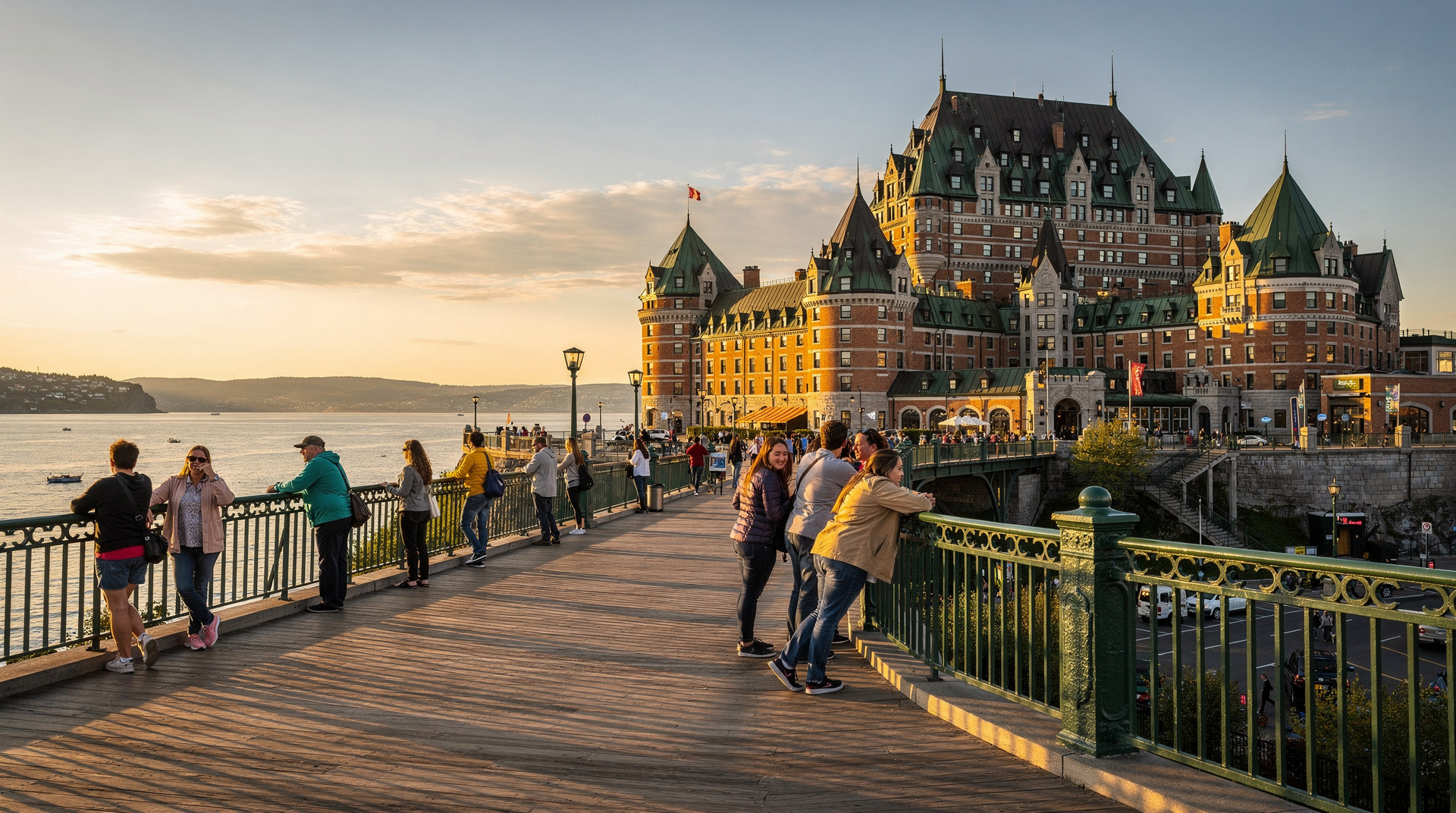
Upper Town has the iconic Château Frontenac, the Citadelle, the Plaines d’Abraham, and the terrace overlooking the St. Lawrence River. Lower Town (Petit-Champlain) is a warren of stone alleys with independent boutiques, local cafés, and one of the most photogenic streets in Canada. Almost everything a first-time visitor wants to see is within a 20-minute walk.
The “European” experience
For North American travellers and for European visitors who want to see Canada and feel at home, Québec City delivers a sensation that Montréal does not quite match: the feeling of walking through a genuine Old World city. Horse-drawn carriages (controversial — see our tourist traps guide), stone fortifications, and street musicians playing folk music. The architecture dates to the 17th and 18th centuries in parts of Petit-Champlain.
Day trips from Québec City
Québec City punches above its weight for day trips. Montmorency Falls (30 minutes, higher than Niagara), Île d’Orléans (30 minutes, farms and cider), Sainte-Anne-de-Beaupré (45 minutes), and the drive toward Charlevoix and Tadoussac all depart from Québec City.
Old Quebec City: Grand Walking TourFood in Québec City
The most important tip for eating in Québec City: avoid the tourist restaurants on rue Saint-Louis. Walk instead to the Saint-Roch and Limoilou neighbourhoods, where the real local dining scene lives. Restaurants like Le Cercle, Chez Muffy, and Battuto represent the genuine Québec City food culture — modern Québécois cuisine using regional ingredients.
Old Quebec City Food Tour with 10+ Local TastingsMontréal: what makes it special
Scale and neighbourhood diversity
Montréal is simply a bigger and more diverse city. The Plateau Mont-Royal is lined with Victorian rowhouses and local restaurants; Mile End is the Jewish-Québécois neighbourhood famous for smoked meat (Schwartz’s) and bagels (St-Viateur, Fairmount); Little Italy has the Marché Jean-Talon; Chinatown, the Gay Village, and NDG each have their own distinct character.
Old Montréal (Vieux-Montréal) is beautiful but tourist-concentrated. The real Montréal experience happens in the residential neighbourhoods where locals actually eat, drink, and live.
Food scene
Montréal’s food scene is one of North America’s best. The city has more per-capita restaurants than New York and a culture of late-night dining that few North American cities can match. Highlights: smoked meat at Schwartz’s (expect a queue — and see our note in the tourist traps guide on managing it), bagels from St-Viateur, poutine from La Banquise, and a growing fine-dining scene in the Plateau and Mile End.
Best of Montreal Food Walking TourNightlife and festivals
Montréal’s nightlife is legendary in North America. The city has a 3 am closing time for bars (vs 3 am in most of Quebec province), a dense concentration of live music venues, and club culture that attracts international DJs. The Gay Village on rue Sainte-Catherine is one of the most vibrant LGBTQ+ neighbourhoods in North America.
Festival season is exceptional: Festival International de Jazz de Montréal in early July (the world’s largest jazz festival), Just For Laughs comedy festival in July, and Osheaga music festival in August anchor a summer calendar that justifies the city’s reputation.
Getting around
Montréal’s STM metro is the most useful urban transit system in Québec, covering the Island of Montréal thoroughly. BIXI bike-share is excellent in summer. The underground city (RÉSO) connects major buildings downtown — useful in winter but frankly more of a shopping mall than a tourist attraction (see our tourist traps guide).
The Original Old Montréal Walking TourThe verdict by traveller type
”I want the classic Canadian postcard experience.”
Go to Québec City. The Château Frontenac, the walled city, the snow in winter — this is the image of Canada that has appeared in every travel magazine for a century. Three to four days is sufficient for a first visit.
”I want world-class food and nightlife.”
Go to Montréal. The food scene, the festivals, the neighbourhood depth, the bar culture — Montréal competes with any North American city. Plan four to five days minimum to get past the tourist surface.
”I want both.”
Spend 3 nights in Montréal, then take the Via Rail train to Québec City for 2–3 nights. This is the classic Québec road trip for first-timers. Or reverse it if you prefer ending in the more energetic city.
”I have kids.”
Both work well. Québec City’s compact walkable core is excellent for families. Montréal’s Biodome, Insectarium, Botanical Garden, and Olympic Park provide a full day of family activity. See our family guide to Québec for detailed recommendations.
”I’m visiting in winter.”
Prioritize Québec City. The Carnaval de Québec (late January to mid-February), Hôtel de Glace, ice canoeing on the St. Lawrence, and the snow-covered Old Town create a winter experience that is genuinely unique in North America. Montréal is also rewarding in winter (Igloofest, the underground food scene) but Québec City is the more iconic winter destination.
Practical logistics
Train: Via Rail connects Montréal (Gare Centrale) to Québec City (Gare du Palais) in roughly 3 hours. Book in advance for better prices — expect to pay 40–80 CAD each way depending on how early you book.
Bus: Orléans Express connects both cities in about 3.5 hours. Cheaper than train but less comfortable. Departs from Montréal’s Berri-UQAM station.
Car: About 3 hours on the A-20 or A-40. Driving allows stops at Trois-Rivières, Drummondville, or anywhere along the St. Lawrence. A car is not necessary within either city but opens up day-trip options significantly.
Airport: Fly into YUL (Montréal-Trudeau) for a Montréal-first trip, or into YQB (Québec City-Jean-Lesage) for a Québec City-first trip. Many international flights serve YUL, fewer serve YQB directly.
One night vs a real stay
If you only have one night to spare between the two, Québec City makes far better use of it — the entire walled Old Town is walkable, so the Château Frontenac, Petit-Champlain, and the St. Lawrence terrace are all reachable within a few hours without needing transit. Montréal’s highlights are more spread across neighbourhoods; a single night there only scratches one or two areas.
Some visitors try a same-day round trip to Québec City from Montréal by train, but with 3 hours each way that leaves only a few hours in Old Québec — staying at least one night lets you see the city at dusk and before the day-tripper crowds arrive, which is when it’s at its best. See our honest take on the Montréal-Québec City journey for the full transport comparison.
Frequently asked questions about Montréal vs Québec City
See the FAQ section at the top of this page for common questions about choosing between the two cities, distance, transport, cost, and safety.
For deeper planning, see our guides on things to do in Montréal, things to do in Québec City, and our classic 5-day Montréal and Québec City itinerary.
Frequently asked questions about Montréal vs Québec City: which to visit (or both)?
How far is Montréal from Québec City?
About 250 km by road, roughly 3 hours by car on the A-20 or A-40. Via Rail connects the two cities in about 3 hours on the Québec–Windsor corridor. Buses (Orléans Express) take closer to 3.5 hours. It is a practical same-trip pairing.Is Québec City better than Montréal for a first visit?
They offer different experiences. If you want cobblestone streets, a UNESCO-listed walled city, and a concentrated historic core you can walk without a car, Québec City is often more immediately striking. Montréal rewards longer stays and travellers who want neighbourhood depth, live music, food diversity, and nightlife.Which city is more expensive?
Roughly comparable for hotels and restaurants, with Montréal slightly more expensive for accommodation at peak times. Both have budget options. Québec City Old Town (Vieux-Québec) has higher tourist-area restaurant prices — see our guide on tourist traps in Québec City. Montréal's Plateau and Mile End offer excellent value dining.Can I visit Montréal and Québec City without a car?
Yes — both cities have solid urban transit (STM in Montréal, RTC in Québec City). The intercity connection is easy via Via Rail train or Orléans Express bus. A car is not needed for either city if you stay in the central neighbourhoods. You will need a car for day trips to Tremblant, Tadoussac, or Charlevoix.Which city is more family-friendly?
Both are family-friendly, but in different ways. Québec City's walled Old Town is compact and walkable, with Plains of Abraham, Montmorency Falls, and the Musée de la Civilisation all accessible without a car. Montréal has the Biodome, Botanical Garden, La Ronde, and the Science Centre, plus more hotel options for families.Where is the food scene better?
Montréal, by most metrics. It has more Michelin recognition, a deeper bench of casual restaurants in Mile End, Plateau, and Little Italy, strong brunch culture, world-famous smoked meat and bagels, and a diverse immigrant food scene. Québec City has excellent restaurants — especially in Saint-Roch and Limoilou — but the overall density is lower.Is Québec City safe for solo travellers?
Yes. Both cities are among the safest in North America. Old Québec has very low crime given its density of tourists. Montréal is also generally safe — standard city-travel awareness applies in certain neighbourhoods at night, but tourist areas and most residential neighbourhoods are very safe.Which city is better for a short layover of one night?
Québec City makes better use of a single night — the entire walled Old Town is walkable, so you can see the Château Frontenac, Petit-Champlain, and the terrace overlooking the St. Lawrence within a few hours without needing transit. Montréal's highlights are more spread across neighbourhoods, so a one-night stop there only scratches one or two areas rather than giving a full impression of the city.Can you day-trip to Québec City from Montréal instead of staying overnight?
Yes, and some visitors do, but we don't recommend it if you can avoid it — a same-day round trip leaves only a few hours in Old Québec after the 3-hour train each way. Staying at least one night lets you see the city at dusk and in the early morning before the day-tripper crowds arrive, which is when Old Québec is at its best.
Top experiences
Bookable activities with verified prices and instant confirmation on GetYourGuide.