Québec City to Tadoussac whale watching: is it doable as a day trip?
Whale Watching with Bus Transfer to Tadoussac
Duration: 8-9 hours
Is a Québec City to Tadoussac day trip realistic?
Technically yes, but it's a 10-12 hour day with 6 hours of driving. Feasible with a 06h30 departure. The easier option is an organised bus tour with whale watching included (14 hours round trip, no driving). Better yet, stay one night in Tadoussac — the town is tiny and atmospheric, and you'll wake up to belugas in the bay.
The day trip everyone debates
Ask in any Québec travel forum whether the Québec City to Tadoussac day trip is “worth it” and you’ll get passionate disagreement. Some say yes, it’s one of the best days of their Québec trip. Others say they spent most of the day in the car. Both are right — which one applies to you depends on how you approach it.
This guide gives you the honest calculation so you can make the right call.
| Where | Tadoussac, 215 km / 3h north of Québec City on Route 138 |
| Cost | Free ferry; whale tours around 110–210 CAD per person |
| Time needed | 10-12 hour day trip, or 1-2 nights for a relaxed visit |
| Getting there | Self-drive + ferry, or an organised bus tour with cruise included |
| Best time | July–August for peak sightings; September for value and fewer crowds |
Who this day trip suits (and who it doesn’t)
The pure day trip suits travellers who already like long drives, who have a rental car sorted, and who are visiting in a season when the weather is settled. If you are still deciding how to get around, the guides on renting a car in Québec and driving in Québec from Europe cover the practical side before you commit to a 06h30 start.
It suits families less well. Young children rarely enjoy six hours in a car plus a three-hour boat ride on the same day, and the schedule leaves very little slack for naps or meltdowns. If you are travelling with little ones, the Québec with kids family guide will help you pick a gentler pace, and the overnight option below is usually the better fit.
It also depends on how much of the rest of Québec you have already seen. Travellers with only a couple of days in the region may prefer to stay in town; the 3 days in Québec City itinerary shows what you give up by spending a whole day on the road.
The numbers, honestly
The drive from Québec City to Baie-Sainte-Catherine (the ferry terminal) is 215 km on Route 138. In summer, with normal traffic, plan 3 hours each way. Add 10 minutes for the ferry. Then you need time for at least one whale watching tour (3 hours on the water) plus the walk from the dock, boarding, and a bite to eat.
A realistic day trip:
| Time | Activity |
|---|---|
| 06h30 | Depart Québec City |
| 09h30 | Arrive Tadoussac (after ferry) |
| 10h00 | Whale watching tour (3h) |
| 13h00 | Back at dock. Lunch in Tadoussac |
| 14h00 | Chapelle, beach, or Marine Mammal Centre |
| 15h30 | Depart Tadoussac (ferry + drive) |
| 18h30-19h00 | Arrive back in Québec City |
Total: 12-hour day. 6 hours of driving, 3 hours on the water, 2.5 hours in the town. It works if you’re fit, you enjoy driving, and the whales cooperate.
What can go wrong: ferry wait (cars, summer peak), weather affecting whale visibility, return traffic through Québec City if arriving Friday evening.
The easier option: organised bus tour
The most stress-free approach is the bus tour from Québec City that includes the round-trip transport and a whale watching cruise in one package. You don’t drive, don’t worry about parking or ferry timing, and get an experienced guide:
Whale Watching with Bus Transfer to TadoussacThe tour takes approximately 14 hours round trip (including 8-9 hours on-site). Departure typically early morning, return early evening.
A bus tour also solves the practical headaches of a self-drive day: nobody has to stay alert for the return leg after a morning outdoors, and nobody has to worry about the ferry queue. If you are comparing booking platforms for this kind of excursion, the Viator vs GetYourGuide comparison explains how they differ for Québec activities.
Whale watching options in Tadoussac
Choosing between formats is the decision that shapes the whole day. The Tadoussac zodiac vs boat cruise guide goes into the trade-offs in more depth, and the whale species guide helps you know what you are looking at once a blow appears on the horizon.
3-hour boat tour (large vessel)
The most popular format. A 75-150 passenger boat with covered decks, naturalist commentary, and sea mammal identification. Three hours on the water at the confluence of the Saguenay River and the St. Lawrence, where cold upwelling brings nutrients to the surface and concentrates whales.
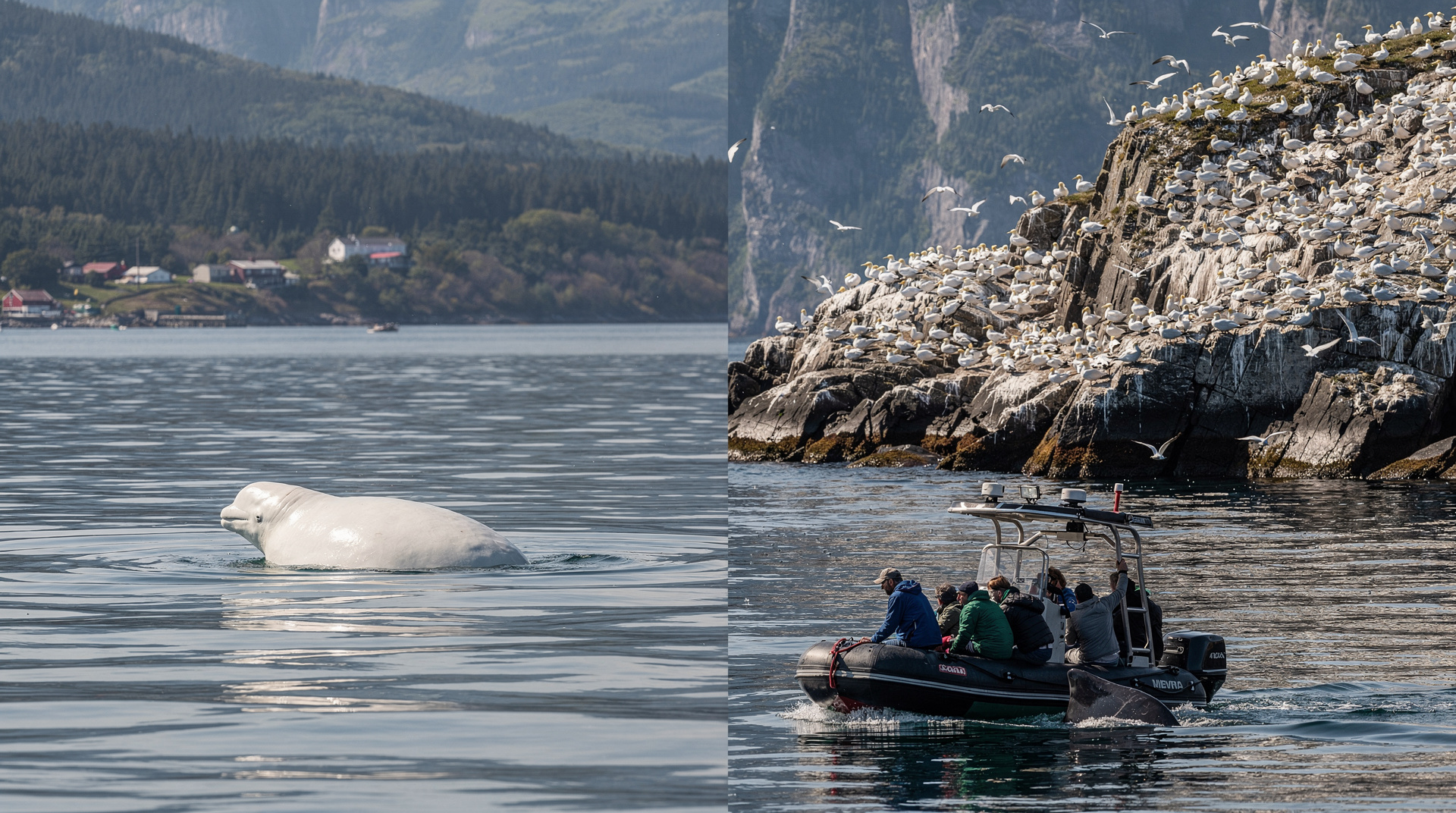
Species commonly sighted in summer: minke whales (year-round), beluga whales (St. Lawrence resident population, visible from the dock), humpback whales (June–October), fin whales (second-largest animal alive, frequent visitor), and blue whales (June–July, occasional).
Book in advance, especially July–August.
3-Hour Whale Watching Boat TourZodiac tour (inflatable speedboat)
Smaller, faster, gets closer. You’re at water level — when a fin whale surfaces 20 metres away, you feel it. Recommended for those who want the maximum wildlife experience and are comfortable with some spray and movement.
Whale Watching Zodiac TourMorning or twilight whale and fjord tour
A beautiful alternative: the morning tour departs before the day’s crowds, and the twilight tour catches the golden light on the Saguenay fjord walls. Both run 3 hours:
Whales and Fjord Morning or Twilight TourWhat to bring on the water
Even in summer, it is cooler and windier on the river than on shore. Layers, a windproof jacket, a hat that stays on, and sunglasses make the three hours far more comfortable. Binoculars are optional but welcome, and a camera with a good zoom beats a phone for distant blows. Keep your bag small: space on deck is shared with many other passengers.
Be patient, too. Whales are wild animals and the best encounters often come after a quiet stretch of scanning the water. Naturalists on board will point out where to look, and listening to them improves your odds of spotting something. If you are choosing a month for your visit, the best time for whale watching in Québec page lays out what to expect through the season.
What else to do in Tadoussac
Tadoussac is genuinely worth the visit even beyond the whale tour:
Chapelle des Indiens (1747): the oldest wooden chapel in North America, a small and moving building at the edge of the bay. Admission is free. Open to visitors in summer.
Centre d’interprétation des mammifères marins (CIMM): the Marine Mammal Interpretation Centre is one of the best wildlife education centres in Québec. Excellent exhibits on the 13 species of marine mammals in the St. Lawrence. Admission 17 CAD. Plan 1 hour.
Tadoussac beach: a small crescent of sand on the bay. On warm August days, locals swim here (the water is cold but not impossible — 18-20°C in August). Beautiful setting with the pink sand hotel above.
Sea kayaking: for active travellers, the Saguenay’s calm fjord waters near Tadoussac are excellent for sea kayaking. Half-day guided paddles available through local operators.
If you want to see the fjord on foot rather than from the water, the Saguenay Fjord hiking guide and the Saguenay Fjord destination page show what lies beyond the town. For a more thorough read on the area as a whole, see the Tadoussac destination guide alongside this page.
The case for staying one night
Here’s the honest case for booking a room:
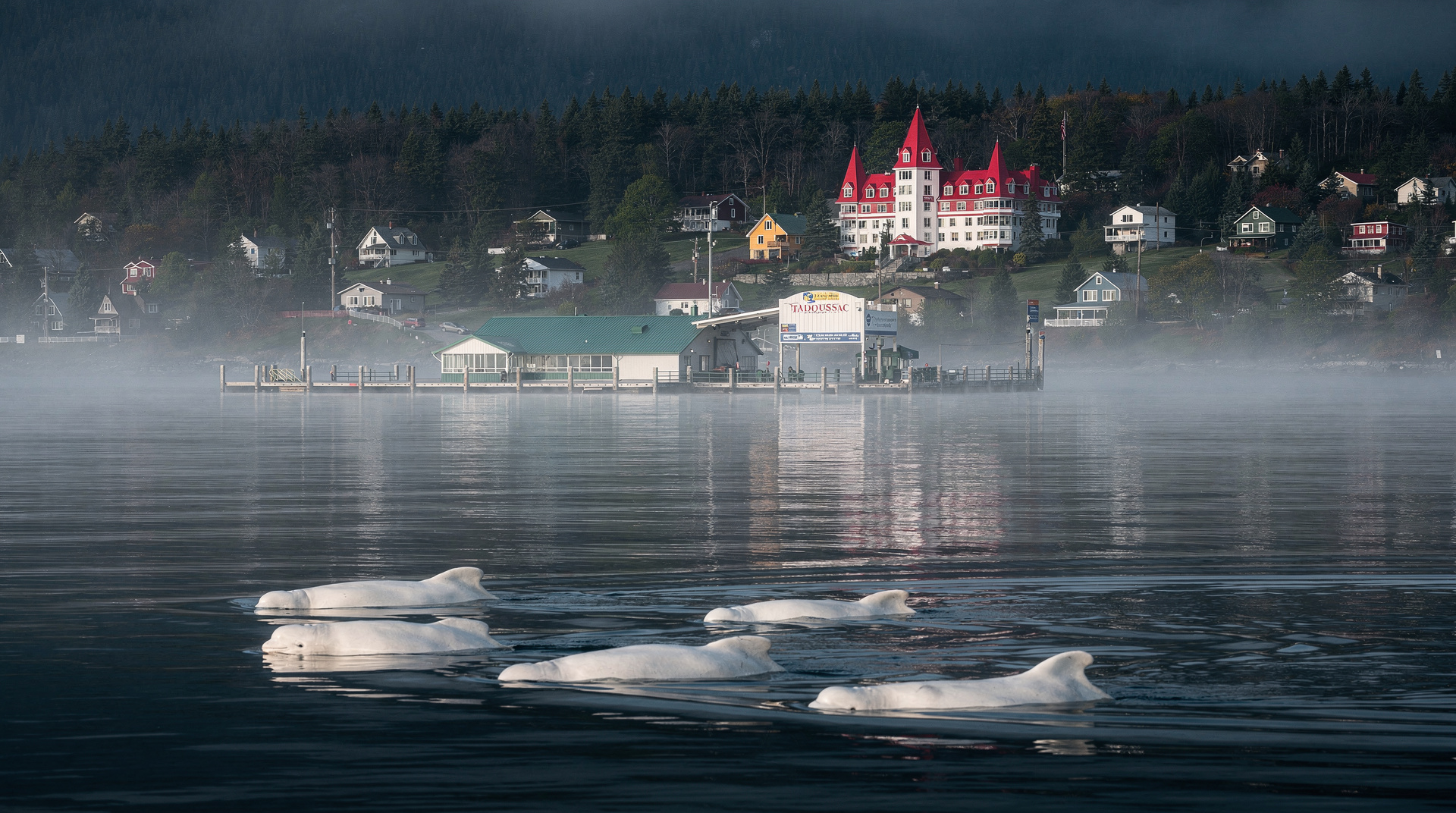
- Wake up to belugas: the Saguenay River mouth at dawn, before any tour boats go out, is extraordinary quiet. Belugas surface close to shore in the early morning.
- Saguenay Fjord: spending a full day allows a Saguenay Fjord boat cruise (3 hours) in addition to whale watching. Two completely different experiences in one trip.
- No rush: driving 6 hours in a day is tiring. One night means you enjoy both the place and the journey.
Accommodation in Tadoussac: the iconic Hôtel Tadoussac (the red-roofed colonial hotel visible from the ferry) offers the most atmospheric stay, see the Hôtel Tadoussac official website for rates. Several gîtes (B&Bs) also offer rooms; rates vary by date. Book 2-3 months ahead for July–August.
Staying over also changes the mood of the whole trip. Instead of watching the clock for the ferry back, you can sit on a terrace in the evening, take a slow walk along the bay, and join a tour at the time that suits you rather than the one that fits the return drive. Travellers who want to build a longer itinerary around this can look at the 5 days whale and fjord itinerary, which sets Tadoussac in a broader loop.
For first-hand impressions of the town and its animals, the blog post on a whale encounter with belugas in Tadoussac gives a personal account of what the experience feels like.
Route notes for self-driving
Route 138 from Québec City is the only road north of the river to Tadoussac. It passes through Beauport, Sainte-Anne-de-Beaupré, Saint-Joachim, Baie-Saint-Paul (the heart of Charlevoix — worth a coffee stop), and continues northeast to Baie-Sainte-Catherine.
The section from Baie-Saint-Paul to Baie-Sainte-Catherine is one of the most scenic drives in Québec — cliffs over the St. Lawrence, the river widening as you go north, the first fjord formations appearing. Allow yourself time to pull over.
Ferry at Baie-Sainte-Catherine: queue on the right side at the dock. The ferry is free. Wait times are worst Saturdays and Sundays in July–August (long for vehicles). Foot passengers walk straight on.
Before you set off, check the ferry details in the Tadoussac crossing guide so the queue does not surprise you. Fuel up and use restrooms before the quieter stretches north of Charlevoix, and keep some food in the car in case the ferry line is longer than hoped. Along the way you may also want to spend time in Charlevoix, which rewards a slower pace if you can spare it.
When to go
| Month | Whale activity | Crowds | Notes |
|---|---|---|---|
| May | Moderate (minkes arrive) | Low | Cold water, good blue whale window |
| June | High | Moderate | Blue whales possible, belugas active |
| July | Peak | Very high | All species, book ahead |
| August | Peak | Very high | Book months ahead |
| September | High | Moderate | Great value, beautiful autumn |
| October | Lower | Low | Season ends mid-October |
The table is a guide rather than a promise: weather, water conditions and the animals’ own movements vary from year to year. For a month-by-month look at the climate you will face on deck and on the road, the Québec weather month by month guide is a useful companion, and the best time to visit Québec page helps you weigh whale season against everything else you want to do. If you are weighing Tadoussac against the Gaspé coast for your whale trip, read Tadoussac vs Percé whale watching first.
Combining the drive with Charlevoix
Since Route 138 runs directly through Charlevoix on the way north, self-drivers rarely need to choose between the two destinations — the smarter move is combining them. A Charlevoix day trip covers roughly the first half of the drive to Tadoussac, so breaking the journey with a night in Baie-Saint-Paul or La Malbaie turns one exhausting 12-hour day into a comfortable two- or three-day loop. This is the single best fix for the “too much driving” complaint that shows up in most negative reviews of the Tadoussac day trip.
Related guides
- Day trips from Québec City
- Tadoussac destination guide
- Québec ferry guide (Tadoussac crossing)
- Whale watching complete guide
Frequently asked questions about Québec City to Tadoussac whale watching: is it doable as a day trip?
How far is Tadoussac from Québec City?
Tadoussac is 215 km from Québec City via Route 138 along the north shore of the St. Lawrence. The drive takes 2h45-3h, plus the 10-minute free ferry across the Saguenay River mouth at Baie-Sainte-Catherine. Allow 3h total each way.What is the best time of year for whale watching in Tadoussac?
The whale watching season in Tadoussac runs May to October. Peak sightings are in July and August, when fin whales, minkes, and humpbacks are most active. Belugas are present year-round in the Saguenay–St. Lawrence Marine Park but are most visible at the surface in summer. Blue whale sightings are more likely in June–July.How long is a whale watching tour in Tadoussac?
Standard whale watching boat tours in Tadoussac run 3 hours. Zodiac (inflatable) tours are 2 to 2.5 hours and get closer to the whales but have no shelter from spray. Large boat tours (75-150 passengers) are 3 hours with covered decks. All tours depart from the Tadoussac dock multiple times daily in peak season.Is there a bus from Québec City to Tadoussac?
Intercar (now Autocar Maheux) operates bus service from Québec City to Tadoussac, but schedules are limited (often 1 departure per day) and the journey takes 4-5 hours due to stops. The most practical bus option for whale watching is the organised day tour from Québec City that includes the bus transfer and the whale watching cruise.What else is there to do in Tadoussac besides whale watching?
Tadoussac has the oldest wooden chapel in North America (Chapelle des Indiens, 1747), the Marine Mammal Interpretation Centre (CIMM), a surprisingly good beach at Tadoussac bay, sea kayaking, and it's the departure point for the Saguenay Fjord. The town is very small — a full day gives you time for everything plus the whale tour.Should I do the zodiac or the large boat for whale watching in Tadoussac?
Both are excellent. Zodiac tours get closer to the whales and give a more immediate experience — you feel the swell and spray. Recommended for those without seasickness concerns and wanting maximum proximity. Large boats offer more stability, shelter, and narration. The 3-hour boat tour is the most popular and reliable.Can I combine Tadoussac with Charlevoix on the same trip?
Yes, and many self-drivers do — Route 138 passes directly through Baie-Saint-Paul and the rest of Charlevoix on the way to Tadoussac. If you're driving yourself, consider breaking the trip into two days: a night in Charlevoix (Baie-Saint-Paul or La Malbaie) followed by a shorter drive to Tadoussac the next morning. This turns two demanding day trips into one manageable multi-day loop rather than two separate 10-12 hour days from Québec City.Is the ferry at Baie-Sainte-Catherine ever closed or cancelled?
The ferry runs year-round and is rarely cancelled, though severe winter ice or high winds can cause temporary suspensions. In practice, summer visitors should plan for wait times rather than cancellations — the crossing itself takes about 10 minutes, but the queue for vehicles can be long on July–August weekends. Foot passengers board without waiting in the vehicle queue.
Top experiences
Bookable activities with verified prices and instant confirmation on GetYourGuide.