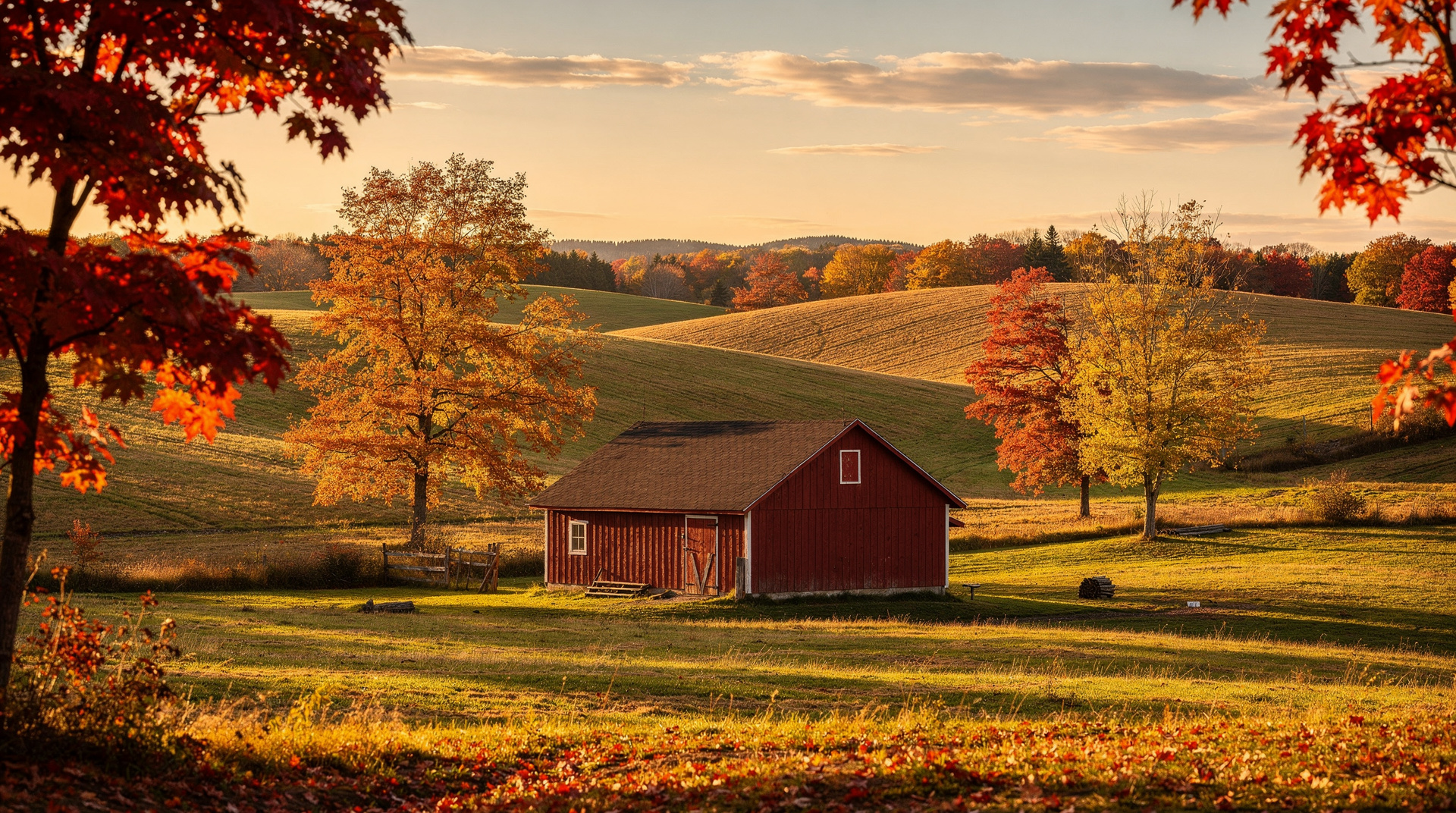
Centre-du-Québec
Quebec's agricultural heartland: Drummondville's living history museum, Victoriaville, and sugar shacks for road-trippers on the Montréal–Québec corridor.
Quick facts
- Distance from Montreal
- 160 km northeast on Autoroute 20, ~1h45
- Distance from Quebec City
- 100 km southwest on Autoroute 20, ~1h
- Main city
- Drummondville (pop. ~80 000)
- Sugar shack season
- Early March to mid-April
| Where | Halfway between Montréal and Québec City on Autoroute 20 |
| Cost | Village québécois d’antan ~25-30 CAD; sugar shack meal ~35-50 CAD/person |
| Time needed | Half-day to overnight as a corridor stop |
| Getting there | Autoroute 20 by car (only practical option); limited bus via Orléans Express |
| Best time | Early March–mid-April for sugar shacks; July for the Village québécois d’antan |
A note on GetYourGuide coverage
Centre-du-Québec has no GetYourGuide listings. This is an editorial page. All recommendations are independent.
An honest framing: this is a road-trip destination
Let’s be direct about something: Centre-du-Québec is more useful to you as a road-trip stop between Montréal and Québec City than as a standalone destination. The region sits almost exactly halfway on Autoroute 20, and it has two things that genuinely justify a detour: one of Quebec’s best living-history museums in Drummondville, and some of the province’s best sugar shack operations if you’re visiting in spring. Neither of these requires a dedicated multi-day trip, but both reward a planned half-day or overnight stop on the Montréal-Québec corridor.
That said — if you are interested in rural Québécois culture, agricultural history, or the social life of the province beyond its cities, Centre-du-Québec is quiet, inexpensive, and genuinely rewarding for the visitor who chooses to slow down.
Village québécois d’antan — Drummondville
The Village québécois d’antan (English: Village of Yesteryear) in Drummondville is an open-air living-history museum covering Quebec rural life from 1810 to 1930. It consists of over 70 heritage buildings — farmhouses, a blacksmith, a mill, a school, a church, craft workshops — staffed by costumed animators who demonstrate and discuss the trades, habits, and social life of different periods. It’s the equivalent of places like Plimoth Patuxent in Massachusetts or Colonial Williamsburg, but at Quebec scale: smaller, more personal, and focused on the specific rhythm of French-Canadian rural life.
Open late June through late August (10h-17h daily), with reduced hours in late May/early June and September. Entry around 25-30 CAD for adults, family rates available. For families with children aged 5-12, this is a genuinely engaging half-day. The crafts demonstrations — candle-making, woodworking, textile production — hold attention in ways that static museum displays cannot. For adults with interest in Quebec history, the 19th-century period (post-1867) is particularly well-rendered.
Outside of summer, the Village is closed or offers limited programming. Check the official website (villageduantan.com) for the current season before planning around it.
Drummondville itself warrants an evening’s walk: the historic core around the Rivière Saint-François has a concentration of well-preserved 19th-century commercial buildings, and the terrasse culture along the river in summer is genuinely pleasant. The Friday and Saturday market (Marché du Centre-du-Québec) has good local produce and artisan food vendors.
Victoriaville and the terroir economy
Victoriaville (50 km northeast of Drummondville) is the administrative capital of the Centre-du-Québec region, known for furniture manufacturing and a strong terroir food culture. The Artisans du terroir de Victoriaville marketplace and the network of farms and producers in the surrounding Bois-Francs territory make this a quiet but worthwhile food-focused stop.
The Fromagerie La Vache à Maillotte (Saint-Christophe-d’Arthabaska, 10 km outside Victoriaville) produces artisan cheeses that have won Caseus (Quebec cheese awards). Direct farm sales available in season.
Victoriaville is also associated with Alfred Desrochers and the literary history of French Canada — the Musée Laurier (at the childhood home of Sir Wilfrid Laurier, Canada’s 7th and only Francophone Prime Minister, in Arthabaska/Victoriaville) is worth 45 minutes for visitors with interest in Canadian political history. Entry around 10-15 CAD.
Sugar shack season: March to mid-April
This is perhaps Centre-du-Québec’s best argument for a dedicated visit. The region has a high concentration of cabanes à sucre (sugar shacks) — traditional maple operations that open to visitors from late February through mid-April, when the temperature cycles above freezing by day and below by night, driving the sap from maple roots up through the trees.
The experience at a proper cabane à sucre is not merely tasting maple syrup. It is a set meal in a log building: soupe aux pois (pea soup), tourtière (meat pie), ham, beans, and eggs — all prepared with maple products in one form or another — followed by tire sur la neige (maple taffy poured on snow and rolled onto wooden sticks). Traditional Québécois musicians often play; families come for what is one of the most specific cultural traditions in the province.
Sucrerie du Domaine and Érablière les Sucreries de l’Érable in the Drummondville-Victoriaville corridor are among the better-known operations that accept visitors during season. Book in advance, especially on weekends in March and early April — these fill quickly with local families.
Sugar shack season is also possible from Montréal (see the sugar shack guide from Montréal), but the Centre-du-Québec operations tend to be less tourist-oriented and more authentic in character, at the cost of some accessibility. If you are already on the Autoroute 20 corridor in March-April, exit at Drummondville and book ahead.
Agricultural terroir
The broader region between Drummondville and Victoriaville is flat, agricultural land at its most productive. The Bois-Francs (as the inland territory is called) grows significant volumes of grain, dairy, and maple. The road network between the two cities is lined with farm stands selling seasonal produce — strawberries in late June, corn in August, squash and root vegetables in October.
The Véloroute des Bois-Francs cycling route connects several rural municipalities in a 150-km loop suitable for road cyclists comfortable with mixed-surface terrain. No shuttle service; self-guided. Route maps available from regional tourism office (tourisme-centreduquebec.qc.ca).
Getting there
By car (only practical option): Autoroute 20 between Montréal and Québec City passes through Drummondville (exit 175 for the village centre). The exit for the Village québécois d’antan is clearly signed. From Montréal: ~1h45. From Québec City: ~1h. Autoroute 20 is four-lane divided highway throughout.
By train: Via Rail’s Montréal-Québec City route does not serve Drummondville on the main corridor. The Drummond station has limited service.
By bus: Orléans Express (intercity coach) stops in Drummondville. Journey time from Montréal Central ~2h. Bus frequency limited on weekends.
Where to stay and eat
Drummondville has the standard mid-range hotel selection expected of a regional city of 80 000: Hôtel Gouverneur Drummondville, a Comfort Inn, and several motel-style options. Expect 100-160 CAD per night. For something more characterful, the smaller Auberge Montminy in Arthabaska (~25 km from Drummondville centre) is a converted heritage building with genuine charm, from ~150 CAD.
For food: Café El Mundo (Drummondville downtown) does reliable breakfast and lunch. La Belle et la Boeuf (Drummondville) is a mid-range steakhouse popular with local families; budget ~40-60 CAD for dinner. La Côtelette (Victoriaville) has a strong local reputation for its charcuterie.
Connecting with the rest of Quebec
The natural integration of Centre-du-Québec into a Quebec itinerary is as a midpoint stop on the Autoroute 20 corridor. From Drummondville:
- North on Route 161 toward Mauricie and Parc national de la Mauricie (~1h to Shawinigan)
- East toward Québec City (~1h, good highway)
- West toward Montréal or the Eastern Townships via Autoroute 20 south to 55
The Montréal to Québec City transit guide covers the corridor options (train, bus, car) and notes where detours like Centre-du-Québec make sense depending on travel pace.
Village québécois d’antan vs a Montréal sugar shack: which to choose
Visitors torn between the Drummondville living-history museum and a sugar shack meal near Montréal should note they serve different purposes and different seasons.
| Village québécois d’antan | Centre-du-Québec sugar shack | |
|---|---|---|
| Season | Late June–late August | Late February–mid-April |
| Experience | Costumed animators, 70+ heritage buildings | Set traditional meal + tire sur la neige |
| Best for | Families with children 5–12 | Anyone wanting authentic maple-season tradition |
| Alternative near Montréal | — | See the sugar shack guide from Montréal for a more accessible option |
If your trip falls outside either season, Centre-du-Québec reduces to a fuel-and-coffee stop on Autoroute 20 — plan around one of these two windows if either genuinely interests you.
Frequently asked questions about Centre-du-Québec
Is Centre-du-Québec worth a dedicated trip from Montréal or Québec City?
Generally no — it works best as a planned stop on the Autoroute 20 corridor rather than a standalone destination. The exceptions are the Village québécois d’antan in summer and sugar shack season (late February–mid-April), both of which can justify a half-day detour if your dates align.
Are Centre-du-Québec sugar shacks better than ones near Montréal?
They tend to be less tourist-oriented and more locally authentic, at some cost to accessibility and English-language service. For a more convenient, more visitor-ready experience, see the sugar shack guide from Montréal instead.